What to do when the Ruyi Queen's leaves turn yellow? Supplement light, reasonable water and fertilizer, change soil and replant
Keeping a pot of evergreen at home is absolutely a good choice, and as a premium variety among them, Ruyi evergreen, also called Ruyi Queen, can be said to be much loved by flower enthusiasts. However, during cultivation, the brilliantly colored Ruyi Queen often shows yellowing symptoms, so what should be done when the Ruyi Queen's leaves turn yellow? Today the editor will help everyone solve this problem.
I. What to do when the Ruyi Queen's leaves turn yellow
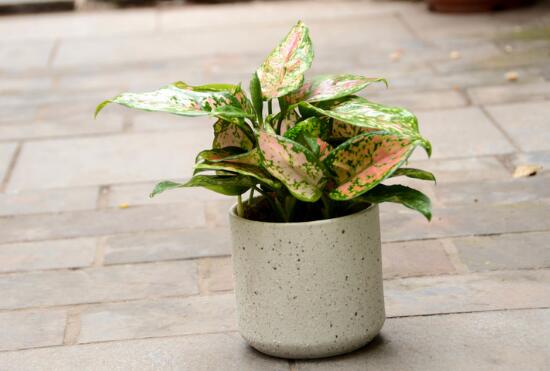
When it comes to what to do when the Ruyi Queen's leaves turn yellow: if it is caused by a sudden environmental change, just create the most suitable growing environment for it; if it is due to insufficient light, then supplement light; when water and fertilizer are improper, water and fertilize reasonably, and if root rot appears, the rotten roots also need to be cut off, the potting soil replaced, and the plant replanted; if the soil is too alkaline, replace it with loose, fertile, well-draining and breathable slightly acidic soil.
II. Causes of yellowing leaves in the Ruyi Queen and solutions
1. Sudden environmental change
There are actually many causes of yellowing leaves in the Ruyi Queen. If it is new potting soil, everyone should consider that there is a problem with the environment. Nowadays, the Ruyi Queens of flower enthusiasts are basically bought online, which can easily lead to large regional differences, and the environment changing too much at once, so the plant cannot adapt for a while and turns yellow.
Solution: It is very simple. According to the growth habits of the Ruyi Queen, create the most suitable growing environment for it. After careful care for 1-2 weeks, it will slowly recover to health.
2. Insufficient light
As a foliage plant, the Ruyi Queen still has a great demand for light. If it is not given sufficient light, but is placed in a dark place for a long time, its leaves will turn yellow due to lack of nutrients from photosynthesis.
Solution: At this time, everyone should move the potted plant to a ventilated sunny place, so that the plant receives sufficient light; however, everyone should note that the light should be increased slowly, and shade is also needed under strong light.
3. Improper watering
Insufficient watering: The Ruyi Queen likes a humid environment. If it is not watered for a long time, or has never been watered thoroughly, the leaf surface or the ends of the branches will turn yellow. At this time, it will also be accompanied by old leaves withering and yellowing from bottom to top and falling off, but new leaves generally grow normally. Solution: After discovering this symptom, everyone should water in time, but do not water too much at once; keeping the potting soil slightly moist is enough.
Overwatering: Although the Ruyi Queen likes water, it hates waterlogging. Once watered too much and water accumulates in the potting soil, it will cause the soil to lack oxygen, thus causing part of the Ruyi Queen's root system to rot. Its leaves cannot absorb water, so naturally they turn yellow. Solution: After overwatering, loosen the soil immediately so that the water evaporates quickly; if root rot appears, the plant should also be taken out of the pot, then the rotten roots cut off, replaced with new soil, and replanted.
4. Excessive fertilization
After talking about watering, let's talk about fertilizing, which is also one of the causes of yellowing leaves in the Ruyi Queen. Although the Ruyi Queen likes fertilizer, if too much fertilizer is applied or the fertilizer concentration is too high, especially when too much nitrogen fertilizer is applied, the plant's leaves will also turn yellow. At this time, the new leaves are shiny, and the old leaves turn yellow and fall off.
Solution: After discovering this situation, everyone should stop fertilizing immediately, then irrigate with water to dilute the fertilizer; if the roots have been burned and rotted, the plant also needs to be taken out of the pot, then the rotten roots cut off, replaced with new soil, and replanted.
5. Soil too alkaline
In addition to the above points, yellowing leaves in the Ruyi Queen may also be caused by soil that is too alkaline. Because the Ruyi Queen likes slightly acidic soil, once the soil is too alkaline, or long-term watering with tap water causes the soil to become too alkaline, the plant will grow poorly. At this time, the leaves will turn yellow, slowly turn white, and in the end may even cause the whole plant to die!
Solution: Facing this situation, we only need to make the soil slightly acidic. For this, alum fertilizer can be applied to achieve the purpose of fertilizing with water; in addition, the potting soil can also be directly replaced and the plant replanted.
Overall, the cultivation method of the Ruyi Queen is not difficult, but because many flower enthusiasts are beginners, yellowing leaves will inevitably appear. However, after reading the whole article, I believe everyone has a clearer idea. When the yellowing problem appears, just solve it according to the above methods. Regarding yellowing leaves in the Ruyi Queen, the editor will introduce it here, hoping to bring help to everyone.
What to do when the leaves of the dragon's whisker orchid turn yellow: supplement light / raise the temperature in winter / reasonable water and fertilizer
The dragon's whisker orchid, a beautiful foliage plant, has an elegant form, with leaves like weeping willow and pure color, and is highly ornamental when kept at home. For experienced growers, the dragon's whisker orchid is an easy green plant to grow, but for beginners, cultivating the dragon's whisker orchid always results in yellowing leaves, so what should be done when the leaves of the dragon's whisker orchid turn yellow? Today the editor will help everyone solve this problem.
I. What to do when the leaves of the dragon's whisker orchid turn yellow
When it comes to yellowing leaves in the dragon's whisker orchid, apart from environmental discomfort, it is caused by improper care: if there is too little light, just supplement light; when the temperature is too low, raise the temperature; if water and fertilizer are improper, after changing the potting soil, water and fertilize reasonably; if it is caused by soil that is too alkaline, just replace the potting soil; if it is caused by pests and diseases, then we need to spray pesticide for prevention and control.
II. Causes of yellowing leaves in the dragon's whisker orchid and solutions
1. Sudden environmental change
There are many causes of yellowing leaves in the dragon's whisker orchid. The first thing everyone should consider is that there is a problem with the environment. Because many of the flower enthusiasts' dragon's whisker orchid potted plants are bought online, this can easily cause large regional differences, and the environment changing too much at once, so the dragon's whisker orchid cannot adapt for a while and its leaves turn yellow.
Solution: It is very simple. If a newly bought dragon's whisker orchid shows yellow leaves, according to the growth habits of the dragon's whisker orchid, provide it with the most suitable growing environment. After a period of time, the plant will recover to health.
2. Too little light
The dragon's whisker orchid is relatively shade-tolerant and suitable for growing in an environment with sufficient scattered light. Once light is insufficient, it will affect the plant's growth, thus causing the symptom of yellowing leaves in the dragon's whisker orchid. Not only that, without sufficient sunlight for a long time, the dragon's whisker orchid will also become leggy, and the leaf color will become lighter and lighter.
Solution: It is very simple. Just supplement light, but avoid direct sunlight, especially in summer, be sure to shade it to prevent the leaves from being scorched. If the leggy growth is relatively severe, appropriate pruning can be carried out to concentrate nutrients.
3. Temperature too low
The dragon's whisker orchid likes a warm environment, and the most suitable growing temperature is above 20°C. It is not cold-tolerant. In winter, when the temperature drops to 6°C, if no warmth measures are taken, the leaves will turn yellow.
Solution: In late autumn and early winter, move the dragon's whisker orchid indoors for care, and control the room temperature above 10°C. Only in this way can it survive the winter safely, and the leaves will also recover to health.
4. Improper watering
①Insufficient watering: The dragon's whisker orchid likes a humid environment. If watered too little, the leaves cannot get nutrient supply and will naturally turn yellow. Solution: Supplement water in time, but do not water too much at once; keeping the potting soil slightly moist is enough.
②Overwatering: Although the dragon's whisker orchid likes water, it fears waterlogging. Once watered too much and water accumulates in the potting soil, the root system will have difficulty breathing, and the leaves will also turn yellow because they cannot absorb nutrients. Solution: Loosen the soil more so that the water evaporates quickly; if the roots have already been soaked and rotted, the plant needs to be taken out of the pot, then the rotten roots cut off, replaced with new potting soil, and replanted.
5. Improper fertilization
During the growth period of the dragon's whisker orchid, it will grow lush branches and leaves. At this time, if fertilization is insufficient, yellowing leaves are very likely to appear; in addition, if too much or too concentrated fertilizer is applied to the dragon's whisker orchid, it may also cause the tips of the leaves to become scorched yellow and fall off.
Solution: When fertilizing too little, just supplement fertilizer, but when fertilizing the dragon's whisker orchid, be sure to apply thin fertilizer frequently and avoid concentrated fertilizer and raw fertilizer; if too much fertilizer is applied, stop fertilizing immediately and irrigate with water to dilute the fertilizer. If the roots have been burned and rotted, the plant also needs to be taken out of the pot, the rotten roots cut off, and then the potting soil replaced and the plant replanted.
6. Pruning not done in time
Under conditions of proper water and fertilizer and sufficient scattered light, the dragon's whisker orchid will grow very luxuriantly. At this time, if it is not pruned, the inner leaves of the dragon's whisker orchid cannot get light, and over time, this can easily cause the leaves to turn yellow and fall off.
Solution: When the dragon's whisker orchid grows very dense, be sure to prune it in a timely manner, so that the area around the plant can be ventilated and receive light. Only this is best for the plant's growth.
7. Soil too alkaline
According to the growth habits of the dragon's whisker orchid, we know that it likes slightly acidic soil. If the soil is too alkaline, or long-term watering with mineral water causes the soil to become too alkaline, the plant will grow poorly, thus showing yellowing leaves.
Solution: It is very simple. If it is caused by soil that is too alkaline, just replace the potting soil. Take the plant out of the pot, then replace it with soil mixed from 3 parts fern roots, 1 part moss, 1 part peat, and 1 part sand, and then replant it.
Overall, the cultivation method of the dragon's whisker orchid is not difficult, but because many flower enthusiasts are beginners, yellowing leaves will inevitably appear. However, after reading the whole article, I believe everyone has a clearer idea. When the yellowing problem appears, just solve it according to the above methods. Regarding yellowing leaves in the dragon's whisker orchid, the editor will introduce it here, hoping to bring help to everyone.
What to do when the leaves of the white-veined pepper plant turn yellow: ventilated environment / supplement light / reasonable water and fertilizer
The white-veined pepper plant, also called diamond emerald, is a recently introduced foliage plant. Its small and exquisite plant shape and white-green leaves make people like it from the bottom of their hearts. However, when cultivated indoors, many beginners raise the leaves of the white-veined pepper plant until they turn yellow, thus affecting the plant's ornamental value. So, what should be done when the leaves of the white-veined pepper plant turn yellow? Today the editor will help everyone solve this problem.
I. What to do when the leaves of the white-veined pepper plant turn yellow
Regarding yellowing leaves in the white-veined pepper plant, there are just a few causes, and solving them is also simple: if light is insufficient, just supplement light; if water and fertilizer are improper, just water and fertilize reasonably; if the roots have rotted, then the plant also needs to be taken out of the pot, the rotten roots cut off, and then the potting soil replaced and the plant replanted; if it is caused by pests and diseases, spray pesticide in time for prevention and control.
II. Causes of yellowing leaves in the white-veined pepper plant and solutions
1. Sudden environmental change
When it comes to the causes of yellowing leaves in the white-veined pepper plant, the first thing everyone should consider is that there is a problem with the environment. Nowadays, most of the flower enthusiasts' white-veined pepper plant potted plants are bought online, which can easily cause large regional differences, and the environment changing too much at once, so the white-veined pepper plant cannot adapt for a while and its leaves turn yellow.
Solution: It is very simple. If a newly bought white-veined pepper plant shows yellow leaves, according to the growth habits of the white-veined pepper plant, provide it with the most suitable growing environment. After a period of time, the plant will recover to health.
2. Too little light
Although the white-veined pepper plant is shade-tolerant, as a foliage plant, it also has a demand for light. Once it is placed in a dark place for a long time, its leaves will turn yellow due to lack of nutrients from photosynthesis.
Solution: It is very simple. Just supplement light, but avoid direct sunlight, especially in summer, be sure to shade it to prevent the leaves from being scorched. The best method is to move the potted plant to a place with sufficient scattered light.
3. Improper watering
The white-veined pepper plant likes a humid environment, but it hates waterlogging, so watering should be neither too much nor too little. If watered too little, the leaves cannot get nutrient supply and will naturally turn yellow; if watered too much, water accumulates in the potting soil, the plant's root system will have difficulty breathing, and the leaves will also turn yellow because they cannot absorb nutrients.
Solution: When watering is insufficient, supplement water in time, but do not water too much at once; keeping the potting soil slightly moist is enough; when watering too much, loosen the soil more so that the water evaporates quickly; if the roots have already been soaked and rotted, the plant needs to be taken out of the pot, then the rotten roots cut off, replaced with new potting soil, and replanted.
4. Improper fertilization
The leaves of the white-veined pepper plant are large and dense, so it naturally needs sufficient nutrients during growth. Once fertilization is insufficient, its leaves cannot get sufficient nutrients and are prone to turning yellow; however, the white-veined pepper plant does not have high fertilizer requirements. Once too much or too concentrated fertilizer is applied, it may also cause the tips of the leaves to become scorched yellow, and in severe cases it may even cause the white-veined pepper plant to drop leaves.
Solution: When fertilizing too little, just supplement fertilizer, but when fertilizing the white-veined pepper plant, be sure to apply thin fertilizer frequently and avoid concentrated fertilizer and raw fertilizer; if too much fertilizer is applied, stop fertilizing immediately and irrigate with water to dilute the fertilizer. If the roots have been burned and rotted, the plant also needs to be taken out of the pot, the rotten roots cut off, and then the potting soil replaced and the plant replanted.
5. Pests and diseases
In addition to the above points, pests and diseases are also one of the causes of yellowing leaves in the white-veined pepper plant. Although the white-veined pepper plant is not prone to insects or disease, under improper care and poor ventilation, it can also develop scale insects and root rot, and these can all cause the plant's leaves to turn yellow.
Solution: Determine the specific pests or diseases, then spray pesticide accordingly for prevention and control. As for what pesticide to spray, refer to pest and disease control for the white-veined pepper plant.
Overall, the cultivation method of the white-veined pepper plant is not difficult, but because many flower enthusiasts are beginners, yellowing leaves will inevitably appear. However, after reading the whole article, I believe everyone has a clearer idea. When the yellowing problem appears, just solve it according to the above methods. Regarding yellowing leaves in the white-veined pepper plant, the editor will introduce it here, hoping to bring help to everyone.