What to do when the leaves of the white-veined peperomia turn yellow? Ventilation, supplemental light, and proper water and fertilizer are key
The white-veined peperomia, also called diamond emerald, is a recently introduced foliage plant. Its compact and delicate form, with leaves patterned in white and green, makes people love it at first sight. But when grown indoors, many beginners let the leaves of the white-veined peperomia turn yellow, which affects the plant's ornamental value. So what should be done when the leaves of the white-veined peperomia turn yellow? Today, the editor will help everyone solve this problem.
I. What to do when the leaves of the white-veined peperomia turn yellow
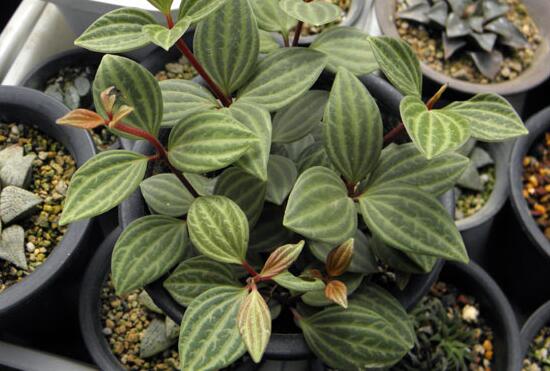
When it comes to yellowing leaves on the white-veined peperomia, there are just a few causes, and the solutions are simple too: if it is insufficient light, just supplement light; if it is improper water and fertilizer, just water and fertilize reasonably; if the roots have rotted, you also need to take the plant out of the pot, cut off the rotten roots, and then repot it with fresh soil; if it is caused by pests and diseases, spray pesticide promptly for control.
II. Causes of yellowing leaves on the white-veined peperomia and solutions
1. Sudden environmental change
When talking about the causes of yellowing leaves on the white-veined peperomia, the first thing everyone should consider is an environmental problem. Nowadays, most of the potted white-veined peperomias that flower lovers buy are purchased online, which easily leads to a large regional difference and a sudden, too-great change in environment, so the white-veined peperomia cannot adapt for a while and its leaves turn yellow.
Solution: It is very simple. If a newly bought white-veined peperomia shows yellow leaves, according to its growth habits, provide it with the most suitable growing environment, and after some time the plant will recover its health.
2. Too little light
Although the white-veined peperomia is shade-tolerant, as a foliage plant it still needs light. Once it is placed in a dark spot for a long time, its leaves turn yellow because they lack the nutrients from photosynthesis.
Solution: It is very simple, just supplement light, but avoid direct sunlight, especially in summer, be sure to shade it to prevent the leaves from being scorched. The best method is to move the pot to a place with plenty of diffused light.
3. Improper watering
The white-veined peperomia likes a moist environment, but it is intolerant of waterlogging, so watering should be neither too much nor too little. If watered too little, the leaves cannot get nutrient supply and naturally turn yellow; if watered too much, water accumulates in the pot soil, the roots have difficulty breathing, and the leaves also turn yellow because they cannot absorb nutrients.
Solution: When watering is insufficient, replenish water in time, but do not water too much at once; keeping the pot soil slightly moist is enough. When watering is excessive, loosen the soil more to let the water evaporate quickly; if the roots have already been soaked and rotted, you need to take the plant out of the pot, cut off the rotten roots, change to fresh pot soil, and replant.
4. Improper fertilizing
The leaves of the white-veined peperomia are large and dense, so it naturally needs sufficient nutrients during growth. Once fertilizing is insufficient, its leaves cannot get enough nutrients and are prone to turning yellow; however, the white-veined peperomia does not have high fertilizer requirements, and once fertilized too much or too strongly, the tips of the leaves may also turn scorched yellow, and in severe cases it may even cause the white-veined peperomia to drop leaves.
Solution: When fertilizing is too little, just supplement fertilizer, but when fertilizing the white-veined peperomia, be sure to apply thin fertilizer frequently and avoid strong fertilizer or raw fertilizer; if too much fertilizer has been applied, stop fertilizing immediately and flush with water to dilute the fertilizer. If the roots have been burned and rotted, you also need to take the plant out of the pot, cut off the rotten roots, and then repot it with fresh soil.
5. Pests and diseases
Besides the points above, pests and diseases are also one of the causes of yellowing leaves on the white-veined peperomia. Although the white-veined peperomia is not prone to insects or disease, under improper care and poor ventilation it can also get scale insects and root rot, and these can all cause the plant's leaves to turn yellow.
Solution: Determine the specific pest or disease, then spray the corresponding pesticide for control. As for what pesticide to spray, you can refer to pest and disease control for the white-veined peperomia.
Overall, the cultivation method for the white-veined peperomia is not difficult, but because many flower lovers are beginners, yellow leaves will inevitably appear. However, after reading the whole article, I believe everyone has a clearer idea now. When yellow leaf problems appear, just solve them according to the methods above. That is all the editor has to introduce about yellowing leaves on the white-veined peperomia, and I hope it can help everyone.
What to do when the white-veined peperomia drops leaves: shade in summer, reasonable water and fertilizer, and spray pesticide for pests and diseases
As a beautiful foliage plant, when problems appear with the leaves of the white-veined peperomia, it is a common and worrying issue for flower lovers. And because the white-veined peperomia is a recently introduced plant, many flower lovers do not know what to do when it drops leaves. For this, the editor has summarized several causes of leaf drop in the white-veined peperomia and solutions for everyone's reference. Let's take a look together!
I. What to do when the white-veined peperomia drops leaves
When it comes to leaf drop in the white-veined peperomia, there are actually just a few causes: if it is caused by too strong light, just provide shade; if it is caused by improper water and fertilizer, water and fertilize appropriately; if the roots have rotted, you need to take the plant out of the pot, cut off the rotten roots, and then repot it with fresh soil; when it is attacked by pests and diseases, spray pesticide promptly for control; if it is normal leaf shedding, just care for it normally.
II. Causes of leaf drop in the white-veined peperomia and solutions
1. Too much light
The white-veined peperomia likes a semi-shaded environment, and sufficient diffused light can make it grow more luxuriant and green. However, under the strong sun in summer, it must be properly shaded, otherwise after direct exposure to strong light, the leaves of the white-veined peperomia will turn yellow and may even drop.
Solution: If the leaves of the white-veined peperomia have been sunburned and dropped, flower lovers should promptly move it to a semi-shaded place indoors, pay attention to ventilation, and after it recovers, water it moderately. With careful care for a period of time, the plant will recover its health and the leaves will slowly grow back.
2. Improper watering
Too little watering: The white-veined peperomia likes a moist environment, and during the growing season it needs sufficient water. Once watering is insufficient, the plant's leaves cannot absorb water and become dull and lusterless, dropping at the slightest touch. Solution: Just replenish water, but do not water too much at one time. Wait until the white-veined peperomia stops dropping leaves, then return to normal watering.
Too much watering: Although the white-veined peperomia likes water, it is intolerant of waterlogging. Once watered too much, water accumulates in the pot, causing root rot, and leaf drop in the white-veined peperomia is also prone to occur. Solution: Stop watering and loosen the soil frequently so the soil is well aerated, then gradually return to normal watering; if the roots have rotted, you need to take the plant out of the pot, cut off the rotten roots, and then repot it with fresh soil.
3. Insufficient fertilizing
Look at the white-veined peperomia: it has large and dense leaves, so it needs sufficient nutrients during growth. Once fertilizing is insufficient, its leaves will drop because of the lack of nutrients.
Solution: During the growing season of the white-veined peperomia, apply a decomposed dilute liquid fertilizer or compound fertilizer once every 2-3 weeks, and water appropriately to dilute the fertilizer in the pot; for regular fertilizing, thin and frequent applications are best, and the concentration should not be too high.
4. Pests and diseases
When talking about the causes of leaf drop in the white-veined peperomia, it is actually also related to pests and diseases. It is said that in poorly ventilated and dry-air environments, the white-veined peperomia can get scale insects and red spider mites. They are small but cause serious damage, often leading to yellow leaves and even leaf drop.
Solution: Wash the insects off with water and spray the relevant insecticide. As for exactly what pesticide to spray, you can refer to pest and disease control for the white-veined peperomia.
5. Normal phenomenon
If the points above can be ruled out, then the cause of leaf drop in the white-veined peperomia may be a normal phenomenon. It is said that newly bought white-veined peperomias easily drop leaves, and this is actually a very common thing, because although the white-veined peperomia has strong adaptability, it also needs a process of adapting to a new environment, and during this period it usually shows leaf drop.
Solution: When encountering this situation, flower lovers do not need to worry. Everyone just needs to place the pot in a place with diffused light for care, and after the plant slowly recovers, follow the cultivation method for the white-veined peperomia, water and fertilize normally, and it will slowly recover.
Regarding the rescue methods for leaf drop in the white-veined peperomia, after reading the all-around analysis of the 5 aspects above, everyone should know what to do! In fact, leaf drop in the white-veined peperomia is caused by one reason, but it is often the result of multiple factors, so when encountering this situation, everyone must make a correct diagnosis, because only then can the right remedy be applied.
Diamond emerald leaves drop at the slightest touch: learn 5 tricks to remedy it easily, continuous water and fertilizer are key
Diamond emerald, a beautiful foliage plant, has broad leaves with a white-and-green color pattern, so it is also called the white-veined peperomia. In daily life, many people grow diamond emerald, but during the growing process, many flower lovers encounter leaf drop. So what should be done when diamond emerald leaves drop at the slightest touch? Today, the editor will help everyone solve this problem.
I. Diamond emerald leaves drop at the slightest touch
When diamond emerald leaves drop at the slightest touch, there are 5 causes, and the solutions are simple too: when light is too strong, shade appropriately; when water and fertilizer are improper, water and fertilize appropriately; if the roots have rotted, you need to take the plant out of the pot, cut off the rotten roots, and then repot it with fresh soil; when it is attacked by pests and diseases, spray pesticide promptly for control; if it is normal leaf shedding, just care for it normally.
II. Causes of leaf drop in diamond emerald and solutions
1. Too much light
Diamond emerald is suitable for growing under diffused light. Once the light is too strong, it will grow poorly, and its leaves are easily scorched and may even fall off.
Solution: If leaf drop in diamond emerald is caused by too much light, flower lovers should promptly move the plant to a semi-shaded place indoors, pay attention to ventilation, and after it recovers, water it moderately. With careful care for a period of time, it will recover.
2. Improper watering
Diamond emerald likes a moist environment and needs sufficient water during growth. Once watering is insufficient, the plant's leaves cannot absorb water and become dull and lusterless, dropping at the slightest touch. At the same time, diamond emerald is intolerant of waterlogging. Once watered too much, water accumulates in the pot, causing root rot, and leaf drop in diamond emerald is also prone to occur.
Solution: When watering is insufficient, just replenish water, but do not water too much at one time. Wait until diamond emerald stops dropping leaves, then return to normal watering; when watering is excessive, stop watering and loosen the soil frequently so the soil is well aerated, then gradually return to normal watering; if the roots have rotted, you need to take the plant out of the pot, cut off the rotten roots, and then repot it with fresh soil.
3. Insufficient fertilizing
When talking about the causes of diamond emerald leaves dropping at the slightest touch, besides watering, insufficient fertilizing is also a point that cannot be ignored. Diamond emerald has large and dense leaves and needs sufficient nutrients during growth. Once fertilizing is insufficient, its leaves will drop because of the lack of nutrients.
Solution: During the growing season of diamond emerald, apply a decomposed dilute liquid fertilizer or compound fertilizer once every 2-3 weeks, and water appropriately to dilute the fertilizer in the pot; for regular fertilizing, thin and frequent applications are best, and the concentration should not be too high.
4. Pests and diseases
Speaking of leaf drop in diamond emerald, it is actually also related to pests and diseases. It is said that in poorly ventilated and dry-air environments, diamond emerald can get scale insects and red spider mites. They are small but cause serious damage, often leading to yellow leaves and even leaf drop.
Solution: Wash the insects off with water and spray the relevant insecticide. As for exactly what pesticide to spray, you can refer to pest and disease control for diamond emerald.
5. Normal phenomenon
Newly bought diamond emerald easily drops leaves, and this is actually a very common thing, because although diamond emerald has strong adaptability, it also needs a process of adapting to a new environment, and during this period it usually shows leaf drop.
Solution: When encountering this situation, flower lovers do not need to worry. Everyone just needs to place the pot in a place with diffused light for care, and after the plant slowly recovers, follow the cultivation method for diamond emerald, water and fertilize normally, and it will slowly recover.
When diamond emerald leaves drop at the slightest touch, after reading the all-around analysis of the 5 aspects above, everyone should know what to do! In fact, leaf drop in diamond emerald is caused by one reason, but it is often the result of multiple factors, so when encountering this situation, everyone must make a correct diagnosis, because only then can the right remedy be applied.