What to do when the leaves of Buddha belly bamboo turn yellow? Shade it in summer, water it properly, and spray to prevent pests and diseases
Buddha belly bamboo (Bambusa ventricosa) differs from ordinary bamboo: its nodes are thinner, and the internodes are short and swollen, resembling stacked arhats, which is how it got its name. In daily life, many people grow Buddha belly bamboo; looking at its peculiar nodes and emerald-green leaves lifts the spirits, so when yellow leaves appear, gardening friends get extremely worried! So what should you do when the leaves of Buddha belly bamboo turn yellow? Today the editor will solve this problem for everyone.
I. What to do when the leaves of Buddha belly bamboo turn yellow
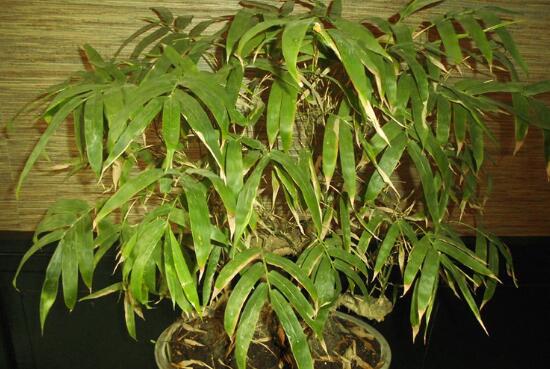
When it comes to yellow leaves on Buddha belly bamboo, apart from unsuitable environment, it is caused by improper care: if the light is too strong, it needs appropriate shading; if watered too much, loosen the soil more, and if there is root rot, cut it off, then change the potting soil and replant; if it is caused by alkaline soil, just replace the potting soil; if it is caused by pests and diseases, then we need to spray pesticides for prevention and control.
II. Causes of yellow leaves on Buddha belly bamboo and solutions
1. Sudden environmental change
There are many reasons for yellow leaves on Buddha belly bamboo, and the first thing everyone should consider is an environmental problem. Nowadays, everyone likes to buy potted Buddha belly bamboo online, which easily results in a large regional span, and the environment changes too much at once, so the Buddha belly bamboo cannot adapt for a while and its leaves turn yellow.
Solution: Very simple, according to the growth habits of Buddha belly bamboo, provide it with the most suitable growing environment: plenty of diffused light, slightly moist potting soil, and a ventilated environment. After a period of time, the plant will recover its health.
2. Too much light
Buddha belly bamboo likes light and needs plenty of light during growth, but it dislikes strong light. Once it is exposed to direct strong light in summer, the chlorophyll in its leaves will be destroyed, the tissues cannot carry out normal photosynthesis, and the result is that the leaves slowly turn yellow.
Solution: In summer, promptly move the Buddha belly bamboo to a cool, ventilated place, and after it recovers, slowly increase the light. After a period of time, the leaves of the Buddha belly bamboo will gradually turn green again.
3. Improper watering
① Insufficient watering: Buddha belly bamboo likes a humid environment. If watered too little, the leaves cannot get nutrient supply and will naturally turn yellow. Solution: Replenish water promptly, but do not water too much at once; just keep the potting soil slightly moist.
② Overwatering: Although Buddha belly bamboo likes water, it fears waterlogging. Once watered too much, causing water to accumulate in the pot, the roots will have difficulty breathing, and the leaves will also turn yellow because they cannot absorb nutrients. Solution: Loosen the soil more to let the water evaporate quickly; if the roots have already been soaked and rotted, you need to take the plant out of the pot, then cut off the rotten roots, change to new potting soil and replant.
4. Alkaline soil
According to the growth habits of Buddha belly bamboo, we know it likes slightly acidic soil. If the soil is alkaline, or long-term watering with mineral water causes the soil to become alkaline, the plant will grow poorly, thus showing symptoms of yellow leaves.
Solution: Very simple, if it is caused by alkaline soil, just replace the potting soil. Take the plant out of the pot, then replace it with soil mixed from leaf mold, garden soil, forest soil, and fine sand in a 2:1:2:1 ratio, and then replant it.
5. Pests and diseases
In addition to the above points, yellow leaves on Buddha belly bamboo may also be caused by pests and diseases. A common pest is scale insects, which mainly attach to the leaf surface and absorb nutrients from the leaves, so the leaves also turn yellow and wither. Solution: When there are only a few pests, remove them directly by hand; when there are many, promptly spray with a pesticide solution. For the specific pesticide to use, refer to the treatment of pests and diseases on Buddha belly bamboo.
Overall, the cultivation method of Buddha belly bamboo is not difficult, but because many gardening friends are beginners, symptoms of yellow leaves will inevitably appear. However, after reading the whole article, I believe everyone has a clearer idea now. If yellow leaf problems appear, just remedy them according to the above methods. That is all the editor has to introduce about yellow leaves on Buddha belly bamboo, and I hope it can help everyone.
How to grow Buddha belly bamboo: cultivation methods and precautions for Buddha belly bamboo
Buddha belly bamboo, also called Buddha belly bamboo (Bambusa ventricosa), is an ornamental plant and a type of bamboo. So do you know how to grow Buddha belly bamboo? Today I will tell everyone about the cultivation methods and precautions for Buddha belly bamboo.
Introduction to Buddha belly bamboo:
Buddha belly bamboo is also called Buddha belly bamboo and dense-node bamboo. Other names include human-face bamboo (Plant Name Glossary), Shouxing bamboo (Henan), cloth-bag bamboo, and abacus bamboo (Sichuan). Its plant is relatively short; the bamboo culms of seedlings are green, and old culms are orange-yellow. If old culms are properly cared for, their leaves are as emerald green as those of young bamboo. What makes Buddha belly bamboo different from ordinary bamboo is that its nodes are thinner, and the internodes are short and swollen, resembling the belly of Maitreya Buddha and also resembling stacked arhats, hence the name.
Cultivation methods for Buddha belly bamboo:
1. Water management: Buddha belly bamboo likes moisture and fears waterlogging. After potting, the first watering should be thorough, and afterward keep the potting soil moist; do not water too much, otherwise the rhizomes and roots are prone to rot. From potting to the survival stage, also frequently spray water on the leaves. If the potting soil lacks water, the bamboo leaves will curl; at this time, water promptly, and the bamboo leaves will unfold again. In summer, water once every 1 to 2 days on average; in winter, water less, but make sure the potting soil remains moist to prevent "dry freezing."
2. Fertilizer management: The fertilizer for potted Buddha belly bamboo is mainly organic fertilizer mixed into the potting soil when potting. After the bamboo survives, apply additional fertilizer appropriately, "apply thin fertilizer frequently," and in spring and summer apply 0.5% urea or 1.0% compound fertilizer with water.
3. Pest and disease control: The main pests of potted Buddha belly bamboo are aphids, scale insects, and so on, which can be sprayed with 80% dichlorvos emulsion or 40% dimethoate emulsion at 1000 times dilution; the main diseases are sooty mold, witches' broom, and so on. Management should be strengthened, and diseased plants should be pruned promptly.
4. Other management: In high-temperature seasons, potted Buddha belly bamboo should be moved to a cool place to avoid scorching sun exposure. Also spray water on the leaves to keep the leaf color emerald green. In winter, potted Buddha belly bamboo must be moved to a wind-sheltered, sunny place or indoors. Potting time. The best potting time is February and March before bamboo shoots emerge in spring and September and October in autumn, among which ground-cover bamboo is best potted in February. Because clustered bamboo produces shoots in summer and autumn, spring from March to May is better.
Precautions for growing Buddha belly bamboo:
In high-temperature seasons, potted Buddha belly bamboo should be moved to a cool place to avoid scorching sun exposure. Also spray water on the leaves to keep the leaf color emerald green. In winter, potted Buddha belly bamboo must be moved to a wind-sheltered, sunny place or indoors. Potting time. The best potting time is February and March before bamboo shoots emerge in spring and September and October in autumn, among which ground-cover bamboo is best potted in February. Because clustered bamboo produces shoots in summer and autumn, spring from March to May is better.
Key care points for water-grown Buddha belly bamboo:
1: It tolerates shade, but when light is too weak it easily produces yellow leaves, and when ventilation is poor it breeds parasites.
2: During the growing period, water should frequently be sprayed on the leaf surface.
Cultivation methods for Buddha belly bamboo
Buddha belly bamboo is also called Buddha belly bamboo and dense-node bamboo. Other names include human-face bamboo (Plant Name Glossary), Shouxing bamboo (Henan), cloth-bag bamboo, and abacus bamboo (Sichuan). Its plant is relatively short; the bamboo culms of seedlings are green, and old culms are orange-yellow. If old culms are properly cared for, their leaves are as emerald green as those of young bamboo. What makes Buddha belly bamboo different from ordinary bamboo is that its nodes are thinner, and the internodes are short and swollen, resembling the belly of Maitreya Buddha and also resembling stacked arhats, hence the name.1. Water management: Buddha belly bamboo likes moisture and fears waterlogging. After potting, the first watering should be thorough, and afterward keep the potting soil moist; do not water too much, otherwise the rhizomes and roots are prone to rot. From potting to the survival stage, also frequently spray water on the leaves. If the potting soil lacks water, the bamboo leaves will curl; at this time, water promptly, and the bamboo leaves will unfold again. In summer, water once every 1 to 2 days on average; in winter, water less, but make sure the potting soil remains moist to prevent "dry freezing."
2. Fertilizer management: The fertilizer for potted Buddha belly bamboo is mainly organic fertilizer mixed into the potting soil when potting. After the bamboo survives, apply additional fertilizer appropriately, "apply thin fertilizer frequently," and in spring and summer apply 0.5% urea or 1.0% compound fertilizer with water.
3. Pest and disease control: The main pests of potted Buddha belly bamboo are aphids, scale insects, and so on, which can be sprayed with 80% dichlorvos emulsion or 40% dimethoate emulsion at 1000 times dilution; the main diseases are sooty mold, witches' broom, and so on. Management should be strengthened, and diseased plants should be pruned promptly.
4. Other management: In high-temperature seasons, potted Buddha belly bamboo should be moved to a cool place to avoid scorching sun exposure. Also spray water on the leaves to keep the leaf color emerald green. In winter, potted Buddha belly bamboo must be moved to a wind-sheltered, sunny place or indoors. Potting time. The best potting time is February and March before bamboo shoots emerge in spring and September and October in autumn, among which ground-cover bamboo is best potted in February. Because clustered bamboo produces shoots in summer and autumn, spring from March to May is better.