How to grow Pentas lanceolata? Cultivation methods and precautions, plenty of light is needed
Pentas lanceolata is a flowering plant native to tropical Africa and the Arabian region, later introduced to China, and today it can be seen in every province across the country. However, to grow it well, there are many things we need to pay attention to. How to grow Pentas lanceolata? What are the cultivation methods and precautions for Pentas lanceolata? Below, the editor takes everyone through it.
I. How to grow Pentas lanceolata, understand its habits
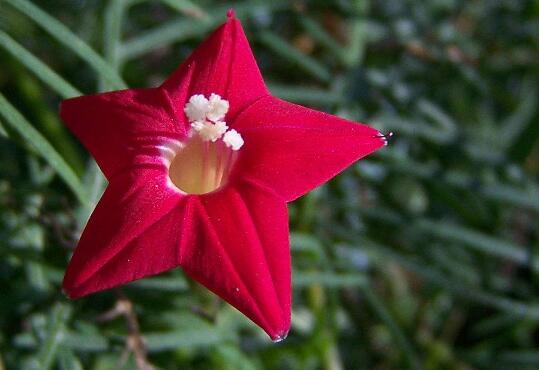
To know how to grow Pentas lanceolata, we first need to understand its growth habits. This plant is quite light-loving, so during its growth period we should keep it in sufficient light, so the plant can grow better. In addition, we also need to pay attention to daily water and fertilizer management. The details are below, let's take a look.
II. Cultivation methods and precautions for Pentas lanceolata
1. Soil, peat soil
When growing Pentas lanceolata, it is best to use sterile peat soil that contains a little fertilizer and drains well, with a pH of 6.5-6.8 being best, as this can avoid iron toxicity and magnesium deficiency. If the pH is below 6.0, iron toxicity will cause severe leaf-edge scorching and stop the plant from growing.
2. Temperature, night temperature above 17-18°C / day temperature above 22-24°C
When growing Pentas lanceolata, the ambient temperature is also something we need to pay attention to, because only when it grows at a suitable temperature can it grow better. During the growth period we should keep the night temperature above 17-18°C and the day temperature above 22-24°C. Temperatures below 10°C will make flowering uneven and delay or hinder the opening of the flowers.
3. Fertilizing, once every 7-10 days
Fertilizer is one of the main nutrients in the growth process of Pentas lanceolata, especially after entering the growth period, when its demand for fertilizer is very high. Basically, we need to fertilize once every 7-10 days, so the plant can grow better. When fertilizing, we should apply dilute fertilizer, not too high in concentration, otherwise it will easily burn the plant.
4. Water, avoid overwatering
Pentas lanceolata is relatively drought-tolerant, so when growing it we do not need to water too frequently. We should maintain the principle of "do not water if not dry, water thoroughly when watering", keeping the soil slightly moist. Remember not to overwater, otherwise the plant will turn yellow and the flowers will grow slowly. If too much is poured and water accumulates, it will also cause the plant's roots to rot.
5. Light, plenty of light is needed
Pentas lanceolata is quite light-loving, so when growing it we should keep it in sufficient light, so it can carry out photosynthesis better and the plant will grow better and stronger. During the growth of Pentas lanceolata, it can basically be said that the stronger the light, the more compact and robust the plant grows. If the light is insufficient, it will cause poor growth and a wilted appearance.
6. Pests and diseases, deal with them promptly
In the process of growing Pentas lanceolata, if we are not careful enough, pests and diseases can easily take advantage of the situation. Such problems are very harmful to the plant, so once we find them we must deal with them promptly. However, because the treatment methods for each pest and disease are different, the editor will not introduce them one by one here. For details, everyone can refer to the article on pest and disease control for Pentas lanceolata.
How to grow Pentas lanceolata? Cultivation methods and precautions for Pentas lanceolata
Pentas lanceolata, also known as Egyptian starcluster, is an upright or sprawling subshrub of the genus Pentas in the family Rubiaceae. Pentas lanceolata has a long flowering period and rich flower colors, with small flowers gathered into balls, and has high ornamental value, and is often grown indoors in pots. So, how to grow Pentas lanceolata? The cultivation methods and precautions for Pentas lanceolata are introduced below.
Image: Pentas lanceolata
I. Cultivation methods for Pentas lanceolata
1. Potting up:Pentas lanceolata can be transplanted and potted up 7-9 weeks after sowing. The pot diameter should preferably be 10-15 cm; a 10 cm pot can hold 1 seedling, and a 15 cm pot can hold 1-2 seedlings. Before potting up, fertilizer should be applied moderately to make the plant grow strong, so as to reduce the shock that potting up causes to the plant.
2. Medium:For the cultivation medium of Pentas lanceolata, use sterile peat soil that contains a little fertilizer and drains well, with a pH of 6.5-6.8 being suitable, to avoid iron toxicity and magnesium deficiency. If the pH is below 6.0, iron toxicity will cause severe leaf-edge scorching and stop the plant from growing.
3. Temperature:Warmth and sufficient sunlight help the growth of Pentas lanceolata. During the growth period it is suitable to keep the night temperature above 17-18°C and the day temperature above 22-24°C. Temperatures below 10°C will make flowering uneven and delay or hinder the opening of the flowers.
Image: Pentas lanceolata
4. Light:Pentas lanceolata likes an environment with sufficient sunlight. The stronger the light, the more compact and sturdy the plant. Therefore, in winter with weak light and short days, attention should be paid to supplementing light.
5. Water:Pentas lanceolata is relatively drought-tolerant but not tolerant of waterlogging. During the growth period it should not be overwatered, and water accumulation in the cultivation medium should be avoided, so as to prevent root rot. When watering, the water temperature should not be too low (that is, the water temperature should be consistent with the medium temperature). Overwatering often makes the plant turn yellow and the flowers grow slowly.
6. Fertilizing:One week after planting Pentas lanceolata, start applying "Yelüjing" at 800-1000 times dilution, watering once every 7-10 days. When the plant enters the mid-growth stage (that is, plant height 8-10 cm), it can be switched to "Kaihuajing" at 800-1000 times solution, once a week, to promote flower bud differentiation and good growth.
Image: Pentas lanceolata
II. Precautions for growing Pentas lanceolata
1. After Pentas lanceolata is planted, when the plant has 3-4 pairs of true leaves, it can be pinched once, so that the branches are neat and flowering is uniform.
2. Generally, Pentas lanceolata only needs to be pinched once. If the flowering period is expected to be too early, it can be pinched twice, and each pinching will delay flowering by 10-12 days.
3. The cultivation time for Pentas lanceolata in a 10 cm flower pot is 110-120 days, and the cultivation time in a 15 cm flower pot is 120-140 days.
[Editor's concluding remarks]Pentas lanceolata is colorful and very gorgeous, generally flowering from March to October, and is very long-lasting for viewing. The above has introduced the cultivation methods and precautions for Pentas lanceolata for everyone, hoping it can help everyone!
Cultivation methods for Pentas lanceolata
Cultivation methods for Pentas lanceolata
Basic information on Pentas lanceolata
Scientific name: Pentas lanceolata
Aliases: Egyptian starcluster, Pentas, starflower, umbrella flower, herbaceous ixora.
Family and genus: Rubiaceae, Pentas. Evergreen herb or subshrub, plant height 30-60 cm. Stems upright or lower part prostrate, base woody. Leaves opposite, lanceolate or ovate, about 9 cm long, hairy. Flowering period mainly from autumn to winter, and it can also bloom at other times; cymes terminal, flowers small, tubular, corolla 5-lobed and star-shaped, often dozens gathered into a cluster, with colors such as pale purplish red, blue-purple, white, pink, red, etc. Capsule. Seeds numerous, very small.
Pentas lanceolata has small flowers but blooms profusely, with a long flowering period. Under suitable conditions it can bloom continuously through all four seasons without fading. Its flowers are like stars all over the sky, and also like small opened umbrellas, delicate, exquisite and gorgeous; it is robust by nature and easy to propagate. It is a very suitable flower species for growing on balconies and windowsills.
[Pentas lanceolata propagation] Cuttings, sowing. Mainly by cuttings.
(1) Cuttings: carried out during the growth period, with April cutting being the best. Choose non-flowering branches and cut them into cuttings 6-8 cm long, with 2-3 nodes, and slightly including two-year-old parts.
After cutting, keep the substrate and environment moist, and shade 50%-70% of the sunlight. Roots can form in about 20 days, and it is very easy to survive. If the cuttings are soaked in 0.1%-0.2% indoleacetic acid for 2-3 seconds, the rooting time can be shortened. Cuttings can also be done in autumn.
(2) Sowing: carried out in April. Because the seeds are small, they need to be mixed with fine sand before sowing. The suitable germination temperature is 21-24°C. After sowing, keep the bed soil moist and the air relative humidity relatively high, and germination occurs after 14-21 days. From sowing to flowering takes 16-22 weeks.
[Key points for growing Pentas lanceolata]
(1) Temperature: likes warmth, and can continue to grow and bloom above 15°C. The most suitable temperature for growth is 20-30°C. Not cold-tolerant; below 10°C the plant enters a dormant state, and overwintering should be kept above 10°C; below 5°C it will shed leaves and die. Tolerant of high temperatures, and at high temperatures it can grow and bloom normally under conditions of slight shading.
(2) Light: likes sun, and is sensitive to light response. During the flowering period it needs 80%-100% sunlight, which is beneficial for vigorous plant growth and flowering. There should be more than 4 hours of direct sunlight every day. Too much shade will cause leggy branches, a thin and weak plant, yellowing leaves, and difficulty in flowering or poor flowering. But in summer when the sunlight is strong, appropriate shading is needed; too strong light can also make it difficult for the plant to bloom. At other times, sufficient sunlight should be given. But try to accept the morning and evening sunlight, and shade about 30% of the sunlight.
(3) Watering: afraid of drought, likes a moist soil environment. During the vigorous growth and flowering period and in summer, water should be supplied fully to keep the pot soil moist. But avoid waterlogging in the pot soil. Watering during the growth period should master "alternating dry and wet". After rain in the plum rain season, check promptly and pour out accumulated water in the pot. In winter, watering should be controlled. Especially after flowering in autumn and winter, there will be a dormant period of about 1 month, during which watering needs to be restrained, only keeping the pot soil slightly moist.
(4) Environmental humidity: in summer during high temperatures, if it is sunny and dry, water should often be sprayed on the branches, leaves and surroundings to increase the air relative humidity, which is beneficial for the plant's growth and flowering.
(5) Fertilizing: during the growth and flowering period, apply a fertilizer combining nitrogen, phosphorus and potassium once every half month, to facilitate continuous growth and flowering. Because it is highly adaptable and grows quickly, too much nitrogen fertilizer should not be applied, otherwise the plant will become leggy and bloom sparsely, affecting ornamentation. Fertilizing should be combined with pruning, that is, after each flowering, cut off the residual flowers and promptly replenish fertilizer, to promote new branch sprouting and continued flowering. During overwintering, if a temperature above 15°C can be maintained and the plant continues to grow and bloom, continue applying fertilizer once every half month; if the temperature is low and the plant enters dormancy, stop fertilizing.
(6) Pruning: during the seedling stage, pinch when it grows to about 10 cm, to promote branching and more flowering. Pinching should be done on sunny days; pinching during continuous rainy weather easily causes wound rot. During the growth period, long branches should be cut back at any time. If seeds are not to be kept, after flowering the branches and leaves can be pruned moderately, and residual flowers cut off, so as to avoid consuming nutrients, keep the plant rounded, and promote new buds and continued flowering.
(7) Potting up and repotting: when the seedlings reach 15-20 cm tall, plant them in pots with a diameter of 15-20 cm. Repot once every 1-2 years, preferably in spring or autumn. Likes fertile, loose and well-drained slightly acidic soil, with pH preferably 6.0-6.5. The substrate can be prepared with materials such as peat soil, leaf mold, garden soil and plain sand. After 2-3 years of pot cultivation, the plant's growth vigor clearly declines, and it should be culled and renewed.
(8) Pest and disease control: there are leaf spot disease and whitefly and other pest and disease damage.
[Common problems in growing Pentas lanceolata]
Common problem Cause
Thin and slender plant, withered yellow leaves, no flowering or small and few flowers ① insufficient light; ② lack of fertilizer; ③ the plant has grown for many years and its growth vigor has weakened
Fat and large branches and leaves, but few flowers This is due to applying too much nitrogen fertilizer or applying only nitrogen fertilizer