How to prune a Buddha Belly Bamboo bonsai? 3 tricks to create a perfect shape
As a beautiful green plant, Buddha Belly Bamboo (Bambusa ventricosa) is often made into bonsai and kept at home. However, when grown indoors, if left to grow naturally, it often grows in a messy, disorderly way that spoils the overall look. This is where pruning comes in. So how do you prune Buddha Belly Bamboo? The following are the pruning methods for a Buddha Belly Bamboo bonsai. Let's take a look and learn together!
I. How to prune Buddha Belly Bamboo
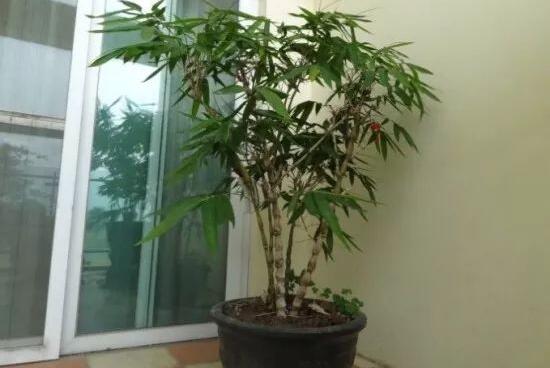
If water and fertilizer are adequate and the light and temperature are suitable, this plant will grow very fast, so excess branches should be pruned in time to prevent them from taking up too many nutrients; secondly, for newly grown bamboo, you should decide based on its form whether to keep it; finally, those bamboo stems that are thin and dry, with long internodes, and that spoil the shape should also be removed in time.
II. Pruning methods for a Buddha Belly Bamboo bonsai
(1) Purpose of pruning
When it comes to the pruning methods for a Buddha Belly Bamboo bonsai, gardeners must first know the purpose of pruning Buddha Belly Bamboo. Everyone thinks of improving its ornamental value, but that is not actually the key point. The key is that reasonable pruning can regulate the proper distribution of nutrients, letting the Buddha Belly Bamboo grow healthily and avoiding the appearance of leggy branches, slender branches, and so on.
(2) Pruning tips
1. Pruning new bamboo
How do you prune Buddha Belly Bamboo? In summer, Buddha Belly Bamboo will grow new bamboo shoots. If the new shoot has emerged about 10 cm and the bamboo has short internodes and a swollen belly, it can be kept; if the bamboo has a flat belly, it needs to have its sheath peeled, generally one piece every other day, so that a bamboo that could grow 2-3 m can be controlled at a height of about 30 cm.
2. Cutting dense branches
Once the bamboo shoots have finished growing, if you have cared for them strictly according to the Buddha Belly Bamboo growing methods, they will grow with luxuriant foliage. At this point, for the plant's healthy growth, you should cut away overly dense branches, overlapping branches, crossing branches, and branches that spoil the beauty of the shape.
3. Shaping and pruning
During the growing season of Buddha Belly Bamboo, to maintain its good looks, you should shape and prune it:
① Cut too-long bamboo shoots shorter; this not only encourages them to grow side branches but also helps create a beautiful Buddha Belly Bamboo bonsai shape;
② Cut away all shoots that grow in the wrong position, are too densely packed, have long internodes and flat bellies - in short, all branches that spoil the look;
③ To highlight the airy openness and upright elegance of Buddha Belly Bamboo, gardeners should also cut off the side branches near the base;
④ How do you prune Buddha Belly Bamboo? There is one last step: once the Buddha Belly Bamboo has taken its final shape, that is, once you feel the bonsai is already beautiful, if new shoots emerge from the soil, they must be cut off in time to maintain the original bamboo grove's elegance.
Overall, Buddha Belly Bamboo is not hard to grow; with proper water and fertilizer it will grow quickly. It also tolerates pruning well, so if you want a beautifully shaped pot of Buddha Belly Bamboo, you should prune it according to the methods above. That is all for the pruning methods for a Buddha Belly Bamboo bonsai. We hope it has been helpful.
How to grow a Buddha Belly Bamboo bonsai: growing methods and precautions for Buddha Belly Bamboo / plenty of light needed
Buddha Belly Bamboo - gardeners who have seen it should remember it. Just as its name suggests, its culms are very short and, seen from a distance, look like the belly of a Buddha, which is very unusual and beautiful. In daily life, many people want to grow Buddha Belly Bamboo, so how do you grow it? The following are the growing methods and precautions for Buddha Belly Bamboo, carefully compiled and very detailed. Anyone who wants to grow it should take a look!
I. How to grow a Buddha Belly Bamboo bonsai: understand its habits
Buddha Belly Bamboo likes a warm, humid environment. It likes light but fears strong light, and it is not cold-tolerant. When grown indoors, it should be placed in a spot with plenty of light, shaded when the summer sun is strong, watered regularly to keep the potting soil moist, and protected from the cold in winter. As for the growing medium, a loose, fertile, slightly acidic soil is best.
II. Growing methods and precautions for Buddha Belly Bamboo
1. Soil
How do you grow a Buddha Belly Bamboo bonsai? We suggest changing the potting soil. Nowadays, the Buddha Belly Bamboo bonsai that gardeners have are basically bought online, with the potting soil already included, but that soil is very cheap. It is fine for ordinary care, but if you want to grow it well, it is best to choose the soil again.
Soil choice: according to the growing habits of Buddha Belly Bamboo, although it is not demanding about soil, it grows best in a loose, fertile, well-drained, slightly acidic soil. For this, we recommend a soil mixed from leaf mold, garden soil, woodland soil, and fine sand in a 2:1:2:1 ratio.
2. Light
As a green plant, Buddha Belly Bamboo cannot grow without light; sufficient light lets it grow luxuriant foliage. However, Buddha Belly Bamboo fears strong light, so in summer it should be kept from being scorched in the blazing sun. As for the other seasons, as long as the light is not too strong, it can be given full sunlight.
3. Temperature
In the growing methods and precautions for Buddha Belly Bamboo, temperature is also a part that cannot be ignored. Buddha Belly Bamboo likes a warm environment and is not cold-tolerant. If the temperature stays below 4-6°C for a long time, the plant will suffer cold damage. So in late autumn and early winter, the Buddha Belly Bamboo should be moved indoors for care, and the room temperature is best kept at around 8°C, which is good for the plant's growth.
4. Watering
When growing Buddha Belly Bamboo indoors, the most important thing is of course watering, which is also what gardeners most like to do. It is said that Buddha Belly Bamboo is a plant tolerant of wet conditions, so during routine care it should be watered often to keep the soil moist. However, Buddha Belly Bamboo hates waterlogging, so do not water too frequently, or root rot can easily occur.
5. Fertilizing
Having covered watering, let's talk about fertilizing, which is also very important in the growing methods for Buddha Belly Bamboo. Buddha Belly Bamboo likes fertilizer. During the growing period from March to September, apply a dilute, fully rotted liquid fertilizer once a month; this ensures the culms stay yellow and bright and the leaves stay emerald green.
Precaution: when fertilizing Buddha Belly Bamboo, you must not apply too much, especially nitrogen fertilizer, or each internode will grow too long and fail to form the Buddha belly shape, reducing its ornamental value.
6. Pruning
How do you grow a Buddha Belly Bamboo bonsai? Do not forget pruning either. With proper water and fertilizer, Buddha Belly Bamboo grows quickly. To avoid consuming too many nutrients, you should cut away branches that are not needed for the shape; in addition, new bamboo stems that are thin, dry, and long-internoded and that spoil the shape should be cut away in time.
7. Pests and diseases
During the growth of Buddha Belly Bamboo, because of improper care or a poor environment, the plant will inevitably suffer pests and diseases. Once discovered, you should promptly use pesticides to eliminate them so that the Buddha Belly Bamboo can grow normally. As for which pesticides to use, you can refer to pest and disease control for Buddha Belly Bamboo.
Overall, Buddha Belly Bamboo is still fairly easy to grow, but if you want it to look good, you need to put in more care and grow it according to the requirements above, so that it can grow with luxuriant foliage. That is all for the growing methods and precautions for Buddha Belly Bamboo. Gardeners who are tempted might as well try growing one!
A brief introduction to the growing methods for Buddha Belly Bamboo
Buddha Belly Bamboo is also called Buddha Belly Bamboo (Bambusa ventricosa), an ornamental plant. It can be used to make walking sticks and bonsai, and can also be used to beautify the environment. Young plants of Buddha Belly Bamboo are dark green with a layer of white powder on them; older plants develop olive-yellow color. The shape is cylindrical, generally 7-10 m tall, with internodes of 30-35 cm. The gaps between its nodes are much shorter than those of ordinary bamboo. The sheath leaves are ovate-lanceolate in shape, without any hairs or bristles. The sheath auricles have a very strong sprouting ability and are round, ovate, or sickle-shaped, and the internodes are very short. Buddha Belly Bamboo has very good ornamental value. Let's take a look below at the growing methods for Buddha Belly Bamboo.
The main propagation method used for Buddha Belly Bamboo is division, generally carried out in autumn, followed by replanting. Cuttage propagation can also be used, generally carried out from March to May.
1. Soil: when planting Buddha Belly Bamboo, choose a sandy soil rich in humus. The soil commonly chosen is a mix of sandy soil, turf mud, and farm soil with rotted base fertilizer.
2. Selecting seedlings: first disinfect the soil with sulfur-phosphorus and soil fungicide, then put it into bags, water it thoroughly, and set it aside. Choose plants that have grown for more than two years, selecting ones whose bamboo branch bases are complete and undamaged, then soak them in clean water for one day and set them aside for cuttage.
3. Temperature: after cuttage, provide 75% shade coverage. This can be done in all four seasons, keeping the temperature above 18°C and the humidity at 80%, and keeping the soil moist. In summer and autumn, water three times a day, and generally new roots will grow in about one month. Rotted organic fertilizer can be applied once every half month, and after the seedlings emerge they can be given full sun.
4. Watering: Buddha Belly Bamboo is a plant tolerant of moisture and needs frequent watering to keep the potting soil moist; the potting soil must not become waterlogged. In summer and during the growing season, water heavily, and in winter move it indoors and mist the leaves to make them look more emerald green and beautiful.
5. Fertilizing: when growing Buddha Belly Bamboo, do not apply too much fertilizer, or it will grow leggy and lose its good looks. Generally, from March to September, apply a dilute, fully rotted liquid fertilizer; you can also water with calcium, magnesium, phosphorus, and rotted livestock manure fertilizer, which is even more beneficial to the growth of Buddha Belly Bamboo.
6. Pruning: if you want Buddha Belly Bamboo to have better ornamental value, then you need to prune overlapping branches, crossing branches, and overly dense branches, so that the shape looks more beautiful.
When growing Buddha Belly Bamboo, note that in hot weather the potted Buddha Belly Bamboo should be moved to a shady spot to avoid scorching in the blazing sun. Also mist the leaves of the Buddha Belly Bamboo to keep the leaf color emerald green. In winter, the potted Buddha Belly Bamboo must be moved to a sheltered, sunny spot or indoors, which is even more beneficial to its growth. If bamboo encounters a poor environment, it will flower early. When bamboo flowers, all the nutrients produced by the bamboo leaves are used for flowering and setting seed. Bamboo pours everything it has into concentrating all its essence into the seeds. After flowering and setting seed, the nutrients stored in the bamboo are also used up, and it has completed its mission. Therefore, only careful care when growing Buddha Belly Bamboo will make its life last longer.