How to grow Weigela florida? Cultivation methods and precautions, sufficient light is needed
Weigela florida is a flowering plant native to East China in our country, and it can also often be seen in the Korean Peninsula and Japan. However, to grow it well, there are many things we need to pay attention to. How to grow Weigela florida? What are the cultivation methods and precautions for Weigela florida? Below, the editor will take everyone through it.
1. How to grow Weigela florida, understand its habits
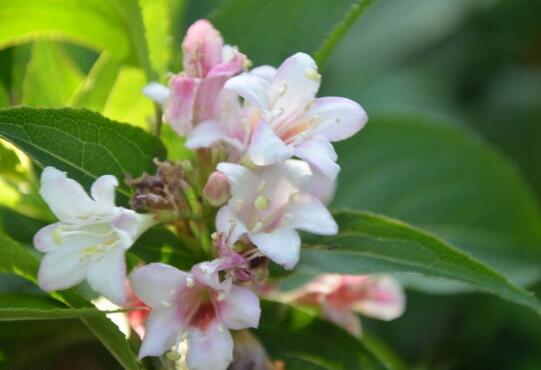
To know how to grow Weigela florida, we first need to understand its growth habits. This plant has strong adaptability to the environment, likes light, and also has a certain tolerance to shade and cold. However, in daily water and fertilizer management, we need to follow the requirements so that it can grow better. The specific details are introduced in detail below. Let us take a look.
2. Cultivation methods and precautions for Weigela florida
1. Soil, good drainage
Before cultivating Weigela florida, we first need to choose soil. Although this plant does not have strict requirements for soil, growing it in suitable soil will allow it to grow better. In terms of soil, Weigela florida likes loose, fertile soil rich in humus. This kind of soil is rich in nutrients and has very good drainage and aeration, allowing the plant to absorb nutrients better.
2. Fertilization, once a month during the growing season
Fertilizer is one of the main nutrients in the growth process of Weigela florida. Especially after entering the growing season, its demand for fertilizer is very high. Basically, it needs to be fertilized once every month so that the plant can grow better. However, before fertilizing, there is one thing we should note: the fertilizer must first be diluted with water. If the concentration is too high, it will burn the plant.
3. Water, avoid waterlogging
After entering the growing season of Weigela florida, its demand for water is very high, so we should water frequently to keep the soil somewhat moist, so the plant will also grow faster. However, we also need to pay attention to controlling the amount of watering. This plant is not tolerant of waterlogging, so we cannot water too much, because if water accumulates, it can easily cause its root system to rot.
4. Light, shade in summer
Weigela florida prefers light, but is not tolerant of strong light. In spring and autumn, when the light is relatively mild, we can grow it outdoors with full-day light, so it can carry out photosynthesis better and the plant will grow better. However, after entering summer, because the light is relatively strong, we still need to pay attention to shading to avoid strong light burning the plant.
5. Pruning, regular pruning
In the process of cultivating Weigela florida, we also need to prune it regularly, cutting off some overly dense branches and some dead branches, diseased branches, and weak branches. This can not only maintain the beauty of its plant shape and help the plant's ventilation and light penetration, but also promote branching, making the plant look fuller.
6. Pests and diseases, timely prevention and control
When cultivating Weigela florida, if we are not careful enough, it is very easy for pests and diseases to take advantage of the situation. Such problems are very harmful to the plant, so once discovered, we must deal with them promptly. For specific treatment methods, everyone can refer to the article on pest and disease control for Weigela florida, which has detailed introductions.
Cultivation methods for Weigela florida: high water demand during the growing season
Weigela florida is also known as Haixianhua, five-color crabapple, etc. It is often planted in garden corners and by park lakesides, so many households commonly grow it. So how is Weigela florida cultivated? Below, the editor will share with everyone the cultivation methods for Weigela florida and the issues to note during cultivation.
1. Cultivation methods for Weigela florida
1. Best propagation time
Generally in early spring and autumn and winter, or in summer from June to July.
2. Best growing soil
Weigela florida needs deep, moist soil rich in humus.
3. Growth humidity requirements
Weigela florida likes light, tolerates shade, tolerates cold, and fears waterlogging. The suitable air humidity is 65%-75%.
4. Best growth temperature
The suitable temperature for growth is 15°C-30°C, and the suitable temperature during the flowering period is 18°C-22°C. It tolerates low temperatures and can overwinter outdoors in the north.
5. Best growth light
Weigela florida likes a warm, humid environment with sufficient sunlight.
2. Precautions for cultivating Weigela florida
1. Applying fertilizer
When potted, 3 parts garden soil and 1 part rice husk ash can be mixed, with a small amount of manure added as base fertilizer. When planting, apply decomposed compost as base fertilizer, and afterward, once every 2 to 3 years during winter or the dormant period in early spring, dig a trench around the roots and apply fertilizer once. During the growing season, fertilize and water timely every month. After spring budding, gradually increase the amount of watering and keep the soil moist regularly.
2. Key points for watering
Pay attention to watering during the growing season. After spring budding, gradually increase the amount of watering and keep the soil moist regularly. High temperature and drought in summer can easily cause leaves to turn yellow, shrink, and branches to wither. Maintain sufficient moisture and spray water to cool down, or move it to a semi-shaded, humid place for care. Water thoroughly 1 to 2 times a month to meet growth needs.
3. Key points for pruning
Because the growing period of Weigela florida is relatively long, the small branches at the top before winter often do not grow fully and are very likely to dry up during overwintering. Therefore, before budding each spring, the dried branches at the top of the plant as well as other old, weak, diseased, and pest-damaged branches should be cut off, and long branches should be shortened. If seeds are not needed, the remaining flower branches should be cut off promptly after flowering to avoid consuming too many nutrients and affecting growth. For branches that have grown for 3 years, cut them off from the base to promote robust growth of new branches. Because the new shoots bearing inflorescences mostly sprout on 1-2 year old branches, larger pruning of the previous year's branches should not be done in early spring; generally only dead branches are thinned out.
4. Pot soil replacement
It is best to repot once every 2-3 years, and also frequently loosen the soil in the pot so that the soil can breathe and promote faster growth.
5. Key points for propagation
Weigela florida can be propagated by four methods: cuttings, layering, division, and sowing.
(1) Cuttings
In summer, cut off semi-lignified branches of the current year as cuttings, insert half of them into the soil, then water thoroughly, and afterward just keep the soil moist regularly. In the plum rain season, softwood cuttings can be used, and the survival rate is also high. In March of spring or during the plum rain season, hardwood cuttings or softwood cuttings can be used, that is, cut the cuttings into 15 cm lengths and insert them into a sterilized seedbed with a shade frame; or after leaf fall, take 1-year-old branches and insert them in the open field, all of which root easily.
(2) Layering
Layering can be done throughout the year. Usually after flowering, select lower branches and press them down. The lower branches of Weigela florida tend to be prostrate. During the growing season, press them into the soil for layering propagation, and the nodes root and survive very easily.
(3) Division
Division is carried out in early spring and autumn and winter. It is often done around spring budding in combination with transplanting. Dig out the whole plant, divide it into several clumps, and plant them separately. In spring from February to March, use 1-year-old mature branches and insert them in the open field, or in June to July use semi-lignified softwood branches and insert them under a shade frame. Layering can be done in June. When transplanting seedlings in spring and autumn, native soil should be kept with the roots; in summer, a soil ball is needed. After planting, apply decomposed compost once every early spring and prune away aged branches.
(4) Sowing
Carry out in early to mid-April. After sowing, water by the soaking irrigation method. Do not use a watering can to spray water on the soil surface, so as not to wash the seeds out of the soil. Seedlings emerge about 15 days after sowing. However, the sowing method has a relatively long growth period, so this method is generally not used for small-scale propagation.
6. Pest and disease control
Weigela florida does not have many pests and diseases, and occasionally suffers from aphids and red spider mites. When aphid damage is severe, spray with 10% imidacloprid wettable powder at 1000 times dilution, and the effect is obvious; when red spider mite damage is severe, use 40% chlorpyrifos at 1000 times dilution or 40% dicofol emulsifiable concentrate at 1000 times dilution for control, and the effect is relatively good.
3. Soil cultivation method for Weigela florida
1. The soil cultivation method for Weigela florida can use four different methods for propagation and cultivation: cuttings, layering, division, and sowing. Weigela florida likes sufficient light and warmth, but also tolerates cold, and does not have strict requirements for soil. Therefore, as long as sufficient base fertilizer is applied at planting and base fertilizer is supplemented once every other year, no additional fertilizing is needed during the growing season.
2. The growing period of Weigela florida is relatively long. In the north, before winter, the tips of new branches are often not full enough, and in early spring, when encountering strong winds, branch tip drying occurs. Therefore, in autumn, water should be controlled to slow branch growth and allow full lignification. Before freezing, water thoroughly with freezing water, and it can overwinter safely. If the branches are full, tip drying in early spring will also be reduced.
3. In maintenance and management, after flowering, promptly cut off remaining flowers and old, weak branches. Overly long branches should be shortened to make the tree shape natural and symmetrical. Old plants grown for many years can be cut off from the base and new branches cultivated again.
4. Experience in cultivating Weigela florida
1. For people who like to cultivate Weigela florida, one point must be noted: before sowing, the seeds must be pre-germinated. For direct sowing or 1 week before sowing, soak the seeds in cold water for 2-3 hours, remove them and place them indoors, wrap them in a wet cloth for pre-germination, and then sow; the effect is better.
2. In the cultivation of Weigela florida, note that sowing is best done in windless weather with no heavy rain in the near future, and the bed surface should be leveled and finely prepared. The sowing method can be broadcast sowing or drilling on the bed surface, with a sowing rate of 2 g/sq m. After sowing, the soil covering thickness must not exceed 0.3 cm. Keep the bed surface moist within 30 days after sowing, and seedlings emerge in about 20 days.
3. Weigela florida not only has ornamental value, but also economic value. In recent years, the price of Weigela florida has been on an upward trend, and propagation in gardens has gradually increased, with considerable market prospects. So potted Weigela florida is also a good choice!
Key points for flower management in June
Weather characteristics in June: By June, temperatures rise further. The Yangtze-Huai River basin enters the plum rain season. This year, plum rain begins on June 12 and ends on July 7. At this time, equally matched cold and warm air masses meet in the region, causing frequent frontal or cyclonic activity. June is the season with the most rain in the year, often with long periods of continuous rainfall. For some flowers that are dormant or semi-dormant in summer and most bonsai, care should be taken especially to avoid root rot caused by excessive rain, or excessive growth caused by insufficient light, which can disrupt shaping or affect normal flowering and fruiting of ornamental plants.In June, flower growing from south to north mainly includes the following:
1. Flower cultivation
1. Sowing
Flowering plants that can be sown in June include: primrose, lotus seeds, cycad, loquat, wintersweet, etc. For wintersweet, when the urn-shaped fruit capsule on the mother tree turns from green to yellow and then from yellow to brown, and the seeds inside are brown, it can be picked; promptly peel open the fruit capsule and remove the seeds. First soak them in cold water for 24 to 36 hours. After the seeds absorb enough water and swell, bury them in clean wet sand for pre-germination. After about 2 weeks, the seeds can crack and show white, and at this time sow in furrows; the soil covering thickness is generally 2 cm to 3 cm. Cover with rice straw to retain moisture. After most seed cotyledons emerge from the soil, remove the covering grass in 2 to 3 rounds and promptly build a frame for shading.
2. Cuttings
In summer, temperatures are high and humidity is high, and the cambium in flower and tree branches is highly active, making it the best time for cutting propagation of flowers and trees. There are two main categories of flowers and trees suitable for softwood cuttings in summer. One category is species that are difficult to root or root slowly with hardwood cuttings, such as osmanthus, camellia, banana shrub, Chinese holly, wintergreen, lilac, purple magnolia, Chaenomeles speciosa, snowball, viburnum, coral tree, Erythrina,
Belgian azalea, Buddha belly bamboo (with aerial roots), rubber tree, dawn redwood, pond cypress, bald cypress, etc.; the other category is species that root relatively easily, such as boxwood types, Chinese rose, firethorn, Forsythia viridissima, winter jasmine, Jasminum officinale, Serissa japonica, pomegranate, rose of Sharon, Caragana, jasmine, chloranthus, dragon-leaf chloranthus, Lantana camara, Kerria japonica, bougainvillea, fingered citron, lemon, Podocarpus macrophyllus, Nandina domestica, Chinese trumpet creeper, Excoecaria cochinchinensis,
honeysuckle, hibiscus, Cordyline fruticosa, Hypericum, Hypericum kouytchense, golden willow, dragon-claw willow, banyan, Dracaena fragrans, Ardisia crenata, Edgeworthia chrysantha, Codiaeum variegatum, Deutzia, mock orange, crape myrtle, Weigela florida, Weigela florida, snowball viburnum, peach coral types, Schefflera types, Mahonia types, Fatsia japonica, Spiraea thunbergii, Hydrangea macrophylla, poinsettia, etc. It also includes a large number of other herbaceous flowers, such as Ipomoea cairica, ground
carpet types, Trollius, Salvia, Qianqiu tea, heliotrope, umbrella plant, Pelargonium, Coleus, Begonia types, pansy, Gomphrena globosa, Zinnia, Tagetes patula, marigold, sulfur cosmos, etc.
Taking fully enclosed moisture-retaining cuttings of camellia and osmanthus as an example: the cutting time is from early June to mid-July, and it is ideal when the young branches of osmanthus and camellia are semi-lignified; the substrate can be yellow subsoil, sandy loam, or vermiculite; the cuttings are new shoots of the current year, 10 cm to 15 cm long, retaining only 2 to 3 leaves at the tip. Dip the lower cut end in 500 mg/kg No. 1 ABT rooting powder or naphthaleneacetic acid solution for 10 seconds, let it dry slightly, then insert it into the seedbed; the insertion depth of the cutting is 1/2 to 2/3 of the cutting length, with a plant-row spacing of 2 cm x 8 cm. After watering thoroughly, set up bamboo arches on the seedbed, cover with plastic film, press the edges firmly with mud, build a double-layer shade frame for shading, keep the bed surface moist, control the temperature inside the film at about 30°C, and maintain humidity above 90%. Generally after one month, the cuttings can root abundantly.
3. Grafting
Approach grafting: use potted seedling wintersweet as rootstock, and approach graft superior wintersweet varieties; use potted purple magnolia and white magnolia seedlings as rootstock, and approach graft Michelia alba, banana shrub, etc. Bud grafting: use wild rose seedlings as rootstock, and graft superior Chinese rose varieties; use 1-year-old seedlings of apricot, peach, plum, etc. as rootstock, and bud graft to propagate longevity peach, ornamental peach, purple-leaf plum, red-leaf peach, dwarf flowering plum, plum blossom, Prunus triloba, etc.; use 1- to 2-year-old green maple seedlings as rootstock, and graft to propagate red maple, lace-leaf maple, red maple, etc. Branch grafting: use oil tea, red-flowered oil tea, or single-petaled seedling camellia as rootstock, and branch graft camellia and sasanqua; use "Purple Butterfly" and "Jade Butterfly" among Rhododendron pulchrum as rootstock, and cleft graft or side graft Belgian azalea or Western azalea.
4. Layering
Flowers and trees that can be propagated by layering in June include: azalea, honeysuckle, Hydrangea macrophylla, snowball, viburnum, Weigela florida, oleander, osmanthus, camellia, plum blossom, wintersweet, lilac, gardenia, red maple, Aglaia odorata, chloranthus, jasmine, Michelia alba, etc.
5. Division
Flowers that can be propagated by division in June include: sword fern, calla lily (after flowering), Buddha belly bamboo, umbrella plant, Tradescantia spathacea, bromeliads, Haworthia, Aspidistra, spider plant, Acorus types, Liriope with golden edges, etc.
2. Seed collection and transplanting and planting
1. Seed collection
Herbaceous flower seeds that can be collected in June include: dianthus, cornflower, snapdragon, dwarf catchfly, tall catchfly, hollyhock, mallow, primrose, Calceolaria, Hippeastrum (collect and sow immediately), etc.
Flower and tree seeds that can be collected in June: after collecting wintersweet seeds, if nursery conditions do not allow, the removed seeds can also be dried and stored until the following spring for sowing, and this will not affect their germination rate; peach, apricot, etc. should be collected and sown immediately, or their seeds can be sand-stored until they crack and germinate, then sown in the field; osmanthus seeds collected in June should have the fleshy fruit peel removed, be washed clean, and stored in wet sand to promote embryo after-ripening. When they germinate, select nursery land for sowing.
2. Transplanting, planting, and potting
In June, a considerable number of herbaceous flowers need transplanting, planting, or potting. They are: evening primrose, spider flower, Impatiens, New Guinea Impatiens, primrose, ornamental pepper, winter coral, tobacco, petunia, marigold, Tagetes patula, Zinnia, Gomphrena globosa, Salvia splendens, dragon's mouth flower, Kochia scoparia, sulfur cosmos, cockscomb, red-green grass, etc.
After entering summer, some large flowers and trees are no longer transplanted, so as not to affect their survival rate and growth after transplanting. But for some small flowering shrubs, such as Fatsia japonica, Mahonia bealei, Mahonia, Hypericum, gardenia, golden-edged privet, Berberis thunbergii, boxwood types, under special circumstances, transplanting with a soil ball is also acceptable, just as the old saying goes: "Transplant at any time, but do not let the tree know,"
but after transplanting, spraying water and shading management should be strengthened.
3. Flower management
1. Watering
Watering potted flowers in June should note the following aspects: first, watering time, preferably at 10 a.m. or 5 p.m.; under normal circumstances, watering once a day is sufficient; second, water temperature, which should remain basically consistent with the pot soil temperature. If the difference between water temperature and soil temperature is too large, it will stimulate the root system and leaves of potted flowers and further affect their growth; third, combine watering and spraying. In weather with several days without rain, in addition to watering the pot, also spray water on the leaf surface and around the potted flowers to increase local humidity. If there are continuous cloudy days, decide whether to water and spray according to the dryness and wetness of the pot soil.
Flower species that enter semi-dormancy or dormancy in summer. Semi-dormant ones such as: red wood sorrel, Pelargonium, fuchsia, clivia, calla lily, Begonia types, etc., when the temperature reaches above 30°C, because their growth activity is very weak and metabolic level is low, watering should be reduced and the pot soil should be kept moist; deeply dormant types such as: cyclamen, Lycoris (types), Ranunculus, lotus
peony, etc., under high temperatures show withering of aboveground stems and leaves and death of underground nutrient fibrous roots, overwintering in the soil as underground stems or tuberous roots through summer. Watering must be stopped for them, and they should be moved to a cool place, keeping the pot soil from becoming excessively dry.
If there is continuous rainfall, after the rain stops, comprehensively inspect the potted flowers. If standing water is found in the pots, pour it out as soon as possible, and after the pot soil dries, loosen the soil to avoid root rot; or before heavy rain arrives, lay the potted flowers down, and after the rain stops, set the potted flowers upright again.
2. Fertilizing
For vigorously growing species, such as Monstera deliciosa, spider plant, Syngonium, arrowroot types, sword fern, Philodendron bipinnatifidum, sago palm, Aspidistra, Philodendron 'Green Giant', red (green) gem, green emperor, green queen, rubber tree, Anthurium, Excoecaria cochinchinensis, Rhapis excelsa, Norfolk Island pine, Dracaena fragrans, Podocarpus macrophyllus, Pachira aquatica, wintersweet, Chinese rose, Michelia alba, Aglaia odorata, jasmine, chloranthus, plum blossom, camellia, sasanqua, Daphne odora, azalea,
azalea, Osmanthus fragrans 'Rixianggui', Lantana camara, Clerodendrum thomsoniae, shrimp plant, bitter orange, lemon, kumquat, pomegranate, crape myrtle, firethorn, etc., apply once every half month a topdressing of fully decomposed dilute cake fertilizer water. For species currently flowering, also apply an appropriate amount of phosphorus and potassium fertilizer to meet the needs of growth, flowering, and fruiting.
For those flower species in dormant and semi-dormant states, fertilizing must be stopped; especially for succulent flower species, such as jade leaf, crab claw orchid, Haworthia cooperi, Senecio, squirrel tail, Lampranthus, Stapelia, Sedum types, when the temperature reaches above 35°C, fertilizing must be stopped to avoid rotting.
3. Pruning and bud removal
(1) Prune vigorously growing species such as Chinese elm, Sageretia thea, Podocarpus macrophyllus, Fujian tea, true cypress, Cuibai, water willow, Chinese juniper, Chinese holly, wintergreen, trident maple, snow willow, tamarisk, firethorn, etc. Branches that affect shaping should be pruned or shortened early, which can keep the plant clearly layered and in good shape, and can promote more short branches and new buds, forming a perfect shape early.
(2) Remove buds from flowers such as Aglaia odorata, jasmine, chloranthus, Chinese rose, etc. Their remaining flowers and withered stems should be removed promptly, and branches that have flowered should be appropriately shortened to promote the lower side branches or flower buds to bloom again; for flowers and trees such as Michelia alba, bitter orange, azalea, camellia, wintersweet, plum blossom, crabapple, etc., in order to promote good plant shape and more flower buds, more flowers, and better flowers in the current or following year, the overly vigorous branches should be topped and buds removed to inhibit the growth of main and side shoots and promote side bud sprouting.
4. Shading
In June, for flowers and trees that like shade or semi-shade, they must be moved under a shade frame to prevent damage to the plants from scorching sunlight. Such as hosta, purple hosta, asparagus fern, camellia, sasanqua, azalea, chloranthus, bird of paradise, orchid, Rhapis excelsa, rubber tree, ferns, Philodendron, Syngonium, pink lady leaf, Philodendron bipinnatifidum, pothos, Peperomia, Philodendron 'Green Giant', red (green) gem, green emperor, red
queen, fan palm, Daphne odora, Aspidistra, spider plant, etc. Light-loving flower species must be given sufficient light, such as pomegranate, wisteria, firethorn, crape myrtle, jasmine, Serissa japonica, cycad, Chinese juniper, peach blossom, plum blossom, wintersweet, Chinese elm, Fujian tea, trident maple, Sageretia thea, Chinese holly, wintergreen, water willow, oak, black pine, white pine, Michelia alba, Aglaia odorata, Chinese rose, Mahonia, grape, etc.; Podocarpus macrophyllus, Damnacanthus indicus, Nandina domestica, Buddha belly bamboo, bamboo palm, five-needle pine, Podocarpus nagi, etc. can be given appropriate shading.
5. Pest and disease control
(1) Chinese juniper, Cuibai, Chinese elm, papaya, firethorn, Podocarpus macrophyllus, crabapple types, etc. are prone to damage by trunk-boring longhorn beetles, and poison sticks should be used promptly to block and control them.
(2) Chinese rose, rose, rugosa rose, etc. are prone to powdery mildew and brown spot disease in the plum rain season, and Bordeaux mixture should be sprayed early for control.
(3) Michelia alba, plum blossom, wintersweet, etc. are prone to aphid damage, and suitable pesticides should be selected early for spraying and killing.
(4) Orchid leaves are prone to anthracnose infection, and fungicides such as carbendazim should be sprayed early for control.
(5) Bitter orange, lemon, kumquat, fingered citron, etc. have young leaves prone to being eaten by citrus swallowtail butterfly larvae, and contact insecticides, stomach poisons, and other pesticides can be sprayed to kill them.
4. Bonsai shaping
The plant types that can be shaped in June are mainly some adaptable woody ornamental plants tolerant of wiring, and they must be plants potted in early spring for hardening or planted in the field. They are: Podocarpus macrophyllus, winter jasmine, Elaeagnus pungens, Huashan pine, Cuibai, Chinese juniper, Chinese holly, wintergreen, Chinese wolfberry, five-needle pine, Malus halliana, Malus micromalus, plum blossom, ornamental peach, trident maple, Serissa japonica, black pine,
Chinese boxwood, Chinese elm, tamarisk, water willow, true cypress, ginkgo, snow willow, firethorn, etc. Shaping in June must be careful, with light wiring and slow bending. Do not rush or use excessive force.
Solar terms in June: June 5 is Grain in Ear; June 21 is Summer Solstice.