Pilea peperomioides dropping leaves? Mostly due to insufficient light, too little watering, or too much fertilizer
Keeping a potted green plant indoors is a choice more and more people are making nowadays, and Pilea peperomioides (Chinese money plant), with its leaves that stay evergreen all year round and look like ancient mirrors, has become the first choice for many plant lovers. However, in the process of growing Pilea peperomioides, many people run into the situation of leaves dropping, which is very headache-inducing! So why does Pilea peperomioides tend to drop leaves? Today the editor will help everyone solve this problem.
I. Why Pilea peperomioides tends to drop leaves
1. Insufficient light
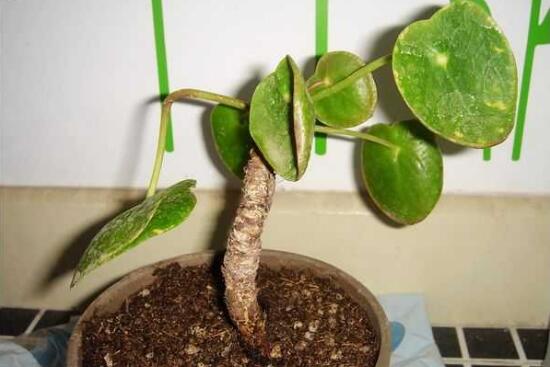
Pilea peperomioides is a shade-loving plant; it is fairly shade-tolerant and very suitable for indoor growing. But some plant lovers are rather lazy, and when growing Pilea peperomioides they do not like to move the pot, often leaving the plant in a dark place for a long time, and the result is: the leaves turn yellow, and in severe cases they even fall off, affecting its ornamental value.
2. Too little watering
Why does Pilea peperomioides tend to drop leaves? It may also be because of too little watering. It is understood that Pilea peperomioides likes a humid environment, and in daily care we should water it frequently. Once watering is too little, the plant lacks water, and its leaves easily wilt and droop, or even fall off, causing the plant to die.
3. Too much fertilizer
Having covered watering, let's talk about fertilizing, which is also one of the causes of Pilea peperomioides dropping leaves. Pilea peperomioides likes fertilizer, and sufficient nutrients can make its leaves greener and more beautiful, but once too much fertilizer is applied, or the fertilizer concentration is too high, the root system's breathing capacity weakens, causing the plant to lodge, the leaves to fall off, or even death.
II. What to do when Pilea peperomioides drops leaves
1. Increase light
What to do when Pilea peperomioides drops leaves? If it is caused by insufficient light, the remedy is very simple: in home care, Pilea peperomioides must not be kept in complete shade; apart from needing shade in summer, in the other seasons it should receive sufficient light. After doing this, the leaf drop can be brought under control.
2. Replenish water
If the leaf drop of Pilea peperomioides is caused by insufficient watering, everyone should replenish water in time: first, water to keep the potting soil moist; second, spray water on the plant's leaves or around it to keep the air humidity above 80%. However, when watering, everyone should note that each watering must not be too much, otherwise root rot easily occurs and the plant's growth is affected.
3. Flush with water to dilute
When too much fertilizer causes Pilea peperomioides to drop leaves, everyone should immediately stop fertilizing, then flush with water to dilute: let the fertilizer flow out from the bottom of the pot. If handled in time, the leaf drop of Pilea peperomioides will stop, and then it will slowly recover.
4. Behead and take cuttings
What to do when Pilea peperomioides drops leaves? If the root system has already rotted and is hard to rescue, then everyone can consider beheading and taking cuttings: use the cutting method to propagate a new pot of Pilea peperomioides. If you do not know how, you can look at the propagation methods for Pilea peperomioides.
Regarding the rescue methods for Pilea peperomioides dropping leaves, after reading the all-round analysis above, everyone should know what to do! Actually, Pilea peperomioides dropping leaves is caused by one reason, but it is often the result of multiple factors, so when everyone encounters this situation, they must make a correct diagnosis, so as to suit the remedy to the case.
What to do when Pilea peperomioides leaves curl, and the causes and solutions for curling leaves in Pilea peperomioides
Pilea peperomioides looks very similar to Lysimachia nummularia (moneywort), both having round green leaves, but one looks like an ancient mirror and the other like an ancient copper coin. Looking at the leaves of Pilea peperomioides puts people in a very good mood, so when they curl, plant lovers get very anxious. So what to do when Pilea peperomioides leaves curl? Next, let's follow the editor to look at the causes and solutions for curling leaves in Pilea peperomioides.
I. What to do when Pilea peperomioides leaves curl
Pilea peperomioides leaves curling is something many plant lovers encounter during growing: if it is caused by lack of water or fertilizer, just water and fertilize appropriately; if it is caused by too low a temperature, move Pilea peperomioides indoors and adjust the room temperature to 15°C; if it is caused by insufficient light, move Pilea peperomioides to a place with sufficient light, but shade is needed in summer.
II. Causes and solutions for curling leaves in Pilea peperomioides
1. Insufficient watering
Pilea peperomioides likes a humid environment, and during growing we should water it frequently, so as to ensure its leaves shine and can reflect your figure like a mirror. Once watering is insufficient, its leaves cannot absorb enough water, and curling leaves in Pilea peperomioides appear.
Solution: very simple, just replenish water in time, but a single watering must not be too much; keeping the potting soil moist is enough; besides that, everyone should also spray water mist around the plant, keeping the air humidity above 80%, so the leaves can absorb their fill of water.
2. Insufficient fertilizer
Pilea peperomioides has large leaves, and to grow tender green, sufficient nutrients are indispensable. Once fertilizing is insufficient, or no fertilizer is applied for a long time, the plant is malnourished, and then the leaves of Pilea peperomioides wrinkle and curl.
Solution: at this point, we should replenish nutrients and fertilize it appropriately, preferably with phosphorus and potassium fertilizer, so the plant becomes round and plump, growing into a plump, rounded beauty.
3. Temperature too low
Although Pilea peperomioides is a cold-tolerant plant, in winter, if the temperature is too low, its leaves will be in poor condition. Over time, just like human skin getting dry and wrinkled in winter, the phenomenon of curling leaves in Pilea peperomioides also appears.
Solution: when winter temperatures get too low, everyone should move Pilea peperomioides indoors and adjust the room temperature to around 15°C; this can maintain the plant's normal growth, and its curled leaves will slowly recover.
4. Insufficient light
Besides the above points, the cause of curling leaves in Pilea peperomioides may also be insufficient light. It is understood that the leaves of Pilea peperomioides are darker in color because they contain rich chlorophyll; if light is insufficient, it cannot carry out photosynthesis fully, and its leaf color becomes light green, or even gray, and in severe cases the leaf edges may curl, with the leaf margins curling toward the back.
Solution: although Pilea peperomioides is shade-tolerant, sufficient light benefits its growth. So apart from needing appropriate shade in summer, in the three seasons of spring, autumn and winter, Pilea peperomioides can all be given full-sun care; with enough light, its leaves will naturally recover.
How to grow Pilea peperomioides, and its cultivation methods and precautions / likes diffused light
Pilea peperomioides, named because its leaves look like the mirror an ancient immortal used to look at their face, is a beautiful foliage plant deeply loved by plant lovers. In daily life, many people want to keep a pot of Pilea peperomioides at home, so how do you grow Pilea peperomioides? The following is the editor's carefully compiled cultivation methods and precautions for potted Pilea peperomioides, very comprehensive, not to be missed~
I. How to grow Pilea peperomioides, understand its habits
Pilea peperomioides likes a warm, humid environment; it is cold-tolerant and shade-loving, and fears strong light, so how do you grow Pilea peperomioides? When growing it indoors, it should be placed in a place with sufficient diffused light, and watered frequently to keep the potting soil slightly moist. As for the growing medium, it is best to choose moist, well-drained peat soil.
II. Cultivation methods and precautions for Pilea peperomioides
1. Soil
How to grow indoor Pilea peperomioides? First, the soil should be reselected. Nowadays, the Pilea peperomioides of plant lovers are basically bought online, with existing pots, and normal care can ensure the plant's growth, but that soil is very cheap, and to make Pilea peperomioides grow well, it is best to reselect the soil.
Soil choice: according to the growth habits of Pilea peperomioides, it likes loose, fertile soil with good drainage and aeration. For this, the editor recommends everyone use soil mixed from 3 parts leaf mold, 3 parts garden soil, 2 parts river sand or stove ash, and 1 part decomposed organic fertilizer. At the bottom of the flowerpot it is best to place tile shards to aid drainage.
2. Light
Pilea peperomioides is a foliage plant, so its demand for light is quite large, but it fears strong light, so when growing it indoors, it should be placed in a place with sufficient diffused light but able to avoid strong light.
Precautions: Pilea peperomioides has high light requirements; it must not be too strong, nor too shady; once the light is too strong, its leaves are easily scorched; once it is too shady, the leaves easily become thin and the leaf stalks lengthen, causing the leaves to droop.
3. Temperature
How to grow Pilea peperomioides? Appropriately adjusting the temperature is also very necessary. It is understood that Pilea peperomioides likes a warm environment, and the most suitable growing temperature is 15-20°C; to make it grow well, it is best to maintain this growing range.
Precautions: although Pilea peperomioides is fairly cold-tolerant, the overwintering temperature should be kept at 7°C, otherwise yellowing leaves, curling leaves, leaf drop, or even frost damage may occur; at the same time, Pilea peperomioides also fears high temperatures, and when the temperature is above 30°C, the plant's growth stalls and the leaves easily fall off.
4. Watering
Water is the source of life, and in the cultivation methods and precautions for Pilea peperomioides, watering is an indispensable part. Because Pilea peperomioides likes a humid environment, it should be watered more often in normal times to keep the potting soil moist. When the winter temperature is below 12°C, the watering frequency should be controlled, otherwise rot easily occurs, which is not good for overwintering.
Precautions: Pilea peperomioides has high water requirements; if watering is insufficient, yellowing and drooping leaves easily occur, and in severe cases the leaves wrinkle or even die; at the same time, Pilea peperomioides fears waterlogging, and watering must not be too much, otherwise the leaves change color, or even the root system rots and dies.
5. Fertilizing
Having covered watering, let's talk about fertilizing, which is also very important in the cultivation methods for Pilea peperomioides. Spring and summer are the growing season for Pilea peperomioides; at this time fertilizing should be done once every half month with dilute liquid fertilizer, and at the same time a 0.1%-0.5% potassium dihydrogen phosphate solution should often be used for watering or leaf spraying.
Precautions: because the stems and leaves of Pilea peperomioides are succulent, it needs fertilizer but cannot tolerate concentrated or heavy fertilizer; when fertilizing it, apply small amounts many times, and watering with dilute fertilizer water is most suitable. Once too much fertilizer is applied, it causes leggy leaves and lodging of the plant, and in severe cases even root rot or death.
6. Pests and diseases
During the growth of Pilea peperomioides, for various reasons, the plant inevitably suffers from pest and disease damage. According to research, the main pests and diseases include: scale insects, red spider mites, leaf spot disease, anthracnose, etc., all of which harm the plant's health. So once discovered, everyone should immediately spray pesticide for control; as for what pesticide to spray, you can refer to the pest and disease control for Pilea peperomioides.