How to grow Scotch broom? Growing methods and precautions, remember to prune regularly
Scotch broom is a world-famous flowering plant, and it can be seen in countries all over the world, but growing this plant well is not easy, and there are many things we need to pay attention to. How to grow Scotch broom? What are the growing methods and precautions for Scotch broom? Below, the editor will walk you through it.
I. How to grow Scotch broom: understand its habits
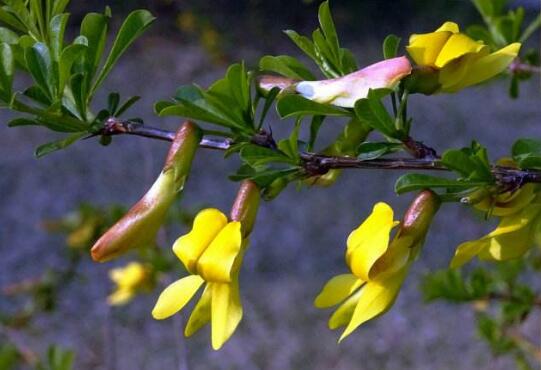
To know how to grow Scotch broom, we first need to understand its growth habits. This plant is quite light-loving, so when growing it we should keep it in sufficient light. In addition, we also need to pay attention to daily water and fertilizer management. As for the specific details, they are introduced in detail below. Let's take a look.
II. Growing methods and precautions for Scotch broom
1. Soil
If you want Scotch broom to grow vigorously, you need to let it grow in suitable soil. Choosing the soil is the step that lays the foundation, and it is very important. Generally, we should choose loose, fertile sandy loam soil. This kind of soil has good drainage and air permeability, allows the plant to absorb nutrients better, and is not prone to waterlogging.
2. Fertilizing
Fertilizer is one of the main nutrients in the growth process of Scotch broom. Especially after it enters its growth period, its demand for fertilizer is very high, and we basically need to fertilize once a month so the plant will have enough nutrients to grow vigorously. However, when fertilizing, there is one thing we must pay attention to, which is to apply diluted fertilizer, not too high in concentration, otherwise it is very easy to burn the plant.
3. Water
Scotch broom is quite averse to waterlogging, so when growing it we should not water too much, and we should maintain the principle of “do not water until dry, and water thoroughly when you do.” When summer arrives, we can water a little more appropriately, but we must control the amount of water. If too much water is given and waterlogging occurs, it is very easy to cause the plant's roots to rot.
4. Light
Scotch broom is quite light-loving, but it is not tolerant of strong light. In spring and autumn, because the light is relatively suitable, we can grow it outdoors in full light all day. However, after summer arrives, because the light is relatively strong, we still need to pay attention to shading, so that long-term exposure does not cause the plant to be scorched.
5. Pruning
In the process of growing Scotch broom, we also need to prune it regularly, cutting off some overly dense branches as well as dead, diseased, and weak branches. This not only keeps its shape attractive and helps the plant's ventilation and light penetration, but also promotes branching, making the plant look fuller.
6. Pests and diseases
During the growth of Scotch broom, if we are not careful enough with care, pests and diseases can easily take advantage of the situation. Such problems are very harmful to the plant, so once we find them, we must deal with them immediately. As for the specific treatment methods, you can refer to the article on pest and disease control for Scotch broom, which has detailed teaching.
Growing methods and precautions for Scotch broom
Scotch broom is a kind of legume plant. It is a creeping herb with a relatively long flowering period, bright flower colors, and particularly high ornamental value. It can be planted in large areas or grown as a potted plant, but people do not know much about its growing methods, nor do they know what to pay attention to when growing Scotch broom, so their Scotch broom never grows well. Today I will specifically introduce some knowledge related to growing Scotch broom. Friends who like this plant can focus on learning about it.
Growing methods for Scotch broom1. Soil selection
When growing Scotch broom normally, choosing suitable soil is very important. This plant likes sandy soil with medium fertility and good drainage, and the soil is best acidic. Normally, leaf mold and river sand can be mixed together to make a growing medium for growing Scotch broom, and its survival rate is particularly high.
2. Propagation methods
Scotch broom has a variety of different propagation methods. It can be propagated by sowing or by division, but sowing propagation requires multiple steps such as seed soaking and seedling raising and is relatively complicated, so it is not commonly used in daily life. Division propagation is its most common propagation method, but during the specific operation you must be careful not to damage its root bark, otherwise it will be difficult to survive after division.
Growing precautions1. Pay attention to watering and fertilizing
When growing Scotch broom normally, you must pay attention to watering and fertilizing. This plant fears wet waterlogging, so do not water excessively normally; just keep the potting soil moist. Scotch broom has a relatively large demand for fertilizer during its growth period, so it can be fertilized once a month, mainly with diluted liquid fertilizer, but before it blooms it needs one topdressing of phosphorus and potassium fertilizer, which will help extend its flowering period.
2. Pay attention to pruning
When growing Scotch broom normally, it is very important to prune it in time. Under normal circumstances, this plant should be pruned in spring and winter. In spring, mainly prune the short branches and weak branches after the flowering period; in winter, mainly prune the overly long branches after leaf drop, so as to keep the plant shape attractive.
What are the growing methods for Scotch broom? Precautions for growing Scotch broom
Scotch broom, commonly known as jijiner, is a deciduous shrub commonly seen in China's high-altitude areas. Its flowers grow in leaf axils and bloom from April to May. The petal tip is slightly pointed, with two petals separated to the side, like a flying sparrow, and the color is golden yellow, hence the name "Scotch broom." It has strong adaptability and a wide range of value. It can be used as an ornamental plant, planted in courtyards, on lawns, and along garden roadsides. So, what are the growing methods for Scotch broom?
I. Introduction to Scotch broom
Scotch broom (Latin name: Parochetus communis), also known as: purple broom, is a creeping herb in the Fabaceae family and Parochetus genus, 10-20 cm tall, sparsely pubescent. The rhizome is filiform, rooting at the nodes, with root nodules. The petal tip is slightly pointed, with two petals separated to the side, like a flying sparrow, and the color is golden yellow, hence the name "Scotch broom." It grows in forest-edge grasslands, hillsides, and roadside wasteland, at an altitude of 2000-3000 m. It is produced in Sichuan, Yunnan, and Tibet. It is also distributed in India, Nepal, Bhutan, Sri Lanka, Myanmar, Thailand, Malaysia, and eastern Africa.
Creeping herb, 10-20 cm tall, sparsely pubescent. Rhizome filiform, rooting at the nodes, with root nodules. Palmately trifoliolate; stipules broadly lanceolate-ovate, 4-5 mm long, membranous, glabrous, entire; petiole slender and soft, up to 8-15 cm long, slightly covered with fine soft hairs; leaflets obcordate, 8-20 mm long, 10-20 mm wide, base narrowly cuneate, margin entire, or sometimes wavy and shallowly crenate, glabrous above, appressed-pubescent below, lateral veins 4-5 pairs, forking and looping near the leaf margin, veinlets reticulate, inconspicuous, both surfaces flat; petiolules very short, about 1 mm long.
II. Growing methods for Scotch broom
1. Watering
Master the principle of not watering until dry, and watering thoroughly when you do. Especially during the flowering period, pay attention to keeping the potting soil moist, which can extend its flowering period.
2. Pruning
After leaf drop in winter, you can cut off various branches that affect the tree shape. After flowering in spring, shorten the branches that have already bloomed to encourage new flowering branches. During the vigorous growth period, you can prune leggy branches at any time and pinch appropriately to keep the plant shape attractive.
3. Repotting
Repot once every 2-3 years, preferably in early spring. When repotting, you can remove about 1B2 of the old soil and appropriately shorten overly long roots. You can also combine repotting with root-exposing styling.
III. Precautions for growing Scotch broom
1. Water control. Scotch broom's water requirements are mainly concentrated before flowering and during the growth period. During the growth period, it is mainly enough to replenish the water consumed by the plant during growth; before flowering, in addition to the water needed for plant growth, you also need to pay attention to maintaining the moisture level of the planting soil so that the flowering period of Scotch broom can be extended.
2. Carry out pruning work in time. The pruning work for Scotch broom is mainly concentrated in spring and winter. In spring, mainly prune the short branches after the flowering period, so that the nutrients of the whole plant can be used better; in winter, after leaf drop, prune those overly long branches to meet the plant's aesthetic requirements.
The above is the relevant introduction in this article. I believe after reading it you also have a simple understanding of this. If needed, you can continue to follow No. 1 Home Network to learn more information.