How to grow an Australian pine bonsai? Growing methods and precautions, avoid waterlogging
Australian pine, many flower enthusiasts should recognize it, is an ornamental tree with extremely strong vitality, often made into bonsai and kept indoors. As Australian pine gradually becomes known, more and more people want to grow it, so how do you grow an Australian pine bonsai? Below are the growing methods and precautions for Australian pine carefully compiled by the editor, very detailed, friends who want to grow it should not miss it~
1. How to grow an Australian pine bonsai, understand its habits
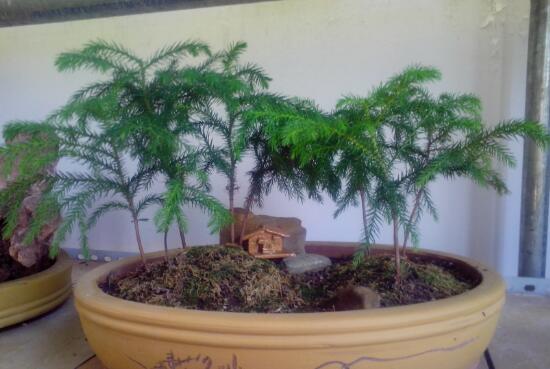
Because Australian pine originally grew in the desert environment of Australia, it has developed a preference for warm, sunlit environments, and it is drought-tolerant, cold-sensitive, and intolerant of waterlogging. So how do you grow an Australian pine bonsai? You should place it in a ventilated, sunny spot, provide shade in summer, and keep it warm in winter. As for the potting soil, it is best to use loose, fertile, slightly acidic sandy soil.
2. Growing methods and precautions for Australian pine
1. Soil
How to grow an Australian pine bonsai: first of all, you should reselect the potting soil. The reason is that many flower enthusiasts' Australian pine bonsai are existing potted plants bought from flower shops or online, and normal care can ensure the plant's growth. But that soil is very cheap, and if you want the Australian pine to grow well, it is best to choose new soil.
Soil selection: according to the growing habits of Australian pine, we know it prefers loose, fertile, well-drained, slightly acidic sandy soil. For this, the editor recommends using a substrate mixed with garden soil, leaf mold, and peat moss.
2. Light
As a green plant, Australian pine has a fairly high demand for light. It is understood that Australian pine likes light and is fairly shade-tolerant. During the summer and autumn growing season, it can be placed in a semi-shaded spot outdoors, or kept in a ventilated spot by a window with light.
Precautions: Australian pine is intolerant of strong light. When the temperature is above 35°C, avoid direct strong light; in addition, it should not be kept for a long time in a lightless shady place, otherwise it will cause symptoms such as yellowing leaves and leggy growth in Australian pine, affecting its ornamental value.
3. Temperature
How to grow Australian pine: adjusting the temperature in a timely manner is also very important. Australian pine likes a warm environment and is not cold-tolerant. In winter, the plant should be moved indoors to keep warm; only when the room temperature is around 5°C can it safely overwinter.
4. Watering
Water is the source of life, so in the growing methods for Australian pine, watering is a very important part. Australian pine likes a humid environment, and the potting soil should remain moist; especially during the high temperatures of summer and autumn, prevent the potting soil from becoming too dry. Australian pine is also intolerant of waterlogging, so in early spring or autumn and winter, the potting soil should be on the drier side and avoid being too wet, to prevent root rot.
5. Fertilizing
After watering, let's talk about fertilizing, which is also indispensable in the growing methods for Australian pine. During the summer and autumn growing season, you should apply fertilizer 1-2 times a month, preferably a compound fertilizer containing nitrogen and potassium. Do not neglect fertilizing, because once nutrients are insufficient, it can easily lead to poor growth of Australian pine.
6. Repotting and soil replacement
How to grow an Australian pine bonsai? Repotting and soil replacement is also a point that cannot be ignored. Because any potted plant's soil will eventually become poor one day, timely repotting is indispensable. You should repot every 2-3 years, using the potting soil mentioned above. As for pruning, under normal circumstances Australian pine does not need branch pruning; just let it grow naturally.
How to grow Norfolk Island pine, growing methods and precautions for Norfolk Island pine
Norfolk Island pine is native to the southeastern coastal areas of Oceania, such as northern Australia. It is now introduced and cultivated in provinces such as Guangdong, and some cities in northern China began introducing Norfolk Island pine bonsai in 2002, with good growth. Don't know how to grow Norfolk Island pine? Take a look at the growing methods and precautions for Norfolk Island pine below.
Growing methods for Norfolk Island pine
Norfolk Island pine likes a warm, humid environment and grows well in sunny places. It has a certain shade tolerance, but avoid strong sunlight exposure in summer. It is not tolerant of cold or drought, and is suitable for well-drained, humus-rich, slightly acidic sandy loam.
When potting Norfolk Island pine, it is best to use a substrate mixed with garden soil, leaf mold, and peat moss. Potted plants mostly use small seedlings, and a suitable flower pot should be chosen according to the size of the seedling. Norfolk Island pine likes diffused light and should be placed in a bright place inside a shed. If kept in a dark place for a long time, it should be moved into the sunlight every few weeks for appropriate exposure, which can keep the dark green leaves maintaining a beautiful color. Its growing season is long; except when the summer temperature exceeds 32°C, it can grow all year round.
From spring to autumn, it should be watered more, but avoid water accumulating in the pot. During high temperature and dryness, spray water on the potted plant and the nearby ground to lower the temperature and increase humidity. Water in a timely manner; do not wait until the soil is dry before watering. From late autumn onward, gradually reduce watering to enhance its cold resistance. During the growing season, apply fertilizer once every 2 weeks, preferably a compound fertilizer containing nitrogen and potassium. Insufficient fertilizer supply can easily cause the branches and leaves to turn yellow.
Precautions for growing Norfolk Island pine
During growth, to prevent the trunk from leaning to one side, it is advisable to turn the pot once every half month so the plant receives light evenly. In addition, young tree trunks are fragile and easily bend and deform, so from the young plant stage it is advisable to set up a support to fix the trunk. To prevent the plant from growing too tall, it should be repotted once every 2-3 years after the weather warms in spring. Usually pay attention to protecting the side branches so they are not damaged and affect the plant's shape.
Under normal circumstances, Norfolk Island pine does not need branch pruning; let it grow naturally. The suitable growing temperature is 10-25°C, and the overwintering temperature is above 5°C. During the overwintering season, some light can be provided, the potting soil should not be too dry, and on clear days water should also be sprayed to increase humidity.
The growing methods and precautions for Norfolk Island pine are introduced here, hoping to be helpful to everyone. Norfolk Island pine is one of the world's three major ornamental trees, evergreen all year round. As long as the temperature stays above zero, it can overwinter, and it is also one of the masters of air purification, very suitable for long-term care indoors where light is insufficient.
Growing methods and precautions for Norfolk Island pine, the role of Norfolk Island pine
Norfolk Island pine is one of the world's three famous ornamental plants, and it is also one of the masters of air purification, very suitable for long-term care indoors where light is insufficient. So do you know how to grow Norfolk Island pine? Today let's talk about the growing methods and precautions for Norfolk Island pine and the role of Norfolk Island pine.
Introduction to Norfolk Island pine:
Evergreen tree, generally potted as a young tree, with a height below 2 m. The crown is spire-shaped, dark green, and the bark of the crown often splits horizontally or peels off in strips; the new bark has a bronze luster. The stem is upright, with whorled side branches spreading horizontally. The branchlets are two-ranked and alternate, extending horizontally or slightly drooping. The leaves are of two types: the leaves on young trees or side branches are awl-shaped, curved upward, about 12 cm long, loosely arranged, bright green; the leaves on large trees or old branches are ovate or triangular-ovate, about 6 cm long, densely arranged. The cones are nearly round
Growing methods for Norfolk Island pine:
1. Soil: Norfolk Island pine is suitable for well-drained, humus-rich, slightly acidic sandy loam. When potting, it is best to use a substrate mixed with garden soil, leaf mold, and peat moss.
2. Watering: From spring to autumn, Norfolk Island pine should be watered more, but avoid water accumulating in the pot. During high temperature and dryness, spray water on the potted plant and the nearby ground to lower the temperature and increase humidity. Water in a timely manner; do not wait until the soil is dry before watering. From late autumn onward, gradually reduce watering to enhance its cold resistance.
3. Light: Norfolk Island pine likes diffused light and should be placed in a bright place inside a shed. If kept in a dark place for a long time, it should be moved into the sunlight every few weeks for appropriate exposure, which can keep the dark green leaves maintaining a beautiful color.
4. Temperature: Its growing season is long; except when the summer temperature exceeds 32°C, Norfolk Island pine can grow all year round.
5. Fertilizing: During the growing season, apply fertilizer once every 2 weeks, preferably a compound fertilizer containing nitrogen and potassium. Insufficient fertilizer supply can easily cause the branches and leaves to turn yellow.
6. Pests and diseases: Norfolk Island pine has very few pests and diseases. When cared for indoors, scale insects are commonly seen. You can spray methidathion, chlorpyrifos emulsifiable concentrate, Guoguang Jie Bisi, etc. for control, with good results.
Precautions for growing Norfolk Island pine:
1. Summer and autumn are the growing seasons. Potted plants can be placed in a semi-shaded spot outdoors, or kept in a ventilated spot by a window with light. Avoid scorching sun exposure above 35°C, and do not keep it for a long time in a lightless shady place. Both will cause the branches and leaves to wither and yellow or grow leggy, affecting the ornamental value.
2. During growth, to prevent the trunk from leaning to one side, it is advisable to turn the pot once every half month so the plant receives light evenly. In addition, young tree trunks are fragile and easily bend and deform, so from the young plant stage it is advisable to set up a support to fix the trunk. To prevent the plant from growing too tall, it should be repotted once every 2-3 years after the weather warms in spring. Usually pay attention to protecting the side branches so they are not damaged and affect the plant's shape.
3. Under normal circumstances, Norfolk Island pine does not need branch pruning; let it grow naturally. The suitable growing temperature is 10-25°C, and the overwintering temperature is above 5°C. During the overwintering season, some light can be provided, the potting soil should not be too dry, and on clear days water should also be sprayed to increase humidity.
The role of Norfolk Island pine:
Norfolk Island pine is suitable for placement in a spacious living room or as an ornamental bonsai in a company hall. It can absorb carbon dioxide and regulate indoor air humidity. It is a powerful natural "humidifier." It can absorb water through its roots, then use 1% of the water to sustain its own life, and the remaining 99% is released into our living space. Moreover, no matter what kind of water you give them, what finally evaporates is 100% pure water.
Norfolk Island pine releases oxygen through photosynthesis, so there is no need to worry about it competing with us for oxygen when placed in a room. It can also add fun to life, cultivate temperament, and supplement oxygen. It is a very good kind of "plant pet"!
Just like many evergreen plants, Norfolk Island pine is also a very good "eye fatigue recovery agent": in life, due to working in front of computer screens at close range for long periods, many of us experience eye fatigue, decreased vision, aching arms or shoulders, and other phenomena. Data analysis tests show that frequently looking at green plants such as Norfolk Island pine can significantly reduce visual fatigue and can also prevent the occurrence of dry eye syndrome.