How to grow a Lespedeza bonsai and points to note: give it plenty of light
Lespedeza is a flowering plant native to Heilongjiang Province in China, and it has high ornamental value. However, growing it well is not easy, and there are many things we need to pay attention to. How do you grow a Lespedeza bonsai? What are the growing methods and points to note for Lespedeza? Below, the editor takes you through it.
1. How to grow a Lespedeza bonsai: understand its habits
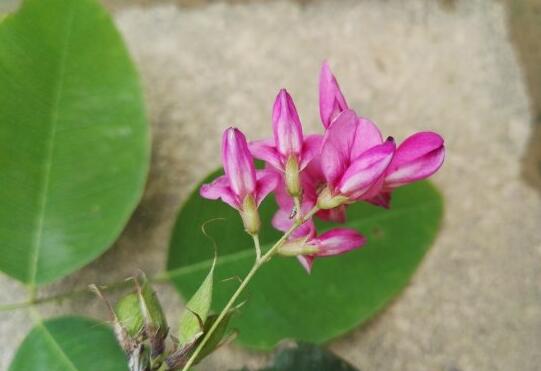
If you want to know how to grow a Lespedeza bonsai, you first need to understand its growth habits. This plant can be grown both outdoors and indoors, but its ability to adapt to a new environment is not very strong, so if we grow it indoors or outdoors for the long term, we should not change the environment lightly, otherwise it will affect its growth.
2. Growing methods and points to note for Lespedeza
1. Soil: humus soil
If you want Lespedeza to grow vigorously, you need to let it grow in suitable soil. This plant prefers loose, fertile humus soil. This kind of soil has good drainage and aeration, is rich in nutrients, allows the plant to absorb nutrients better, and is not prone to waterlogging.
2. Fertilizing: not much needed
Lespedeza does not have a high demand for fertilizer, so when growing it we do not need to fertilize excessively. We only need to apply an appropriate amount of base fertilizer to the soil when planting. If the soil is rich in nutrients, there is no need to fertilize during the growing season; a single supplementary feeding before it blooms is enough.
3. Water: keep the soil slightly moist
Lespedeza is relatively drought-tolerant and not tolerant of waterlogging, so during the growing process we should not water too much; keeping the soil slightly moist is enough. In summer when temperatures are higher, we can appropriately increase the watering frequency, while in winter we should water less. In short, when watering, just follow the principle of "don't water until dry, and water thoroughly when you do."
4. Light: provide shade in summer
Lespedeza prefers light, so when growing it we should keep it in sufficient light, so that it can carry out photosynthesis better and the plant will grow better. However, in summer when the light is relatively strong, we still need to provide appropriate shade, to avoid the plant turning yellow and withering from prolonged direct exposure to strong light.
5. Pests and diseases: deal with them promptly
During the process of growing Lespedeza, if we are not careful enough, pests and diseases can easily take advantage of the situation. These problems are very harmful to the plant, so once we discover them we must deal with them promptly. As for the specific treatment methods, you can refer to the article on pest and disease control for Lespedeza, which has detailed information.
Five points you must understand about plant selection for rooftop greening
Rooftop greening is of great significance in urban greening, with broad development space, and it is also a key project in our pursuit of high-end greening in the future. Its decoration and plant selection should not be underestimated.
Plant decoration
Eaves, two-slope roofs, flat roofs, and trapezoidal roofs can be used for decoration. Depending on the planting form, potted forms for flowers, foliage, and fruit are commonly used, such as potted Chinese rose, oleander, firethorn, osmanthus, and caladium; hollow bricks can also be made into various flower troughs 25 cm high, lined with thick plastic film up to the rim of the trough, with drainage holes left at the bottom, and the trough filled with growing medium to plant various herbaceous flowers, such as salvia, impatiens, China aster, zinnia, and petunia. Various woody flowers can also be planted, and wooden barrels or large pots can be used to grow woody flowers as accents. Without affecting the load capacity of the building, shade frames can also be set up to grow vines such as grape, wisteria, Chinese trumpet creeper, and banksia rose. On the walls of the platform and fence walls, plants such as Japanese ivy and English ivy can be grown.
According to the load capacity of the rooftop garden and the coordination and variation of planting forms, the rooftop garden can take on different characteristics. On flat roofs with limited load capacity, ground cover or other low flowering shrubs can be planted, such as stringy stonecrop, purslane, and climbing plants like Japanese ivy, wisteria, Boston ivy, Chinese trumpet creeper, and smilax, directly covering the roof to form a green carpet. For roofs with better conditions, an open garden can be designed, referring to garden-style layouts, made into natural, formal, or mixed styles. But the general principle is to focus mainly on plant decoration, with appropriate stacking of rockeries, stone boats, trellises, and flower walls to form a modern rooftop garden. We should pay special attention to the fact that in urban rooftop gardens, few or no architectural facilities such as pavilions, terraces, buildings, and towers should be built, while emphasis should be placed on the ecological effect of plants.
When designing a rooftop garden, one very important issue should be noted: limited load capacity. Rooftop gardens are often relatively high, so the wind is also relatively strong. In addition, the roof soil layer is thin, sunlight duration is long, the temperature difference between day and night is large, and humidity is low, so you can choose plants, flowers, and trees that are light-loving, cold-tolerant, heat-tolerant, drought-tolerant, barren-tolerant, and vigorous. It is best to use plants such as shrubs, bonsai, and turf. In short, use tree species with more fibrous roots and well-developed horizontal root systems that can adapt to the requirement of shallow soil. Use tall trees with a main root as little as possible. If large-sized trees must be used, the planting position should be designed at the location of load-bearing columns and main walls, not on the roof slab. It should also be noted that the planting soil on the roof should be lightweight, and since the wind resistance of tall trees is clearly weaker than on the ground, reinforcement measures should be taken.
Control soil layer thickness to the minimum. Generally, for low ground cover plants such as turf, the cultivation soil depth is about 16 cm; for shrubs, 40 cm to 50 cm; for trees, about 90 cm to 100 cm. Pay special attention that on the roofs of high-rise buildings, try not to plant large trees taller than 5 m, as strong wind makes them prone to falling over.
There are fewer trees on roofs and more shrubs and herbaceous flowers, so in design it is especially important to achieve a well-arranged mix of tall and short, sparse and dense trees, flowers, and grasses, with harmonious and reasonable color combinations.
Plant selection
The design of a rooftop garden must fully consider natural condition requirements, such as a sturdy structure, load capacity, and waterproofing and drainage facilities.
1. Choose low shrubs and herbaceous plants with strong drought and cold resistance.
Because rooftop gardens have high summer temperatures, strong wind, and poor soil moisture retention, and poor insulation in winter, plants with strong drought and cold resistance should be chosen. At the same time, considering the special geographical environment of the roof and load-bearing requirements, attention should be paid to choosing more low shrubs and herbaceous plants to facilitate plant transport, planting, and management. Therefore, generally choose sun-loving, drought-tolerant, cold-tolerant, shallow-rooted plants, and they must also be low-growing, wind-resistant, and transplant-tolerant varieties. Common ones include Buddhist pine, Chinese box, large-leaf box, boxleaf holly, common box, sweet viburnum, palm, Chinese witch hazel, yucca, gardenia, silvergrass, Chinese pagoda tree, redbud, crape myrtle, crabapple, wintersweet, and longevity peach, with materials determined according to season and region. The growing medium for rooftop gardens generally uses lightweight materials such as vermiculite, sawdust, and worm castings, or some medium can be made at home.
2. Choose sun-loving, barren-tolerant, shallow-rooted plants.
Most places in a rooftop garden receive direct full sun with high light intensity, so plants should be sun-loving species as much as possible. However, in certain specific microenvironments, such as under flower trellises or near walls where sunshine duration is shorter, some semi-sun-loving plant species can be appropriately chosen to enrich the plant varieties of the rooftop garden. The planting layer on the roof is relatively thin, and to prevent roots from eroding the roof building structure, shallow-rooted plants should be chosen as much as possible. Because applying fertilizer affects the sanitation of the surrounding environment, rooftop gardens should grow barren-tolerant plant species as much as possible. Examples include white magnolia, purple magnolia, nandina, azalea, peony, camellia, banana shrub, Chinese rose, orange, kumquat, jasmine, canna, dahlia, sago palm, lily, spider lily, cockscomb, gerbera, aucuba, pittosporum, holly, grape, wisteria, English ivy, Japanese ivy, serissa, osmanthus, chrysanthemum, dwarf lilyturf, autumn zephyr lily, yellow jasmine, winter jasmine, frangipani, velvet lawn, and lotus.
3. Choose plant species that are wind-resistant, not prone to lodging, and tolerant of waterlogging.
The roof is open, and the wind is generally stronger than on the ground, especially in the rainy season or when a typhoon comes. Wind and rain together are the most harmful to plant survival. In addition, the roof planting layer is thin and the soil's water storage performance is poor, so once there is heavy rain, short-term waterlogging is likely. Therefore, choose as much as possible plants that are wind-resistant, not prone to lodging, and also tolerant of short-term waterlogging. Examples include large-leaf oleaster, Lespedeza, sharp-toothed holly, thornless holly, dwarf yew, clustered large-leaf privet, French holly, large-leaf box, Chinese hackberry, zelkova, smoke tree, and American smoke tree.
4. Mainly evergreens, plants that can overwinter outdoors in winter.
The purpose of building a rooftop garden is to increase the urban green area and beautify the "fifth facade." The plants in a rooftop garden should be mainly evergreens as much as possible, and varieties with beautiful leaf shapes and plant forms are preferable. To make the rooftop garden more colorful and reflect seasonal changes in the garden, some colorful-leaf tree species can also be appropriately planted; in addition, when conditions permit, some potted seasonal flowers can be arranged so the garden has flowers in all four seasons. Examples include winter camellia, camellia, Chinese witch hazel, Japanese privet, yew, camphor, Elaeocarpus, northern red oak, southern magnolia, banyan, holly, palm, areca palm, Canary date palm, osmanthus, trained Chinese ash, trained box, pittosporum, sisal, Norfolk Island pine, flame tree, schima, red-flowered manglietia, and banana shrub. Green-space lawns are mainly evergreen lawns and dwarf lilyturf, stringy stonecrop, and Bermuda grass.
5. Use native plants as much as possible, and appropriately introduce new greening varieties.
Native plants have a high degree of adaptability to the local climate. In the relatively harsh environment of a rooftop garden, using native plants achieves twice the result with half the effort. At the same time, considering that the area of a rooftop garden is generally small, to arrange it more exquisitely, some new varieties with high ornamental value can be chosen to raise the quality of the rooftop garden. Northern greening tree species include Vitex, Paulownia, Amur honeysuckle, forsythia, winter jasmine, firethorn, persimmon, date plum, eucommia, and pomegranate.
Five points you must understand about plant selection for rooftop greening
May 24 news from China Landscape Web: Rooftop greening is of great significance in urban greening, with broad development space, and it is also a key project in our pursuit of high-end greening in the future. Its decoration and plant selection should not be underestimated.
Plant decoration
Eaves, two-slope roofs, flat roofs, and trapezoidal roofs can be used for decoration. Depending on the planting form, potted forms for flowers, foliage, and fruit are commonly used, such as potted Chinese rose, oleander, firethorn, osmanthus, and caladium; hollow bricks can also be made into various flower troughs 25 cm high, lined with thick plastic film up to the rim of the trough, with drainage holes left at the bottom, and the trough filled with growing medium to plant various herbaceous flowers, such as salvia, impatiens, China aster, zinnia, and petunia. Various woody flowers can also be planted, and wooden barrels or large pots can be used to grow woody flowers as accents. Without affecting the load capacity of the building, shade frames can also be set up to grow vines such as grape, wisteria, Chinese trumpet creeper, and banksia rose. On the walls of the platform and fence walls, plants such as Japanese ivy and English ivy can be grown.
According to the load capacity of the rooftop garden and the coordination and variation of planting forms, the rooftop garden can take on different characteristics. On flat roofs with limited load capacity, ground cover or other low flowering shrubs can be planted, such as stringy stonecrop, purslane, and climbing plants like Japanese ivy, wisteria, Boston ivy, Chinese trumpet creeper, and smilax, directly covering the roof to form a green carpet. For roofs with better conditions, an open garden can be designed, referring to garden-style layouts, made into natural, formal, or mixed styles. But the general principle is to focus mainly on plant decoration, with appropriate stacking of rockeries, stone boats, trellises, and flower walls to form a modern rooftop garden. We should pay special attention to the fact that in urban rooftop gardens, few or no architectural facilities such as pavilions, terraces, buildings, and towers should be built, while emphasis should be placed on the ecological effect of plants.
When designing a rooftop garden, one very important issue should be noted: limited load capacity. Rooftop gardens are often relatively high, so the wind is also relatively strong. In addition, the roof soil layer is thin, sunlight duration is long, the temperature difference between day and night is large, and humidity is low, so you can choose plants, flowers, and trees that are light-loving, cold-tolerant, heat-tolerant, drought-tolerant, barren-tolerant, and vigorous. It is best to use plants such as shrubs, bonsai, and turf. In short, use tree species with more fibrous roots and well-developed horizontal root systems that can adapt to the requirement of shallow soil. Use tall trees with a main root as little as possible. If large-sized trees must be used, the planting position should be designed at the location of load-bearing columns and main walls, not on the roof slab. It should also be noted that the planting soil on the roof should be lightweight, and since the wind resistance of tall trees is clearly weaker than on the ground, reinforcement measures should be taken.
Control soil layer thickness to the minimum. Generally, for low ground cover plants such as turf, the cultivation soil depth is about 16 cm; for shrubs, 40 cm to 50 cm; for trees, about 90 cm to 100 cm. Pay special attention that on the roofs of high-rise buildings, try not to plant large trees taller than 5 m, as strong wind makes them prone to falling over.
There are fewer trees on roofs and more shrubs and herbaceous flowers, so in design it is especially important to achieve a well-arranged mix of tall and short, sparse and dense trees, flowers, and grasses, with harmonious and reasonable color combinations.
Plant selection
The design of a rooftop garden must fully consider natural condition requirements, such as a sturdy structure, load capacity, and waterproofing and drainage facilities.
1. Choose low shrubs and herbaceous plants with strong drought and cold resistance.
Because rooftop gardens have high summer temperatures, strong wind, and poor soil moisture retention, and poor insulation in winter, plants with strong drought and cold resistance should be chosen. At the same time, considering the special geographical environment of the roof and load-bearing requirements, attention should be paid to choosing more low shrubs and herbaceous plants to facilitate plant transport, planting, and management. Therefore, generally choose sun-loving, drought-tolerant, cold-tolerant, shallow-rooted plants, and they must also be low-growing, wind-resistant, and transplant-tolerant varieties. Common ones include Buddhist pine, Chinese box, large-leaf box, boxleaf holly, common box, sweet viburnum, palm, Chinese witch hazel, yucca, gardenia, silvergrass, Chinese pagoda tree, redbud, crape myrtle, crabapple, wintersweet, and longevity peach, with materials determined according to season and region. The growing medium for rooftop gardens generally uses lightweight materials such as vermiculite, sawdust, and worm castings, or some medium can be made at home.
2. Choose sun-loving, barren-tolerant, shallow-rooted plants.
Most places in a rooftop garden receive direct full sun with high light intensity, so plants should be sun-loving species as much as possible. However, in certain specific microenvironments, such as under flower trellises or near walls where sunshine duration is shorter, some semi-sun-loving plant species can be appropriately chosen to enrich the plant varieties of the rooftop garden. The planting layer on the roof is relatively thin, and to prevent roots from eroding the roof building structure, shallow-rooted plants should be chosen as much as possible. Because applying fertilizer affects the sanitation of the surrounding environment, rooftop gardens should grow barren-tolerant plant species as much as possible. Examples include white magnolia, purple magnolia, nandina, azalea, peony, camellia, banana shrub, Chinese rose, orange, kumquat, jasmine, canna, dahlia, sago palm, lily, spider lily, cockscomb, gerbera, aucuba, pittosporum, holly, grape, wisteria, English ivy, Japanese ivy, serissa, osmanthus, chrysanthemum, dwarf lilyturf, autumn zephyr lily, yellow jasmine, winter jasmine, frangipani, velvet lawn, and lotus.
3. Choose plant species that are wind-resistant, not prone to lodging, and tolerant of waterlogging.
The roof is open, and the wind is generally stronger than on the ground, especially in the rainy season or when a typhoon comes. Wind and rain together are the most harmful to plant survival. In addition, the roof planting layer is thin and the soil's water storage performance is poor, so once there is heavy rain, short-term waterlogging is likely. Therefore, choose as much as possible plants that are wind-resistant, not prone to lodging, and also tolerant of short-term waterlogging. Examples include large-leaf oleaster, Lespedeza, sharp-toothed holly, thornless holly, dwarf yew, clustered large-leaf privet, French holly, large-leaf box, Chinese hackberry, zelkova, smoke tree, and American smoke tree.
4. Mainly evergreens, plants that can overwinter outdoors in winter.
The purpose of building a rooftop garden is to increase the urban green area and beautify the "fifth facade." The plants in a rooftop garden should be mainly evergreens as much as possible, and varieties with beautiful leaf shapes and plant forms are preferable. To make the rooftop garden more colorful and reflect seasonal changes in the garden, some colorful-leaf tree species can also be appropriately planted; in addition, when conditions permit, some potted seasonal flowers can be arranged so the garden has flowers in all four seasons. Examples include winter camellia, camellia, Chinese witch hazel, Japanese privet, yew, camphor, Elaeocarpus, northern red oak, southern magnolia, banyan, holly, palm, areca palm, Canary date palm, osmanthus, trained Chinese ash, trained box, pittosporum, sisal, Norfolk Island pine, flame tree, schima, red-flowered manglietia, and banana shrub. Green-space lawns are mainly evergreen lawns and dwarf lilyturf, stringy stonecrop, and Bermuda grass.
5. Use native plants as much as possible, and appropriately introduce new greening varieties.
Native plants have a high degree of adaptability to the local climate. In the relatively harsh environment of a rooftop garden, using native plants achieves twice the result with half the effort. At the same time, considering that the area of a rooftop garden is generally small, to arrange it more exquisitely, some new varieties with high ornamental value can be chosen to raise the quality of the rooftop garden. Northern greening tree species include Vitex, Paulownia, Amur honeysuckle, forsythia, winter jasmine, firethorn, persimmon, date plum, eucommia, and pomegranate.