How to grow corn poppy? Cultivation methods and precautions, sunlight must be sufficient
Corn poppy is a flowering plant native to Europe, later introduced to our country, and today it can be seen in many regions of our country. However, growing it well is not easy, and there are many points to pay attention to. How to grow corn poppy? What are the cultivation methods and precautions for corn poppy? Below, the editor will walk everyone through it.
I. How to grow corn poppy, understand its habits
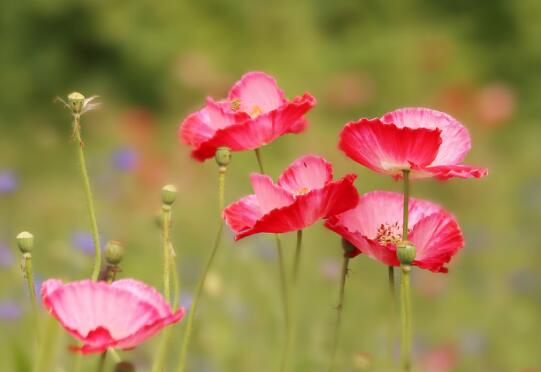
To know how to grow corn poppy, we first need to understand its growth habits. This plant is quite light-loving, so during cultivation we should keep it in sufficient light, and the plant will grow better as a result. In addition, we also need to pay attention to daily water and fertilizer management. The details are introduced below, so let's take a look.
II. Cultivation methods and precautions for corn poppy
1. Soil, sandy loam
If you want corn poppy to grow vigorously, you need to let it grow in suitable soil. Choosing the soil is the first step in laying a good foundation, and it is very important. Generally, it is best to choose loose, fertile sandy loam. This kind of soil has good drainage and air permeability, allowing the plant to absorb nutrients better, and it is also less prone to water accumulation.
2. Temperature, 5-25°C
Corn poppy likes to grow in a cool environment and has a certain cold tolerance, but it is not heat-tolerant. Its suitable growth temperature is between 5-25°C. If the temperature is too high, the plant will turn yellow and wither, so in the hotter summer we should pay attention to spraying water more often to cool it down.
3. Fertilizing, once a month
Fertilizer is one of the main nutrients in the growth process of corn poppy. Especially after it enters its growth period, its demand for fertilizer is very high, and it basically needs fertilizing once every month. However, before fertilizing, we should note that the fertilizer must be diluted first and must not be too concentrated, otherwise it can easily burn the plant.
4. Water, avoid waterlogging
The corn poppy plant is tolerant of dryness and drought, but afraid of waterlogging, so during its growth we should not water too much; keeping the soil slightly moist is enough. In summer when the temperature is higher, we can appropriately increase the watering frequency, while in winter we should water less. In short, when watering it, just maintain the principle of "do not water if not dry, water thoroughly when watering."
5. Light, sunlight must be sufficient
Corn poppy is quite light-loving, and during its growth it needs sufficient light. It must receive at least 4 hours of sunlight per day so that it can grow better. If it does not get enough light during growth, the plant will show poor growth, and the flowers it produces will also appear relatively dull.
6. Pests and diseases, deal with them promptly
In the process of growing corn poppy, if we are not careful enough, pests and diseases can easily take advantage of the situation. Such problems are extremely harmful to the plant, so once discovered we must deal with them promptly. As for the specific treatment methods, everyone can refer to the article on pest and disease control for corn poppy, which contains detailed instructions.
How to grow corn poppy? Cultivation methods and precautions for corn poppy
"When will the spring flowers and autumn moon end? How much of the past do we know?" "Yu Meiren" is not only a ci poem by Li Yu, the last ruler of the Southern Tang, but also a common ornamental plant. Corn poppy, also known as Lichunhua, Saimudan, Manyuanchun, etc., is an annual herbaceous plant in the genus Papaver of the family Papaveraceae. It has rich flower colors and beautiful blooms, is often potted indoors, and has high ornamental value. So, how to grow corn poppy? The cultivation methods and precautions for corn poppy are introduced as follows.
Image: Corn poppy
I. Cultivation methods for corn poppy
1. Site selection and soil:A place with sufficient light and good ventilation is needed. Corn poppy is not strict about soil, but loose, fertile sandy loam is still best.
2. Potting:In January, use a flower pot with an inner diameter of 20 cm, fill it more than half full with loose soil, press it level, then sow seeds, 20 to 30 seeds, then cover with soil until the seeds can no longer be seen. After sowing, use the method of soaking the pot to seep water, that is, place the flower pot in a large basin with a water surface not exceeding the height of the flower pot, so that water seeps evenly into the soil from the hole at the bottom of the flower pot. After the seedlings emerge, remove all the poorly growing ones, and in the end keep only 3 to 5 plants. When the seedlings are 30 cm tall, gradually fill in planting soil up to the rim of the pot to prevent the plants from having thin stems and lodging. Keep sufficient light and fresh ambient air, with nighttime temperatures not lower than 5°C, avoid drought and waterlogging. For potted plants, watering depends on the weather and the condition of the potting soil; generally, water once every 3~5 days. If this state is maintained, they will bloom in March and continue until May.
Image: Corn poppy
3. Thinning:After the field-planted seedlings emerge, remove all the poorly growing ones, and thin the seedlings at a spacing of 30*30. Because corn poppy is not easy to transplant and keep alive, special care must be taken when thinning.
4. Fertilizing:Before flowering, appropriately apply 2-3 times of dilute liquid fertilizer as a top dressing, but do not fertilize too much, as this can easily lead to pests and diseases. For field planting, apply thin fertilizer twice before overwintering, and apply liquid fertilizer once more before flowering. Apply the last top dressing before flowering to promote large, brightly colored flowers and vigorous blooming.
5. Watering:For field planting, generally there is no need to water frequently. Maintain a temperature of around 20°C, and sprouts will appear in 7-10 days. If pests or diseases are found, treat them promptly, and pay attention to hygiene. Promptly cut off the withered stems that have already flowered, which can extend the flowering period and make the flowers even more beautiful.
Image: Corn poppy
II. Precautions for growing corn poppy
It should not be planted in overly fertile soil, and should not be planted in continuous cropping; it should not be raised or planted in low-lying, damp places with heavy water and fertilizer and poor light, otherwise it will grow poorly and is also prone to disease; water less during overwintering, and water more during the spring growth period; during the seedling growth period, do not water too much, but keep it moist.
[Editor's conclusion]Corn poppy likes a sunny environment, but is afraid of summer heat, so special attention is needed during care. The above has introduced the cultivation methods and precautions for corn poppy, and we hope it can help everyone!
How to grow corn poppy, cultivation methods and precautions for corn poppy
Corn poppy is a very famous ornamental flower, very beautiful. How to grow corn poppy? Next, we will tell everyone about the cultivation methods and precautions for corn poppy.
Cultivation methods for corn poppy:
1. Watering: Corn poppy is tolerant of dryness and drought, but not of water accumulation. During the growth period, do not water too much; keeping the soil moist is best. If it is not very dry, there is no need to water. But excessive drought will delay flowering and affect quality.
2. Sunlight: Corn poppy requires sufficient light during its growth period, with at least 4 hours of direct sunlight every day. If the growing environment is shady and light is insufficient, the plant will grow weak and thin, and the flower color will be dull.
3. Temperature: Corn poppy likes coolness and avoids high temperatures. Warm winters and cool summers are most suitable for its growth. The suitable growth temperature is 12 -20°C. As the temperature rises in summer, the growth vigor of corn poppy weakens, and the aboveground parts turn yellow and die.
4. Fertilizing: Before flowering, apply dilute liquid fertilizer 1-2 times. After budding, spray 0.1% potassium dihydrogen phosphate solution on the leaves once every 3 days to force flowering. After the corn poppy flowers fade, promptly cut off the withered flowers so the remaining flowers bloom better.
5. Pests: Corn poppy rarely suffers from pests and diseases, but if too much nitrogen fertilizer is applied, the plants are too dense, or there is continuous cropping for many years, rot disease may occur. The diseased plants need to be promptly removed, and then some lime powder can be scattered in the original spot. There are not many pests, but sometimes it may be harmed by scarab larvae and scale insects. If found, spray with 40% omethoate 1000-fold solution, spraying once every 7 days for two times to kill the pests.
6. Pruning: If the faded flowers of corn poppy are promptly cut off when the flowers wither so that they do not set seed, nutrients can be concentrated, and the later flowers can grow strong, thereby extending the flowering period.
Precautions for growing corn poppy:
After emergence, thin the seedlings. The spacing between planted plants and rows should be about 30 cm. When they have grown to 5~6 leaves, choose a cloudy day, first water thoroughly, then transplant; when transplanting, be careful not to damage the roots, and bring soil with them, pressing the soil firmly when planting. Usually, there is no need to water too much; keeping it moist regularly is enough. If the outdoor temperature in winter is below minus 0.5°C, it is best to cover with film to overwinter.