Buddleja officinalis cultivation methods and precautions: ensure sufficient light
Buddleja officinalis is a shrub in the genus Buddleja, family Loganiaceae. It can be seen in many regions of China, but if we want to grow it well, there are many points we need to pay attention to. How do you grow Buddleja officinalis? What are the cultivation methods and precautions for Buddleja officinalis? Below, the editor will walk you through it.
1. How to grow Buddleja officinalis: understand its habits
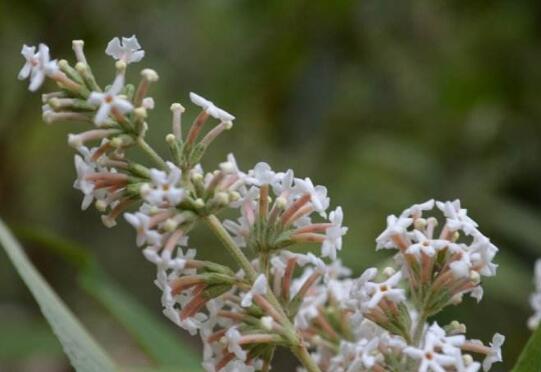
To know how to grow Buddleja officinalis, we first need to understand its growth habits. This plant likes a warm and humid environment and has some cold tolerance, but it does not tolerate waterlogging, so when watering it we need to control the amount of water. In addition, we also need to pay attention to daily light, fertilization and other aspects. The details are introduced below. Let's take a look.
2. Cultivation methods and precautions for Buddleja officinalis
1. Soil: humus soil
If we want Buddleja officinalis to thrive, we need to choose suitable soil for it. This is the step of laying a solid foundation and is very important. Generally, it is best to choose loose, fertile humus soil. This kind of soil is rich in nutrients and has good drainage and air permeability, allowing the plant to absorb nutrients better.
2. Temperature: 18-25°C
When cultivating Buddleja officinalis, ambient temperature is also something we need to pay attention to, because only when it grows at a suitable temperature can it grow better. The suitable growth temperature for Buddleja officinalis is between 18-25°C. The temperature must not be too high or too low, otherwise it is not conducive to its growth.
3. Fertilization: fertilize three times
Buddleja officinalis does not have a high demand for fertilizer, so when cultivating it we do not need to fertilize too much. It only needs to be fertilized three times a year. First, when planting, we should apply an appropriate amount of base fertilizer to the soil. After that, fertilize once before flowering and once during the fruiting period. For fertilizer, we can choose a mixed fertilizer combining nitrogen, phosphorus and potassium.
4. Water: avoid water accumulation
Buddleja officinalis likes to grow in a warm and humid environment, so when cultivating it we should water frequently to keep the soil somewhat moist, and the plant will grow better this way. However, we need to control the amount of watering and must not water too much, because Buddleja officinalis does not tolerate waterlogging. If water accumulates, its root system can easily rot.
5. Light: avoid strong light
Buddleja officinalis is a light-loving plant, but it does not tolerate strong light. In spring and autumn, when the light is relatively suitable, we can place it outdoors to receive light all day. However, after summer arrives, because the light is relatively strong, we still need to provide shade to prevent strong light from scorching the plant.
6. Pests and diseases: deal with them promptly
In the process of cultivating Buddleja officinalis, if we are not careful enough, pests and diseases will take advantage of the opportunity to invade. Such problems are very harmful to the plant, so once discovered we must deal with them promptly, because prolonged delay will cause the plant to wither and die directly. As for the specific treatment methods for such problems, you can refer to the article on pest and disease control for Buddleja officinalis, which has detailed instructions.
How do you plant Pyrostegia venusta? Cultivation methods and precautions for Pyrostegia venusta
[Common questions] How do you plant Pyrostegia venusta? Cultivation methods and precautions for Pyrostegia venusta
[Expert answer]
Pyrostegia venusta, also known as firecracker flower, yellow eel vine, Buddleja officinalis, etc., can be propagated by layering. Layering mainly uses the vines that touch the ground, wounding the bark at the leaf axils and pressing them into the soil. It can be done in spring, autumn or summer, with summer being preferable. After 20-30 days it can take root, and after one and a half months it can be cut off as a new plant, which can bloom in the same year. It is mostly grown in pots. Or it can be layered directly in a container without being moved to a nursery field for seedling cultivation.
Planting
In the south it can be cultivated in the open ground; in northern regions it needs to be potted and brought indoors to overwinter. For potting, a culture soil mixed evenly with leaf mold, compost soil and sand can be used, with a small amount of cake fertilizer powder added as base fertilizer.
Fertilization
During the growing season, generally apply a dilute liquid fertilizer combining nitrogen and phosphorus once about every 2 weeks. During the bud stage, apply 1-2 additional applications of a quick-acting liquid fertilizer mainly based on phosphorus fertilizer. After the flowers fade, apply once a liquid fertilizer mainly based on nitrogen fertilizer to promote flowering and plant growth.
Watering
Water according to the principle of watering when dry and stopping when wet, and never allow water to accumulate in the pot. During the bud and flowering period, watering should be appropriately increased. In summer, when temperatures are high, watering must be sufficient, and at the same time water should be sprinkled on the ground near the flower pot to increase air humidity. In autumn, the flower bud differentiation period begins, and at this time watering should be appropriately reduced in order to control vegetative growth and promote flower bud differentiation.
Temperature and light
Pyrostegia venusta is not cold-tolerant. In northern regions, after winter begins it needs to be moved indoors to overwinter. During overwintering, place it in a sunny spot indoors, control watering and stop fertilizing, and keep the room temperature above 10°C. Generally, from mid to late December, the room temperature needs to be gradually raised, and at the same time water and fertilize appropriately. By February to March it can form buds and bloom.
[Editor's comment] Pyrostegia venusta is native to Brazil and is an evergreen large climbing plant. It has been introduced and cultivated in China for more than a hundred years. When it blooms, the inflorescences line up in strings and hang down heavily, very spectacular and beautiful. It can be used as a hedge or wall greenery. The editor of First Agricultural Economics above introduced its cultivation methods for you, and hopes it will be helpful to you.
Eriocaulon buergerianum: Eriocaulon buergerianum illustrated guide: how to grow Eriocaulon buergerianum / how to propagate Eriocaulon buergerianum
Eriocaulon buergerianum profileEriocaulon buergerianum
Cultivation methods and precautions for Eriocaulon buergerianum: introduction to Eriocaulon buergerianum
Eriocaulon buergerianum is an annual herb with fine, soft, dense fibrous roots and basal leaves that are long lanceolate-linear. The capitulum is hemispherical, with bracts arranged tightly in layers at the base. The bracts are pale yellow-green, with dense white short hairs along the upper margin, and the top of the inflorescence is grayish white. The scape is slender, of varying lengths, pale yellow-green, glossy, slightly twisted, with several ridge lines. The capsule splits into 3 parts.
Eriocaulon buergerianum is mainly produced in Suzhou, Yixing and Liyang in Jiangsu, China; Wuxing, Huzhou and Xiangxiang in Zhejiang; and Huanggang, Xianning and Xiaogan in Hubei.
In most regions of China, the whole plant of this species is used as Eriocaulon buergerianum for medicinal purposes. It is harvested in autumn when it flowers and forms seeds, then dried in the sun. It can disperse wind-heat and improve vision and remove eye opacities. It is used for wind-heat in the liver meridian, red and swollen eyes with pain, eye opacities, wind-heat headache, night blindness, etc.
Morphological characteristics of Eriocaulon buergerianum
Eriocaulon buergerianum is a herbaceous plant with linear leaves, clustered, semi-transparent, with transverse partitions, 4-10 (-20) cm long, 2-5 mm wide in the middle, with 7-12 (-18) veins. Scapes are numerous, up to 25 (-30) cm long, 0.5 mm thick, twisted, with 4-5 angles; the sheath-like bract is 3-5 cm long, with an obliquely split mouth; the inflorescence is nearly spherical when mature, straw-colored, 3-5 mm long, 4-5 mm wide; the involucral bracts are obovate to nearly round, straw-colored, harder in the lower half, papery in the upper half, not recurved, 2-2.5 mm long, 1.5-1.8 mm wide, hairless or with a few hairs on the margin, with the lower hairs longer; the receptacle often has dense soft hairs.
Bracts obovate to long obovate, 1.7-2.5 mm long, 0.9-1.6 mm wide, with white short hairs on the upper back and apex; male flowers: calyx spathe-like, splitting on the outside, 3-lobed, 1.8-2.5 mm long, more or less hairy on the back and apex; corolla lobes 3, nearly conical, almost equal in size, each with 1 black gland near the apex, often with 2-celled white short hairs at the tip; stamens 6, anthers black; female flowers: sepals connate, splitting on the outside, apex 3-lobed, 1.8-2.5 mm long, with short hairs on the back and apex, with hairs on the margin of the outer slit, longer below and shorter above; petals 3, free, flat-club-shaped, fleshy, each with 1 black gland and several white short hairs at the apex, the hairs easily falling when the fruit matures, often with long soft hairs on the inner surface; ovary 3-locular, style branches 3, shorter than the style.
Seeds oblong, 0.75-1 mm long, with transverse partitions and T-shaped protrusions on the surface.
Flowering and fruiting period July-December.
Ecological habits of Eriocaulon buergerianum
Eriocaulon buergerianum has a large number of fibrous roots, rooted in the mud at the bottom of the water; it grows in ponds, noisy stream ditches, edges of paddy fields and other moist places. It likes a warm and humid climate, and avoids drought and severe cold. It is suitable to cultivate in paddy fields or low wetland.
Ecological environment
It grows in fields, wasteland or on hillsides. Eriocaulon buergerianum likes a warm and humid climate, and avoids drought and severe cold. It is suitable to cultivate in paddy fields or low wetland.
1. Eriocaulon buergerianum grows in swamps, stream ditches and shaded moist places at field edges.
2. Eriocaulon nudicuspe grows in paddy fields and ditch edges.
3. Eriocaulon sexangulare grows in paddy fields or moist stream ditch areas.
4. Eriocaulon australe grows in paddy fields or moist stream ditch areas.
Cultivation techniques of Eriocaulon buergerianum: field management
During the growing period, remove weeds 3-4 times, topdress 1-2 times; irrigate regularly to keep the soil moist.
Harvesting and storage
Harvest in autumn, pull out the scapes, remove mud and impurities, and dry in the sun.
Propagation method of Eriocaulon buergerianum: seed propagation
In autumn, harvest mature scapes, dry them in the sun, rub them apart and collect the seeds for sowing. In spring, sow about 15 kg of seeds per 1 hm2 of field or land, evenly broadcast. When sowing, keep water in the field, and after germination and emergence, irrigate with shallow water for maintenance.
Seed retention and seed cultivation
At present it is mostly wild. For cultivation, wild seeds are mainly collected. September to October is the fruit ripening period. When the seeds mature, the infructescence shows gray-black patches, the fruit stalk dries yellow and twists, and the seeds appear orange-red. Harvest at this time, not too early, because if too early the seeds are not yet mature and have no germination capacity; if harvested too late, the seed germination rate will also be reduced.
When collecting seeds, pull out the infructescence together with the fruit stalk, spread it on a bamboo basket to dry off the moisture, then press the infructescence with the palm of the hand and rub it back and forth continuously until all the fruits are rubbed off. Cut off the fruit stalk, then continue rubbing the fruits with a copper sieve with an aperture of 0.9 mm. After rubbing the fruit skin to pieces, pour them all into a beaker and rinse away the fruit skin and bracts with clean water. Spread the seeds in a culture dish to dry, store them in a sealed glass bottle, and place in a desiccator or refrigerator for later use. Stored at room temperature for 8 months, they almost completely lose viability.
Seed propagation method
The germination rate of Eriocaulon buergerianum seeds is relatively low, but they germinate fairly easily. They can germinate when the average daily temperature in the seedbed is 11-28°C. They like high temperature and sufficient light for germination. On Hainan Island, the high-temperature season begins in April, when the average daily temperature in the seedbed has already reached above 21°C, so seedlings emerge 6-11 days after sowing. Because the seeds are small and have poor resistance to adverse environments, the emergence rate is low when sown during the typhoon and rainstorm season in Hainan Island in September-October. Raising seedlings indoors with light gives better results, with an average emergence rate of 19.7%. If sowing outdoors, film should be covered to prevent strong winds from blowing away the seeds and to ensure an emergence rate above 16%.
Seedling raising and transplanting are used. When raising seedlings, choose paddy fields with convenient irrigation and drainage. After fully harrowing them into mud, make seedbeds 5 m long, 1 m wide and 10 cm high. Because the seeds are very small, the bed surface is required to be level and fine. When sowing, mix the seeds with coconut coir or sawdust at a ratio of 1:50, then broadcast evenly on the seedbed. Sowing in the high-temperature summer season is better. The sowing rate is 0.3 g per square meter. After sowing, water and keep the bed surface moist. Set up a movable rain shelter in time. Before each rain, cover the shelter to prevent the seeds from being washed away by rain, and uncover it promptly after the rain. Seedlings are generally uniform after about one month. After the seedlings are uniform, begin topdressing, preferably with dilute human urine or urea, to promote seedling growth. Continue cultivating for 3-4 months before transplanting. Choose a cloudy day to remove them from the nursery and plant them in the field.
Variety classification of Eriocaulon buergerianum and related species
This species resembles E. nantoense Hayata in appearance, but the latter is easily distinguished by its densely hairy receptacle, and it also differs from E. nepalense Presc. ex Bong. and E. senile Honda by its female sepals having keel-like protrusions and its larger anthers.
Species classification
Eriocaulon buergerianum was first recorded in "Bencao Shiyi". "Kaibao Bencao" says: "In February and March, collect it in grain fields. It is also called Daixingcao; the flowers are white and small and round like stars." "Bencao Tujing" says: "Eriocaulon buergerianum, formerly it did not record the prefectures and lands where it is produced; now it is found everywhere. It grows in grain fields in spring; the leaves and stems are all green, and the roots and flowers are both white. In February and March, collect the flowers for use... There is another kind, with stems somewhat longer and jointed, and roots slightly red, produced in the Qinling area. Ancient prescriptions rarely used it; today oral and dental medicines mostly use it." "Gangmu" says: "This grass grows in wasteland after grain is harvested. It is common in the north and south of Jianghu. One plant grows in clusters, and the leaves resemble tender grain seedlings. It sends up slender stems, four or five cun high, and at the top of the stem there are small white flowers, dotted like scattered stars. Collect the flowers in September and dry them in the shade. The saying that it is collected in February and March is mistaken." Based on the above and the textual research on the characteristics of the Eriocaulon buergerianum figure attached to "Bencao Tujing" as "Qinzhou Eriocaulon buergerianum", and the Eriocaulon buergerianum figures attached to "Gangmu" and "Zhiwu Mingshi Tukao", it can be seen that the main medicinal varieties of Eriocaulon buergerianum in ancient and modern times are basically the same, being plants of the genus Eriocaulon in the family Eriocaulaceae. However, the "Jiangning Fu Eriocaulon buergerianum" figure recorded in "Bencao Tujing" and the Eriocaulon buergerianum in "Luchanyan Bencao" are not this product, and appear to be the Primulaceae plant Androsace.
1. Eriocaulon buergerianum
Annual herb, rosette-shaped. Fibrous roots numerous, fine and soft, dense. Stemless. Leaves basal, linear-lanceolate, 6-20 cm long, 3-4 mm wide in the middle, up to 8 mm wide at the base, apex slightly blunt, with more than 10 longitudinal veins, and transparent small squares formed by longitudinal and transverse veins on the leaf blade. Scapes numerous, of varying lengths, the tallest reaching 30 cm, shorter than or somewhat taller than the leaves; capitulum nearly spherical, 4-6 cm in diameter, involucral bracts obovate, 2-2.5 mm long, straw-yellow; floral bracts obovate, apex abruptly pointed, about 2 mm long, densely covered with short hairs on the upper part. Male flowers fewer, outer perianth segments connate into an obovate bract-like form, apex 3-lobed, blunt, with short hairs, inner perianth segments connate into an obconical tube; stamens 6, anthers black, 0.2 mm long; female flowers numerous, borne around the inflorescence, almost sessile; outer perianth segments connate into an elliptical bract-like form, inner perianth segments 3, free, spoon-shaped, with a black gland at the apex and fine long hairs; pistil 1, ovary 3-locular, stigma 3-lobed. Capsule triangular-spherical, about 1 mm long. Seeds long elliptical, with fuzz. Flowering and fruiting period July-December.
2. Eriocaulon nudicuspe
This species differs from Eriocaulon buergerianum in: leaves clustered, leaf blades narrowly linear. Capitulum loose, without white powder; sepals of male flowers usually connate, lobes not keeled on the back, anthers white; female flower sepals 2-3, free, narrowly linear, petals absent.
3. Distinguishing Eriocaulon sexangulare from the previous two species
Capitulum solid, covered with white powder; sepals of male flowers similar in shape to those of female flowers, all 3, of which 2 are larger, boat-shaped, with wing-like keel protrusions on the back. Leaves 6.5-15 cm long, hairless on the back; peduncle slightly longer than the leaves.
4. Eriocaulon australe
This species differs from the previous three in: leaves up to 60 cm long, covered with long soft hairs on the back; peduncle usually as long as the leaves, rarely twice as long as the leaves. Capitulum solid, covered with white powder, and its shape does not change when dry; outer bracts shorter than the inflorescence; male petals densely covered with long soft hairs at the apex, with black glandular dots; female petals narrowly linear, relatively thick, densely covered with long soft hairs at the apex, with black glandular dots below.
Distribution range of Eriocaulon buergerianum
Eriocaulon buergerianum is distributed in tropical and subtropical regions, especially abundantly in the Americas. In China there is only 1 genus, Eriocaulon, with about 40 species, produced in all regions except the northwest. Eriocaulon buergerianum is mainly produced in China's Jiangsu, Anhui, Zhejiang, Jiangxi, Fujian, Taiwan, Hubei, Hunan, Guangdong, Guangxi, Sichuan, Guizhou and other provinces and regions. It grows in rice fields and watersides. It is also found in Japan.
1. Eriocaulon buergerianum is distributed in East China, Southwest China and Hunan, Taiwan, China and other places.
2. Eriocaulon nudicuspe is distributed in East China, Central South China and Shanxi, Shaanxi, Taiwan, China, Guizhou and other places.
3. Eriocaulon sexangulare is distributed in Fujian, Taiwan, China, Hunan, Guangdong, Hainan, Guangxi and other places.
4. Eriocaulon australe is distributed in Guangdong, Hainan, Guangxi, Sichuan, Yunnan and other places.
Medicinal or dietary therapeutic value of Eriocaulon buergerianum
The medical information and health dietary therapy information on Hugarden are for reference only and cannot be used as a basis for diagnosis or medical treatment. Any health problem should be consulted with professional medical staff, and treatment of any disease should follow doctor's advice.
Ultimate flower-protecting task: love yourself, start from reality, and strictly follow doctor's advice. For illness, do not be careless, do not delay, do not give up hope, face it bravely, warm the silent world with love, and care for the flower field in your heart with your heart.
Medicinal value
[Source] The inflorescence with scape of the Eriocaulaceae plant Eriocaulon buergerianum.
[Aliases] Daixingcao, Liuxingcao, Wenxingcao, Gujingzhu, Zhenzhucao, Fodingzhu
[Effects] Dispel wind and dissipate heat, improve vision and remove eye opacities.
[Main indications] Treats eye opacities, night blindness, headache, toothache, throat obstruction, and nosebleeds.
[Nature, flavor and meridian entry] Pungent and sweet, cool.
① "Bencao Shiyi": "Flavor sweet, neutral."
② "Rihua Zi Bencao": "Cool." Enters the liver and stomach meridians. "Bencao Jingshu": "Enters the foot Jueyin and Yangming meridians."
[Usage and dosage] Oral administration: decoct in water, 15-20 g; or make into pills or powder. External use: char it, retain its nature, grind into powder and sprinkle.
[Contraindications] "Depei Bencao": "For those with blood deficiency and eye disease, it is contraindicated."
[Drug compatibility] "Bencao Shu": avoid iron. With Buddleja officinalis, it improves vision and removes eye opacities; with Saposhnikovia divaricata, it disperses wind, improves vision and relieves itching; with Gentiana scabra, it disperses wind, drains heat and removes eye opacities; with Haliotis shell, it clears the liver, improves vision and removes eye opacities.
[Aliases] Daixingcao ("Kaibao Bencao"), Wenxingcao, Liuxingcao ("Gangmu"), Yixingcao ("Xiandai Shiyong Zhongyao"), Zhenzhucao ("Jiangsu Zhiyao Zhi"), Yuyancao ("Luchuan Bencao"), Tianxingcao ("Nanning Shi Yaowu Zhi"), Fodingzhu, Guanercao ("Sichuan Zhongyao Zhi").
[Prescription names] Eriocaulon buergerianum, Gujingzhu.
[Trade names] Eriocaulon buergerianum: the whole plant or inflorescence of the annual herbaceous plant Eriocaulon buergerianum or Eriocaulon sieboldtianum of the family Eriocaulaceae. Those with large and compact inflorescences, dry, grayish white, short scapes and no impurities are preferred. Gujingzhu: the capitulum of the plants Eriocaulon sexangulare L. and Eriocaulon australe R. Br. This is not the genuine product.
[Distribution of animal and plant resources] Distributed in Anhui, Jiangsu, Zhejiang, Taiwan, China, Guangdong, Jiangxi, Hunan, Hubei, Guizhou, Yunnan, Shaanxi and other places. Mainly produced in Jiangsu and Zhejiang. In addition, Hubei, Anhui, Jiangxi and other places.
[Harvesting and storage of medicinal materials] Harvest from August to September, pull out the scapes, remove mud and impurities, and dry in the sun. "Bencao Tujing": "Eriocaulon buergerianum, formerly it did not record the prefectures and lands where it is produced; now it is found everywhere. It grows in grain fields in spring; the leaves and stems are all green, and the roots and flowers are both white. In February and March, collect the flowers for use. There is another kind with stems somewhat longer and jointed, and roots slightly red, produced in the Qin and Long areas. Ancient prescriptions rarely used it; today oral and dental medicines mostly use it."
[Latin name] Medicinal material Flos Eriocauli; original plant Eriocaulon buergeria-num Koern.
[Textual research] From "Kaibao Bencao Yao".
Identification of crude medicinal materials
It is the capitulum with scape. The inflorescence is flat-round, 4-5 mm in diameter; at the base there are scaly pale yellow involucral bracts arranged closely in a disc shape; there are 30-40 florets, grayish white, arranged very densely, with white fine powder attached to the surface; after rubbing with the hand, many small black particles and small gray-green seeds can be seen. Below the inflorescence is connected a slender scape, about 15-18 cm long, yellow-green, glossy; texture soft, not easy to break. Odorless, taste bland, and after prolonged chewing it forms a mass. Those with large and tight beads, grayish white, short scapes, yellow-green, and no roots, leaves or impurities are preferred. The capitulum with scape of the related plants Eriocaulon sieboldtianum and Eriocaulon nudicuspe Maxim. is also used medicinally in the same way. The capitulum is smaller, 2-4 mm in diameter, grayish yellow, with a dozen or so florets arranged more loosely, and the scape is slender and soft, sometimes with leaves. Produced in Jiangsu, Zhejiang, Sichuan and other places. In Guangdong, Guangxi, Fujian and other places, it is customary to use the capitulum of Eriocaulon sexangulare L. and Eriocaulon australe R. Br., commonly known as "Gujingzhu".
[Chemical components of traditional Chinese medicine] Contains eriocaulin.
Clinical application
1. Wind-heat red and swollen eyes with pain, photophobia, and eye opacities. This product is light and floating, rising and dispersing, and is good at dispersing wind-heat from the head and face, improving vision and removing eye opacities. For red and swollen eyes with pain, photophobia and excessive tears, and eye opacities caused by wind-heat attacking upward, it can be combined with Schizonepeta tenuifolia, Cassia seed, Gentiana scabra, etc., such as Eriocaulon buergerianum decoction ("Shenshi Yaohan").
2. Wind-heat headache: take it to disperse wind-heat and treat wind-heat headache, often combined with Mentha haplocalyx, Chrysanthemum, Arctium lappa, etc.
Literature discussion
1. "Xinhua Bencao Gangyao": Inflorescence or whole plant: flavor pungent, sweet, nature slightly warm. Has the function of improving vision, removing eye opacities and relieving pain. Used for conjunctivitis [3], sore and swollen throat, toothache, common cold with fever, and headache.
2. "Kaibao Bencao": "Mainly treats throat obstruction, wind toothache and various sores and scabies."
3. "Bencao Gangmu": "Eriocaulon buergerianum is light in body and floating in nature, and can ascend to the Yangming region. Whenever treating various eye diseases, adding it for use is very good. Its effect of improving vision and removing eye opacities seems to be above that of chrysanthemum."
Uses and economic value of Eriocaulon buergerianum
Eriocaulon, family Eriocaulaceae, 400 species; distributed in tropical and subtropical regions. China has 40 species, produced throughout China except where not recorded in the northwest, especially abundantly in the south. Among them, the most common and economically valuable is Eriocaulon buergerianum, and the fruit is a capsule.
Flower language of Eriocaulon buergerianum
Flower language of Eriocaulon buergerianum: fresh and dignified.
Eriocaulon buergerianum promotes collagen synthesis, effectively absorbs ultraviolet rays, resists skin aging, and significantly improves wrinkles. It has the effects of clearing heat and dispelling wind, and clearing the liver and improving vision, and is used to treat various eye diseases.
Eriocaulon buergerianum pictures