How to grow Pilea peperomioides (Chinese money plant) in bright indirect light? Detailed growing methods and precautions
Pilea peperomioides, named because its leaves resemble the mirrors used by ancient immortals to look at their faces, is a beautiful foliage plant deeply loved by plant enthusiasts. In daily life, many people want to grow a pot of Pilea peperomioides at home, so how do you grow it? Below are the carefully compiled growing methods and precautions for potted Pilea peperomioides, very comprehensive, not to be missed~
1. How to grow Pilea peperomioides: understand its habits
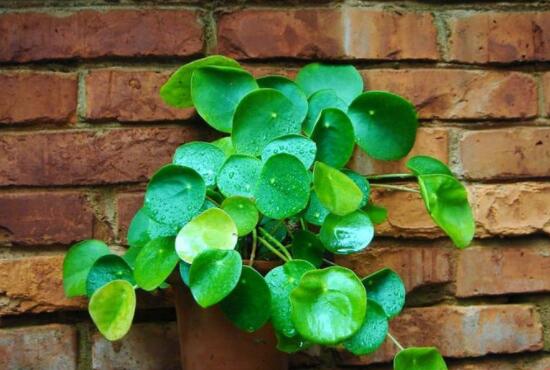
Pilea peperomioides likes a warm, humid environment. It is cold-tolerant, shade-loving, and avoids strong light, so how do you grow it? When growing it indoors, it should be placed in a spot with plenty of bright indirect light, and watered frequently to keep the potting soil slightly moist. As for the growing medium, it is best to choose moist, well-draining peat soil.
2. Growing methods and precautions for Pilea peperomioides
1. Soil
How to grow Pilea peperomioides indoors? First, you should reselect the soil. Nowadays, the Pilea peperomioides that plant enthusiasts have are basically bought online. There are ready-made potted plants, and normal care can keep the plant growing, but that soil is very cheap. If you want Pilea peperomioides to grow well, it is best to reselect the soil.
Soil selection: According to the growth habits of Pilea peperomioides, it likes loose, fertile soil with good drainage and aeration. For this, the editor recommends using a soil mix of 3 parts leaf mold, 3 parts garden soil, 2 parts river sand or furnace ash, and 1 part decomposed organic fertilizer. It is best to place tiles at the bottom of the flower pot to facilitate drainage.
2. Light
Pilea peperomioides is a foliage plant, so its demand for light is quite high, but it avoids strong light, so when growing it indoors, it should be placed in a spot with plenty of bright indirect light but protected from strong light.
Precautions: Pilea peperomioides has high light requirements; it cannot be too strong, nor too shady. Once the light is too strong, its leaves are easily scorched; once it is too shady, the leaves tend to become thinner, and the petioles elongate, causing the leaves to droop.
3. Temperature
How to grow Pilea peperomioides? Properly adjusting the temperature is also very necessary. It is understood that Pilea peperomioides likes a warm environment, and the most suitable growing temperature is 15-20°C. If you want it to grow well, it is best to maintain this growing temperature.
Precautions: Although Pilea peperomioides is relatively cold-tolerant, the overwintering temperature should be kept at 7°C, otherwise yellowing leaves, curling leaves, leaf drop, and even frost damage may occur; at the same time, Pilea peperomioides also fears high temperatures. When the temperature is higher than 30°C, the plant's growth will stagnate, and the leaves are also prone to falling off.
4. Watering
Water is the source of life. In the growing methods and precautions for Pilea peperomioides, watering is an indispensable part. Because Pilea peperomioides likes a humid environment, it should be watered more often in normal times to keep the potting soil moist. When the winter temperature is below 12°C, the frequency of watering should be controlled, otherwise it is prone to rot, which is not conducive to overwintering.
Precautions: Pilea peperomioides has high water requirements. If watering is insufficient, the leaves are prone to turning yellow and drooping, and in severe cases the leaves will wrinkle or even die; at the same time, Pilea peperomioides dislikes waterlogging, so it should not be overwatered, otherwise the leaves will discolor, and even the root system will rot and die.
5. Fertilizing
After watering, let's talk about fertilizing, which is also very important in the growing methods for Pilea peperomioides. Spring and summer are the growing seasons for Pilea peperomioides. At this time, fertilize once every half month with dilute liquid fertilizer, and at the same time often water or spray the leaves with a 0.1%-0.5% potassium dihydrogen phosphate solution.
Precautions: Because the stems and leaves of Pilea peperomioides are succulent, it needs fertilizer, but it is not tolerant of concentrated or heavy fertilizer. When fertilizing it, apply small amounts more frequently, and watering with dilute fertilizer water is most suitable. Once too much fertilizer is applied, it will cause leggy leaves and lodging of the plant, and in severe cases it will also cause root rot or even death of the plant.
6. Pests and diseases
During the growth of Pilea peperomioides, due to various reasons, the plant will inevitably suffer from pest and disease damage. According to research, the main pests and diseases include: scale insects, red spider mites, leaf spot disease, anthracnose, etc., all of which harm the health of the plant. So once discovered, everyone should immediately spray pesticide for control. As for what pesticide to spray, you can refer to the pest and disease control for Pilea peperomioides.
How to grow Pilea peperomioides? Key precautions for growing Pilea peperomioides
The leaves of Pilea peperomioides are nearly round, much like an ancient dressing mirror, and it is also called money grass. If you do not look carefully, it is very similar to Lysimachia nummularia (moneywort), very fresh and beautiful, and it is an indoor potted plant with considerable aesthetic appeal. So how do you grow Pilea peperomioides so that it thrives?
1. Actually, it is quite different from Lysimachia nummularia. Lysimachia nummularia likes a warm environment, while Pilea peperomioides is relatively cold-tolerant; as long as it is above zero degrees, it is fine, and it prefers a cool and shady environment.
2. The suitable growing temperature for Pilea peperomioides is around 15 degrees. Normally, do not let it be exposed to strong light, otherwise the leaves will curl. As long as it is not exposed to strong sunlight, bright indirect light is sufficient. In summer, appropriate shading is needed.
3. It is suitable to grow it with leaf mold, plus peat, a small amount of river sand, coal ash, and some base fertilizer. If you cannot find soil, you can use humus soil from under large trees on the mountain to grow it.
4. Watering needs to be timely. During the spring and autumn growing seasons, it needs frequent watering to keep the soil moist, or continuously spray water on the leaves to maintain a humid environment and increase air humidity.
5. It is a perennial herbaceous plant, meaning that if you grow it this year, it will continue to grow next year. It is quite easy to keep alive. Propagation is very simple.
In spring, some side shoots with adventitious roots will grow on the plant. Just keep four leaves, cut them off together with the adventitious roots, and then plant them in moist potting soil. In about ten days, they will take root and sprout.
Or select healthy branches, cut them off, and insert them into a flower pot, and they can also easily take root and survive.
6. Normally spray it with a little potassium dihydrogen phosphate to supplement phosphorus and potassium fertilizer, or organic fertilizer liquid, which will make its branches grow sturdy and its leaves a lush, emerald green.
7. When it is relatively cold in winter, it can be placed inside a balcony or grown indoors. Below five degrees will affect growth. If placed in a warm place, it can continue to grow, with many lush green leaves, very beautiful.
Lysimachia nummularia likes warm and humid conditions. It is best to cultivate it in partial sun or shade, and it avoids direct sunlight. There are no strict requirements for the growing soil, but loose, well-draining soil is best. It is shade-tolerant, moisture-tolerant, slightly drought-tolerant, highly adaptable, and can grow both in water and on land.