Butterfly bush dislikes waterlogging: what are the cultivation methods and precautions?
Butterfly bush is a fairly common plant worldwide, and people cultivate it in Asia, the Americas, Africa and other regions, but growing it well is not easy, and there are many points we need to pay attention to. How do you grow butterfly bush? What are the cultivation methods and precautions for butterfly bush? Let's take a look below.
1. How to grow butterfly bush: understand its habits
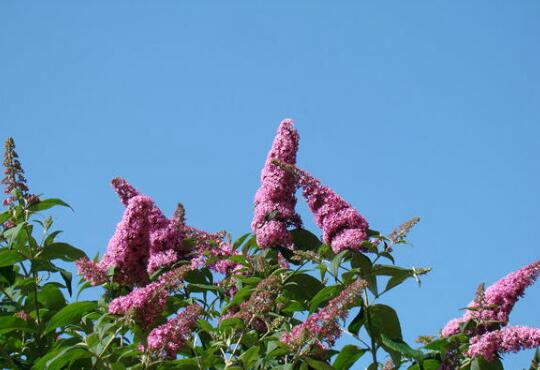
To know how to grow butterfly bush, we first need to understand its growth habits. This plant likes to grow in warm, humid environments and is quite light-loving, so when we grow it we should keep it in sufficient light. In addition, we also need to pay attention to daily water and fertilizer management. The details are introduced below. Let's take a look.
2. Cultivation methods and precautions for butterfly bush
1. Soil: sandy loam
If we want butterfly bush to grow vigorously, we need to choose suitable soil for it. This is the step of laying a good foundation and is very important. Generally it is best to choose loose, fertile sandy loam. This kind of soil has relatively good drainage and aeration, allows the plant to absorb nutrients better, and is not prone to water accumulation.
2. Fertilizing: fertilize very little
Butterfly bush does not have a very high demand for fertilizer during growth, so we do not need to fertilize regularly. We only need to apply an appropriate amount of base fertilizer to the substrate soil before planting, because too much growth energy promotes leaf growth rather than flower production, so unless it is growing in poor soil, it does not need fertilizing during its growth process.
3. Water: avoid water accumulation
Butterfly bush likes warm, humid environments, so when we grow it we should water frequently and keep the soil somewhat moist so that it can grow vigorously. However, we still need to pay attention to controlling the amount of watering. This plant does not tolerate waterlogging. If too much watering causes water accumulation, it will lead to root rot.
4. Light: avoid strong light
Butterfly bush is quite light-loving but does not tolerate strong light. When we grow it, if it is spring or autumn, because the light is relatively suitable, we can let it receive light all day so that it can carry out photosynthesis better and thus grow better. However, after summer arrives, because the light is relatively strong, we still need to provide appropriate shading to prevent strong light from scorching the plant.
5. Pests and diseases: deal with them promptly
In the process of growing butterfly bush, if we are not careful enough, pests and diseases can easily take advantage of the situation. Such problems are extremely harmful to the plant, so once we discover them we must deal with them promptly, because the longer it drags on, the greater the harm to the plant. As for the specific treatment methods, you can refer to the article on pest and disease control for butterfly bush, which has a detailed introduction.
How to grow Buddleja officinalis: cultivation methods and precautions for Buddleja officinalis / sufficient light
Buddleja officinalis is a shrub plant in the genus Buddleja, family Loganiaceae, and it can be seen in many regions of China, but to grow it well there are many points we need to pay attention to. How do you grow Buddleja officinalis? What are the cultivation methods and precautions for Buddleja officinalis? Let's take a look below.
1. How to grow Buddleja officinalis: understand its habits
To know how to grow Buddleja officinalis, we first need to understand its growth habits. This plant likes warm, humid environments and has a certain degree of cold tolerance, but it does not tolerate waterlogging, so when watering it we should pay attention to controlling the amount of water. In addition, we should also pay attention to daily light, fertilizing and other aspects. The details are introduced below. Let's take a look.
2. Cultivation methods and precautions for Buddleja officinalis
1. Soil: humus soil
If we want Buddleja officinalis to grow vigorously, we need to choose suitable soil for it. This is the step of laying a good foundation and is very important. Generally it is best to choose loose, fertile humus soil. This kind of soil is rich in nutrients and has relatively good drainage and aeration, allowing the plant to absorb nutrients better.
2. Temperature: 18-25°C
When growing Buddleja officinalis, environmental temperature is also something we need to pay attention to, because only by letting it grow at a suitable temperature can it grow better. The suitable growing temperature for Buddleja officinalis is between 18-25°C. The temperature must not be too high or too low, otherwise it is not conducive to its growth.
3. Fertilizing: fertilize three times
Buddleja officinalis does not have a high demand for fertilizer, so when growing it we do not need to fertilize excessively. It only needs fertilizing three times a year. The first is at planting time, when we should apply an appropriate amount of base fertilizer into the soil. After that, apply fertilizer once before flowering and once during the fruiting period. For fertilizer, we can choose a mixed fertilizer combining nitrogen, phosphorus and potassium.
4. Water: avoid water accumulation
Buddleja officinalis likes to grow in warm, humid environments, so when growing it we should water frequently and keep the soil somewhat moist so that the plant grows better. However, we need to pay attention to controlling the amount of watering and must not water too much, because Buddleja officinalis does not tolerate waterlogging, and if water accumulates its root system can easily rot.
5. Light: avoid strong light
Buddleja officinalis is a light-loving plant, but it does not tolerate strong light. If it is spring or autumn, when the light is relatively suitable, we can place it outdoors to receive light all day. However, after summer arrives, because the light is relatively strong, we still need to pay attention to shading to prevent strong light from scorching the plant.
6. Pests and diseases: deal with them promptly
In the process of growing Buddleja officinalis, if we are not careful enough, pests and diseases can take advantage of the situation. Such problems are extremely harmful to the plant, so once we discover them we must deal with them promptly, because dragging on will cause the plant to wither and die directly. As for the specific treatment methods for such problems, you can refer to the article on pest and disease control for Buddleja officinalis, which has detailed teaching.
Butterfly bush Buddleja lindleyana Fortune butterfly bush gallery: how to grow butterfly bush / how to propagate butterfly bush
Butterfly bush profileButterfly bush Buddleja lindleyana Fortune
Cultivation methods and precautions for butterfly bush, introduction to butterfly bush
Butterfly bush (Buddleja lindleyana Fortune) is a plant in the order Gentianales, family Loganiaceae. It is native to tropical and subtropical regions of the world. The leaves of most species in the genus Buddleja have down or chaff-like material, and the flowers are clustered, purple, white, yellow or orange.
Butterfly bush, also known as yuwei cao and zuiyu'er cao, is a plant in the order Lamiales, family Scrophulariaceae, genus Buddleja. It is a deciduous shrub, 1-2.5 m tall. The bark is tea-brown, much branched, and the branchlets are four-angled with narrow wings. The flowering period is April to July, and the fruiting period is October to November.
Butterfly bush is a semi-evergreen shrub in the genus Buddleja, family Verbenaceae. It is relatively cold tolerant (in the Shanghai area it tolerates an absolute minimum temperature of -8°C, the suitable growing temperature is 25-30°C, and it can also tolerate high temperatures of 39°C), has strong drought resistance, is not strict about soil quality, and is extensively managed. It likes sufficient sunlight and blooms most profusely in fertile, well-drained places. It should be pruned every year after flowering to ensure vigorous growth the following year. It blooms continuously from late spring until before frost, with large and showy inflorescences, a long flowering period and abundant blooms, making it an excellent summer and autumn flowering shrub. Butterfly bush is easy to cultivate and convenient to manage. Whether planted in groups or scattered, it can form a good natural-style landscape.
Morphological characteristics of butterfly bush
Butterfly bush is a shrub, 1-3 m tall. The stem bark is brown; the branchlets are four-angled, with slight narrow wings on the angles; the young branches, the underside of the leaves, the petioles, the inflorescences, the bracts and the bracteoles are all densely covered with stellate short tomentum and glandular hairs.
Leaves are opposite; leaves on sprouting branches are alternate or nearly whorled. The leaf blades are membranous, ovate, elliptic to oblong-lanceolate, 3-11 cm long and 1-5 cm wide, with acuminate tips, broadly cuneate to rounded bases, entire or wavy-toothed margins, dark green above, covered with stellate short pubescence when young and becoming hairless later, grayish yellow-green beneath; lateral veins 6-8 on each side, flat above and sunken after drying, slightly raised beneath; petioles 2-15 mm long.
The spicate cyme is terminal, 4-40 cm long and 2-4 cm wide; the bracts are linear, up to 10 mm long; the bracteoles are linear-lanceolate, 2-3.5 mm long; the flowers are purple and fragrant; the calyx is campanulate, about 4 mm long, the outside together with the outside of the corolla covered with stellate hairs and small scales, hairless inside, the calyx lobes broadly triangular, about 1 mm long and wide; the corolla is 13-20 mm long, pubescent inside, the corolla tube curved, 11-17 mm long, 2.5-4 mm in diameter in the upper part and 1-1.5 mm in diameter in the lower part, the corolla lobes broadly ovate or nearly round, about 3.5 mm long and about 3 mm wide; the stamens are inserted at the lower part or near the base of the corolla tube, the filaments are extremely short, the anthers are ovate with a pointed tip and ear-shaped base; the ovary is ovate, 1.5-2.2 mm long and 1-1.5 mm in diameter, hairless, the style 0.5-1 mm long, the stigma ovate, about 1.5 mm long.
The bark of butterfly bush is tea-brown, much branched, and the branchlets are four-angled with narrow wings. Both sides of the angles are covered with short white pubescence, which falls off when old.
Leaves are simple and opposite; petiolate, the petiole densely covered with tomentum; the leaf blades are papery, ovate to oblong-lanceolate, 3-8 cm long and 1.5-3 cm wide, with pointed tips, cuneate bases, entire or sparsely serrate margins; when young and tender, both sides of the leaves are densely covered with yellow tomentum, and the hairs fall off when old.
The spike is terminal, 18-40 cm long, with the flowers inclined to one side; the calyx is tubular, with 4 or 5 shallow lobes, densely covered with scales; the corolla is slender and tubular, slightly curved, purple, about 15 mm long, with white glossy fine scales outside and white fine pubescence inside, with 4 lobes at the tip, the lobes ovate; stamens 4; filaments short, adnate; pistil 1, style linear, stigma 2-lobed, ovary superior. The capsule is oblong, about 5 mm long, scaly, dehiscent into 2 valves when mature, with a persistent calyx at the base.
Seeds are small and brown.
The infructescence is spicate; the capsule is oblong or elliptic, 5-6 mm long and 1.5-2 mm in diameter, hairless, with scales, often with a persistent calyx at the base; seeds are light brown, small, wingless.
The flowering period is April to October, and the fruiting period is August to April of the following year.
Ecological habits of butterfly bush
It likes a warm, humid climate and deep, fertile soil, and has strong adaptability, but it does not tolerate water and moisture. Butterfly bush has strong stress resistance, tolerates severe cold and intense heat, and saves water and tolerates drought. At temperatures as high as 40°C and -15°C, it can grow normally and overwinter safely, and it can endure low temperatures of -30°C. The temporary wilting coefficient of the leaves of Buddleja alternifolia is 1.292%, and it is extremely drought tolerant. In areas with annual precipitation of 180-400 mm, irrigating 3 to 4 times per year, and in areas with about 400 mm, watering 1 to 2 times per year, is enough for it to grow and bloom. It is a good ornamental plant that saves water and tolerates drought.
Cultivation techniques for butterfly bush
Butterfly bush has graceful branches and leaves, abundant flowers, and an elegant fragrance. It is suitable for planting on slopes, at bridgeheads, and beside walls, or as a medium-sized hedge, or planted in groups on lawns or densely planted as a flower hedge or flower border.
Cultivation methods
Propagate by sowing, cuttings or division. Because the seeds are relatively small, it is suitable to broadcast them on raised beds, taking care to maintain moisture and build a shed for shade. When the seedlings reach about 10 cm in height, transplant them into larger containers.
Cuttings of butterfly bush can be done in spring, using dormant branches as cuttings. Division is carried out together with transplanting and takes root easily. During cultivation, the aboveground part can be cut back during the dormant period to encourage new branches the following year and more flowers.
Propagation methods
Butterfly bush has strong adaptability, tolerates poor soil and resists salinity and alkalinity: it is not strict about soil and grows well in loam, sandy loam, sand, gravelly soil and the like with good soil permeability.
It tolerates poor soil. When soil organic matter content is above 0.3%, annual growth can still reach 33 cm. It can grow and bloom normally at pH below 9 and salt content below 0.3%. It has strong stress resistance, tolerates severe cold and intense heat, and saves water and tolerates drought: at temperatures as high as 40°C and -15°C, it can grow normally and overwinter safely, and it can endure low temperatures of -30°C. The temporary wilting coefficient of the leaves of Buddleja alternifolia is 1.292%, and it is extremely drought tolerant. In areas with annual precipitation of 180-400 mm, irrigating 3 to 4 times per year, and in areas with about 400 mm, watering 1 to 2 times per year, is enough for it to grow and bloom. It is a good ornamental plant that saves water and tolerates drought.
Photo by Xue Jinze of butterfly bush. The branches are tough and strong, and it grows vigorously, with abundant flowers and brilliant flower colors. It tolerates pruning and is suitable for shaping, with strong ornamental value: properly pruned Buddleja alternifolia not only has a compact plant shape but also a long flowering period. It can be used in solitary planting, hedge planting, strip planting, block planting and other ways, and applied on a large scale in parks, roadside green spaces and along both sides of highways, creating a kind of imposing beauty.
Butterfly bush propagates easily, and cultivation and management are simple and extensive: Buddleja alternifolia can be propagated by sowing, cuttings and tissue culture. In particular, softwood cuttings take root easily, bloom 2-3 years after cuttings, and show results quickly.
Management during the growing period is extensive, and overwintering protection measures such as cold protection are not needed; there are few pests and diseases, which can reduce control costs and environmental pollution; it has strong branching ability and tolerates pruning, and generally should be pruned after flowering; it needs very little fertilizing, and applying decomposed base fertilizer before planting is enough.
Propagation methods for butterfly bush
Softwood cuttings in the growing season in May and June are preferable. The survival rate is high, growth is fast, and propagation is rapid.
Before cutting, first build a shade shed. Disinfect the river sand in the cutting bed with potassium permanganate or carbendazim. Use semi-lignified branches cut into 10 cm lengths, remove all the lower leaves, and cut off two-thirds of the upper 2-3 leaves. Make the upper cut flat, 1 cm from the bud, and make the lower cut diagonally on the back side of the bud into a horseshoe shape.
Use a wooden strip to open a furrow 5 cm deep in the river sand. Place the cuttings dipped in rooting agent neatly, then cover with sand, pat firm and spray water. The cutting density should be such that the leaves do not touch each other and are evenly distributed. After the whole bed is fully planted, spray once more thoroughly, then build an arched shed and cover it with plastic film, sealing all around.
Before rooting, spray water twice a day to lower the temperature and maintain moisture, keeping the temperature inside the shed at about 28°C and the relative humidity above 90%. In May and June, rooting takes about 20 days; in July and August, rooting begins in 2 weeks. After rooting, control moisture and pay attention to ventilation. According to the rooting situation, remove the arched shed. After hardening the seedlings for one week, transplant them.
Planting out
Use the rooted sprouts after cuttings for bare-root transplanting, and the nursery land must be carefully plowed and harrowed. To prevent the occurrence of pests and diseases, when preparing the nursery land apply 3-4 kg of phoxim granules and 50 kg of ferrous sulfate per mu. When transplanting, follow the word "fast": transport quickly and plant quickly, and irrigate promptly after finishing a bed. Because butterfly bush grows fast, the row spacing should not be too small; 35 cm x 50 cm is suitable. After transplanting, directly cover the small seedlings with shade netting for 2-3 days. On the afternoon of the third day, remove the shade netting and water thoroughly once more. When the soil surface is slightly dry, shallowly hoe once to preserve soil moisture. After 7-10 days the transplanted seedlings will survive, and after 2 months a scene of brilliant colors will appear before your eyes.
Common varieties in the variety classification of butterfly bush
1. Buddleja davidii Franch.
Deciduous shrub, up to 5 m tall, branchlets slightly angled, covered with soft hairs, simple leaves opposite, leaves large, 5-25 cm long, with fine teeth along the margin, the underside of the leaves densely covered with stellate tomentum, small cymes aggregated into spicate panicles, corolla pale purple with an orange-yellow throat, capsule oblong with a pointed tip, and many varieties, with rich flower colors and fragrant flowers. It can be cultivated outdoors and overwinter in areas south of Beijing.
2. Buddleja alternifolia Maxim.
Deciduous shrub, up to 3 m tall, branches slender and weak, spreading and drooping, simple leaves alternate, lanceolate, 4-8 cm long, the underside of the leaves with gray-white tomentum, clustered panicles borne on last year's branches, with a few small leaves at the base, corolla purple-blue, flowers fragrant. It grows in Shanxi, Hebei and the northwest region, and is relatively drought tolerant.
Distribution area of butterfly bush
Butterfly bush grows at altitudes of 200-2,700 m on mountain roadsides, in riverside thickets or at forest edges. It likes a warm, humid climate and deep, fertile soil, and has strong adaptability, but it does not tolerate water and moisture.
It is produced in Jiangsu, Anhui, Zhejiang, Jiangxi, Fujian, Hubei, Hunan, Guangdong, Guangxi, Sichuan, Guizhou and Yunnan and other provinces and regions. It is cultivated in Malaysia, Japan, the Americas and Africa.
Medicinal or dietary therapeutic value of butterfly bush
The medical information and health dietary information on Huahua Network is for reference only and cannot be used as a basis for diagnosis or medical treatment. For any health problem, consult professional medical personnel, and for the treatment of any disease, follow medical advice.
Ultimate flower-protecting mission: to love yourself, start from reality and strictly follow medical advice. For illness, do not be careless, do not delay, do not give up hope, face it bravely, use love to warm the silent world, and use your heart to care for the flower field within.
Medicinal value
Functions and indications
Dispels wind, kills parasites, invigorates blood. Treats influenza, cough, asthma, rheumatic joint pain, ascariasis, hookworm disease, bruises, traumatic bleeding, mumps and scrofula.
① "Fujian Folk Herbal Medicine": Can invigorate blood and promote the movement of qi.
② "Hunan Materia Medica Record": Dispels wind and removes dampness, promotes the movement of qi and resolves phlegm, detoxifies and relieves cough. Treats abdominal pain, diarrhea, carbuncles and swelling, and joint pain.
③ "Mindong Materia Medica": Promotes digestion and removes food stagnation, kills parasites. Treats colic caused by roundworms.
Pharmacological effects
Butterfly bush has certain insecticidal effects.
Attached formulas
① To treat influenza: 5 qian to 1 liang of butterfly bush. Decoct in water and take. ("Selected Compilation of Survey Materials on Simple and Proven Recipes")
② To treat hookworm disease: 5 qian of butterfly bush (reduced as appropriate for children). Boil in water for two hours, take
100 ml of the juice, add white sugar, and take it in divided doses after dinner and before breakfast the next morning. The dosage can be increased gradually from 5 qian to 5 liang. A few patients experienced symptoms such as nausea, abdominal pain, diarrhea, dizziness and fatigue. ("Selected Compilation of National Exhibits: Infectious Diseases")
③ To treat malaria: 1 liang each of butterfly bush and Baiying. Decoct in water and take within three to four hours before a malaria attack, for two consecutive days. ("Selected Compilation of Survey Materials on Simple and Proven Recipes")
④ To treat fresh bruises: fresh whole butterfly bush plant, 5 to 8 qian (3 to 5 qian if dried). Add an appropriate amount of red wine and boiling water, stew for one hour, and take orally. ("Fujian Folk Herbal Medicine")
⑤ To treat traumatic bleeding: dry butterfly bush leaves, grind into powder, sprinkle on the wound, and press gently; it has a hemostatic effect. ("Fujian Folk Herbal Medicine")
⑥ To treat poisoning from accidentally eating grouper roe (moderate poisoning) with incessant vomiting: grind yuwei cao into juice and take a small amount. ("Puji Fang")
⑦ To treat mumps: 5 qian of butterfly bush, 7 maple balls, and 3 qian of shepherd's purse. Boil with eggs and eat. ("Hunan Materia Medica Record")
⑧ To treat scrofula: 1 liang of whole butterfly bush plant. Decoct in water and take. ("Hunan Materia Medica Record")
⑨ To treat wind-cold toothache: fresh butterfly bush leaves and a little table salt, pound into a paste, take the juice and rinse the mouth. ("Fujian Chinese Herbal Medicine")
Clinical application
1. Treating chronic bronchitis
Using compound butterfly bush tablets, 8 tablets each time, taken 3 times a day (the daily dose is 5.3 qian of the crude drug butterfly bush, 4.7 qian of Ardisia japonica, and 2.6 fen of Genkwa flower), with 10 days as one course of treatment. After medication the effect was obvious. Generally after 3-5 days the cough was relieved, purulent sputum became thinner and easier to cough up, and wheezing was reduced, but it could not be completely controlled. Side effects included stomach discomfort, dry mouth and throat, intestinal gas, and a few reported dizziness, which disappeared after stopping the medication.
2. Treating bronchial asthma
Take butterfly bush as a decoction, twice a day, 2 liang each time. In 1 trial case, 10-15 minutes after each dose the patient coughed up a large amount of yellow purulent sputum. After about 2 weeks, the feeling of chest tightness and stuffiness improved markedly. Continuing the medication for 1.5 months (total drug amount reaching 6 jin), the symptoms gradually disappeared. A follow-up 3 months later showed the patient had returned to work, and there was no attack even when the weather changed. Examination showed clear breath sounds in both lungs.
Functions and indications
Dispels wind and removes dampness, relieves cough and resolves phlegm, dissipates blood stasis, and kills parasites. For bronchitis, cough, asthma, rheumatoid arthritis, and bruises; for external use, treats traumatic bleeding and burns and scalds, and is also used to kill maggots and eliminate mosquito larvae.
Usage and dosage
3-5 qian. For external use, an appropriate amount, pounded into a paste or ground into powder and applied to the affected area.
Precautions
1. Pregnant women are forbidden to take it.
2. When livestock eat a large amount, it causes poisoning phenomena such as vomiting, difficulty breathing, and tremors of the limbs. Rescue methods: gastric lavage, purgation, taking a large amount of sugar water or intravenous injection of glucose saline, and intramuscular injection of vitamin B1.
Uses and purposes of butterfly bush: ornamental applications
In landscaping, butterfly bush can be used for planting lawns, and can also be used for greening and beautifying slopes and wall corners. It is very beautiful for decorating rockeries, courtyards, roads and flowerbeds, and can also be used as cut flowers.
Buddleja davidii is cold tolerant, drought tolerant, tolerant of poor soil, tolerant of partial shade, tolerant of extensive management, and averse to waterlogging. The plant has extremely strong sprouting ability and is extremely tolerant of pruning, requiring no very high level of skill.
Using Buddleja davidii for landscaping has relatively low cost. Taking planting Buddleja davidii in a landscaping project as an example, if used for flowerbed landscaping, with a plant and row spacing of 50 cm, 500 sq m would plant 2,000 plants. Using small seedlings raised in winter and spring and planted in the project in April, if the price is 2 yuan per plant, 500 sq m would cost only 4,000 yuan; if using 60 cm tall seedlings from the previous year, at 3 yuan to 4 yuan per plant, 500 sq m would still cost only 6,000 yuan to 8,000 yuan; if the plant and row spacing is increased to 80 cm to 90 cm, the unit cost would be even lower. Whether using the current year's small seedlings or the previous year's large seedlings, planting them in spring means by July to August you can likewise enjoy a beautiful scene.
Compared with conventional landscaping tree species, the cost is basically the same, while the landscaping effect of Buddleja davidii is far higher than that of conventional tree species.
Cultural background of butterfly bush: plant culture
The whole butterfly bush plant is slightly toxic. Pounded and put into a river, it can anesthetize live fish, making them easier to catch, hence the name "zuiyu cao" (fish-intoxicating grass).
Textual research
1. "Lüchan Yan Bencao" (Materia Medica of the Craggy Cliffs): The fish-intoxicating herb must never be planted along the edges of household ponds, for fear that fallen flowers and leaves may drop into the water; if fish mistakenly eat them, they will surely be harmed, and the fragrance alone, upon contact, is also harmful.
2. "Gangmu" (Compendium of Materia Medica): Buddleja lindleyana grows everywhere in the south, mostly as small plants on the banks of moats and ditches, the taller ones reaching three or four chi. Its root resembles that of the goji (Lycium chinense). Its stem resembles that of the yellow vitex (Vitex negundo), with slight ridges and a thin yellowish bark, and its branches multiply easily. Its leaves resemble those of the water willow, growing in opposite pairs at the nodes, and it does not wither through the winter. In the seventh and eighth months it blooms in spikes, red-purple in color, exactly like yuanhua (Daphne genkwa), and bears fine seeds. Fishermen gather its flowers and leaves to poison fish, which are surrounded and all die, and so it is called the fish-intoxicating herb; it must not be planted beside ponds and pools. Its flower color, form, and scent are all like those of yuanhua, and it poisons fish in the same way, differing only in that its blooming time is not the same.
3. "Main Poisonous Plants of the South": After people and livestock consume large quantities of the flowers and leaves of Buddleja lindleyana, the symptoms of poisoning are dizziness, vomiting, difficulty breathing, numbness and trembling of the limbs. The rescue method is gastric lavage, purgation, drinking large amounts of sugar water or intravenous drip of glucose saline, intramuscular injection of vitamin B1, and symptomatic treatment. A Guangzhou herbal doctor introduces: fangfeng (Saposhnikovia divaricata) 2 qian, gancao (licorice) 2 qian, decocted in four bowls of clear water down to two bowls and drunk; jinlancao (also called xiyefengweicao) 4 qian, in four bowls of clear water, decocted down to one to two bowls and drunk.
The flower language of Buddleja lindleyana
The flower language of Buddleja lindleyana: faith.
As soon as it sees someone it likes, it clings and will not let go, but before long it grows tired of them; so if this behavior is not corrected, one may spend a lifetime in loneliness.
Pictures of Buddleja lindleyana