Gaillardia cultivation methods and precautions, sunlight must be sufficient
Gaillardia is an annual herbaceous plant in the Asteraceae family, and it can be seen in many regions of our country, but it is not easy to grow it well, and there are many things we need to pay attention to. How do you grow Gaillardia? What are the cultivation methods and precautions for Gaillardia? Below, the editor will take everyone to learn about it.
I. How to grow Gaillardia, understand its habits
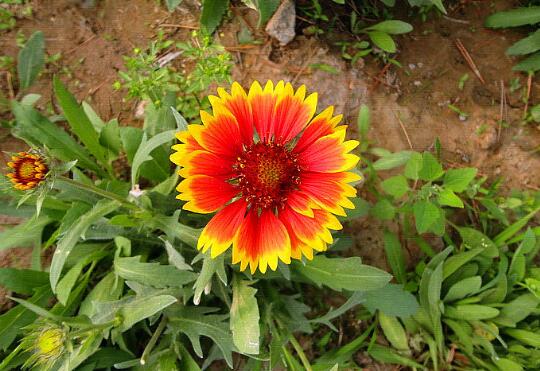
To know how to grow Gaillardia, we first need to understand its growth habits. This plant likes a warm environment, is drought-tolerant, and is also fairly tolerant of heat, but it is not cold-tolerant, so when cultivating it we should keep the environment warm and must not grow it in an environment with too low a temperature, otherwise it will be unfavorable for its growth.
II. Gaillardia cultivation methods and precautions
1. Soil, good drainage
If we want Gaillardia to grow vigorously, then we need to choose suitable soil for it. This is the step of laying a good foundation and is very important. Generally, it is best to choose loose, fertile humus soil. This plant's nutrients are rich, and the drainage and air permeability are both very good, allowing the plant to better absorb nutrients.
2. Temperature, 15-35°C
When cultivating Gaillardia, the ambient temperature is also something we need to pay attention to, because only when it grows at a suitable temperature can it grow better. The suitable growth temperature for Gaillardia is between 15-35°C. If the temperature is too low, it will cause the plant to stop growing, and in severe cases it will also freeze and damage the plant.
3. Fertilization, once every 20 days
Fertilizer is one of the main nutrients in the growth process of Gaillardia, especially after it enters its growth period, its demand for fertilizer is very high. Basically, it needs to be fertilized once about every 20 days. In terms of fertilizer, we can choose phosphate fertilizer and potassium fertilizer to apply, but the fertilizer must not be too concentrated; apply thin fertilizer. If the concentration is too high, it will burn the plant.
4. Water, water when dry, water thoroughly when watering
Gaillardia is a fairly drought-tolerant plant, so when cultivating it we do not need to water too frequently. We should maintain the principle of "do not water if not dry, water thoroughly if watering," and keep the soil slightly moist. Remember not to overwater, otherwise it will cause the plant to turn yellow and the flowers to grow slowly. If too much is watered and water accumulates, it will also cause the plant's root system to rot.
5. Light, sunlight must be sufficient
Gaillardia is a plant that fairly likes light, so when cultivating it we should let it maintain sufficient light, so that it can carry out photosynthesis better, and thus the plant will also grow better and more vigorously. This plant likes light and is also tolerant of high temperatures, so we do not need to worry too much about it being scorched by strong light.
6. Pests and diseases, deal with them promptly
When cultivating Gaillardia, if we are not careful enough, it is very easy for pests and diseases to take advantage of the opportunity and invade. Such problems are very harmful to the plant, so once we discover them we must deal with them promptly, because the longer it is delayed, the more unfavorable it is to the plant's growth. As for the specific treatment methods, everyone can refer to the article on pest and disease control for Gaillardia, which has detailed introductions.
Gaillardia cultivation methods and precautions
Gaillardia cultivation methods 1. Adapting to the environmentGaillardia is tolerant of drought and heat, not cold-tolerant, likes sunlight, and is also tolerant of partial shade. It is suitable for loose soil with good drainage. It is wind-resistant, moisture-resistant, and very resilient in growth. Its drought-tolerant characteristic makes it a good windbreak and sand-fixing plant.
2. Soil requirementsTo plant Gaillardia, you need to choose suitable soil. Generally, you need to choose soil with good drainage and loose texture, but be careful not to choose acidic soil, as it will cause poor plant growth.
3. Light and temperatureGaillardia likes a growth environment with high temperatures and sufficient sunlight. It can tolerate heat and is slightly less cold-tolerant. The suitable temperature for growth is between 15°C and 35°C. Sunlight requirements are sufficient, but it can tolerate partial shade.
4. Sufficient watering amountGaillardia's water requirements are frequent but in small amounts. It is fairly drought-tolerant and avoids rain, but it also needs to maintain a certain air humidity. Generally, Gaillardia should be watered and fertilized in small amounts and multiple times.
5. Sufficient fertilization amountIn cultivation measures for Gaillardia, attention should be paid to applying sufficient base fertilizer, spraying flower fertilizer, digging furrows to drain waterlogging, pinching to promote branching, and promptly removing spent flowers, etc., to promote growth and development. During the growth period, fertilization should be done early, with more phosphate fertilizer and potassium fertilizer applied. After fertilizing, keep the plant dry, and during the flowering period, water and fertilizer should be appropriately controlled.
Gaillardia cultivation precautions 1. Potting precautionsWhen potting Gaillardia seedlings, first place broken tiles or coarse sand particles at the bottom of the flowerpot as a drainage layer, then sprinkle some fully decomposed fertilizer as base fertilizer, place a layer of prepared soil on top of the base fertilizer, and finally place the plant. After potting, water the flowerpot thoroughly once, and place it in a shaded environment for a period of care.
2. Matters for flowering period managementDuring the flowering period of Gaillardia, keep the substrate moist. Lack of water will shorten the flowering period. Especially during the full bloom period, promptly replenish water in a targeted manner to keep the perennial Gaillardia moist.
3. Matters for pinching and pruningPinching and pruning are very important for the growth of Gaillardia. When the Gaillardia seedlings grow to more than 6 leaves, pinch them by removing the top shoots, which can promote branching of the Gaillardia plant. After that, pinch once more during the growth process, which can shape an ideal plant form and promote more flowering.
Gaillardia, Gaillardia cultivation methods, Gaillardia care knowledge
What Floral Bonsai Network shares with everyone today is an article about Gaillardia, Gaillardia cultivation methods, and Gaillardia care knowledge. Let's take a look.
Introduction to Gaillardia
Gaillardia(scientific name:Gaillardia pulchella), also known asblanket flower、tiger-stripe blanket flower(Shanghai),center flower、annual gaillardia, is a plant in the genus Gaillardia of the Asteraceae family, distributed in North America, tropical America, and the American continent. It is native to the central United States and is an annual plant with a very short growth period. It has now been introduced and cultivated artificially.
Gaillardia is the state flower of Oklahoma in the United States, and is also the county flower of Penghu County, Taiwan Province, China.
Gaillardia is tolerant of drought and heat, not cold-tolerant, likes sunlight, and is also tolerant of partial shade. It is suitable for loose soil with good drainage. Gaillardia is wind-resistant, moisture-resistant, and very resilient in growth. Its drought-tolerant characteristic makes it a good windbreak and sand-fixing plant.
Gaillardia is the state flower of Oklahoma in the United States, and is also the county flower of Penghu County, Taiwan, China.
Morphological characteristics of Gaillardia
Gaillardia is an annual herbaceous plant. The plant is about 20-60 cm tall, and the whole plant is covered with soft hairs. Leaves are alternate, lanceolate, oblong to spatulate, with entire margins or basal leaves pinnately lobed. Petal-like, the ray florets are yellow at the tip and brown-purple at the base. The flowering period is summer and autumn.
The cultivated variety of Gaillardia, annual gaillardia, has ray florets and even the tubular florets in the center of the flower head all developed into funnel shapes, and there are large-flowered and red-flowered varieties.
Gaillardia's flowering period is July-October, and the fruit ripening period is August-October.
Gaillardia's flower belongs to the "capitulum," and "one flower" is actually "a bunch of flowers," because it contains many ray florets and tubular florets. The ray florets on the outside are colorful, like a landing pad attracting insects to come; the tubular florets in the middle look like small round balls. After the ray florets wither, this part will develop into a seed cluster, and the seeds inside will then drift with the wind, fall to the ground, and grow. In addition, some Gaillardia ray florets grow into tube shapes, looking like curved little trumpets; some varieties of Gaillardia have the entire flower in a tender yellow color, with a unique charm; and Gaillardia's leaves and soft hairs are also worth observing.
Ecological habits of Gaillardia
Gaillardia likes high temperatures, dryness, and a sunlight-rich environment. It has good salt tolerance, resistance to strong winds, good drought tolerance, and good cold tolerance, but slightly poorer shade tolerance.
Gaillardia is native to North America. It is tolerant of drought and heat, not cold-tolerant, likes sunlight, and is also tolerant of partial shade. It is suitable for loose soil with good drainage. It is wind-resistant, moisture-resistant, and very resilient in growth. Its drought-tolerant characteristic makes it a good windbreak and sand-fixing plant. If in acidic soil, it is not only difficult to obtain strong seedlings, but the lower leaves also wither in midsummer. For rapid growth, fertilizer should be applied early, and the proportion of phosphorus and potassium needs to be somewhat higher.
Cultivation techniques for Gaillardia
Gaillardia has good cold tolerance and no special requirements for soil, but sandy soil and soil with good drainage are most suitable for its growth, and it does not like moisture. Its drought tolerance is very good, and it can grow well in a climate with sufficient sunlight, dryness, and heat. From summer to late autumn, it is commonly seen in felt-grass fields and along roadsides for several miles. In horticulture, by removing flower buds, further blooming of Gaillardia can be promoted. In winter, the aboveground part withers, and the roots remain underground to overwinter, then sprout again in spring.
Gaillardia can be propagated by sowing, division, and cuttings, while root cuttings require a certain level of skill.
Many cultivars of Gaillardia have been selected and bred, mainly cultivars with red and yellow alternating wheel-like flower disks. The recently selected cultivar "Sundance Bicolor" has flower heads with alternating red and yellow colors. Because its colors are vivid, it is suitable for planting in sunlight. The flower shape of this cultivar is very similar to that of the genus Chrysanthemum. The Plume series of Gaillardia has a double-flowered form, similar to cornflower.
Sowing propagation
Sowing is often carried out in summer. Disinfect the substrate used for sowing. The best method is to put it in a pot and heat it by stirring until hot; any pests and diseases can be scalded to death. Soak the seeds in warm hot water (temperature similar to face-washing water) for 3-10 hours, until the seeds absorb water and swell. For very common seeds that germinate easily, this work can be skipped. For tiny seeds that are difficult to pick up by hand or with other tools, you can wet one end of a toothpick with water, stick the seeds one by one onto the surface of the substrate, cover with substrate 1 cm thick, then place the sowing flowerpot into water, with the water depth at 1/2-2/3 of the flowerpot height, and let the water slowly soak upward. For larger seeds that can be picked up by hand or with other tools, directly place the seeds into the substrate and sow them in spots at a spacing of 3 x 3 cm. After sowing, cover with substrate at a thickness of 2-3 times the size of the seeds. After sowing, use a sprayer or a fine-hole watering can to moisten the sowing substrate. Later, when the pot soil is slightly dry, water again. Still be careful not to water too forcefully, so as not to wash the seeds up; management after sowing: after the seedlings emerge after sowing, promptly uncover the film, and let the seedlings receive sunlight before 9:30 every morning or after 3:30 in the afternoon, otherwise the seedlings will grow very weak; after most of the seeds have emerged, appropriate thinning is needed: pull out the diseased and unhealthy seedlings so that the remaining seedlings have a certain amount of space between them; when most of the seedlings have grown 3 or more leaves, they can be transplanted into pots.
Cutting propagation
The branches used for cuttings are called cuttings. Usually combined with pinching work, the thick, pest-free and disease-free top shoots that are removed are used as cuttings, and the top shoots are directly used for cutting. After cutting, the following management should be noted: Temperature: The optimal temperature for rooting of cuttings is 18°C-25°C. Below 18°C, cuttings root with difficulty and slowly; above 25°C, the cut of the cuttings is easily infected by pathogens and rots, and the higher the temperature, the greater the proportion of rot. When low temperatures are encountered after cutting, the main measure for keeping warm is to wrap the flowerpot or container used for cutting with film; when the temperature is too high after cutting, the main cooling measure is to shade the cuttings, blocking 50-80% of sunlight, and at the same time spray the cuttings, 3-5 times a day. On sunny days with higher temperatures, spray more times; on cloudy and rainy days with lower temperatures and higher humidity, spray fewer times or do not spray.
Transplanting
When potting seedlings, first place 2-3 cm thick coarse-grained substrate or ceramsite at the bottom of the pot as a drainage layer, sprinkle a layer of fully decomposed organic fertilizer on top as base fertilizer, about 1-2 cm thick, then cover with a layer of substrate about 1-2 cm thick, and then place the plant, so as to separate the fertilizer from the root system and avoid burning the roots. The substrate used for potting can be one of the following. Vegetable garden soil: cinder = 3:1; or garden soil: medium-coarse river sand: sawdust (mushroom residue) = 4:1:2; or one of paddy soil, pond mud, and leaf mold. Or peat + perlite + ceramsite = 2 parts + 2 parts + 1 part; vegetable garden soil + cinder = 3 parts + 1 part; peat + cinder + ceramsite = 2 parts + 2 parts + 1 part; sawdust + vermiculite + medium-coarse river sand = 2 parts + 2 parts + 1 part. After potting, water thoroughly once, and place it in a slightly shaded environment for one week of care. When transplanting seedlings, first dig the planting hole, sprinkle a layer of organic fertilizer at the bottom of the planting hole as bottom fertilizer (base fertilizer), about 4-6 cm thick, then cover with a layer of soil and place the seedling, so as to separate the fertilizer from the root system and avoid burning the roots. After placing the seedling, backfill the soil, cover the root system, and press the soil firm with your feet, then water thoroughly once. Before flowering, generally pinch twice to promote the sprouting of more flowering branches; one to two weeks after potting, or when the seedlings are 6-10 cm tall and have more than six leaves, remove the top shoots and keep the lower 3-4 leaves to promote branching. Three to five weeks after the first pinching, or when the side branches grow to 6-8 cm long, carry out the second pinching, that is, remove the top shoots of the side branches and keep the 4 leaves below the side branches. After two pinchings, the plant form will be more ideal and the number of flowers will also be greater.
Management and care of Gaillardia
Humidity management
It likes relatively high air humidity. If the air humidity is too low, it will accelerate the withering of individual flowers. It is also afraid of rain, and the leaves need to be kept dry at night. The most suitable relative air humidity is 65-75%.
Temperature management
Heat-tolerant, not tolerant of frost and cold.
Light management
Likes sufficient sunlight, slightly tolerant of partial shade.
Fertilizer and water management
Like other herbaceous flowers, Gaillardia has relatively high requirements for fertilizer and water, but it is required to follow the fertilization (water) principle of "apply light fertilizer frequently, small amounts with more times, and complete nutrition," and after fertilizing, keep the leaves and flowers dry at night:
Summer and autumn: This is its peak growth season. Fertilizer and water management follows the cycle order of "Hua Bao" - "Hua Bao" - clear water - "Hua Bao" - "Hua Bao" - clear water (at least ensure two "Hua Bao" applications per week). After entering the flowering period, appropriately control fertilizer to facilitate seed maturation.
Distribution area of Gaillardia
Gaillardia is native to the central United States and is an annual plant with a very short growth period. It has now been introduced and cultivated artificially.
Gaillardia is distributed in North America, tropical America, and the American continent.
Garden uses of Gaillardia
Gaillardia is a very good herbaceous plant for sand land greening, beautification, and sand fixation. Its flower posture is charming, its colors are brilliant, its flowering period is long, and cultivation and management are simple. It can be used as material for flower beds and flower clumps.
Tending management: The best cultivation soil is loam or sandy loam. Drainage and sunlight need to be good. If sunlight is insufficient, it will affect flowering and result in poor blooming. Fertilize once a month. The suitable growth temperature is 10-25°C.
Cultural background of Gaillardia
County flower of Penghu County
Gaillardia is the county flower of Penghu County, Taiwan Province, China. It can be seen everywhere in Penghu, so Penghu is called the Chrysanthemum Island.
The whole plant of Gaillardia has soft hairs, which can prevent water loss. This is the main reason Gaillardia can survive in harsh environments.
Gaillardia's leaves are slender, and its flowers are yellow and red, with a few golden yellow; the flower stems are long and upright; the seeds drift with the wind, fall to the ground, and grow.
It can withstand wind, tolerate drought, resist moisture, and is very resilient in growth. It is a good windbreak and sand-fixing plant.
Because of its strong reproductive capacity and vitality, after being introduced from North America at the time, Gaillardia grew vigorously at an astonishing speed in the Penghu Islands and along the central and northern coasts of Taiwan. Today, the beautiful Gaillardia has become one of the scenic sights of Penghu tourism, and because of its tough characteristics it was selected as the county flower of Penghu.
Poetry quatrain
[Gaillardia]
Author: Yuqiaozi
Strong winds demand the top flower plume,
The achenes fly and stop everywhere.
Expanding territory rewards the savage,
When the flowering period comes, it is fragrant again.
The flower language of Gaillardia
The flower language and symbolic representative meaning of Gaillardia: unity, working together with one heart.