What to do when Calathea ornata leaves turn yellow? Adjust light, water and fertilizer, and control pests and diseases
As a common foliage plant, Calathea ornata has richly colored leaves, with white, green and red in equal measure, giving a unique visual enjoyment. But during cultivation, for certain reasons, its leaves can turn yellow, which affects its overall ornamental value. So what should be done when Calathea ornata leaves turn yellow? Today the editor will solve this problem for everyone.
I. What to do when Calathea ornata leaves turn yellow
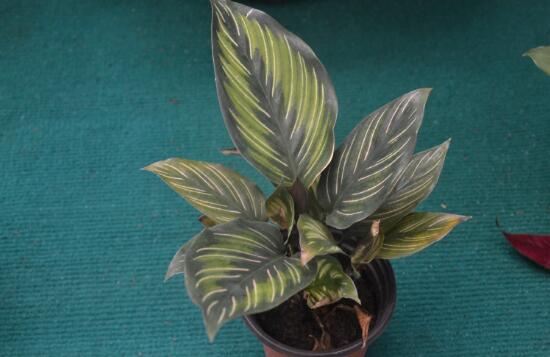
When it comes to yellowing leaves on Calathea ornata, apart from unsuitable environment, it is caused by improper care: when light is insufficient or too strong, supplement light or provide shade; when water and fertilizer are improper, water and fertilize reasonably; if root rot occurs, take the plant out of the pot, cut off the rotten roots, then replace the potting soil and replant; if it is caused by pests and diseases, spray pesticide promptly for control.
II. Causes of yellowing leaves on Calathea ornata and remedies
1. Sudden environmental change
Regarding the causes of yellowing leaves on Calathea ornata, if it is a newly potted plant, it may be caused by a sudden environmental change. Because many of the Calathea ornata plants hobbyists grow are bought online, this easily causes a relatively large change in environment all at once, and the Calathea ornata cannot adapt for the moment, thus showing symptoms of yellow leaves.
Remedy: Based on the growth habits of Calathea ornata, create the most suitable growing environment for the newly bought potted plant; after some time, the plant will recover its health.
2. Improper light
Insufficient light: Although Calathea ornata is shade-tolerant, it still has a need for light. Once it is in a shaded environment for a long time, its leaves cannot form chlorophyll because they do not get enough sunlight, and they will turn yellow. Remedy: Just supplement light, but note that the light must not be too strong.
Too much light: Calathea ornata dislikes direct strong light. Once strong sunlight shines directly on its leaves, it easily causes the leaf tips and leaf margins to wither, and yellow spots appear on the sun-facing parts of the leaves. Remedy: Move the pot to a shaded place promptly, water it moderately after it recovers a little, and then gradually move it to a place with good light.
3. Improper watering
Too little watering: Calathea ornata likes a moist environment, and daily care requires frequent watering to keep the potting soil moist. Once watering is insufficient, its leaves will turn yellow due to lack of water, shown as: old leaves withering and yellowing from bottom to top and falling off, but new leaves growing relatively normally. Remedy: Water moderately; just water thoroughly and generously.
Too much watering: Calathea ornata likes water, but even liking it has a limit. Once watering is excessive and water accumulates in the pot, its root system will have difficulty breathing, resulting in the symptom of yellowing leaves on Calathea ornata. Remedy: Take the Calathea ornata out of the pot and place it in a ventilated, cool place to let the water evaporate quickly; if there is root rot, it also needs to be cut off, then put it back into the pot.
4. Too much fertilizer
Insufficient fertilizer: The leaves of Calathea ornata are broad and richly colored. To make it grow well, a moderate amount of fertilizer is very important. During cultivation, if fertilizer is insufficient, its old leaves will turn yellow due to lack of nutrients. Remedy: Supplement nutrients promptly, but fertilizing Calathea ornata should follow the principle of light fertilizer applied frequently.
Too much fertilizer: Although Calathea ornata likes fertilizer, too much fertilizer will cause fertilizer burn, resulting in dry brown tips on new leaves that are uneven and not smooth, and old leaves turning scorched yellow and falling off. Remedy: Stop fertilizing immediately, then irrigate with water to dilute it; if the roots are burned and rotten, you should also take the plant out of the pot, cut off the rotten roots, then replace with new potting soil and replant.
5. Pests and diseases
Besides the above points, yellowing leaves on Calathea ornata may be caused by pests and diseases. It is understood that under improper care and poor environment, Calathea ornata may be attacked by aphids and scale insects. They mainly harm the plant's leaves, and all results cause yellow leaves.
Remedy: Very simple: identify the specific pest, then spray pesticide accordingly for control. As for what pesticide to spray, you can refer to pest and disease control for Calathea ornata.
Overall, the cultivation method for Calathea ornata is not difficult, but because many hobbyists are beginners, the symptom of yellow leaves inevitably appears. However, after reading the whole article, I believe everyone feels more confident now; when yellow leaf problems appear, just remedy them according to the above methods. That is all the editor will introduce about yellowing leaves on Calathea ornata, hoping it can help everyone.
What to do when Calendula leaves turn yellow, and how to handle it
When Calendula shows yellowing leaves, people often think pathogens are responsible, but in fact this is only one cause. Improper watering, fertilizing and light can all cause yellow leaves. Let's look at the causes of yellowing leaves in Calendula.
Analysis of Calendula leaf yellowing: large flowers in a small pot cause Calendula leaves to turn yellowSome Calendula varieties have larger flowers and more roots, and need more water and fertilizer. A small pot cannot meet their growth needs, and at this time the old leaves become dry, yellow and lusterless, while the young leaves are thin and weak. You should repot it and add 30% humus soil to the soil to ensure normal flower growth.
Lack of water causes Calendula leaves to turn yellowReduced watering will cause the plant's leaves to droop. At this time, spray water on the leaves immediately, then water the pot. When watering, pay attention to proceeding step by step and do not water too much all at once.
When the weather is dry and indoor humidity is low, yellow leaves can also appear. Especially in winter in areas heated by coal fires or radiators indoors, the problem is more serious. At this time, frequently spray and wash the branches and leaves with water close to room temperature to increase air humidity. In summer, frequently sprinkle water on the ground to keep the local environment moist.
Improper fertilizing causes Calendula leaves to turn yellowDuring the growth period of Calendula, not fertilizing for a long time or insufficient fertilizing will cause yellow leaves. When too much fertilizer is applied, the flowers have difficulty absorbing the excess fertilizer, which can burn the roots and affect the absorption of water and nutrients.
In summer, fertilize once a week, and avoid excessive fertilizing. If too much fertilizer is applied, water more to dilute the fertilizer in the soil. When fertilizer is lacking, the soil will become compacted; fertilize immediately, and results will be seen within a week, then fertilize on schedule to keep the flowers growing normally.
Cold causes Calendula leaves to turn yellowIf Calendula is moved outdoors too early and is exposed to cold wind, or if it is not moved indoors in time during the cold autumn and the flowers are frozen, yellow leaves result. Therefore, do a good job of cold protection in early spring and late autumn.
Pests and diseases cause Calendula leaves to turn yellowThe yellowing leaves of Calendula are often caused by mosaic virus disease; yellowing leaves will also show mottled yellow-green spots. Pay attention to preventing the disease in time, spray pesticide promptly, and provide sufficient light and ventilation.
High alkalinity causes Calendula leaves to turn yellowBecause potted flowers are watered for a long time, salt and alkali accumulate in the potting soil. In severe cases, an alkaline crust forms on the potting soil and makes the flowers and leaves fall off. The method is to replace with new soil or spray ferrous sulfate solution on the leaves to neutralize it. Using alum fertilizer water and fermented rice washing water can both achieve relatively good results, but do not apply too much. If too much ferrous sulfate is applied, the leaves also turn yellow but do not fall off; at this time, appropriately water with alkaline water to adjust.
Dry air causes Calendula leaves to turn yellowSome flowers cultivated in the north that like moist air environments, such as camellias and orchids, are often affected when the air is too dry, which can cause dry leaf tips, scorched leaf margins or scorched spots on the leaves, and symptoms such as curled, wrinkled edges turning brown. Especially in winter in areas heated by coal fires or radiators indoors, the problem is more serious. At this time, frequently spray and wash the branches and leaves with water close to room temperature to increase air humidity. For families growing flowers on balconies in summer, sprinkle water on the balcony floor to keep the local environment moist and also lower the temperature.
It is different from the common Asteraceae plants we know. It is afraid of hot weather, but is relatively tolerant of low temperatures, and an environment of minus nine degrees will not affect it. Therefore, to grow this plant, you must first understand its growth habits, and then use reasonable care methods.
What to do when jasmine leaves turn yellow? Causes and solutions
Jasmine is also known as jasmine, Xianghun, Molly flower, Meili, etc. It is an upright or climbing shrub of the genus Jasminum in the family Oleaceae. Its flowers are a famous raw material for scented tea and an important raw material for essential oils. Its flowers and leaves are used medicinally to treat red, swollen and painful eyes and have the effect of relieving cough and reducing phlegm. However, in actual cultivation, yellowing leaves often occur. Let's take a look below at what to do when jasmine leaves turn yellow!
Potting soil tends to be alkaline
[Cause] Jasmine is watered with relatively alkaline water for a long time. As alkalinity increases, iron deficiency occurs, causing poor plant growth and yellow, withered branches and leaves.
[Solution] Apply ferrous sulfate solution or alum fertilizer water to increase the soluble iron element in the soil, and the problem can be solved.
Malnutrition
[Cause] When jasmine is grown in a pot, if the soil is not changed and fertilizer is not applied for a long time, the soil nutrients become insufficient and the leaves turn yellow.
[Solution] Change the soil promptly and strengthen water and fertilizer management, or directly strengthen fertilizer and water application.
Improper fertilizing
[Cause] When jasmine is fertilized too heavily or with undecomposed organic fertilizer, it causes “root burn” and withered yellow branches and leaves appear.
[Solution] Remove part of the potting soil and replace it with new potting soil. In daily management, it is better to apply light fertilizer frequently; do not try to fill it up all at once.
Caused by water accumulation
[Cause] If the jasmine potting soil is in a wet state for a long time, the root system will suffocate and rot due to lack of oxygen, and the plant cannot absorb nutrients, causing the leaves to turn yellow and even wither and die.
[Solution] Watering should be done alternately dry and wet; do not let the potting soil always be soggy.
Unsuitable temperature
[Cause] Jasmine is not cold-tolerant. If it encounters low temperatures, normal physiological metabolism in the body will be disrupted, causing the leaves to turn yellow.
[Solution] Adjust the microclimate of the environment, add plastic film, or move it to a warmer place for care and management.
Insufficient light
[Cause] During the growth period, jasmine needs sufficient light conditions. In a semi-shaded place it can still maintain a good state for a period of time, but in a shaded place it will quickly show yellow leaves, withered tips, and even leaf drop. Insufficient light generally affects flowering and normal growth.
[Solution] Adjust the placement position and increase the lighting time.
Pests and diseases
[Cause] When jasmine is harmed by pests such as red spider mites and scale insects, the phenomenon of withered yellow branches and leaves also occurs.
[Solution] Pay attention to ventilation and increase air humidity for prevention. When pests appear, spray pesticide promptly for control.