How to deal with bugs on lucky bamboo? Pest and disease control and leaf spot spraying methods
When growing plants indoors, pests and diseases are something everyone needs to pay close attention to, because their appearance often deals a devastating blow to the plant. And lucky bamboo, as a beautiful green plant, is not only good-looking but also has many benefits, so it is often kept as a potted plant at home. So, during the growing process, what should you do if lucky bamboo gets bugs? Here are several pest and disease control methods for lucky bamboo, let's take a look!
I. How to deal with bugs on lucky bamboo
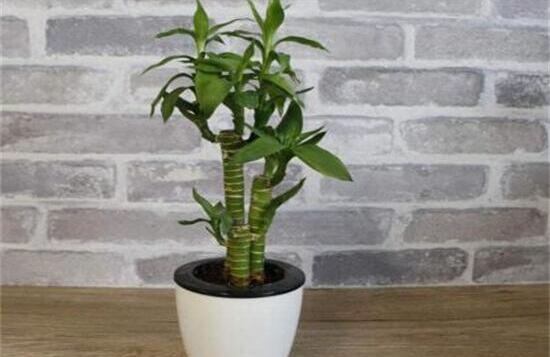
Lucky bamboo has strong vitality and generally rarely gets bugs, but under improper care and poor environmental conditions, it can also get bugs and become sick. The main diseases of lucky bamboo are leaf spot, root rot and anthracnose, and the main pests are scale insects and red spider mites. Their appearance will affect the health and appearance of the plant, so once found they should be removed immediately!
II. Pest and disease control for lucky bamboo
1. Lucky bamboo scale insects
Although lucky bamboo is not prone to bugs, in poorly ventilated and poorly lit environments, scale insects will also come calling. These insects generally float and attach to the surface of the plant's leaves, and their secretions pollute the leaves, affecting the plant's photosynthesis, which leads to wilting leaves and induces sooty mold, causing great harm.
Control method: When there are few scale insects, you can use a brush dipped in water to gently brush off the insects, then spray white vinegar for prevention; when there are many scale insects, you can spray 40% omethoate 1000 times dilution for control, spraying once a week, and 2 to 3 consecutive sprays will be effective.
2. Lucky bamboo red spider mites
Besides scale insects, under high temperature and high humidity with poor ventilation, lucky bamboo may also get red spider mites. These pests mainly pierce the leaves of lucky bamboo with their mouthparts to suck the sap, damaging the plant's chlorophyll, causing the leaves of lucky bamboo to turn yellow and even fall off.
Control method: When individual leaves are affected, the infested leaves can be removed; when more leaves are affected, propargite, dimethoate, huachongjing, fenvalerate and other pesticides should be sprayed early for control.
3. Lucky bamboo root rot
Under improper care, lucky bamboo can also become sick, and the most common is root rot. This disease generally appears when there is excessive watering or poor drainage of the potting soil, combined with a dark indoor environment, causing the roots and stems of lucky bamboo to turn black and rot, accompanied by the yellowing of the lucky bamboo stalks.
Control method: After discovering the above symptoms, cut off the rotted parts of the lucky bamboo, apply sulfur powder, then replace with fresh culture soil and replant.
4. Lucky bamboo leaf spot
When the indoor temperature fluctuates greatly in a short period, or when watered too much during the dormant period, lucky bamboo is also prone to leaf spot. This disease mainly harms the lower leaves of lucky bamboo; the diseased leaves will show many small brown spots, and in severe cases the spots will spread over the entire leaf.
Control method: When the above symptoms are found, promptly remove the diseased leaves and destroy them together to reduce the source of infection; in the early stage of the disease, you can also spray 42% kejunqing powder 3000 times dilution on the leaf surface, spraying once every 5-7 days, for 2-3 consecutive sprays, and it can basically recover.
5. Lucky bamboo anthracnose
In the pest and disease control of lucky bamboo, anthracnose is also something everyone needs to prevent. This disease easily occurs in the rainy season when humidity is too high and the environment is not ventilated. If lucky bamboo shows blackened leaf tips and yellow spots on the leaves, it has probably caught anthracnose.
Control method: When the above symptoms are found, if it is winter or spring, promptly remove and destroy the diseased leaves, and sprinkle quicklime to disinfect the soil. In the early stage of the disease, you can spray 75% chlorothalonil 600 times dilution or 50% thiram wettable powder 500 times dilution, spraying once every 7-10 days, and 3 consecutive sprays will be effective.
That's all for the pest and disease control of lucky bamboo. I believe everyone will know what to do when lucky bamboo gets bugs or becomes sick again! Overall, the growing method of lucky bamboo is not difficult; as long as everyone takes good care of it, bugs will not come calling. Finally, may everyone's lucky bamboo grow beautifully~
How to treat bugs on Calathea orbifolia? Pest and disease control for Calathea orbifolia / 3 pests 2 diseases with pesticide spraying
As a beautiful foliage plant, Calathea orbifolia has richly colored leaves, with white, green and red all equally matched, looking extremely beautiful! But when grown indoors, due to environmental differences and carelessness in maintenance, you will encounter many problems, such as getting bugs and becoming sick. So how do you treat bugs on Calathea orbifolia? Here is the pest and disease control for Calathea orbifolia, let's take a look together.
I. How to treat bugs on Calathea orbifolia
In the process of growing Calathea orbifolia, due to various reasons, it is inevitable to encounter situations of getting bugs and becoming sick. The main pests are aphids, scale insects and red spider mites, and the diseases are leaf spot and southern blight. Their appearance will harm the health and appearance of the plant. As for how to treat bugs on Calathea orbifolia, everyone should spray pesticides in time for control.
II. Pest and disease control for Calathea orbifolia
1. Calathea orbifolia aphids
If you find that Calathea orbifolia has bugs, it is very likely aphids, because they are the main pest of foliage plants. These insects generally appear on tender leaves and newly grown buds, feeding on the sap in the leaves, causing the leaves of Calathea orbifolia to turn yellow, and at the same time black or yellow diseased spots will appear.
Control method: When there are few aphids, manual aphid control can be adopted, using a writing brush or brush to brush off the aphids and bury them in the potting soil; when there are many scale insects, you can spray 40% omethoate 1500 times dilution or 90% trichlorfon solution for control. Usually pay attention to reasonable watering and fertilizing to improve its resistance to pests and diseases.
2. Calathea orbifolia scale insects
When the environment is not ventilated and care is improper, Calathea orbifolia is also prone to scale insects. These insects attach to the leaves, absorbing the nutrients and water within, causing poor growth of Calathea orbifolia, and the leaves chewed by scale insects will also cause other diseases, and in severe cases will directly cause Calathea orbifolia to wither and die.
Control method: When there are few scale insects, you can use a brush for manual treatment; if a large number of scale insects are found, in addition to manual removal, you also need to cooperate with spraying for control. The pesticide can be 50% malathion 1500 times dilution, or 255 imiphos 1000 times dilution for control, spraying once a week, and two consecutive sprays can effectively control it.
3. Calathea orbifolia red spider mites
Besides aphids and scale insects, red spider mites are also a main pest of Calathea orbifolia. These insects often occur when ventilation is poor, mainly piercing the leaves of Calathea orbifolia with their mouthparts to suck the sap, damaging the plant's chlorophyll, causing leaves to turn yellow in mild cases, and even leaf drop in severe cases, seriously affecting the ornamental value.
Control method: After discovering the diseased insects, you can use decis for treatment, or spray 25% fenbutatin oxide EC 800 times dilution, 73% propargite 2000 times dilution and other pesticides.
4. Calathea orbifolia leaf spot
Calathea orbifolia has strong adaptability and can be said to rarely get sick, but under high temperature and poorly ventilated environments, it can also catch leaf spot. In the early stage of the disease, small yellow-brown spots appear on the leaves of Calathea orbifolia, and halos also appear at the edges; in severe cases, the spots will quickly spread to every branch and leaf of Calathea orbifolia, and finally cause Calathea orbifolia to wither and die.
Control method: After discovering the above symptoms, promptly cut off all diseased branches to reduce the source of infection; then spray relevant pesticides, choosing 38% oxadixyl-fosetyl-aluminum 800-1000 times dilution, or 4% flusilazole 1000 times dilution, spraying once every week, and three consecutive sprays will be effective.
5. Calathea orbifolia southern blight
Among the pests and diseases of Calathea orbifolia, southern blight is also something everyone needs to pay attention to. This disease is often more serious in July and August, but it also occurs frequently at ordinary times, often because the soil is too moist and poor. When the disease occurs, it causes purple-brown spots on the leaves, followed by an obvious white mycelium layer, and in severe cases the plant withers and eventually dies.
Control method: After discovering the above symptoms, promptly spray fungicides such as carbendazim, Bordeaux mixture, lime sulfur mixture on the stem base of the plant and on the substrate; or, after the disease occurs, directly remove the infected potting soil and sprinkle pentachloronitrobenzene powder or lime.
That's all for the pest and disease control of Calathea orbifolia. I believe everyone will know what to do when Calathea orbifolia gets bugs or becomes sick again! Overall, the growing method of Calathea orbifolia is not difficult; as long as everyone takes good care of it, bugs will not come calling. Finally, may everyone's Calathea orbifolia grow beautifully~
What to do when jasmine gets bugs? Pest and disease control for jasmine / 2 pests 2 diseases
In the process of growing jasmine, the last thing we want to encounter is pests and diseases. Such problems are very harmful to the plant; they not only affect its shape and appearance, but if left untreated for a long time will also cause the plant to wither and die. So what to do when jasmine gets bugs? And how should the pest and disease control of jasmine be done? Below, let me take everyone to learn about it.
I. What to do when jasmine gets bugs, find the cause
If you want to know what to do when jasmine gets bugs, first we need to understand what kind of bug it is, so that we can carry out targeted treatment, because the treatment methods for each pest and disease are different. The specific details are introduced in detail below, and friends who are troubled by this can take a look.
II. Pest and disease control for jasmine
Red spider mites
Among the pests and diseases of jasmine, red spider mites are a relatively high-incidence one. Their peak period is every summer, so everyone must pay extra attention at this time. When this pest appears, the plant's leaves will gradually turn yellow and white, and if left untreated for a long time will also cause the plant to wither.
Control method: When dealing with this pest, red spider mites, we can directly use 40% dicofol EC 1000-1500 times dilution for spraying and killing. Generally, three consecutive sprays can completely kill this pest.
Whiteflies
Whiteflies are very small and hard to find with the naked eye. Generally, the largest whiteflies are over 3mm, so to find this pest you can only judge from the symptoms. This pest mainly sucks the plant's sap, causing the plant to lose nutrients and appear withered.
Control method: The most direct method for this pest is to use medication for treatment. Generally, we can choose insect chitinase inhibitors to spray on the plant, so as to achieve the effect of eliminating this pest.
Leaf spot
Leaf spot is a disease caused by fungi. Its peak period is every spring and autumn, so everyone must pay extra attention in these two seasons. Leaf spot mainly harms the leaves of jasmine. When the disease occurs, many prototype spots appear on the leaves, and the spots will gradually expand, and the shape will also become irregular, finally causing the plant to gradually wither and die.
Control method: When preventing and controlling leaf spot, a pest and disease of jasmine, we can use 80% mancozeb 400-600 times dilution to spray the diseased plant. Generally, spraying once every 10-15 days, 1-2 times can lead to recovery.
Powdery mildew
Powdery mildew is a relatively common plant disease. This disease generally appears on the leaves. At first, many irregular white powder blocks appear, and as the disease develops they gradually turn black-brown, and in the later stage will directly cause the leaves to wither, yellow and twist.
Control method: Promptly pull out the diseased plants and gather them together to destroy them. Or choose 25% carbendazim wettable powder 500 times dilution for spraying.