How to grow lotus bamboo? Growing methods and precautions, avoid dry wind
Lotus bamboo, as the name suggests, is a beautiful plant. It was only introduced into our country in recent years. Its stems are upright and elegant, and its leaves stay evergreen all year round, making it highly ornamental when grown indoors. In daily life, many people want to grow lotus bamboo, so how do you grow lotus bamboo? Below are the growing methods and precautions for lotus bamboo, very detailed, so friends who want to grow it should definitely take a look~
1. How to grow lotus bamboo, understand its habits
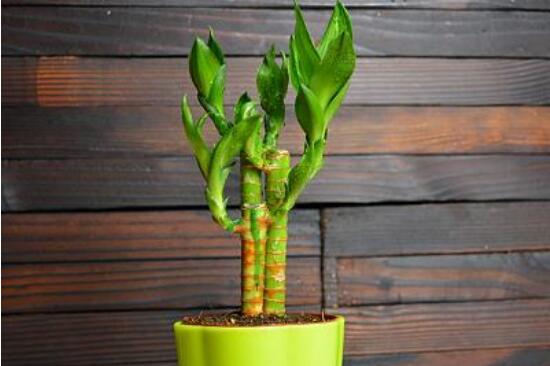
Lotus bamboo likes a warm, humid, semi-shaded environment. It is tolerant of waterlogging and has strong cold resistance, but dislikes strong light. So how do you grow lotus bamboo? When growing it indoors, you should place it in an environment with plenty of diffused light, and water it regularly to keep the potting soil moist. As for the growing medium, lotus bamboo is not demanding about soil, as long as it drains well.
2. Growing methods and precautions for lotus bamboo
1. Soil
How do you grow potted lotus bamboo? First of all, you should replace the potting soil. This is because whether the lotus bamboo pot is bought from a flower shop or online, the soil inside is very cheap. It can ensure the plant grows, but if you want it to grow better, it is best to choose new soil.
Soil choice: Although lotus bamboo is not demanding about soil, it grows best in well-drained sandy soil, semi-muddy sand, or alluvial clay. For this, the editor recommends using soil mixed with leaf mold and river sand or furnace slag ash.
2. Light
In the growing methods for lotus bamboo, light is very important, but it likes a semi-shaded environment and is shade-tolerant but afraid of sun exposure. So when caring for it at home, it is best to put it in a place with plenty of diffused light, such as under a south-facing window or on a balcony. This helps the leaves carry out photosynthesis, making the leaves dark green, broad, thick, and glossy.
Precautions: Lotus bamboo dislikes strong light. In summer, it should be moved to a place with a shade rate of 50%-70%. Once exposed to direct strong light, phenomena such as yellowing and fading of lotus bamboo leaves will appear, seriously affecting the plant's ornamental value.
3. Temperature
How do you grow lotus bamboo? Adjusting the temperature in good time is also key. It is understood that the most suitable growing temperature for lotus bamboo is 20-28°C. If you want its leaves to stay evergreen all year round, it is best to maintain this temperature when growing it indoors.
Precautions: Although lotus bamboo has strong cold resistance and can withstand low temperatures of 2—3°C, in winter, if you want it to continue growing, the room temperature should be adjusted to above 5°C.
4. Watering
Lotus bamboo likes a humid environment, but it dislikes waterlogging, so in the growing methods for lotus bamboo, watering is a very important part. During the growing season from May to September, water lotus bamboo more, and water it whenever the surface of the potting soil looks a bit dry. During dry air periods, spray water on the leaves frequently.
Precautions: When watering lotus bamboo, you need to keep the soil moist, preferring moist over dry. But moist does not mean waterlogged, otherwise root rot easily occurs; in addition, in winter, you can wait until the potting soil is dry about 2cm deep from the surface before watering.
5. Fertilizing
After watering, let's talk about fertilizing, which is also very important during the growth of lotus bamboo. However, lotus bamboo is not demanding about fertilizer. Besides adding a certain amount of fully decomposed organic fertilizer as base fertilizer when repotting, you can apply a small amount of compound fertilizer granules with a nitrogen:phosphorus:potassium ratio of 2:1:1 to the potting soil once a month during the growing season. No fertilizing is needed in winter.
6. Pests and diseases
In the process of growing lotus bamboo, due to poor environment, improper care, and other reasons, the plant will inevitably develop pests and diseases. Among them, the main pests are thrips and scale insects, and the main diseases are leaf spot, stem rot, and root rot. Their appearance will harm the plant's health and beauty. So once discovered, pesticide should be sprayed immediately for control. For specific pesticides, refer to lotus bamboo pest and disease control.
7. Avoid wind
In the growing methods and precautions for lotus bamboo, there is one more point everyone should note, and that is the growing environment. It is understood that lotus bamboo is afraid of wind and radiation, so its placement should be far from places hit by electric fans, and also far from TVs, washing machines, air conditioners, and so on.
Overall, lotus bamboo is quite easy to grow, but if you want to grow it beautifully, everyone needs to put in more care and follow the requirements above for maintenance, so that it can grow incomparably beautiful. The editor has introduced the growing methods and precautions for lotus bamboo here. Flower lovers who are tempted might as well try growing it~
How to grow epiphyllum? Growing methods and precautions for epiphyllum
Epiphyllum, also known as red peacock, is very beautiful, so how do you grow epiphyllum? Below we will tell you the growing methods and precautions for epiphyllum.
1. Growing methods for epiphyllum
1. Soil: Epiphyllum is not particularly demanding about soil. Loose, fertile, well-drained sandy loam is sufficient.
2. Watering: During the growth and development period of epiphyllum, watering should follow the principle of watering when dry and stopping when wet. Never let water accumulate in the pot, otherwise root rot easily occurs. When flower buds have appeared but not yet opened, watering must not be excessive, otherwise it easily causes flower and bud drop. In the dry and windy spring and the hot summer, it is necessary to frequently spray the modified stems with clean water and also sprinkle water on the ground around the flowerpot to maintain relatively high air humidity, which is beneficial for growth and flowering.
3. Sunlight: Epiphyllum likes a warm and humid environment, but dislikes direct sunlight. In summer, when the weather is hot and sunlight is strong, it should be placed under a shade shed to avoid direct sunlight, and water should often be sprayed around the pot to increase air humidity. In winter, when the weather is cold, epiphyllum is not cold-tolerant, so after being brought indoors it should be placed in a sunny spot.
4. Temperature: Epiphyllum is not cold-tolerant. In northern regions, it should be brought indoors around the Cold Dew solar term, and after being brought indoors, placed in a sunny spot. From November to March of the following year, the temperature should be kept at 10-15°C. If the temperature is too high, the modified stems easily become leggy, affecting the symmetry of the plant shape; from March to June, the temperature should be kept at 13-18°C. If the temperature is too low, it affects bud formation.
5. Pruning: Because the modified stems of epiphyllum are soft, thin bamboo poles are needed as supports. It is best to tie them into an oval trellis and evenly distribute the modified stems on the trellis and tie them up. This can both prevent breakage and help ventilation and light penetration, making the plant shape symmetrical and beautiful.
6. Fertilizing: Epiphyllum likes fertilizer. During the growing season, apply decomposed dilute cake fertilizer water once every 15-20 days. After Spring Festival, change to applying liquid fertilizer once every 10 days, and promptly remove excessive side buds and branch buds sprouting from the base to reduce nutrient consumption and keep the plant shape neat and beautiful. During the bud stage, apply quick-acting phosphorus fertilizer 1-2 times additionally to promote larger flowers and brighter colors.
7. Pests: Epiphyllum often suffers from stem rot, brown spot, and root-knot nematode damage. It can be sprayed with 50% carbendazim wettable powder at 1000 times dilution. For root-knot nematodes, irrigate with 80% dibromochloropropane emulsifiable concentrate at 1000 times dilution for control. When ventilation is poor, it is susceptible to aphids, scale insects, and red spiders, which can be killed by spraying with 50% fenitrothion emulsifiable concentrate at 1000 times dilution.
2. Precautions needed for epiphyllum
1. For potting, use fully decomposed growing medium rich in organic matter.
2. Summer is the growing season, and the potting soil should remain moist, not waterlogged, to avoid root rot. Avoid strong light; it can be grown in a semi-shaded place, and avoid rain exposure.
3. In autumn, apply decomposed liquid fertilizer as a top dressing. Without sufficient nutrients, it is not easy to flower or it flowers little. In autumn, remove shade facilities and increase light.
4. In winter, move it indoors, water less, and place it in a spot with light to control its growth. If the winter room temperature is too high, dense new shoots often sprout from the base, and they should be removed at any time to avoid consuming nutrients and affecting flowering after spring.
5. Spring is the season for flower bud growth, so watering and fertilizing should not be excessive, to avoid bud drop. In the evening, some water can be sprayed on the branch surfaces.
The role of lotus bamboo and its growing methods
Also known as lotus bamboo and Guanyin bamboo, lotus bamboo was only introduced in recent years. It grows coarsely and vigorously, stays evergreen all year round, and has upright and elegant stems with a free and easy posture and a rich bamboo charm. It is a fairly good indoor foliage plant.
Because it is named lotus bamboo and Guanyin bamboo, in feng shui it is a plant that implies good fortune and protection of peace, and it is also very suitable as an offering decoration on an altar. It is an evergreen small tree. It is similar to ordinary lucky bamboo, but its stems are thicker, its internodes are shorter, and its leaves are wider. The shape of the leaves at the top when spread out resembles a lotus, hence the name lotus bamboo. It is suitable for water culture, potting, and hydroponics. Its ornamental value is extremely high, and it is one of the few greenery and decorative items that can be placed indoors for a long time.
Why do many homeowners place some lotus bamboo after decorating a new home? It turns out that lotus bamboo also has the effect of absorbing harmful gases. Besides absorbing harmful gases and purifying the air, what other household effects does it have? The Jiuzheng Home bricklayer has summarized some of the roles and growing methods of lotus bamboo for everyone.
The role of lotus bamboo in matching with home styles
Lotus bamboo belongs to the evergreen upright shrub of the genus Dracaena in the lily family, and is very suitable for indoor water-grown flowers. Lotus bamboo was only introduced in recent years. It grows coarsely and vigorously, stays evergreen all year round, and has upright and elegant stems with a rich bamboo charm and a free and easy posture. It is a fairly good indoor foliage plant. It is similar to ordinary lucky bamboo, but its stems are thicker, its internodes are shorter, and its leaves are wider. The shape of the leaves at the top when spread out resembles a lotus, hence the name.
In recent years, lotus bamboo has also become an important plant for decorating homes. Lotus bamboo can absorb harmful gases such as ammonia, acetone, benzene, trichloroethylene, and formaldehyde. Its distinctive plant shape placed on an office desk has the effect of relieving eye fatigue. Lotus bamboo is suitable for ordinary potting, or directly water-grown. It can be placed on windowsills and in bright places near windows in living rooms, studies, bedrooms, and other places for display and viewing.
The symbolism of lotus bamboo: "wealth and good fortune," "rising step by step," and "everlasting youth." It is suitable for water culture, potting, and hydroponics. Its ornamental value is extremely high, and it is one of the few greenery and decorative items that can be placed indoors for a long time. Botanical characteristics of lotus bamboo: the leaves are emerald green, and the stems are straight and round like bamboo. It can be placed indoors for a long time to view its leaves. It does not need special care; as long as there is enough water, it can grow vigorously.
Lotus bamboo must be tall, and the height depends on the placement location; if it is placed on a windowsill, six to seven inches is most suitable; if it is placed at the entrance, then at least two feet or more is best; but if it is placed in the hall or at the whole home's wealth position, then it must be at least three feet or more in height.
The feng shui role of lotus bamboo
Lotus bamboo was only introduced in recent years. It grows coarsely and vigorously, stays evergreen all year round, and has upright and elegant stems with a free and easy posture and a rich bamboo charm. It is a fairly good indoor foliage plant.
Because it is named lotus bamboo and Guanyin bamboo, in feng shui it is a plant that implies good fortune and protection of peace, and it is also very suitable as an offering decoration on an altar.
Lotus bamboo is an evergreen small tree. It is similar to ordinary lucky bamboo, but its stems are thicker, its internodes are shorter, and its leaves are wider. The shape of the leaves at the top when spread out resembles a lotus, hence the name.
Lotus bamboo is suitable for ordinary potting, or directly water-grown. It can be placed on windowsills and in bright places near windows in living rooms, studies, bedrooms, and other places for display and viewing.
The role of lotus bamboo in the home
Home and decorative role
Lotus bamboo has a short plant shape and is suitable for home greenery decoration. It can be placed on windowsills, balconies, and desks, and can also be used as row decoration in halls, as well as a cut flower ingredient. It can absorb harmful gases such as ammonia, acetone, benzene, trichloroethylene, and formaldehyde. Its distinctive plant shape placed on an office desk has the effect of relieving eye fatigue.
Growing methods for lotus bamboo
Light
It likes a semi-shaded environment and dislikes direct strong light. A suitable shade rate is 50%-70%.
Temperature
It likes warmth. The suitable growing temperature is 20-28°C. Its cold tolerance is not strong. In winter, the temperature should be kept above 5°C.
Watering
It likes moisture. During the growing season, water it whenever the surface of the potting soil looks a bit dry. During dry air periods, spray water on the leaves frequently. In winter, you can wait until the potting soil is dry about 2cm deep from the surface before watering.
Normally, apply a small amount of compound fertilizer granules with a nitrogen:phosphorus:potassium ratio of 2:1:1 to the potting soil once a month. No fertilizing is needed in winter.
The above is the shared information on the roles and growing methods of lotus bamboo. For more household plants, please stay tuned.