Can Lucky Bamboo be grown in water? Hydroponic methods and key points for rooting in 15 days while avoiding cold drafts
Lucky Bamboo (Dracaena sanderiana), just like its name suggests, has stems like bamboo and leaves like lotus, looking very beautiful and deeply loved by plant enthusiasts. However, when growing it indoors, many enthusiasts prefer hydroponics over soil culture. So can Lucky Bamboo be grown in water? If so, how do you grow Lucky Bamboo hydroponically? Next, let's take a look at the hydroponic methods for Lucky Bamboo.
I. Can Lucky Bamboo be grown in water? Yes
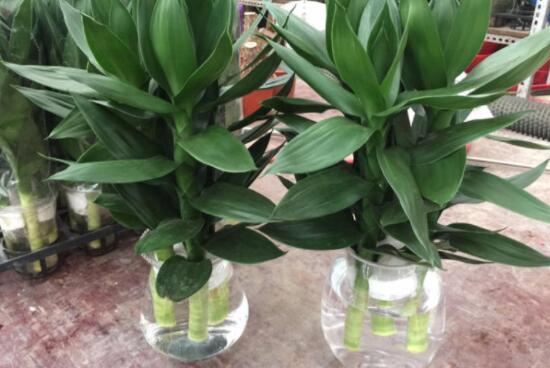
Lucky Bamboo likes humid environments and has strong vitality; even inserting its leaves into water can keep it alive, so can Lucky Bamboo be grown in water? Clearly it can. It is understood that Lucky Bamboo is a plant that stays green year-round and is suitable for both soil culture and hydroponics, and hydroponically grown Lucky Bamboo has even higher ornamental value!
II. How to grow Lucky Bamboo hydroponically: change the water once every 3-4 days
1. Container selection
To grow Lucky Bamboo hydroponically, you first naturally need to choose a hydroponic container for it. For this, the editor recommends using a nice-looking transparent glass container, which not only makes it easy to observe its rooting progress, but also looks lovely as the white roots of the Lucky Bamboo stand out against the water.
2. Selecting hydroponic cuttings
How do you grow Lucky Bamboo hydroponically? It is actually very simple: from a soil-grown Lucky Bamboo, select a robust growing branch and cut it off as a hydroponic cutting. Then cut off all the leaves at the base of the branch, and use a small knife to cut the base into a slanted shape, which helps with better water absorption.
3. Starting hydroponics
Insert the hydroponic cutting into water, then keep changing the water once every 3-4 days with clean water, or you can put a little charcoal in it to prevent the plant from rotting. After doing this, keep the glass bottle unmoved for 10 days; generally in 15 days the Lucky Bamboo will grow pure white small roots, and after that comes hydroponic care.
(2) Hydroponic growing methods for Lucky Bamboo
1. Switch from changing water to adding water
After the Lucky Bamboo has rooted, you don't need to change the water so frequently; when you notice the water level dropping, you can just add a little water. The reason is that if you change the water frequently, it can cause the Lucky Bamboo's leaves to turn yellow.
2. Moderate fertilizing
In the hydroponic growing methods for Lucky Bamboo, moderate fertilizing is also very necessary. You can add a small amount of nutrient solution to the glass container every three weeks; just add a few drops when you top up the water. However, note that fertilizing should be done right at the start of hydroponics; once the plant's roots have grown out, you no longer need to add it.
3. Avoid cold drafts
Regarding the hydroponic methods for Lucky Bamboo, there is one more thing you must not forget, and that is the placement location. You should keep the glass bottle away from air conditioners or fans, avoiding the possibility that cold drafts cause the edges or tips of the Lucky Bamboo's leaves to turn yellow and wither.
Can Lucky Bamboo be grown in water? Home hydroponic growing methods and precautions for Lucky Bamboo
Lucky Bamboo has a short, compact form and strong adaptability; it can be grown not only in soil but also in water, and each method has its own characteristics. Although its name contains the word "flower," it is a non-flowering plant, generally grown for its foliage. Below is an introduction to its hydroponic methods and precautions.
Can Lucky Bamboo be grown in water?
It is native to the western islands of the Indian Ocean and the tropical regions of Asia and Africa. It was introduced to mainland China in the early 1980s and began to be planted in large quantities in the early 1990s. It has now become a major economic crop in the southern coastal regions of China. It can be grown hydroponically.
Home hydroponic growing methods and precautions for Lucky Bamboo
Growing methods
1. Before placing, cut off the leaves at the base of the cutting, and use a sharp knife to cut the base into a slanted opening; the cut should be smooth to facilitate the absorption of water and nutrients. Change the clean water once every 3-4 days, do not move the position or change the direction within 10 days, and after about 15 days silvery-white fibrous roots can grow.
2. After rooting, it is not advisable to change the water; only add water promptly after the water evaporates and decreases. Frequent water changes easily cause yellow leaves and withered branches.
3. After rooting, promptly apply a small amount of compound fertilizer, then the leaves will be glossy green and the stems sturdy. If no fertilizer is applied for a long time, the plant will grow thin and weak, and the leaf color will easily turn yellow. But do not fertilize too much, to avoid "burning the roots" or causing leggy growth. In spring and autumn, apply compound fertilizer once a month.
Precautions
1. Temperature control
You need to manage the indoor temperature for hydroponic Lucky Bamboo well, because Lucky Bamboo prefers warmth; 16°C to 25°C is moderate, and it is not suitable to place it in a cold spot for growing. Take good anti-freezing measures.
2. Light and ventilation management
Make sure the Lucky Bamboo gets enough lighting time; even when grown indoors, let it receive moderate sunlight. Just place it in a ventilated spot with sufficient light.
3. You need to fertilize Lucky Bamboo
Some enthusiasts, when buying Lucky Bamboo, were told by the seller that it only needs clean water, so they did not fertilize, and later the leaves turned yellow. In fact, hydroponic Lucky Bamboo also needs fertilizing. It depends on the actual situation; on average, fertilize about once every 30 days. Moderate fertilizing can keep its leaves glossy green and spread out for a long time, or you can add an appropriate amount of culture solution.
Does Lucky Bamboo bloom?
Lucky Bamboo is a species under the genus Dracaena in the family Liliaceae. Lucky Bamboo is suitable for water growing, potted growing, and hydroponics. It has extremely high ornamental value and is one of the few greenery and decorative items that can be placed indoors for a long time. It is a non-flowering plant.
What to do if Lucky Bamboo leaves turn yellow
1. Scorch yellow: Strong direct sunlight hitting the Lucky Bamboo easily causes the leaf tips and leaf margins to dry out, and yellow spots appear on the sun-facing parts of the leaves. Just move it to a shaded spot.
2. Light-deficiency yellow: Being placed in a shaded environment for a long time means the leaves cannot get enough sunlight and cannot form chlorophyll; the whole plant's leaves turn yellow and then fall off. Supplementing light can prevent this problem.
3. Fertilizer yellow: Yellowing of Lucky Bamboo caused by too much fertilizer or too high a concentration shows as dry brown tips on new leaves; generally the leaf surface is thick and lacks gloss, and is uneven and not spread out, while old leaves turn scorched yellow and fall off. Immediately stop fertilizing; in severe cases, use a large amount of clean water to flush out part of the fertilizer.
4. Fertilizer-deficiency yellow: This shows as tender leaves becoming lighter in color, turning yellow or pale green, while old leaves remain relatively normal or gradually turn from green to yellow. Usually apply thin fertilizer frequently and add some alum water at the right time. (Lucky Bamboo is a foliage plant, so fertilizer mainly based on nitrogen should be applied.)
Although Lucky Bamboo has strong vitality and adaptability, improper care can also easily cause problems. Yellow leaves are one of its common problems, divided into scorch yellow, light-deficiency yellow, fertilizer yellow, and fertilizer-deficiency yellow. We should observe carefully to see which cause it belongs to and treat it accordingly, so it can grow well.
Hydroponic growing methods for Umbrella Papyrus
1. Container:
Do not choose a shallow-bottomed one. You can put some colored glass balls or pebbles in the container, which not only stabilizes the center of gravity but also increases the aesthetic appeal.
2. Water quality:
When growing Umbrella Papyrus hydroponically, you can use river, lake, or pond water, or well water. If it is tap water, it is best to let it settle for 24 hours first. Definitely do not use mineral water. For water quality, acidic water among electrolyzed ion water is preferable.
3. Care work:
(1) When growing Umbrella Papyrus hydroponically, the water surface should contact the upper part of the roots at 3 cm; do not submerge too much, to avoid root rot affecting respiration. If the stem part rots, you must promptly cut off the rotten part to prevent the rotten part from expanding; it is best to cut at the bamboo node. Generally, once Umbrella Papyrus has rooted, it is not prone to rotting. If rotting occurs, besides cutting off the rotten part, you can also put some Lianglübao in the water to promote rooting.
(2) In summer, Umbrella Papyrus has a relatively large evaporation rate, so the water needs to be changed once every 2 to 3 days to keep the water quality from being polluted. At the same time, when the air is dry, remember to mist the leaf surface, and at night you can let the Umbrella Papyrus receive night dew.
(3) Umbrella Papyrus has little demand for fertilizer; after a relatively long period, you can dissolve one or two fertilizer tablets in water to increase nutrients.