What to do when the lotus bamboo stem turns yellow? Shade it, replenish water, and spray pesticide for control
As a green plant, lotus bamboo has many uses, but its most popular attribute is its ornamental value. Lotus bamboo has a sturdy, straight plant form and lovely emerald-green leaves, so when its leaves turn yellow or its stem turns yellow, flower lovers must be very anxious! So what should be done when the lotus bamboo stem turns yellow? Today the editor will help everyone solve this problem.
I. What to do when the lotus bamboo stem turns yellow
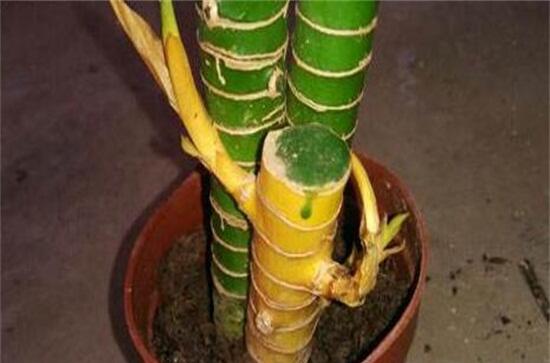
When the lotus bamboo stem turns yellow, it is generally caused by improper care: if poor soil permeability causes root rot, then cut off the rotten roots, change the potting soil, and replant; if the light is too strong, shade it promptly; if water is insufficient, then replenish water; if pests or diseases appear, then spray pesticide promptly for control; if fertilization is improper, then supplement fertilizer or water to dilute it.
II. Causes of the lotus bamboo stem turning yellow and solutions
1. Unsuitable soil
Lotus bamboo does not have high soil requirements, but low requirements do not mean any soil can be used casually. Once the soil permeability is too poor, normal watering can easily lead to water accumulation in the pot, and over time this will cause root rot. And if the lotus bamboo roots rot, various symptoms will appear, such as the lotus bamboo stem turning yellow.
Solution: At this point, everyone only needs to replace the potting soil, changing to loose, fertile sandy soil with good air permeability and drainage; if there are rotten roots, they also need to be cut off, and then replant.
2. Light too strong
Lotus bamboo likes a semi-shaded environment, and sufficient diffused light can let it grow quickly; however, it fears strong light. Once exposed to excessively strong light, or placed in a strong-light environment for a long time, it will directly cause the lotus bamboo stem to turn yellow.
Solution: Move the potted plant to a ventilated, cool place, water it appropriately, and after it recovers, gradually increase the light for it; but in daily care, in summer everyone should shade the lotus bamboo potted plant, and when the light is not strong, it can be allowed to bask in the sun.
3. Insufficient watering
Lotus bamboo likes a moist environment, and daily watering should be frequent. If watering is insufficient, it will inhibit the plant's growth, thus causing the bamboo stem to turn yellow and die.
Solution: What should be done when the lotus bamboo stem turns yellow? If it is caused by insufficient watering, it is very simple, just replenish the water, and it is best to keep the potting soil moist; in addition, when the air is too dry, it should also be sprayed every day.
4. Improper fertilization
After discovering that the lotus bamboo stem has turned yellow, everyone should consider whether there is a problem with fertilization. Because when too little fertilizer is applied, its bamboo stem will lack nutrients and turn yellow; when too much fertilizer is applied, it will burn the roots, inhibit the plant's absorption, and also cause the bamboo stem to turn yellow.
Solution: When fertilization is insufficient, just apply an appropriate amount of fertilizer; when fertilization is excessive, water it to dilute, and if the roots have already been burned and rotted, it also needs to be removed from the pot, the rotten roots cut off, and then the potting soil changed and replanting done.
5. Pests and diseases
When it comes to the lotus bamboo stem turning yellow, pests and diseases are a point everyone cannot ignore. Because when lotus bamboo suffers from leaf spot disease or root rot disease, yellow-brown spots will appear on its bamboo stem, then slowly spread, and in severe cases cause the plant to die.
Solution: Cut off the affected parts, then spray pesticide accordingly. As for what pesticide to spray, different diseases use different medicines; for this, you can refer to lotus bamboo pest and disease control.
What causes lotus bamboo leaves to turn yellow, and what to do when lotus bamboo leaves turn yellow / shade
Lotus bamboo, an ornamental plant with a graceful plant form, has stems as round as bamboo and leaves like lotus flowers, and is often potted at home as a household greenery decoration. However, during cultivation, many flower lovers' lotus bamboo develops yellow leaves, affecting the ornamental value. So what causes lotus bamboo leaves to turn yellow? What should be done when lotus bamboo leaves turn yellow? For this, the editor will explain it for everyone.
I. What causes lotus bamboo leaves to turn yellow
When it comes to lotus bamboo leaves turning yellow, aside from unsuitable environment, it is generally caused by improper care: if the light is too strong, the leaves will be scorched and turn yellow; if the light is insufficient, the leaves cannot form chlorophyll and will turn yellow; if fertilization is insufficient, the leaves lack nutrients and turn yellow; if too much fertilizer is applied, causing fertilizer damage, the roots cannot breathe smoothly, and the leaves will also turn yellow.
II. What to do when lotus bamboo leaves turn yellow
1. Sudden environmental change
Regarding the causes of lotus bamboo leaves turning yellow, if it is a newly potted plant, everyone should consider environmental issues. Because nowadays, everyone's lotus bamboo potted plants are basically bought online, which easily causes a large regional difference and too great an environmental change, so the lotus bamboo cannot adapt for a while and its leaves turn yellow.
Solution: It is very simple, change the lotus bamboo to the soil it likes, ensure timely nutrient supply, and then create the most favorable growth environment for it according to lotus bamboo cultivation methods. After a period of time, the plant will recover its health.
2. Light too strong
Although lotus bamboo needs light, it is more suitable for growing in places with sufficient diffused light, and it fears strong light. Once exposed to the strong sun in summer, it easily causes the plant's leaf tips and leaf margins to wither, and yellow spots appear on the sun-facing part of the leaves.
Solution: What to do when lotus bamboo leaves turn yellow? If it is caused by light that is too strong, everyone should promptly move the potted plant to a cool place, water it appropriately, and after letting it recover a little, let it gradually receive light.
3. Insufficient light
Although lotus bamboo likes a shaded environment, it also needs light. Once it is in a shaded environment for a long time, the leaves of lotus bamboo cannot get enough light, so they cannot form chlorophyll. The result is that the leaves of the whole lotus bamboo plant turn yellow, and then they will also fall off, affecting the ornamental value.
Solution: Lotus bamboo does like a cool environment, but it cannot always avoid the sun. While avoiding direct sunlight and strong light, we should let lotus bamboo receive sufficient light.
4. Insufficient fertilization
Although lotus bamboo does not have high fertilizer requirements, an appropriate amount of fertilization can let it grow better. Once fertilization is insufficient, its leaves cannot absorb enough nutrients, so they will turn yellow.
Solution: What to do when lotus bamboo leaves turn yellow? If it is caused by insufficient fertilization, it is very simple, apply a fertilizer mainly based on nitrogen fertilizer in a timely manner, remember to apply thin fertilizer frequently, and add some alum water.
5. Too much fertilization
When fertilizing lotus bamboo, it definitely cannot be too much, because too much or too concentrated fertilizer may burn the root system, causing old leaves to turn yellow and fall off. Although new leaves will not turn yellow, they will also become lusterless, and uneven and not stretched out.
Solution: Immediately stop fertilizing, then water it, letting the diluted fertilizer flow out from the bottom of the pot; if the root system has already been burned and rotted, everyone also needs to remove it from the pot, cut off the rotten roots, and then change the potting soil and replant.
Overall, lotus bamboo is not difficult to grow, but because many flower lovers are beginners, yellow leaves inevitably appear. However, after reading the whole article, I believe everyone has a better idea now. If yellow leaf problems appear, just remedy them according to the above methods. Regarding lotus bamboo leaves turning yellow, the editor will introduce it here, hoping to bring help to everyone.
How to deal with bugs on lotus bamboo, lotus bamboo pest and disease control / spray medicine for leaf spot disease
When growing plants indoors, pests and diseases are something everyone needs to focus on, because their appearance often brings a devastating blow to the plant. And lotus bamboo, as a beautiful green plant, is not only good-looking but also has many benefits, so it is often potted at home. So, during cultivation, what should be done when lotus bamboo gets bugs? The following are several pest and disease control methods for lotus bamboo. Let's take a look together!
I. How to deal with bugs on lotus bamboo
Lotus bamboo has strong vitality and generally rarely gets bugs, but under improper care and poor environment, it can also get bugs and diseases. Among them, the main diseases of lotus bamboo include leaf spot disease, root rot disease, and anthracnose, and the main pests include scale insects and red spiders. Their appearance will affect the plant's health and beauty, so once discovered they should be removed immediately!
II. Lotus bamboo pest and disease control
1. Lotus bamboo scale insects
Although lotus bamboo is not prone to bugs, in an environment with poor ventilation and poor light, scale insects will also come knocking. These insects generally float and attach to the surface of the plant's leaves, and their secretions pollute the leaves, affecting the plant's photosynthesis, thereby causing the leaves to wilt and inducing sooty mold, causing great harm.
Control method: When there are few scale insects, use a brush dipped in water to gently brush off the insect bodies, then spray white vinegar for prevention; when there are many scale insects, spray 40% omethoate 1000-fold solution for control, spraying once a week, and 2 to 3 consecutive times can be effective.
2. Lotus bamboo red spiders
Besides scale insects, under conditions of high temperature and high humidity and a non-ventilated environment, lotus bamboo may also get red spiders. These pests mainly pierce their mouthparts into lotus bamboo leaves to suck sap, damaging the plant's chlorophyll, causing lotus bamboo leaves to turn yellow and even fall off.
Control method: When individual leaves are damaged, the infested leaves can be picked off; when more leaves are damaged, propargite, dimethoate, huachongjing, fenvalerate and other medicines should be sprayed early for control.
3. Lotus bamboo root rot disease
Under improper care, lotus bamboo can also get sick, and the most common one is root rot disease. This disease generally appears when there is too much watering or poor drainage of the potting soil, plus a dark indoor environment, causing the roots and stems of lotus bamboo to turn black and rot, and at the same time accompanied by the lotus bamboo stem turning yellow.
Control method: After discovering the above symptoms, cut off the rotten parts of the lotus bamboo, apply sulfur powder, and then change to fresh culture soil and replant.
4. Lotus bamboo leaf spot disease
When the indoor temperature fluctuates greatly in a short period, or when too much water is given during the dormant period, lotus bamboo is also prone to leaf spot disease. This disease mainly harms the lower leaves of lotus bamboo. Diseased leaves will show many small brown spots, and in severe cases the spots will cover the entire leaf.
Control method: When the above symptoms are discovered, promptly remove the diseased leaves and destroy them in a centralized way to reduce the source of disease; in the early stage of the disease, you can also spray the leaf surface with 42% kejunjiing powder 3000-fold solution, spraying once every 5 to 7 days, and spraying 2 to 3 consecutive times can basically cure it.
5. Lotus bamboo anthracnose
In lotus bamboo pest and disease control, anthracnose is also something everyone needs to prevent. This disease easily occurs in the rainy season when humidity is too high and the environment is not ventilated. If lotus bamboo shows blackened leaf tips and yellow spots on the leaves, it should be anthracnose.
Control method: When the above symptoms are discovered, if it is winter or spring, promptly remove the diseased leaves and destroy them, and sprinkle quicklime to disinfect the soil. In the early stage of the disease, spray 75% chlorothalonil 600-fold solution or 50% thiram wettable powder 500-fold solution, spraying once every 7 to 10 days, and 3 consecutive sprays can be effective.
Regarding lotus bamboo pest and disease control, the editor will introduce it here. I believe everyone should know what to do when lotus bamboo gets bugs or gets sick again! Overall, lotus bamboo cultivation methods are not difficult; as long as everyone cares for it carefully, bugs will not come knocking. Finally, may everyone's lotus bamboo grow beautifully~