How to grow paperbush (Edgeworthia chrysantha)? Master the care methods and precautions: it likes partial shade and dislikes strong light
Paperbush is a flowering plant native to the Henan region of China, with very high ornamental value, and it is cultivated in all provinces south of the Yangtze River basin. However, to grow it well, there are many things we need to pay attention to. How do you grow paperbush? What are the cultivation methods and precautions for paperbush? Below, the editor will walk you through it.
I. How to grow paperbush: understand its habits
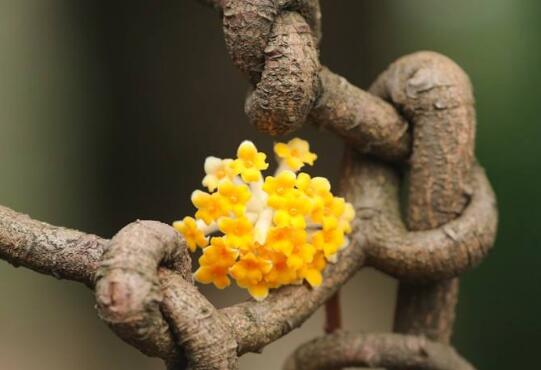
To know how to grow paperbush, we first need to understand its growth habits. This plant likes to grow in semi-humid environments and also likes partial shade, so when growing it we should not place it in direct sunlight, lest prolonged exposure cause the plant to dry out and turn yellow. Of course, besides that, daily water and fertilizer management is also very important. The details are below, and interested friends can take a look.
II. Cultivation methods and precautions for paperbush
1. Soil
To let paperbush grow vigorously, we first need to choose suitable soil. This is the step that lays the foundation and is very important. Generally, it is best to choose loose, fertile, well-drained humus soil. This kind of soil is rich in nutrients and has good aeration, allowing the plant to absorb nutrients better.
2. Temperature
When growing paperbush, the ambient temperature is also something we need to pay attention to, because only when it grows at a suitable temperature can it grow better. The ambient growing temperature should be kept within a relatively mild range. In winter it can tolerate low temperatures, but note that excessive cold will delay its flowering period.
3. Fertilizing
Fertilizer is one of the main nutrients in the growth process of paperbush. Especially after it enters its growing period, its demand for fertilizer is very high, and basically we need to fertilize once a month. However, when fertilizing, there is one thing we must pay attention to: we should apply thin fertilizer. The fertilizer concentration must not be too high; if the concentration is too high, it will burn the plant.
4. Water
Paperbush likes semi-humid environments, so when growing it we should water frequently to keep the soil somewhat moist, so that the plant can grow vigorously. However, we need to control the amount of water, because it is not tolerant of waterlogging, so we must not water too much. If water accumulates, it can easily cause its root system to rot.
5. Light
Paperbush likes a semi-shady growing environment and is not tolerant of strong light. In spring and autumn, when the light is relatively mild, we can grow it outdoors in a spot with scattered sunlight. After summer arrives, it is best to move it indoors to a semi-shady spot, because if the light is too strong it will scorch the plant and also cause its leaves to turn yellow and dry up.
6. Pests and diseases
In the process of growing paperbush, if we are not careful enough, pests and diseases can easily take advantage of the situation. Such problems are extremely harmful to the plant, so once we discover them we must deal with them promptly, because the longer it drags on, the harder it is to cure. As for the specific treatment methods, you can refer to the article on pest and disease control for paperbush, which has detailed introductions.
How to grow lucky bamboo well: cultivation methods and precautions for lucky bamboo
Lucky bamboo is also known as wan shou zhu, green-leaf fairy dragon tree, and fairy dracaena. It belongs to the Agavaceae family and is an evergreen small tree or subshrub-like flowering plant, native to the Canary Islands, Asia, Africa, and other tropical regions. It is a plant with very high ornamental value, and its symbolism is also very good, symbolizing rising prosperity, wealth and good fortune, and abundance year after year. It is regarded by people as a feng shui plant. It often appears in bedrooms, living rooms, studies, offices, and other indoor places, and occupies a very important position in people's hearts. But many people also encounter many problems in the process of growing lucky bamboo. Below, the editor will introduce how to grow lucky bamboo well, and the cultivation methods and precautions for lucky bamboo.
How to grow lucky bamboo well
Lucky bamboo is an evergreen herbaceous plant. It prefers to grow in dark and moist environments, and has very good tolerance to shade, waterlogging, and fertilizer. In particular, its cold resistance is very strong, and it does not require too much effort during cultivation. Its appearance is very beautiful, and its ornamental value is extremely high. It carries the meaning of blooming flowers bringing wealth and bamboo reporting peace.
Cultivation methods for lucky bamboo — soil culture
1. Soil: Lucky bamboo has a very good ability to adapt to the environment and is suitable for growing in clay and sandy soil. It grows best in loose, fertile, well-drained humus sandy soil. You can also use special plant nutrient soil, leaf mold, and river sand mixed together for planting. During cultivation, repot it once every two years, which helps lucky bamboo grow healthily and vigorously.
2. Watering: Lucky bamboo is suitable for growing in an environment of 20-30 degrees Celsius, and in winter it should be kept at 10 degrees Celsius. It is not tolerant of low-temperature freezing damage. During growth, the air must be kept [moist], otherwise the leaves will become dull and lusterless. You can spray clean water on the leaves to maintain their humidity and also increase the humidity of the growing environment.
3. Fertilizing: Lucky bamboo is not so strict about environmental requirements, especially about fertilizing, but it still needs some topdressing during growth. Use chemical fertilizers and organic fertilizer liquid for fertilizing; use chemical fertilizers in small amounts and frequently. After fertilizing, water it a little.
4. Light: Lucky bamboo likes to grow in warm environments, but it dislikes high temperatures and cannot grow under direct summer sunlight. For potted cultivation, it can be placed under a window or on a balcony to avoid direct sunlight. Giving it some light is beneficial to its healthy growth; otherwise the leaves will become dull and lusterless or turn golden yellow, with poor ornamental value.
5. Pest prevention: During the growth of lucky bamboo, diseases such as leaf spot, root rot, and stem rot can occur. You can spray 100-fold Bordeaux mixture on the leaves to prevent and control them. Pests include thrips and scale insects. When these appear, you can spray 50% omethoate and emulsifiable concentrate at 1000-fold dilution, which can help effectively kill the insects.
Cultivation methods for lucky bamboo — water culture
1. Water quality: When growing lucky bamboo in water, it cannot be placed directly in tap water. First let the water settle, thereby reducing the chlorine compounds in the water, which is beneficial to the normal growth of lucky bamboo.
2. Temperature: Lucky bamboo is cold-tolerant and suitable for growing freely at a temperature of 20-28 degrees Celsius, but it cannot be below 2-3 degrees Celsius. In winter, freezing damage must be prevented; too low a temperature will cause lucky bamboo to wither and prevent normal growth.
3. Light: Lucky bamboo is shade-tolerant and suitable for growing in a semi-shady environment. It cannot be placed under direct strong light, otherwise the branches and leaves of lucky bamboo will turn yellow and its growth rate will slow down.
4. Fertilizing: Lucky bamboo is a fertilizer-tolerant plant. Change the water about once every half month, then fertilize with monopotassium phosphate fertilizer, which is beneficial for it to have sufficient nutrients to absorb. After rooting, add a small amount of culture solution and compound fertilizer to the water to ensure the stems grow vigorously. Fertilizing must not be excessive either, otherwise it will burn the roots and prevent normal growth.
Cultivation methods for lucky bamboo — precautions
1. If using water culture, the period from April to September is the best season; in this season the survival rate of lucky bamboo is very high.
2. When the weather is dry, you can increase the humidity of the growing environment, or spray water on the leaves, making lucky bamboo more spread out and lush.
3. It is best to change the water once every half month, so that bacteria will not accumulate and cause root rot.
4. Do not place it next to electrical appliances, otherwise it may dry up and affect its ornamental value.
5. Lucky bamboo grown in water can be cultivated with multiple stems grouped together, which gives better ornamental value and also has a very good air-purifying ability.
Summary: The above is what the editor introduced for everyone on how to grow lucky bamboo well, as well as the cultivation methods and precautions for lucky bamboo. I hope more and more people can grow lush and thriving lucky bamboo, bring good luck back to your home in life, and let you live healthily and happily. Thank you for reading.
More related information: Japanese cherry blossom images paperbush images Caragana images what are the uses of rosy rain lily Schima superba images
Cultivation methods for paperbush
Cultivation methods for paperbush
Basic information on paperbush
Scientific name: Edgeworthia chrysantha. Aliases: three-fork wood, snowflake tree, termite tree, yellow daphne, golden belt, knotting flower, blooming in snow.
Family and genus: Thymelaeaceae, Edgeworthia.
Deciduous shrub, plant height can reach 1-2 m. Branches are sparsely borne and stout, branching once a year, and each branch can produce 3 small branches in a three-forked shape, brown-red, with obvious lenticels and raised leaf scars; young branches have pale yellow or gray silky pubescence. Leaves alternate, clustered at the branch tips, 6-20 cm long and 2-5 cm wide, long elliptic or elliptic-lanceolate, apex acute, margin entire, with sparse soft hairs on the surface. Flowers bloom before the leaves from February to April, yellow, strongly fragrant; 40-50 flowers gather at the top into a false head-like inflorescence, with a stout and short common peduncle.
The paperbush plant has an elegant posture, and its branches are soft and easy to tie into knots, which is very peculiar and quite charming; it blooms before the leaves in early spring, and when flowering the flowers are numerous and clustered, with a strong fragrance spreading far; it is also easy to propagate, grows robustly, has strong adaptability, and is convenient to manage. It is often planted in courtyards, and can also be potted for viewing the knotted shapes and the flowers.
[Paperbush propagation] Division, cuttings, layering, etc.
(1) Division: Paperbush has extremely strong suckering ability and often produces suckers in clumps beside the mother plant. This can be done after leaf fall in autumn and before bud break in spring. Cut the thick and strong sucker shoots beside the mother plant from the connection point and plant them separately; they are very easy to survive.
(2) Cuttings: Carry out before bud break in early spring. Select thick and strong one-year-old branches, cut the middle and lower parts into 10-15 cm cuttings, insert them about 1/2 into the substrate, and after insertion maintain a semi-shady and moist environment. They will root in about 50 days and are extremely easy to survive. Semi-mature branches can also be used for cuttings in May-June.
(3) Layering: Carry out before and after bud break. After scoring the branches near the soil surface, press and bury them in the soil, leaving only the branch tips exposed. Afterward keep the substrate moist, and they will root in 40-50 days. The following spring they can be cut off and cultivated separately.
[Key cultivation and care points for paperbush]
(1) Temperature: It is a temperate tree species and likes a warm climate. The most suitable growing temperature is 20-25°C. However, it can tolerate low temperatures within -20°C; only when below -10°C will the flowering period be delayed to March-April. If you want it to bloom at New Year's Day or in spring, you can move the defoliated plant to a greenhouse to promote flower bud development and flowering.
(2) Light: It is not very sensitive to light intensity, tolerates partial shade, and also tolerates sun exposure. But in summer and autumn, when sunlight is strong, the potted plant should be placed in a semi-shady spot, especially preventing exposure to west sun, as too strong light will make the leaves turn yellow and reduce flowering. At other times it is best to give sufficient sunlight, especially during the flowering period when sunlight should be sufficient; when too shady, the fragrance of the flowers will weaken.
(3) Watering: Because the root system is fleshy, it dislikes waterlogging, and poor drainage can easily cause root rot. It should also not be too dry, otherwise the leaves will turn yellow and fall off. During growth, watering should follow the principle of "do not water until dry, and when watering, water thoroughly," keeping the potting soil moist but neither too dry nor too wet. After leaf fall in autumn, the plant enters dormancy, and watering should be restricted, keeping the potting soil relatively dry.
(4) Fertilizing: During the growing season, apply fertilizer once a month as topdressing. After flowering, fertilizing should mainly be nitrogen-based to promote the growth of branches and leaves. But fertilizing should not be excessive, otherwise it will cause leggy branches and leaves and affect the aesthetic appearance. After July, increase the application of phosphorus and potassium fertilizers to promote flower bud differentiation, so that future flowering will be large and dense.
(5) Shaping and pruning: Because the branches are soft and tough, they can be bent and tied into knots without breaking, so knots can be made on the main trunk and small branches according to artistic ideas for shaping. Knot shaping is best done after leaf fall and before bud break. After flowering, old branches and weak branches should be cut back; after pruning, 1-2 new shoots will sprout, maintaining a full tree shape. Usually, sucker branches that grow out should be cut off at any time to maintain a beautiful plant shape. At ordinary times, the height of the plant can also be controlled by tying and twisting the branches into knots.
(6) Repotting: Because it grows rapidly, it should be repotted once a year. Repotting is best done after the flowers fade, so as not to affect flowering. It is not strict about soil, but loose, fertile, well-drained slightly acidic sandy loam is best; saline-alkaline soil is taboo. The substrate can be prepared from materials such as leaf mold, garden soil, and coarse sand. The bottom of the pot should have a thick drainage layer to prevent the potting soil from becoming too wet. Old plants cultivated for many years will age and grow weaker, and should be considered for replacement and renewal.
(7) Pest and disease control: There are relatively few pests and diseases, but when ventilation is poor it is susceptible to scale insect damage. Others include leaf-curling [diseases], southern blight, and damage from aphids, planthoppers, stinging moths, and other pests and diseases.
[Common problems in paperbush cultivation and care]
Common problems Causes
Yellowing and falling leaves during the growing period ① Direct strong light; ② potting soil too dry; ③ potting soil too wet causing root rot; ④ applying concentrated fertilizer
Flowers not fragrant Usually due to being too shaded
Few flowers ① sunlight too strong or too shady; ② applying too much nitrogen fertilizer during flower bud differentiation; ③ poor water management