What to do when the leaves of the Calathea ornata curl? Provide shade, water properly, and spray to prevent disease
For the Calathea ornata, flower lovers who have seen it should be deeply impressed; it is a beautiful foliage plant. Although it is not as distinctive as the Calathea makoyana, its white, green, and red tri-color leaves look extremely beautiful. So when the leaves of the Calathea curl, flower lovers must be very anxious! Then, what should be done when the leaves of the Calathea ornata curl? Today the editor will help everyone solve this problem.
I. What to do when the leaves of the Calathea ornata curl
/view/15576.html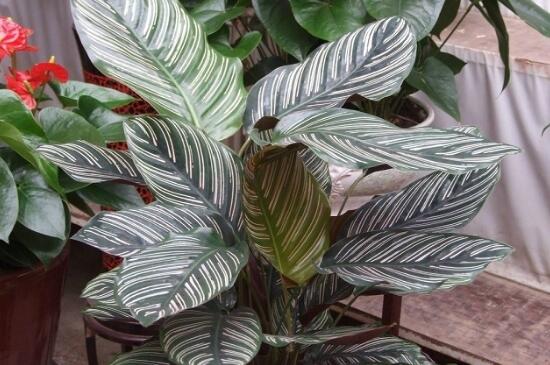
To discuss the causes of leaf curling in Calathea ornata, there are actually only three: if it is direct strong light, provide shade in time; if it is caused by improper watering, water reasonably, but when root rot appears, also trim the rotten roots, change the potting soil, and replant; if it is caused by pests and diseases, spray in time for prevention and treatment.
II. Causes and solutions for dry, curled leaves of Calathea ornata
1. Excessive light
Regarding the causes of dry, curled leaves in Calathea ornata, everyone should first consider the light factor. Although Calathea ornata likes light, and sufficient light can make its leaf color more beautiful, it dislikes strong light. Once it is exposed to overly strong light or direct sunlight, its leaves easily curl.
Solution: What to do when the leaves of Calathea ornata curl? If it is caused by excessive light, the solution is very simple: just move it promptly to a dark place for care, and after it recovers, move it to a semi-balcony, windowsill, or similar place to absorb scattered light.
2. Improper watering
① Insufficient watering
Calathea ornata is very sensitive to moisture. Once it is watered too little or the air humidity is insufficient, its leaves will curl; if there is a shortage during the growing season, it will also cause the leaves of Calathea ornata to turn yellow, seriously affecting the ornamental effect.
Solution: Calathea ornata has large leaves and a high water requirement. Everyone should water according to the watering method for Calathea ornata, keeping watering once a day in spring and autumn, 3-4 times a day in summer, and once every 2-3 days in winter. At the same time, increase air humidity so that the relative air humidity remains at 85%—90%.
② Excessive watering
Calathea ornata likes a moist environment, and daily watering should be frequent, but it must never be too much, because once watered too much, it easily causes water accumulation in the pot, leading to poor root respiration. The leaves of Calathea ornata then show curling symptoms because they cannot absorb nutrients.
Solution: What to do when the leaves of Calathea ornata curl? If it is caused by excessive watering, everyone should loosen the soil more to let the water evaporate quickly; if it is discovered too late and root rot appears, everyone should also take the plant out of the pot, then cut off the rotten roots, change to fresh potting soil, and replant.
3. Pests and diseases
Besides light and moisture, pests and diseases are also one of the causes of dry, curled leaves in Calathea ornata. Because when Calathea ornata is attacked by pathogens, the leaves will gradually curl and wither, and in severe cases the leaves will also fall off.
Solution: Once signs of pests and diseases are found, everyone should immediately identify the cause and treat the symptoms accordingly; for this, refer to the pest and disease control of Calathea ornata. In addition, in daily care, pay attention to maintaining air circulation and the soil's permeability and drainage.
How to treat worms on Calathea ornata, pest and disease control of Calathea ornata / 3 insects and 2 diseases treated by spraying
As a beautiful foliage plant, Calathea ornata has richly colored leaves, with white, green, and red all equally matched, looking extremely beautiful! But when grown indoors, due to environmental differences and negligence in care, many problems will be encountered, such as worms and diseases. So how do you treat worms on Calathea ornata? The following is pest and disease control for Calathea ornata; let's take a look together.
I. How to treat worms on Calathea ornata
In the process of growing Calathea ornata, due to various reasons, it is unavoidable to encounter worms and diseases. The main pests include aphids, scale insects, and red spider mites, and the diseases include leaf spot and southern blight. Their appearance will harm the health and beauty of the plant. As for how to treat worms on Calathea ornata, everyone should spray in time for prevention and control.
II. Pest and disease control of Calathea ornata
1. Aphids on Calathea ornata
If you find worms on Calathea ornata, they are very likely aphids, because they are a major pest of foliage plants. These insects generally appear on tender leaves and newly grown buds, feeding on the sap in the leaves, causing the leaves of Calathea ornata to turn yellow, and at the same time black or yellow diseased spots will appear.
Control method: When there are few aphids, manual aphid control can be adopted, using a writing brush or brush to brush off the aphids and bury them in the potting soil; when there are many scale insects, spray 40% omethoate 1500x solution or 90% trichlorfon solution for control. Usually pay attention to reasonable watering and fertilizing to improve its resistance to pests and diseases.
2. Scale insects on Calathea ornata
When the environment is not ventilated and care is improper, Calathea ornata is also prone to scale insects. These insects attach to the leaves, absorb nutrients and moisture from them, causing poor growth of Calathea ornata. Moreover, leaves bitten by scale insects can also cause other diseases, and in severe cases directly lead to the withering and death of Calathea ornata.
Control method: When there are few scale insects, a brush can be used for manual treatment; if a large number of scale insects are found, in addition to manual insect removal, spraying should also be used for control. The pesticide can be 50% malathion 1500x solution, or 255 phosmet 1000x solution. Spray once a week, and two consecutive sprays can effectively control them.
3. Red spider mites on Calathea ornata
Besides aphids and scale insects, red spider mites are also a major pest of Calathea ornata. These insects often occur when ventilation is poor, mainly piercing their mouthparts into the leaves of Calathea ornata to suck sap, damaging the plant's chlorophyll. In mild cases the leaves turn yellow, and in severe cases they also fall off, seriously affecting the ornamental value.
Control method: After discovering the pest, you can use decis for treatment, or spray miticides such as 25% emulsifiable concentrate 800x solution, 73% propargite 2000x solution, and other chemicals.
4. Leaf spot on Calathea ornata
Calathea ornata has strong adaptability and can be said to rarely get sick, but in a high-temperature, poorly ventilated environment, it can also suffer from leaf spot. In the early stage of the disease, small yellow-brown spots appear on the leaves of Calathea, and halos also appear at the edges; in severe cases, the spots rapidly spread to every branch and leaf of Calathea ornata, and finally cause Calathea ornata to wither and die.
Control method: After discovering the above symptoms, promptly cut off all diseased branches to reduce the source of disease; then spray relevant chemicals, choosing 38% oxathiapiprolin 800-1000x solution, or 4% flusilazole 1000x solution, spraying once every week, and three consecutive sprays will show effect.
5. Southern blight on Calathea ornata
Among the pests and diseases of Calathea ornata, southern blight is also something everyone needs to pay attention to. This disease is often more serious in July and August, but it also often occurs at ordinary times, often because the soil is too moist and poor. When it occurs, it causes purple-brown spots on the leaves, followed by an obvious white mycelial layer, and in severe cases the plant withers and eventually dies.
Control method: After discovering the above symptoms, promptly spray fungicides such as carbendazim, Bordeaux mixture, and lime sulfur mixture on the stem base of the plant and the substrate; or, after the disease occurs, directly remove the infected potting soil and sprinkle pentachloronitrobenzene powder or lime on it.
Regarding pest and disease control of Calathea ornata, the editor has introduced it here. I believe everyone should know what to do when encountering worms or diseases on Calathea ornata! Overall, the cultivation method of Calathea ornata is not difficult; as long as everyone cares for it carefully, insects will not come looking for it. Finally, may everyone's Calathea ornata grow beautifully~