How to Grow and Care for Calathea ornata: Avoid Strong Light
Calathea ornata (pin-stripe calathea) is an evergreen herbaceous foliage plant with captivating leaf colors, making it very suitable for indoor growing and offering decorative and beautifying effects. In daily life, after learning about the benefits of Calathea ornata, many people want to grow it, so how do you grow Calathea ornata? The following are the growing methods and precautions for Calathea ornata, very comprehensive. Friends who want to grow it, come in and take a look!
I. How to Grow Calathea ornata: Understanding Its Habits
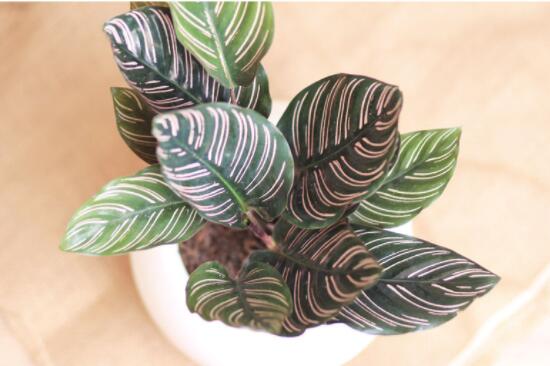
Calathea ornata likes warm, humid environments. It enjoys light, tolerates shade, is not cold-tolerant, nor drought-tolerant, and also dislikes scorching sun. So how do you grow Calathea ornata? You should place it in a spot with plenty of bright, indirect light, water it frequently to keep the potting soil moist, and take good cold-protection measures in winter. As for the growing medium, a loose, fertile, well-draining, breathable, slightly acidic soil is best.
II. Growing Methods and Precautions for Calathea ornata
1. Potting Soil
For potted Calathea ornata, the first thing you should do is change the potting soil. Because potted Calathea ornata bought from flower shops or online comes with existing potting soil, but that soil is usually very cheap. It can ensure the plant grows normally, but if you want to grow it well, it is best to prepare new potting soil.
Soil selection: According to the growth habits of Calathea ornata, it prefers loose, fertile, well-draining, breathable, slightly acidic soil rich in humus. For this, the editor recommends using a soil mix of pond mud, peat, and perlite in a 2:3:1 ratio.
2. Light
In the growing methods and precautions for Calathea ornata, light is extremely crucial. Although it enjoys light, it grows even better in semi-shaded environments. It is said that it can be placed in a dimmer room for 4-6 weeks without issue. So when growing it indoors, you should place Calathea ornata in a spot with bright light where direct strong light can be avoided.
Precautions: Calathea ornata dislikes strong light. When the light is relatively strong, especially in summer, you must provide shade, otherwise it can easily cause leaf scorch, leading to yellowing of the Calathea ornata leaves and affecting its ornamental value.
3. Temperature
Calathea likes warmth, is not cold-tolerant, and fears high temperatures, so how do you grow Calathea? Regulating temperature is also very important. It is understood that the most suitable growing temperature for Calathea ornata is 20-30°C. When growing it indoors, it is best to maintain this temperature so that the Calathea will grow very well.
Precautions: In summer, when the temperature is above 35°C, you should place it in a cool place to cool it down; in winter, when the room temperature is below 10°C, you can move the plant to a wind-free, warmer indoor spot to overwinter.
4. Watering
Water is the source of life, so in the growing methods for Calathea ornata, watering is an indispensable part. Calathea ornata likes humid environments and has relatively high water requirements. In spring and autumn, water once a day; in summer, water 3-4 times a day; in winter, water once every 2-3 days.
Precautions: Calathea ornata is not drought-tolerant. Once watering is insufficient, the plant's leaves will wilt and afterward cannot recover; at the same time, do not water too much, otherwise the soil becomes too sticky and too wet, and the plant is very prone to root rot and diseases.
5. Fertilizing
How do you grow Calathea ornata? After watering, let's talk about fertilizing, which is also an extremely crucial part. During the peak growing season of Calathea ornata, you should apply fertilizer once every 2 weeks. The fertilizer can be a mixture of peanut bran and compound fertilizer or decomposed compost.
Precautions: Calathea is very sensitive to high-concentration fertilizers, so do not over-fertilize, otherwise leaf burn easily occurs. Therefore, when fertilizing Calathea ornata, you should follow the principle of "frequent application, diluted application."
6. Pests and Diseases
During the growth of Calathea ornata, due to improper care and other reasons, the plant will inevitably develop pests and diseases. Among them, pests are mainly scale insects and red spider mites, and diseases are mainly southern blight and leaf spot. Once pests or diseases occur, you should spray pesticides for control. As for what pesticide to spray, you can refer to Calathea ornata pest and disease control.
Overall, Calathea ornata is still quite easy to grow, but if you want to grow it beautifully, you need to put in more effort and care for it according to the requirements, so that the leaves of Calathea ornata can be beautiful enough to make hearts flutter. The editor has introduced the growing methods and precautions for Calathea here. Flower lovers who are tempted might as well try growing it!
How to Grow Calathea ornata: Growing Methods and Precautions for Calathea ornata
Calathea ornata is a plant grown for its foliage. Its leaves are relatively large and evergreen throughout the four seasons, with some white lines interspersed on the leaves, very distinctive. Calathea ornata is a plant very suitable for home growing and has an air-purifying effect. So how should you grow it to make it grow well?
How to Grow Calathea ornata
1. The suitable growing temperature for Calathea ornata is 20-30°C. The optimal daytime growing temperature is 18-21°C, and at night 16-18°C. The safe overwintering temperature is 10°C. Therefore, in summer, prevent high-temperature exposure and place it in a cool place; in winter, pay attention to cold protection and move the plant to a wind-free, warmer indoor spot to overwinter.
2. Calathea ornata dislikes direct sunlight and grows better under indirect radiation or diffused light. Especially in summer, direct sunlight easily causes leaf scorch, so in production it is cultivated under artificially controlled light with a 75%-80% shade net. If leaf scorch is found, immediately move it to a place without direct light or to a location with shade facilities or under tree shade, and cut off the scorched leaves to prevent other pathogenic bacteria from invading through the wounds. At the same time, strengthen water and fertilizer management.
Growing Methods for Calathea ornata
1. Temperature. Calathea ornata prefers warm environments. The suitable growing temperature is 20°C-30°C, the optimal daytime growing temperature is 18°C-21°C, at night 16°C-18°C, and it can overwinter safely above 10°C. So in summer, prevent high-temperature scorching sun, and place Calathea ornata in a cool place; in winter, pay attention to cold protection and move the plant indoors.
2. Watering. The peak growing season of Calathea ornata is from March to October. Air humidity should be maintained at 75%-85%. High air humidity is beneficial for leaf unfurling, so during the growing season you should water more and frequently mist the leaf surface. The suitable watering method is to mist the leaf surface in the morning, water the potting soil in the afternoon, and water the whole plant in the evening.
3. Light. Calathea ornata is not tolerant of direct sunlight, so shade work should be done well in summer. Let Calathea ornata absorb diffused light.
4. Soil. Calathea ornata prefers fertile, loose soil and dislikes compacted and waterlogged soil. Generally, fertile humus soil and porous coarse media are used as the substrate.
5. Fertilizing. Fertilizing Calathea ornata should follow the principle of "small amounts, many times." During the peak growing season, apply a mixed fertilizer of peanut bran and compound fertilizer or decomposed compost once every 2 weeks.
Precautions for Calathea ornata
1. In summer, sunlight is strong, and the leaves of Calathea ornata are easily scorched under direct sunlight, so place the plant in a place without direct light. If leaves are found to be scorched, immediately cut off the leaves to prevent pathogenic bacteria from invading.
2. Stop fertilizing during the winter dormant period and the hot summer period. The fertilizer concentration should not be too high, otherwise it will cause leaf scorch, and in severe cases the plant will die.
Common Diseases of Calathea ornata and Their Control Methods
1. Southern blight. Control method: You can add 0.2% of the soil weight of 70% quintozene to the potting soil to disinfect the soil. Before sclerotia form, pull out the diseased plant, discard the soil, and use new soil. During daily care, always pay attention to ventilation and do not plant too densely.
2. Leaf spot. Control method: Apply more base fertilizer to ensure soil fertility and enhance disease resistance. Remove diseased leaves promptly to prevent further spread of the pathogen. If the plant is seriously diseased, dispose of it promptly. Before the disease occurs, you can spray 75% chlorothalonil wettable powder at 500-600 times dilution, or spray 75% chlorothalonil wettable powder at 1000 times dilution plus 70% thiophanate-methyl wettable powder at 1000 times dilution for control.
The growing methods for Calathea ornata can start with its growth habits. When growing it, you must do a good job with temperature and light. It cannot receive direct strong light for a long time, so in summer it is best to provide shade. Disease prevention and control for Calathea ornata is also very important and must be done properly.
What to Do When Calathea ornata Leaves Turn Yellow: Suitable Light / Proper Water and Fertilizer / Spray for Pests and Diseases
As a common foliage plant, Calathea ornata has richly colored leaves, with white, green, and red all equally prominent, giving a unique visual enjoyment. But during cultivation, for certain reasons, its leaves may turn yellow, thus affecting overall ornamental value. So what should you do when Calathea ornata leaves turn yellow? Today the editor will help everyone solve this problem.
I. What to Do When Calathea ornata Leaves Turn Yellow
When it comes to Calathea ornata leaves turning yellow, besides unsuitable environment, it is caused by improper care: when light is insufficient or too strong, supplement light or provide shade; when water and fertilizer are improper, water and fertilize reasonably. If root rot occurs, you should also take it out of the pot, cut off the rotten roots, and then change the potting soil and replant; if it is caused by pests and diseases, spray pesticides promptly for control.
II. Causes of Calathea ornata Leaves Turning Yellow and Remedies
1. Sudden Environmental Change
Regarding the causes of Calathea ornata leaves turning yellow, if it is a newly potted plant, it may be caused by a sudden environmental change. Because many flower lovers' Calathea ornata potted plants are bought online, this easily causes a relatively large environmental change at once, and Calathea ornata cannot adapt for a while, resulting in yellowing leaves.
Remedy: According to the growth habits of Calathea ornata, create the most suitable growing environment for the newly bought potted plant. After a period of time, the plant will recover its health.
2. Improper Light
Insufficient light: Although Calathea ornata tolerates shade, it still has light requirements. Once it is in a shaded environment for a long time, its leaves cannot obtain enough sunlight to form chlorophyll and will turn yellow. Remedy: Just supplement light, but note that the light must not be too strong.
Too much light: Calathea ornata dislikes direct strong light. Once strong sunlight shines directly on its leaves, it easily causes the leaf tips and leaf margins to wither, and yellow spots appear on the sun-facing part of the leaves. Remedy: Immediately move the pot to a shaded place, water appropriately after it recovers a bit, and then gradually move it to a place with good light.
3. Improper Watering
Too little watering: Calathea ornata likes humid environments, and daily care requires frequent watering to keep the potting soil moist. Once watering is insufficient, its leaves will turn yellow due to lack of water. The symptoms are: old leaves wither and fall from bottom to top, but new leaves grow relatively normally. Remedy: Water appropriately; just water thoroughly and sufficiently.
Too much watering: Calathea ornata likes water, but even liking water has a limit. Once watered too much, water accumulates in the pot, its root system has difficulty breathing, and as a result symptoms of Calathea ornata leaves turning yellow appear. Remedy: Take Calathea ornata out of the pot and place it in a ventilated, cool place to let the water evaporate quickly. If there are rotten roots, cut them off, then put it back into the pot.
4. Too Much Fertilizer
Insufficient fertilizing: The leaves of Calathea ornata are broad and richly colored. To make it grow well, appropriate fertilizing is very important. During cultivation, if fertilizing is insufficient, its old leaves will turn yellow due to lack of nutrients. Remedy: Supplement nutrients promptly, but fertilizing Calathea ornata should adhere to frequent application of diluted fertilizer.
Too much fertilizing: Although Calathea ornata likes fertilizer, too much fertilizer will cause fertilizer burn. The result is that the tips of new leaves appear dry brown and are uneven and not smooth, and old leaves scorch yellow and fall off. Remedy: Immediately stop fertilizing, then irrigate with water to dilute it; if the roots are burned and rotten, you should also take the plant out of the pot, cut off the rotten roots, and then replace with new potting soil and replant.
5. Pests and Diseases
In addition to the above points, Calathea ornata leaves turning yellow may be caused by pests and diseases. It is understood that under improper care and poor environment, Calathea ornata may be damaged by aphids and scale insects. They mainly harm the plant's leaves, and the result can cause leaf yellowing.
Remedy: Very simple. Determine the specific pest, then spray targeted pesticides for control. As for what pesticide to spray, you can refer to Calathea ornata pest and disease control.
Overall, the growing methods for Calathea ornata are not difficult, but because many flower lovers are beginners, symptoms of yellow leaves will inevitably appear. However, after reading the whole article, I believe everyone has a clearer idea. When yellow leaf problems appear, just remedy them according to the above methods. The editor has introduced this much about Calathea ornata leaves turning yellow, hoping to be helpful to everyone.