How to Propagate Lucky Bamboo? A Detailed Guide to Two Methods: Cuttings and Seed Sowing
As a common indoor potted plant, lucky bamboo has many uses. It is not only ornamental but also beautifies the home and purifies the air. Such a plant is nice to have one pot of, and even better to have several. If you do not want to waste money, it is very necessary to master the propagation methods of lucky bamboo. So, how do you propagate lucky bamboo? Below, the editor will introduce it in detail.
I. How to Propagate Lucky Bamboo: Cuttings / Seed Sowing
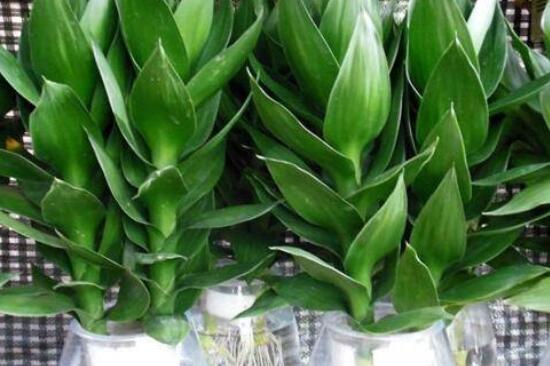
When it comes to propagating lucky bamboo, there are generally two methods: cuttings and seed sowing. Among them, cuttings are the most commonly used and are more suitable for indoor use by gardening enthusiasts. The method is simply to cut off a section of branch, insert it into soil, and wait for it to take root; seed sowing is suitable for mass propagation. Take lucky bamboo seeds and scatter-sow them onto the soil, then transplant once the seedlings grow to a certain height.
II. The Two Propagation Methods for Lucky Bamboo
(1) Cutting Propagation Method for Lucky Bamboo
1. Cutting Time
How do you propagate lucky bamboo? Gardening enthusiasts can choose the cutting method, and the time is best chosen in spring and autumn. Because lucky bamboo likes a warm environment, the plant's vitality is best in spring and autumn, and the rooting rate after cuttings is higher.
2. Selection of Cuttings
In the cutting propagation method for lucky bamboo, the selection of cuttings is the most important part. You can cut healthy, robust branches from a healthy potted lucky bamboo as cuttings. Each branch section should be about 10 cm long, and the leaves should be either all removed or half cut off.
3. Cutting Medium
According to the growth habits of lucky bamboo, the cutting medium prepared for it should preferably be relatively clean coarse river sand, which has better permeability and is more conducive to rooting after cutting.
4. Starting the Cuttings
After completing the above preparatory work, the cutting propagation of lucky bamboo can officially begin: insert the cuttings into the medium, water thoroughly, then cover the entire flower pot with a plastic bag, and then place it indoors in a place with relatively good light. After doing this, roots will generally form in 15-25 days, and afterward you can care for it according to the cultivation methods for lucky bamboo.
(2) Seed Propagation Method for Lucky Bamboo
After lucky bamboo blooms, seeds can be obtained manually, so in addition to cuttings, the propagation method for lucky bamboo can also use seed sowing. In spring and summer, scatter-sow lucky bamboo seeds onto a sowing bed (mixed and prepared with 1 part each of plant nutrient soil, leaf mold, and river sand), maintain a room temperature of 20-25°C, and they will soon germinate. Once the seedlings grow to a certain extent, transplant them.
Overall, when propagating lucky bamboo, whether by cuttings or seed sowing, both can succeed, but the most suitable one for indoor operation by gardening enthusiasts is still cuttings. Of course, methods are fixed, but people are flexible, so everyone can choose according to the actual situation. Regarding the propagation methods of lucky bamboo, the editor has introduced them here, hoping to be of help to everyone.
September! The Month Best Suited for Flower Propagation - Sowing, Cuttings, Grafting, Division, and Layering Are All Worth Trying~
September! The Month Best Suited for Flower Propagation - Sowing, Cuttings, Grafting, Division, and Layering Are All Worth Trying~
September is about to arrive, and it is a very lovable month. For gardening enthusiasts, this season, neither too cold nor too hot and very suitable for flower growth, is even more of a good time for sowing, cuttings, grafting, division, and layering. Now follow Huahua and get started together!
Sowing
Flowers that can be sown in autumn include: hollyhock, China pink, tall catchfly, dwarf catchfly, pansy, snapdragon, petunia, daisy, corn poppy, pot marigold, black-eyed Susan, iris, verbena, and others.
In addition, greenhouse flowers such as cyclamen, primrose, globeflower, cineraria, wax begonia, gerbera, and calceolaria can also be sown at this time, but they need to overwinter in a plastic tunnel.
Huahua takes petunia as an example, and the specific operation method is as follows:
1. Thoroughly mix peat soil, leaf mold, and perlite in a 1:1:1 ratio, then pour it into a seedling tray, pressing it slightly firm while pouring.
2. Mix carbendazim with water at 800 times to make a carbendazim solution. First water the soil in the seedling tray with the carbendazim solution, then pour water into the outer seedling box, soaking the seedling tray, and let it soak for a day and a night. After soaking, let the pot soil air dry for 2-3 hours.
3. The suitable temperature for sowing is around 20-25°C. Before sowing, water the pot soil once with clean water to ensure the carbendazim does not harm the seeds. Petunia seeds are very small, so you can use a spoon or a toothpick (dipped in water) to scoop (pick up) one seed and place it on the soil surface. Note that one seed per pot is enough!
4. Pour some clean water into the bottom of the large seedling box, with the water level reaching about half a centimeter up the bottom of the small seedling tray.
5. Cover with a lid or plastic film and place it in a bright, ventilated place! Add water when it runs out, and they will germinate in 7-10 days. After germination, gradually expose them to sunlight.
Cuttings
Woody flowers that can be propagated by cuttings in autumn include: purple magnolia, bridal wreath spirea, pomegranate, rose of Sharon, crape myrtle, hydrangea, fig, oleander, serissa, gardenia, Japanese aralia, Chaenomeles speciosa, tree peony, and others.
Some herbaceous flowers can also be propagated by cuttings, such as scarlet sage, globe amaranth, marigold, and others.
Huahua takes hydrangea as an example, and the specific operation method is as follows:
1. Prepare materials.
Choose healthy and relatively strong branches. The medium can be finer vermiculite, fine seedling peat, and so on. Try to use a utility knife or similar, and do not use scissors to cut, because the wound made by scissors is a crushed wound, different from the cut made by a knife.
2. Make a slanted cut about one cun below the node, that is, about three to five centimeters below it.
3. Make a flat cut above the node, keeping the bud.
4. Cut off about two-thirds or one-half of the leaf. It depends on the leaf size; leave less for large ones and more for small ones.
5. Before cutting, sterilize the pot soil once with potassium permanganate or carbendazim. Then water the medium thoroughly so it absorbs enough water. Insert the cutting into the pot soil, inserting the entire part below the node. Finally, place the pot in a tray filled with water, and spray water frequently to maintain humidity. (Remember, do not place it under strong sunlight.)
6. At the current temperature, roots will form in about twenty days, and after basically one month it can be pulled out and potted up.
Grafting
Flowering trees that can be grafted in autumn include: using peony root sections as rootstock to graft improved varieties of tree peony; using cactus as rootstock to graft improved varieties of Christmas cactus; using Euphorbia tirucalli as rootstock to graft crown of thorns, and others.
Huahua takes a current-year peach seedling as the rootstock and a green plum branch as the scion as an example, and the specific operation method is as follows:
1. The mother plant should be selected as one that blooms profusely and has a robust tree vigor, and plump, well-growing buds should be cut from it.
2. Use the three-cut bud removal method: cut a shield shape of about one centimeter around the selected bud, with the lower part slightly longer than the upper part.
3. Use a fingernail to first peel out the graft bud from outside to inside. After removing the bud, it can be placed in water to prevent water loss.
4. At a smooth place 10 to 15 cm from the base of the rootstock, use a knife to cut a T shape, slightly longer than the graft bud, and use the back of the knife or a fingernail to lift open the bark.
5. Insert the graft bud and wrap it with plastic film.
Layering
Ornamental flowering trees that can be propagated by layering include: Chaenomeles speciosa, weigela, hydrangea, gardenia, oleander, winter jasmine, Forsythia viridissima, osmanthus, purple magnolia, jasmine, Michelia figo, camellia, Chloranthus spicatus, French holly, snowball viburnum, Chinese snowball viburnum, Spiraea thunbergii, bridal wreath spirea, and others.
Huahua takes gardenia as a specific example, and the operation method is as follows:
1. Select a branch you like. It can be an excess part that needs to be cut off, or a healthy, well-growing curved branch.
2. Use a sharp small knife to make a ring cut in the bark on the branch, then ring-bark and peel off the bark. The width should be 1-2 cm.
3. Make a drink bottle into a funnel shape, cut it open in the middle, put it around the ring-barked area, and tie it firmly with metal wire.
4. Put culture soil and other water-retaining materials into the drink bottle, and wrap the top and bottom with transparent film, trying to ensure no water leaks and no soil is exposed. Afterward, add a little water every few days to maintain humidity, wait patiently, and roots will generally form in 2-3 months.
5. After the root system is well developed, cut off the branch and it can be planted directly! 6. Air layering successful, cut off and potted up.
The advantages of air layering propagation compared with cutting propagation are:
1. It can directly propagate thicker branches.
2. It has a high safety factor; even if rooting is unsuccessful, the branch will not die.
Division
Plants that can be divided in autumn include: Cymbidium goeringii, Cymbidium faberi, Cymbidium ensifolium, peony, tree peony, Aglaonema modestum, black-eyed Susan, snake plant, baby's tears, sword fern, heavenly bamboo, Aspidistra elatior, and others.
In addition, hyacinth, tulip, freesia, calla lily, Lycoris radiata, and others can also have their bulblets divided and planted at this time.
Huahua takes peace lily as an example, and the specific operation method is as follows:
1. A peace lily grown for two years is already very robust and has produced many plants, and one pot is almost too full to hold them. At this time, division can be used to solve the problem!
2. Turn it upside down. Take out the whole plant together with roots and pot soil. If it is not easy to remove, you can water it a little first, then use your thumb to push outward from the drainage hole at the bottom of the pot, and the whole pot can be taken out with soil.
2. Separate the culture soil from the root system without damaging the roots, especially the fine roots.
3. Divide into as many plants as the number of pots needed, and try to choose a pot that contains both strong plants and young plants to improve the survival rate.
4. Fill the pot with culture soil and plant the divided peace lily into it. In the first few days, do not place it in direct sunlight. After the root system has recovered well, the flowers can enjoy the sunlight.
Dear readers~ What other impressive September cultivation experiences do you have? Hurry and submit them or leave a comment to tell Huahua.
Flowers Suitable for Sowing and Propagation in May - It Is Not Too Late to Grow Flowers in May
May is about to arrive. Many gardening enthusiasts think they have already missed the best time for flower sowing, so they give up on sowing and growing flowers. Actually, this is unnecessary. Now, a succulent nursery has summarized flower planting in May for everyone.
The climate characteristics of May are that temperatures continue to rise, rainfall gradually increases from south to north across our country, and after each rainfall, the temperature rises noticeably. With many continuous spring rain days, after the spring rain ends around Xiaoman, the weather turns muggy, marking that summer will soon begin.
Therefore, May, at the turn of spring and summer, is a key period for growing and caring for flowers, and it plays an important role in laying the foundation for the summer and autumn growth of potted flowers.
Types of Flowering Trees Suitable for Courtyard Display
Entering May, at the turn of spring and summer, temperatures across the country rise significantly, and sunlight becomes increasingly strong. The types of potted ornamental plants that can be displayed in courtyards increase, such as Chinese rose, Norfolk Island pine, Malus halliana, Canary Island date palm, rubber tree, five-needle pine, Buddhist pine, heavenly bamboo, amaryllis, jasmine, bamboo palm, sago cycad, king coconut, areca palm, variegated schefflera, palm, bottle palm, cinnamon, beautiful phoenix palm, European primrose, lily, dwarf potted plants, pomegranate, peony, Michelia figo, red maple, Aglaia odorata, four-season osmanthus, bitter orange, and others.
Propagation of Courtyard Flowers:
1. Sowing
Herbaceous flowers suitable for sowing in May include: Chinese primrose, impatiens, globe amaranth, and others.
Woody flowers include loquat, Japanese aralia, Mahonia bealei, areca palm, bottle palm, and osmanthus. Among them, the seeds of the first 5 flowers can be washed clean and sown immediately after collection, but only osmanthus fruits that are mature, blackened, softened, and covered with white powder should have their peel and flesh washed off, then be stored in clean wet sand until February of the following year, and sown again when the seed grains crack and show white.
For seeds sown immediately after collection, the following points should be noted when sowing: first, keep the seedbed moist, but not waterlogged; second, cover with grass to prevent the seed grains from "sprouting back"; third, after the seeds emerge, remove the covering grass in 2 to 3 rounds, and promptly build a shade frame to prevent the sun from scorching the young seedlings.
In addition, although loquat has large seeds, its young sprouts have weak soil-pushing ability and are prone to bending. Sowing too deeply will affect the emergence rate and seedling survival rate, so shallow sowing is appropriate. Generally, a trench depth of 2 to 3 cm and covering with soil until the trench is full is enough.
At this time, planting gladiolus bulbs in the ground can produce flowers in August. Planting tuberose in the ground can produce flowers between August and September.
2. Cuttings
Herbaceous ornamental plants suitable for cuttings in May include: scarlet sage, pansy, chrysanthemum, spiderwort, dragon's mouth flower, wax begonia, begonia, split-leaf philodendron, clearweed, Syngonium podophyllum, anthurium, white mosaic plant, globe amaranth, marigold, coleus, pepperomia, geranium, coral flower, and others;
Succulent ornamental plants include: Epiphyllum oxypetalum, Epiphyllum ackermannii, cactus used as rootstock, three-angled cactus used as rootstock, Echeveria glauca, Graptopetalum paraguayense, and others;
Woody ornamental plants include: azalea, Chloranthus spicatus, jasmine, crown of thorns, Chinese rose, fuchsia, hibiscus, clerodendrum, heavenly bamboo, Excoecaria cochinchinensis, Mahonia, rubber tree, dragon blood tree, Acalypha wilkesiana, hydrangea, pomegranate, rose of Sharon, Lantana camara, Cordyline fruticosa, bougainvillea, Schefflera octophylla, firethorn, purple magnolia, Buddleja lindleyana, and others.
3. Grafting
In May, wild rose and others can be used as rootstock to bud-graft Chinese rose;
Use 1- to 2-year-old purple magnolia seedlings or cutting seedlings as rootstock to approach-graft Michelia alba;
Use 2- to 3-year-old single-trunk rubber trees as rootstock to cleft-graft variegated weeping fig;
Use green maple seedlings as rootstock to graft red maple with tender shoots;
Use finger-thick wintersweet seedlings as rootstock to approach-graft improved varieties of wintersweet;
Use osmanthus seedlings or Ligustrum quihoui as rootstock to approach-graft improved varieties of osmanthus;
Use red-flowered camellia or single-petaled camellia seedlings as rootstock to graft camellia with tender branches;
Use vigorously growing Rhododendron mucronatum as rootstock to cleft-graft Western azalea;
Use Artemisia annua as rootstock to graft variety chrysanthemums;
In early May, use cactus or three-angled cactus as rootstock to graft Christmas cactus;
Use three-angled cactus as rootstock to graft Gymnocalycium mihanovichii and others.
4. Division
Flower types that can be propagated by division in May include: hosta, purple hosta, iris, Aspidistra elatior, rain lily, Liriope platyphylla, Haworthia, Aglaonema modestum, orchid grass, jasmine, Chloranthus spicatus, black-eyed Susan, purple loosestrife, wax begonia, sword fern, and others.
5. Layering
Flower types that can be propagated by layering in May include: Michelia figo, Chloranthus spicatus, plum blossom, winter jasmine, Chinese rose, Malus halliana, cherry blossom, Michelia alba, rubber tree, Belgian azalea, osmanthus, purple magnolia, croton, Buddhist pine, Chinese cypress, true cypress, gardenia, wisteria, Chinese trumpet creeper, Aglaia odorata, and others.