How to Propagate Calathea orbifolia? A Detailed Guide to Two Methods: Cuttings and Division
Calathea orbifolia, a beautiful foliage plant, has broad leaves with rich colors - white, green, and red in equal measure - looking absolutely stunning! In daily life, because of its powerful benefits, many people grow it, but is one pot too monotonous? It's time to propagate a few more pots. So how do you propagate Calathea orbifolia? Here are two propagation methods for Calathea orbifolia - let's learn together.
I. How to Propagate Calathea orbifolia: Cuttings / Division
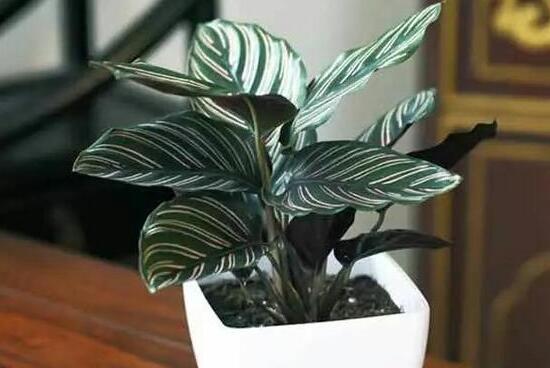
Regarding how to propagate Calathea orbifolia, it's actually the same as most indoor potted plants - it's suitable for cutting propagation: take 10-15cm cuttings, treat them briefly, and insert them into soil; besides this, Calathea orbifolia can also be propagated by division: use a sharp blade to cut apart the root clumps with stems and leaves or leaf buds, and plant them in humus-rich soil.
I. Two Propagation Methods for Calathea orbifolia
(1) Calathea orbifolia Cutting Propagation
1. Cutting Time
Calathea orbifolia prefers a warm environment. As long as the temperature is not below 20°C, cuttings can be taken, but to improve the success rate of propagation, it's best to choose late spring to early summer.
2. Cutting Selection
To take cuttings of Calathea orbifolia, the most important thing is to select good cuttings. For this, you can take from a well-growing Calathea orbifolia potted plant the base with the top tender shoot, preferably with 3 leaves on the base, and cut it into 10—15 cm as a cutting.
Cutting Treatment: Before cutting, to improve the rooting rate, you should soak the cuttings in a 500ppm naphthalene acetic acid solution for 2—3 seconds.
3. Starting the Cutting
After completing the above preparations, you can officially begin cutting propagation. Insert the prepared cuttings into the substrate (an even mix of peat soil and river sand).
4. Post-Cutting Management
After cutting, keep the soil moist, maintain the temperature at 20-30°C, and the relative air humidity at 75%-85%. After one month, they will take root and sprout. After about another 10 days, they can be moved into pots, and then cared for normally according to Calathea orbifolia cultivation methods.
(2) Calathea orbifolia Division Propagation
Besides cuttings, Calathea orbifolia can also be propagated by division, and the survival rate is very high. Method: In spring when the temperature reaches 20°C, use a sharp blade to cut apart the root clumps with stems and leaves or leaf buds, and place them directly in flower pots. After division, place them in a cool area to grow, keep the soil moist, and wait for the rhizomes to take root and sprout before normal cultivation.
Overall, whether by cuttings or division, Calathea orbifolia can survive. However, the survival rate of cuttings is lower than that of division propagation, at about 50%, so for general home propagation, it's best to use the division method. That's all for the propagation methods of Calathea orbifolia - I hope this helps everyone.
Propagation Methods for Calathea orbifolia
Propagation of Calathea orbifolia: Division Method
Division is the most commonly used propagation method for Calathea orbifolia, generally carried out in spring when the temperature reaches about 20°C.
The soil in the flower pot or seedbed should be slightly acidic soil rich in humus, generally prepared by mixing equal amounts of leaf mold and peat soil; it can also be prepared by mixing pond mud, peat, and perlite in a 2:3:1 ratio; or prepared with loose, organic-rich leaf mold plus 1/3 perlite, plus a small amount of base fertilizer.
First, use a sharp blade to cut apart the root clumps with stems and leaves or leaf buds. If it's for home cultivation with a small quantity needed, you can directly place the cut root clumps with stems, leaves, and leaf buds into flower pots; if it's for large-scale propagation, insert them into a seedbed.
Maintain the surrounding temperature at 20°C-28°C and relative humidity above 80%. If the temperature and humidity cannot be reached, cover the flower pot or seedbed with a layer of plastic film.
Propagation of Calathea orbifolia: Cutting Method
Cuttings are generally taken when the temperature is not below 20°C, and can be done in any season.
Calathea orbifolia cuttings generally use the top tender shoot. The cut cutting length should be 10-15 cm. If the leaves are growing vigorously, keep one-third of the leaves; if the leaves are growing weakly and are relatively small, keep one-half of the leaves.
Before cutting, soak the cuttings in a 500ppm naphthalene acetic acid solution for 2-3 seconds. You can also treat them with indoleacetic acid, indolebutyric acid, or ABT rooting powder.
After treatment, insert the cuttings at an angle into the seedbed or flower pot. If propagating in large quantities, the plant and row spacing for Calathea orbifolia should be about 5×10 cm, to ensure normal plant growth.
After cutting, cover with plastic film, control the temperature at 20°C-30°C, and the relative air humidity at 75%-85%.
The survival rate of cuttings is lower than that of division propagation, at about 50%, so for general home cultivation, it's best to use the division propagation method.
Introduction to Common Propagation Methods for Calathea orbifolia, and Post-Propagation Care
You are surely familiar with Calathea, and Calathea is also very widespread. There are many varieties of Calathea, and Calathea orbifolia is one of them. Calathea orbifolia is an excellent evergreen foliage plant with clear leaf patterns, very suitable for home decoration and beautification. Today, I'll walk you through the propagation methods of Calathea orbifolia.I. Division Method
Division is the most commonly used propagation method for Calathea orbifolia, generally carried out in spring when the temperature reaches about 20°C.
1. Steps
The soil in the flower pot or seedbed should be slightly acidic soil rich in humus, generally prepared by mixing equal amounts of leaf mold and peat soil; it can also be prepared by mixing pond mud, peat, and perlite in a 2:3:1 ratio; or prepared with loose, organic-rich leaf mold plus 1/3 perlite, plus a small amount of base fertilizer.
First, use a sharp blade to cut apart the root clumps with stems and leaves or leaf buds. If it's for home cultivation with a small quantity needed, you can directly place the cut root clumps with stems, leaves, and leaf buds into flower pots; if it's for large-scale propagation, insert them into a seedbed.
2. Care
Maintain the surrounding temperature at 20°C-28°C and relative humidity above 80%. If the temperature and humidity cannot be reached, cover the flower pot or seedbed with a layer of plastic film.
II. Cutting Method
Cuttings are generally taken when the temperature is not below 20°C, and can be done in any season.
1. Steps
Calathea orbifolia cuttings generally use the top tender shoot. The cut cutting length should be 10-15 cm. If the leaves are growing vigorously, keep one-third of the leaves; if the leaves are growing weakly and are relatively small, keep one-half of the leaves.
Before cutting, soak the cuttings in a 500ppm naphthalene acetic acid solution for 2-3 seconds. You can also treat them with indoleacetic acid, indolebutyric acid, or ABT rooting powder.
After treatment, insert the cuttings at an angle into the seedbed or flower pot. If propagating in large quantities, the plant and row spacing for Calathea orbifolia should be about 5×10 cm, to ensure normal plant growth.
2. Care
After cutting, cover with plastic film, control the temperature at 20°C-30°C, and the relative air humidity at 75%-85%. The survival rate of cuttings is lower than that of division propagation, at about 50%, so for general home cultivation, it's best to use the division propagation method.
The above is my compilation of Calathea orbifolia propagation methods and care. I hope it helps fellow flower enthusiasts, and please continue to follow Duorou Huapu for more knowledge on flower care.