Jasminum officinale planting method: harvest seeds in the twelfth lunar month, plant in early spring
Among the propagation methods for Jasminum officinale, there are mainly three: seed propagation, cutting propagation, and division propagation. Among them, seed propagation is the more commonly used one, and the survival rate is also very high. So how do you plant Jasminum officinale? What is the planting method for Jasminum officinale? Below, the editor will walk you through it.
1. How to plant Jasminum officinale: be careful
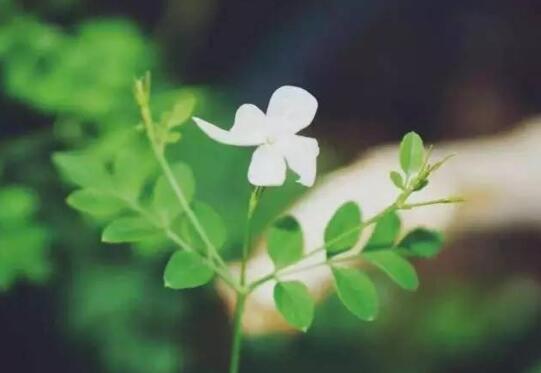
When it comes to how to plant Jasminum officinale, there are many things we need to pay attention to, such as the choice of substrate, the harvesting of seeds, and the planting method. The most important thing is to be careful during the propagation process, so that we can strive for perfection and the survival rate will naturally be higher. As for the specific planting details, they are given below. Let's take a look.
2. Planting method for Jasminum officinale
1. Seed harvesting
The Jasminum officinale plant does not produce many fruits, and each fruit contains only one seed. Its fruits generally mature in the twelfth lunar month. When mature, the fruits turn black, and that is when we can harvest them. After harvesting, remove the outer flesh, take out the seeds, and place them in a dry place to air-dry and store them. Then sow them in the spring of the following year.
2. Substrate selection
Before planting Jasminum officinale, we first need to choose a substrate. This is the step that lays the foundation and is very important. Generally, it is best to choose loose, fertile sandy loam as the substrate. This kind of soil has good drainage and aeration, allowing the plant to better absorb nutrients, and it is not prone to water accumulation.
3. Seed germination
In addition to the above two points, before planting Jasminum officinale there is another pre-treatment we need to do, which is to germinate its seeds. We can take out the stored seeds, then soak them in warm water for 12-24 hours, and take them out after the seeds begin to absorb water and swell. This allows the seeds to sprout more quickly.
4. Planting method
When planting Jasminum officinale, we first need to apply an appropriate amount of base fertilizer to the soil, then scatter the seeds on the surface of the soil. After scattering, cover with 1-2 cm of soil and then water. When watering, it is best to use the immersion method, because Jasminum officinale seeds are relatively small, and watering directly from above will wash the seeds away.
5. Follow-up management
After we have successfully planted them according to the above method, once the seeds sprout, we need to carry out daily care for Jasminum officinale. During care, we need to pay attention to regular watering and fertilizing, light management, and so on. For specific details, you can refer to the article on Jasminum officinale cultivation methods, which contains detailed care instructions.
How does Jasminum officinale propagate? Propagation methods for Jasminum officinale / sowing / cuttings / division
Jasminum officinale is a flowering plant native to Yunnan Province in China. Today, many people in various provinces across China are cultivating it. As more people cultivate it, people are also more concerned about questions regarding its propagation. How does Jasminum officinale propagate? What are the propagation methods for Jasminum officinale? Below, the editor will walk you through it.
1. How does Jasminum officinale propagate? Sowing / cuttings / division
When it comes to how Jasminum officinale propagates, it can mainly be divided into three methods: seed propagation, cutting propagation, and division propagation. As long as we operate properly and are careful in the process, the survival rates of all three propagation methods are very high. Below are the specific details of the three propagation methods. Friends who are interested can take a look.
2. Propagation methods for Jasminum officinale
Seed propagation
Seed harvesting: The Jasminum officinale plant does not produce many fruits, and each fruit contains only one seed. Its fruits generally mature in the twelfth lunar month. When mature, the fruits turn black, and that is when we can harvest them. After harvesting, remove the outer flesh, take out the seeds, and place them in a dry place to air-dry and store them. Then sow them in the spring of the following year.
Sowing method: Among the propagation methods for Jasminum officinale, seed propagation is a relatively commonly used method. First, we need to apply an appropriate amount of base fertilizer to the soil, then scatter the seeds on the surface of the soil. After scattering, cover with 1-2 cm of soil and then water. When watering, it is best to use the immersion method, because Jasminum officinale seeds are relatively small, and watering directly from above will wash the seeds away.
Cutting propagation
Selection of cuttings: Before carrying out cutting propagation of Jasminum officinale, we first need to choose cuttings. Generally, it is best to choose relatively robust branches as cuttings, as this will give a higher survival rate. If you choose branches that already look very thin, then it will basically be very difficult for them to survive. After choosing the cuttings, we also need to prune off the leaves at the bottom, keeping only the upper 2-3 leaves before carrying out the cutting.
Cutting method: When taking cuttings, we can choose spring. Spring is the season when all things revive, and the climate is also moderate. Choosing this time for cuttings gives a very high survival rate. Before cutting, we first need to use chopsticks to poke a hole in the soil the thickness of the cutting, then insert the cutting into it and water thoroughly. This operation can prevent the cutting from being damaged when inserted, and is very practical.
Division propagation
For division propagation of Jasminum officinale, we can generally carry it out together with repotting. When dividing, we can lift the overly dense mother plant out of the pot soil, then divide it into several clumps, pot them separately, and plant them as we divide. They are extremely easy to survive, and generally after potting they become a complete foliage plant.
Jasminum officinale picture appreciation and planting technique reference
Jasminum officinale, such a name makes people feel that this flower must be elegant and pure. That's right, Jasminum officinale is just such a flower, with white blossoms, small and exquisite, very beautiful. Many people do not know that Jasminum officinale is the national flower of Pakistan, and this flower can be seen everywhere in Pakistan. Below, the editor will attach a large number of pictures of Jasminum officinale so that friends who do not yet know it can appreciate it. Jasminum officinale is suitable for planting in home courtyards. Next, the editor will explain the planting techniques for Jasminum officinale. You can appreciate the pictures while learning about its planting techniques.
Cultivation techniques
Seed propagation
Jasminum officinale does not produce many fruits. The fruits are nearly the size of pea seeds, and each fruit contains only one seed. The seeds are harvested in the winter twelfth lunar month when the fruits are fully black and mature. After harvesting, place them together with the outer flesh in a ventilated and dry place to air-dry, then sow around the Start of Spring solar term. For the sowing seedbed, use fertile, loose sandy loam to make a raised bed, open shallow furrows at 15 cm row spacing for drill sowing, then cover with 1 cm of soil, or use 15 cm x 15 cm shallow holes for dibbling. After sowing, cover with a layer of pine needles or rice straw to prevent the seeds from being exposed when watering, then sterilize and disinfect, water thoroughly, cover with a small arched shed and film to retain moisture and increase temperature, and after careful management and protection for half a year, the seedlings can be grown and leave the nursery.
Cutting propagation
Jasminum officinale cutting propagation can produce a large number of flower seedlings in a short period. For cutting time, in the Yunnan region, where dry and wet seasons are distinct, protected seedling cultivation is suitable in mid-January (about 20 d before the Start of Spring solar term); open-field cutting propagation is suitable from June to July, between the Grain in Ear and Major Heat solar terms, when the rainy season has just begun.
When taking cuttings, select 1-2a-old vigorous green branches from the outer part of the mother plant, cut flat between two leaf nodes, and cut them into cuttings with 2-3 leaf nodes per segment (if taking cuttings in summer, it is not advisable to choose overly tender branches). The cuttings are generally 8-12 cm long. Remove the flower buds and the leaves of the lower 1~2 leaf nodes. If the top cut is sealed with wax or plastic film, the effect is even better.
Soak the lower part of the cuttings in a 5/10000 naphthaleneacetic acid or 1/10000 ABT No. 1 rooting powder solution for 1 h, then insert them into a small seedbed of sandy loam with less humus that has been disinfected with fungicides such as carbendazim. The insertion depth is such that the retained leaves are about 1 cm above the soil. After cutting, mainly do a good job of moderate shading and temperature and humidity control management. If using a small arched shed with plastic film for seedling cultivation, ventilate timely during high-temperature periods to prevent seedling burn.
Generally, 30 d after cutting, adventitious roots grow from the lower leaf nodes buried in the soil, and new buds emerge from the upper leaf nodes. After 90 d, they can be bagged for temporary planting, or after half a year the seedlings can be dug up and leave the nursery.
Division propagation
Division propagation of Jasminum officinale is even simpler and easier, and is suitable for small-scale planting by ordinary households. When dividing, select suckering seedlings from around the mother plant, pry them out along the roots, cut off the portion of the vine above 10-50 cm, then tie the top tightly with plastic film to seal it, and it becomes 1 new seedling that can be directly used for planting. If planted in early spring, flower buds can appear in winter of that year, and a large number of flowers can bloom in the following spring.
Planting management
Jasminum officinale cultivation can be divided into 2 types: planting in courtyards and beside railings, and potted cultivation on balconies. For courtyard planting, simply dig a hole at the foot of a wall, plant it, and tie 3-5 wires more than 2 m long for it to climb; a trellis can also be set up for cultivation to form shade beneath the vines for cooling off.
For balcony pot cultivation, choose a relatively large flowerpot and plant it with matured, fertilized soil. After planting, insert two small white bamboo, purple bamboo, or similar stakes more than 2 m long into the flowerpot for it to climb. However, because pot cultivation has less soil, after 2 or 3 years of planting, all or part of the pot soil must be replaced. To replace the pot soil, you can use a handheld plastic bag to take loam, add 1/3 chicken manure, sheep manure, or other farmyard manure and mix evenly, water until it shows water when squeezed by hand but does not drip, then tie the plastic bag opening tightly and place it in a sunny place to ferment and decompose for 20-30 d. Pry out most of the old soil from the flowerpot and replace it with the fermented fertilized soil.
Pest and disease control
Jasminum officinale grows relatively quickly and has few pests or diseases. In cultivation, note that if nutrients are excessive, growth will be too vigorous, leaf color will be dark green, and flowering will be reduced; excessive watering will shorten the flowering period and make the floral fragrance weaker. In frost-damage areas above 1900 m elevation, only some leaves may freeze and wither, but no greater harm is seen.
The above are the planting techniques for Jasminum officinale. I believe that after reading this, everyone has a good understanding of what Jasminum officinale looks like and its planting techniques. Jasminum officinale is snowy white throughout, fresh and elegant. When in full bloom, the flowers cover the branches and look very beautiful; moreover, the fragrance of Jasminum officinale is pleasant and makes people feel refreshed. Therefore, Jasminum officinale is welcomed by many flower and plant enthusiasts. For people encountering Jasminum officinale for the first time, it is still somewhat unfamiliar, but just looking at its pure white flowers makes people unable to resist wanting to plant it.