How to plant amaryllis bulbs? Only with the right care can the flowers bloom more vigorously
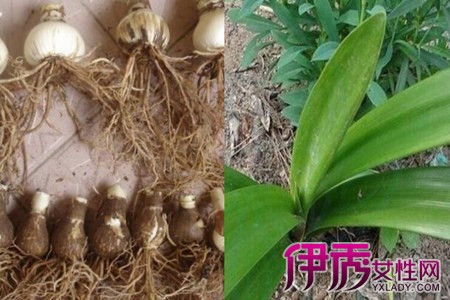
Amaryllis is a typical bulb plant, and if you want to grow it yourself you have to plant this bulb. When we bring the bulb home, the first thing to do is clean it thoroughly. Usually the bulbs sold on the market have a layer of white membrane on them as well as many roots that are about to rot, and these things must be removed before planting, so that the amaryllis does not develop root rot after planting.
Before planting, the bulb should first be soaked in water for two to three hours, as this can soften the hard shell of the bulb and make it easier to take root and sprout after planting. When soaking, the water temperature should not be too low; water at around ten degrees is fine. Note that the top of the bulb should not be placed in the water while soaking. After soaking is complete, we can plant the bulb in a pot.
Before planting we need to prepare both the flower pot and the soil. The pot must not be too small, because bulb plants all have extensive root systems, and if there is not enough space the amaryllis cannot grow normally. The soil should be nutrient-rich; soil from a park that contains leaf mold and rotting roots is best, as it can serve as a natural base fertilizer. After planting, water the amaryllis, and the first watering must be thorough.
After planting and watering, place the amaryllis in a cool, ventilated spot, and preferably do not let sunlight reach it. Newly planted amaryllis fears sunlight the most, and if new shoots appear after a week it proves that it has taken root. After that you can put it somewhere that gets sun in the morning or evening, and let the amaryllis grow naturally.
Amaryllis should normally be fertilized once every half month, and a flower nutrient solution is fine. After three months the amaryllis will bloom. Before the flowering period arrives, give the amaryllis one top dressing, and once the buds form, stop fertilizing. The amaryllis flowering period is relatively long, and as long as you care for it in the right way, it will never let down the effort you put in.
How to grow amaryllis
Amaryllis is somewhat easier to care for than clivia, and is very suitable for home cultivation. The home growing method for amaryllis is introduced below: Amaryllis morphological characteristics: a perennial bulbous plant. The largest bulbs reach 6cm—10cm in diameter, and the color of the bulb skin is related to the flower color: brown bulb skin means red flowers, while light green bulb skin means the flowers have white or red stripes. Roots grow from below the bulb, and leaves emerge from the bulb in two rows, with 3—4 on each side, flat and pale green. The flower stem also emerges from the bulb, is green, thick and hollow. An umbel inflorescence is borne at the top of the flower stem, trumpet-shaped, with colors such as red, red with white stripes, and white with red stripes, often with 2—6 flowers opening facing each other.
It likes partial shade and is not cold-tolerant. The suitable growing temperature is 18℃—25℃, and the suitable temperature during the winter dormant period is 5℃—10℃. It likes moisture but fears waterlogging, and likes loose soil rich in organic matter with good drainage. It likes fertilizer, but after flowering, nitrogen fertilizer should be reduced and phosphorus and potassium fertilizers increased, to promote bulb enlargement.
The main species and varieties also include Amaryllis belladonna, Hippeastrum vittatum, Hippeastrum reginae, Hippeastrum reticulatum, and Hippeastrum hybridum, among others. There are very many horticultural varieties.
Key points for propagation and cultivation:Both division of bulbs and seed sowing can be used for propagation. Division means taking the small bulbs growing around the mother bulb and propagating them, carried out between March—April. When taking the bulbs, avoid damaging the roots on which the small bulbs grow. Either pot planting or ground planting is fine, and when covering with soil, the top of the small bulb should be left exposed above the soil surface. In cold regions, the bulbs should be dug out in late October; bulbs with a diameter of 6cm—7cm or more can be potted separately to await flowering, while small bulbs should be stored in dry sand and then planted in the ground the following April for cultivation. Generally, after 2 years of ground cultivation, they can form flowering bulbs. In addition, in the high-temperature season of July—August, bulb scales can be cut and inserted for propagation, to obtain large numbers of planting bulbs. The suitable temperature for cutting is 27℃—30℃; keep them moist, and after 6 weeks small bulbs will form and take root. Planting should not be deep; if too deep, the neck grows slender; if shallow, the soil temperature is high and the root mass grows vigorously. Plant in March—April, and they can bloom in May—June. Water fully during the flowering period, and increase top dressing after flowering. In midsummer, place in partial shade. After August, growth gradually stops, and watering should be reduced accordingly until it stops. In winter, keep it dry and maintain 10℃—13℃, to encourage full dormancy.
Brief cultivation history and flower culture: native to tropical and subtropical regions, such as the Andes mountains of Peru, the Cape of Good Hope in South Africa, and Brazil in South America, and was introduced to Europe in 1633 and 1769 respectively. The Dutch studied the flowering period of amaryllis and bred plants that could bloom at Christmas and New Year, so that the flowering period of this beautiful amaryllis can be made to bloom according to people's needs. Besides being used as a potted plant, amaryllis is also a high-grade cut flower. Because of its long flowering period it is much loved by people, and it often also becomes material for painters.
Spring management of amaryllis
Amaryllis blooms in April in spring and also blooms in winter. To promote flowering, management should be strengthened early.
1. Repotting. Amaryllis grows quickly, and after 1 year of growth it should be moved into a suitable flower pot.
2. Changing the soil. After 1 or 2 years of growing in the pot, the pot soil lacks nutrients, and to promote the next year's growth and flowering, fresh soil should be used.
3. Division. Amaryllis grows quickly, and after 1 or 2 years of growth many small bulbs grow on the head, so when repotting and changing the soil, divide them at the same time: plant the large plants together in one pot, the medium plants together in one pot, and the small plants together in one pot.
4. Fertilizing. When repotting, changing soil and planting amaryllis, apply base fertilizer at the same time. After potting, apply phosphorus and potassium fertilizer once a month. The fertilizing principle is to apply lightly and frequently, to promote flower bud differentiation and flowering.
5. Pruning. Amaryllis grows quickly and its leaves are long and dense. When repotting and changing the soil, cut away withered leaves, dead roots, and roots and leaves affected by pests and diseases, leaving the vigorous leaves.
6. Pest and disease control. To make amaryllis grow vigorously and bloom early, pest and disease control should be carried out, spraying flower medicine once a month. Spraying should be done on sunny days at around 9 a.m. and 4 p.m.; do not spray in the midday sun, to prevent chemical damage.
The above six points are the tasks that should be carried out in spring management of amaryllis.
Propagation methods for amaryllis:
Amaryllis is a perennial herbaceous plant with a spherical bulb, the bulb diameter being between 10 and 15 cm. The sword-shaped leaves are neatly arranged, with clear veins, green and glossy. The flowers are mainly red, yellow, pink, green, orange, multicolored, etc., and the flowering period is 10 to 20 days. Because it has strong ornamental value, it is widely cultivated all over the world. Amaryllis can be propagated by sowing, bulb division, and tissue culture, among other methods. Several common ones are introduced below.
1. Newspaper sowing method. After artificial pollination when the amaryllis is in bloom, the seed pod naturally splits open after more than a month, and the seeds can then be harvested. Dry them for one or two days and then sow. Draw 3 cm squares on a newspaper, then place it on a seedbed (do not expose to direct sunlight), spray with water, place one seed in each square, and cover with a sheet of wet newspaper. Spray water twice a day so the newspaper does not dry out, and after about 15 days the seeds will grow into seedlings from under the newspaper (temperature 18℃ to 24℃). When the seedlings have grown two true leaves, prick them out into a large tray, with a substrate of vermiculite and peat soil, and water with nutrient solution. When the seedlings have grown 6 to 7 leaves they can be planted in the ground.
2. Shallow pot sowing method. Sieve culture soil mixed with vermiculite and put it into a shallow
pot, 3 cm below the pot rim, then water. When the soil is wet, sow the seeds on the soil surface at 3×3 cm, then cover with sieved soil, not too thick. After sowing, cover the shallow opening with glass and place it in a place with no light, at a temperature of 18℃ to 24℃ and a humidity of 80% to 90%, and after about 10 days the seeds begin to germinate. The gap in the glass plate can be gradually adjusted until it is fully open. When the seedlings have grown three or four leaves, they can be pricked out into pots or planted in the ground.
3. Bulb division propagation method. Generally, when repotting amaryllis, the surplus daughter bulbs are broken off and directly potted or planted in the ground.
This method is simple and easy, with a high survival rate. If the divided small bulbs are vigorous bulbs of 5 cm or more, they can bloom in the same year. For somewhat smaller bulbs, they can bloom in about two years.
4. Tissue culture propagation method. Commonly used is
MS medium, with the stem disc, dormant bulb tissue, flower stalk and ovary as explants. After tissue culture, callus is produced, adventitious roots form after 30 days, and adventitious buds form after 3 to 4 months. When the leaves grow to 4 cm, separate them, and after another 2 months the plantlets can be placed in a greenhouse for management.
Question: This amaryllis of mine was a gift from a friend. I really like it, but I have grown it for 2 years and the bulb is not small either. My colleagues all say it should be blooming, but it just will not bloom. I fertilize and water it regularly, what is going on?
Answer:
It is probably being cared for too attentively. Being a little drier in autumn and winter would be better.
This thing is very easy to grow. With a diameter above 5cm it blooms every year. Normally let it be a little dry, and in autumn water it with fertilizer once every 7~10 days, and let it grow as fully as possible. When winter comes, cut off the leaves and let it go dormant. The following spring, repot it and apply enough base fertilizer and it will produce beautiful flowers. The one I grow at home even blooms once more in October.
I guess it is caused by too much nitrogen fertilizer and too little phosphorus and potassium fertilizer. Also, after two years of growing, it is time to change the soil and divide the pot.
The natural flowering period of this flower is April-May, so if it has passed, let it pass. But you can still start applying a compound fertilizer of nitrogen, phosphorus and potassium once in mid-June, and afterward, in addition to normal watering, apply phosphorus fertilizer once about every 10 days. By late July, the amaryllis still has a chance to bloom.
The key to making amaryllis bloom is winter management. After winter arrives, watering should be stopped and it should be allowed to enter dormancy, so that it can bloom in spring. If you fertilize and water in winter it will cause leggy growth, the flower bulb cannot develop, and it will not be able to bloom. In short, the fewer leaves in winter the better.
In winter it must be allowed to go fully dormant; cut off all the leaves, and wait until spring to water thoroughly once, to let it wake up
How to grow the striped amaryllis. Key points for amaryllis management and maintenance
There are many kinds of amaryllis, and the striped amaryllis is just one of them; the striped amaryllis is a horticultural variety. The striped amaryllis is the most common red amaryllis, and when it blooms it is very beautiful. Below, wed114 wedding website editor brings you the key points for amaryllis management and maintenance. Let's take a look!
How to grow the striped amaryllis. Key points for amaryllis management and maintenance
Amaryllis, also known as zhu ding hong, hua zhou lan, gu ting hua, and bai zi lian. It is a perennial herbaceous plant with bulbs of the Amaryllidaceae family, Hippeastrum genus. The bulb is plump and nearly spherical, 5-7.5 cm in diameter, with a yellow-brown or light green outer skin, varying with flower color. The leaves are opposite on both sides, broadly strap-shaped, slightly pointed at the tip, 6-8 in number, and elongate after flowering. The common flower stalk is hollow, taller than the leaves, covered with white powder, and bears 1-4 flowers; the flower shape resembles a trumpet, and the flowering period is from late winter to spring, sometimes extending to early summer. The capsule is spherical, and the fruit ripens in autumn. Modern cultivated varieties are mainly hybrid large-flowered types, with flower colors of white, light red, rose red, orange red, bright red, or with various stripes; large-flowered varieties reach a flower diameter of more than 22 cm.
How to grow the striped amaryllis. Key points for amaryllis management and maintenance
Key points for striped amaryllis management and maintenance: key points for water culture
1. Choose a good bulb
Generally choose a bulb that is more than 3 years old (preferably with a bulb diameter greater than 6CM), soak and wash it with a 0.1% potassium permanganate solution, then remove the old roots and impurities, and plant it in a bottle so that the bottom of the bulb just touches the water surface. Place it in a shaded place and keep it at 20-25 degrees.
In the first half month, change the water once every 2-3 days, and after rooting, change the water once every 1-2 weeks. You can also use a potted plant, wash the roots and grow it in water; use scissors to remove the rotten roots under the bulb, put it in clean water, change the water every day at first, and after half a month change it once every 1-2 weeks.
2. Nutrient solution
A bulb used for short-term cultivation already contains the nutrients needed for growth, and it can grow and bloom without additional nutrient solution. Bulbs for long-term cultivation need nutrient solution added once every half month.
3. Sunlight
Full sun or shade are both fine; bright scattered light is most suitable.
Editor's recommendation: Provence lavender field pictures
How to grow the striped amaryllis. Key points for amaryllis management and maintenance
4. Temperature
It requires cool summers and warm winters. From May to October the temperature should be 20-25 degrees, and from November to April the temperature should be 5-12 degrees.
5. Care
To make the flowers bloom better, after the flower scape emerges you can add a nutrient solution high in phosphorus and potassium once a week. When the flower scape grows to about 3CM, raise the ambient temperature to 25 degrees.
During the flowering period, place the plant in a cool spot at about 10 degrees; doing so can make the flower color more vivid and the flowering period longer. After flowering, when spring is warm, plant the water-cultured striped amaryllis in the ground for care, to promote bulb enlargement and the production of new bulbs. Store the bulb at 8-13 degrees for 4-6 weeks to make the striped amaryllis dormant. In winter, grow it in water again, and in spring it can bloom again.
Editor's recommendation: Provence lavender field pictures
How to grow the striped amaryllis. Key points for amaryllis management and maintenance
Potted management of the striped amaryllis
For the flower pot, generally use a pot with a 16-20 cm diameter first, which can prevent the pot soil from staying wet for a long time and causing the bulb to rot. The pot soil should be a mix of leaf mold and sandy soil. Before planting the striped amaryllis, some decomposed cake fertilizer or chicken and duck manure should be applied at the bottom of the pot as base fertilizer.
When planting, leave 1/4 to 1/3 of the bulb exposed above the soil surface. After planting, press the pot soil firm, leave a 2-3 cm rim, and water thoroughly once. Afterward, do not water too much; keep the humidity low, and avoid direct sunlight. When the leaves have grown to about 10 cm long, water normally again and begin applying top dressing. Stop fertilizing once the flower buds form. After flowering, an appropriate amount of fertilizer can be applied; doing so can promote bulb enlargement and plumpness.
Promptly cut off flower stems that have already faded, to avoid draining the bulb's nutrients. After autumn, watering should be gradually reduced, and the pot soil should preferably be slightly dry. In winter it should be moved indoors to overwinter, and the amount of watering reduced to just enough to keep the bulb from withering, with the temperature kept no lower than 5 degrees, otherwise it will affect dormancy and the next year's flowering.
Editor's recommendation: Provence lavender field pictures
How to grow the striped amaryllis. Key points for amaryllis management and maintenance
Spring cultivation has the following key points:
1. Repotting. After 1 year of growth, it should be moved into a suitable flower pot.
2. Changing the soil. After 1 or 2 years of growing in the pot, the pot soil lacks nutrients, and to promote the next year's growth and flowering, fresh soil should be used.
3. Division. After 1 or 2 years of growth, many small bulbs grow on the head, so when repotting and changing the soil, divide them at the same time: plant the large plants together in one pot, the medium plants together in one pot, and the small plants together in one pot.
Editor's recommendation: Provence lavender field pictures
How to grow the striped amaryllis. Key points for amaryllis management and maintenance
4. Fertilizing. When repotting, changing soil and planting, apply base fertilizer at the same time. After potting, apply phosphorus and potassium fertilizer once a month. The fertilizing principle is to apply lightly and frequently, to promote flower bud differentiation and flowering.
5. Pruning. When repotting and changing the soil, cut away withered leaves, dead roots, and roots and leaves affected by pests and diseases, leaving the vigorous leaves.
6. Pest and disease control. Spray flower medicine once a month. Spraying should be done on sunny days at around 9 a.m. and 4 p.m.; do not spray in the midday sun, to prevent chemical damage.
Summary: The above are the issues that need attention in the management of the striped amaryllis. For every kind of flower, whether in growing or in management, there are many issues that need our attention, and a moment's carelessness can bring quite a lot of trouble to the cultivation process, so everyone should be careful.