What are the precautions for growing pothos in water?
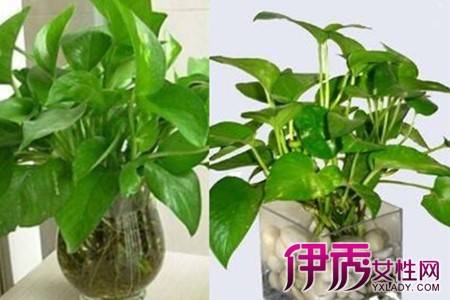
Pothos is one of the green plants most people love, and it is also one of the very good indoor decorative plants, known as the king of absorbing toxic gases. The leaves of pothos are rounded, a lush green mass, and can bring a lot of natural atmosphere to rooms and offices, as well as add to the beauty, making people feel pleased. Below I provide you with a method to quickly learn hydroponic pothos.
First, buy a shallow-mouthed vase you like, pothos, scissors, and water. Carefully take the pothos out of the soil. If it is hard to take out, water it a little to make the soil soft. Do not rush in this process, and be especially careful to avoid damaging the roots of the pothos, so that the hydroponic pothos can grow normally afterward.
After taking it out, choose stems with roots. The stems must have buds protruding outward, each section 15 cm to 30 cm. Cut diagonally along the pothos stem, remove the leaves one or two nodes below the base, and rinse clean with clear water the dust on the leaves and the soil at the roots and stems. Only in this way can each stem section normally take root and sprout.
In the early stage of hydroponic pothos, be sure to remember to change the water frequently, preferably once every 2~3 days. After about a week, a white tender fibrous root will extend from the pothos stem. After the roots grow out, it is best to change the water once every 7-10 days to prevent the pothos from root rot. If the roots of the pothos are too long, be sure to prune them in time. Do not be reluctant to do so, to prevent loss of nutrients.
The above is the detailed introduction to hydroponic pothos that I have brought to you. After reading it, do you feel it is very simple? Then what are you still waiting for? Hurry up and do it yourself. Making a hydroponic pothos is both beautiful and can bring us the benefit of purifying the air. It simply achieves multiple benefits at once.
Hydroponic pothos methods, precautions for growing hydroponic pothos
Pothos is a foliage plant deeply loved by people. It has low environmental requirements and is convenient to care for and manage. It can be grown in soil or hydroponically. Pothos is a must-have green plant for the home and is also the easiest to grow. Below is an introduction to the operating steps of the hydroponic pothos method.
Hydroponic pothos method 1: Stem hydroponic methodFind a pot of vigorously growing pothos, cut hydroponic stems, about 15 cm long is enough, and rinse the dust off the leaves with clear water;
a. Cut pothos cuttings
The cuttings must be healthy and free of pests and diseases, and it is best if they have aerial roots, so they can root quickly and adapt to the hydroponic environment;
b. Cuttings with aerial roots
Insert the cut stems directly into the hydroponic container;
c. Insert the cuttings into the container
The stem inserted into the hydroponic container must not have leaves, so as to avoid rotting and contaminating the water quality, and infecting it with pathogens.
d. The cuttings grow new roots
After about a week, the protruding buds on the pothos stem break through the bud epidermis, reveal white buds, and slowly extend a slender white tender fibrous root. After the roots grow out, this means a new pot of pothos has been successfully cultivated.
2. De-potting and root-washing methodSelect 1 potted pothos with relatively good growth;
a. Representative of relatively good pothos growth
Gently separate the pothos from the pot soil, wash the soil off the root system, and remember not to damage too much of the pothos root system;
b. De-pot the potted pothos
Cut off some old roots and diseased and damaged leaves, then place the pothos into a hydroponic container filled with clear water for hydroponic culture.
c. Final effect of hydroponic pothos
Of course, you can also refer to the way merchants do it, place the pothos in a container with a hydroponic tray, then add ceramsite to fix the stems.
Precautions for hydroponic pothos careHydroponic pothos grows relatively fast and is extensively cultivated and managed. During cultivation and management, in summer, spray water on the plant more often, add nutrient solution once every 10 days, and keep the leaves green.
1. Water change time for hydroponic pothosIn the first few days, hydroponic pothos needs frequent water changes, once every one or two days, and the water temperature should not differ much from the indoor temperature. After new roots grow, the number of water changes can be reduced, once a week is enough.
2. Root cleaningMany flower lovers only know to change the water and never clean the roots. This often leads to accumulation of bacteria at the roots and causes root rot. When cleaning the roots, promptly cut off overly long roots and rotten roots. For roots with rot, be sure to disinfect with potassium permanganate before resuming normal care.
3. Pruning issuesFlower lovers should not think that hydroponic pothos is easy to grow and therefore does not need careful care. If you find that the pothos has grown too long or too dense, or if dried leaves appear, it also needs to be pruned in time. Only then can the pothos grow better.
What are the cultivation methods and precautions for hydroponic pothos?
Hydroponic pothos means growing pothos by hydroponics, and pothos is also a relatively common vine plant. It grows on rocks and tree trunks in rainforests, and after continuous growth, it can also grow into a huge vine plant. It has strong twining ability and well-developed aerial roots. It can not only climb on cylindrical columns, but when placed in entrance halls, hotels, and other places, it is a relatively ideal decorative plant. It is precisely because of the special characteristics of this plant that pothos is a relatively suitable flower to place. So, what are the cultivation methods and precautions for hydroponic pothos? Let us take a look together at the hydroponic pothos cultivation methods and precautions that I have compiled.
Introduction to hydroponic pothos
Hydroponic pothos is a very good indoor decorative plant and climbing foliage plant. Its pothos stems are relatively slender and soft, and the leaves are delicate and elegant. If placed on top of a furniture cabinet, letting its vines hang downward, it is just like an emerald green relief. The environment that hydroponic pothos likes is relatively warm and humid, and the soil it requires is also relatively loose, fertile, and well-drained. If it is placed in a sunny spot indoors, it can achieve the effect of four-season placement. In a relatively dark indoor room, pothos grows poorly and its growth is relatively slow. If it is a relatively dark indoor room, you can move the plant to a brighter environment for recovery every half a month. In this way, you can ensure that the pothos appears vibrant and full of vitality.
Hydroponic pothos cultivation methods
If you plan to grow pothos by hydroponics, then pay attention to the water temperature and the ambient temperature. The main method for hydroponic pothos is the cutting method. Choose a suitable plant, then place it in a container, and within a week its root system can grow out. Next, during the cultivation process, increase its light exposure time, place it in a place with relatively good indoor light, and then ensure the healthy growth of the leaves. In winter, if the indoor temperature is above 10 degrees, the plant can grow healthily. It is worth noting that you should avoid a relatively large temperature difference, and the placement position should not be too close to heating equipment. Because the hydroponic pothos method is used, during cultivation you should pay attention to maintaining air humidity, which can ensure the healthy growth of pothos and achieve ornamental and decorative effects.
Precautions for growing pothos
When growing pothos, ensure sufficient sunlight and reasonable fertilization. In addition to ornamental value, this plant can also be used as medicine, and its function is to invigorate blood and dissipate stasis. Placing it in a garden not only decorates it, but it can also absorb harmful substances in the air such as benzene, trichloroethylene, and formaldehyde. At the same time, it also has super strong air purification ability, so it is called a green purifier.
Podocarpus bonsai pictures Chayote pictures What is the flower language of water lily Can guava lower blood sugar How to grow cyclamen