Rieger begonia growing methods and precautions to help you become a skilled gardener
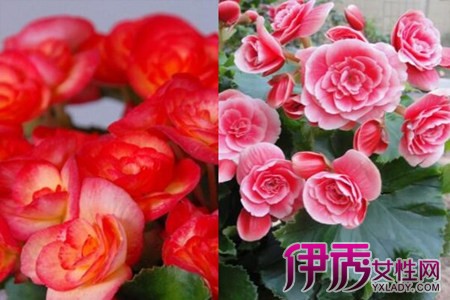
Growing Rieger begonias is actually not difficult; it is just that many people do not understand their habits, so they always feel that problems arise when growing them. Rieger begonias have high requirements for soil. When growing Rieger begonias, you must choose soft black soil to let them grow normally; otherwise, root rot will occur.
The flowerpot chosen for growing Rieger begonias should not be too large. A flowerpot with a diameter of about 20-30 cm is enough. The soil it holds can then supply the normal growth of the Rieger begonia, and a porcelain pot can be chosen to look much cleaner. However, you must choose a breathable flowerpot, and one with holes in the bottom is best. This is because if the roots of the Rieger begonia are not ventilated, they will turn black.
When growing it, you should also pay attention to the tricks of watering. Rieger begonias themselves do not like water very much. So watering about once every 5-7 days is enough, and do not water too much each time. With too much water, the leaves will become somewhat red and develop black spots. When watering, check that as long as the soil in the flowerpot is not dry, do not water for the time being.
Another very important point is that Rieger begonias need attention to heat preservation. In winter, when the outdoor temperature is low, do not place them outside. Rieger begonias must be placed indoors to grow better. Once they are frostbitten, there is basically no way for them to recover. You can only carry out cuttings propagation again. The temperature that Rieger begonias like is around 22°C, which is more suitable.
Also, when they are blooming, they are very prone to attracting insects, which makes the leaves turn yellow and sticky. In such a case, insecticide must be sprayed. After spraying the insecticide, do not spray water immediately, as it will affect the effect of the insecticide. The above are all growing methods for Rieger begonias. Master these, and your Rieger begonias will bloom more vigorously.
Rieger begonia growing methods and precautions
Rieger begonia, also known as rose begonia, is an improved hybrid variety. Its characteristic of blooming in winter makes it very popular at New Year flower markets. However, the beautiful Rieger begonia is not easy to grow and is even a bit delicate. If you do not pay attention to growing methods after buying it home, its leaves will fall and branches will wither after a few months. Therefore, it is very necessary to understand its growth habits and master certain growing methods. Below, we introduce the growing methods and precautions for Rieger begonia.
I. Basic introduction to Rieger begonia
1. Appearance of Rieger begonia
Rieger begonia is a perennial herbaceous plant. It is a group of winter-blooming hybrid varieties obtained by crossing winter-blooming Soko begonia with many kinds of tuberous begonias. It has a fibrous root system, a full plant shape, and a long flowering period. Its heart-shaped simple leaves are alternate. The leaf color is mostly green, and some are brown. The flower shapes are diverse, mostly double-petaled, with clusters of blooms. The flower colors include red, orange, yellow, white, and so on, with complex variations.
2. Price of Rieger begonia
Potted Rieger begonias are a new type of potted variety that has developed rapidly in recent years. They vary in size, and their prices also differ slightly. The lowest average price for small potted Rieger begonias on the market is around 4 yuan, with preferential prices for large quantities.
3. Rieger begonia seeds
Rieger begonia is a hybrid variety. Although it generally does not set seeds, it can also produce seeds. The seeds are very small, and the seeds are basically all imported, divided into coated pellets and uncoated pellets. If you want to sow small seeds, you should mail-order original packaging with no damage from a large flower and tree company to ensure germination and seedling formation.
4. Is Rieger begonia toxic?
Rieger begonia is not toxic. Its tender stems can be eaten. The French even use its leaves as vegetables, for cooking fish, or as soup ingredients.
II. Growing methods for Rieger begonia
1. Temperature
It likes warmth and is a quantitative short-day greenhouse plant. The suitable temperature for growth and development is 18°C-22°C. In winter, it is in the growth and flowering period, so ensure the minimum temperature is not lower than 15°C. Try to place it indoors in a south-facing sunny spot, such as on an indoor windowsill. When the summer temperature is higher than 28°C, cooling measures should be taken, such as placing it in an air-conditioned room or providing shade at noon.
2. Watering
It likes moisture. Decide the amount of watering according to the principle of watering when dry and stopping when wet, and according to climatic conditions. In summer, when water evaporates quickly, it needs more water. Water in the morning and evening, and decide the number of waterings according to the moisture of the potting soil. Frequently spray the leaf surface to maintain air humidity, but avoid spraying water onto the flowers. In winter, when the temperature is low, water at noon on sunny days, and the number of waterings should be appropriately reduced. Note that the water temperature should be close to room temperature to avoid chilling and damaging the root system due to low water temperature.
3. Fertilizing
Rieger begonia has relatively strict requirements for fertilizer. Apply light fertilizer frequently. You can choose special fertilizer for Rieger begonia cultivation. To promote growth and development into shape, nitrogen fertilizer can be used for small seedlings. As the plant grows, the content of phosphorus and potassium fertilizer can be gradually increased. Before flowering, increase the amount of fertilizer. You can also appropriately and evenly spray foliar fertilizer on both the front and back sides, with the concentration controlled at 1%-2%.
4. Shaping and pruning
To make the plant shape full, pinch during the growth period to prompt the plant to sprout side branches. Excess flower buds should also be removed in time to ensure sufficient nutrients.
5. Cutting propagation
At the end of autumn and the beginning of winter, when pruning and shaping, use stem cuttings or leaf cuttings. New shoots can be cut off as cuttings. For stem cuttings, the branches should be of moderate length, and the lower part of the branch should be cut into a horseshoe shape. For leaf cuttings, choose vigorous leaves that are about 60% mature, and use a blade to cut the lower end of the leaf stalk at a slant. Prepare the substrate for cuttings. After inserting, water thoroughly, cover with plastic film, and place in a ventilated place with scattered light for care. After about 3 weeks, the cuttings or inserted leaves will take root.
The branches, leaves, flower buds, inflorescences, and flowers of Rieger begonia all have high ornamental value. After learning the growing methods, they can add a distinctive style to your room, and you no longer need to worry about lacking good decorations.
Growing methods and precautions for Rieger begonia
Rieger begonia has bright and festive flower colors. From planting to blooming, the time is short, the flowers are large and lively, and it is a common fine indoor warm-room flower. It is a new type of potted plant now loved by flower enthusiasts. So, is Rieger begonia easy to grow?
To grow Rieger begonia well, you need to do the following steps well:
1. Soil:
To plant Rieger begonia, it is best to provide it with fertile soil that has relatively good drainage and is as loose as possible. Do not use garden soil, and this soil should preferably contain abundant humus. You can collect soil covered by fallen leaves and dry grass in the wild, then add enough base fertilizer and mix it. It can also be made by mixing peat sugar, peat soil, vermiculite, perlite, carbonized bark, and so on.
2. Watering:
Rieger begonia is a plant that likes warm and humid environments, so the potting soil should remain moist, neither completely dry nor overly wet. Because summer temperatures are high, it needs a little more water. You can water it in the morning or evening, but do not pour water on the leaves. You can choose the method of soaking the pot. In winter, watering is best done at noon on sunny days, and the water moisture should preferably be close to room temperature.
3. Light:
It likes to grow in a semi-shady growing environment, so in the winter peak growth season it can be left without shading and can be placed directly on a windowsill on the side of an enclosed balcony close to the room. But in summer, it must be moved to a relatively cool and ventilated place for growing. However, it also needs a little scattered light from time to time to provide heat so it can grow healthily.
4. Temperature:
The most suitable temperature for Rieger begonia growth is 18°C-22°C. It is both afraid of cold and afraid of high temperatures, so in winter pay attention to keeping warm. The minimum temperature must not be lower than 15°C, otherwise the whole plant will die. Prepare a warm room. In summer, when there are continuous high-temperature days above 28°C, cooling measures should be taken or it should be placed in an air-conditioned room for growing.
5. Pests and diseases:
Because of its growth characteristics, this plant is not very prone to pests and diseases. If they do occur, it is best to use physical methods to repel them, since after all it is a household ornamental flower. You can use ginger juice mixed with water and spray at a 1:25 ratio. In this way, soft rot and the germination of other pathogenic spores can be prevented and controlled.
6. Fertilizing:
During the growth period of Rieger begonia, sufficient fertilizer and water are needed. So usually at home, about every two weeks you can apply soybean soaking liquid or fermented rice washing water once. These natural ingredients can also let it obtain sufficient nutrients to maintain normal development. Of course, in addition, phosphorus and potassium fertilizer can also be applied, while during the seedling stage nitrogen fertilizer is mainly used.
As long as it is grown properly, Rieger begonia plants are luxuriant, with diverse flower colors and a full plant shape. They can produce flowers in colors such as red, white, yellow, and orange. Moreover, from maturity to flowering the time is short, the flowering period is long, and the flower diameter is large. It is the most ideal plant variety for beautifying the home.