Master the characteristics and growth habits of hydrangeas, and growing flowers and plants won't be difficult
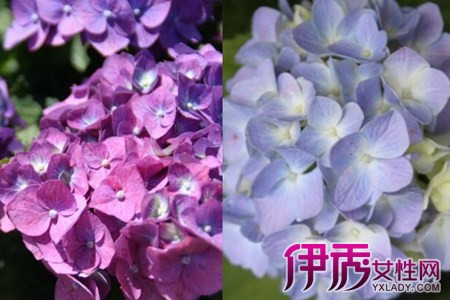
There are many kinds of hydrangeas, and their requirements for growing conditions are not high to begin with. So as long as you master the basic characteristics of hydrangeas, growing them is not difficult at all, and when they bloom they are very beautiful. Placed indoors, the flowers can stay open for many more days. When in bloom, placed indoors, the fragrance is very strong and can make the indoor air very fresh.
For growing hydrangeas, you must choose suitable soil, using black, loose soil. Only this way can hydrangeas take root and grow better. You can choose to buy bagged black soil at the flower market; this kind of soil is very suitable for the normal growth of hydrangeas. The price is not very expensive either, generally around 5 jin for about 3 yuan.
You must have a good grasp of temperature control. Many people like to put flowers outdoors to grow. But in many places, in late autumn the temperature is relatively low, so hydrangeas at such times must be placed indoors, with the temperature controlled at around 22 degrees, which is just right. Only by mastering the temperature well can hydrangeas' normal growth not be affected.
When blooming, they often attract small insects, so insecticide must be sprayed. When using insecticide, be sure not to use too much; excessive use of insecticide will also cause great harm to the flowers. And after spraying insecticide, do not spray water too soon, as it will seriously affect the effectiveness of the insecticide. Spraying water after about 2-3 days is fine.
After one year of growth, the nutrients in the soil are no longer so sufficient, so you need to apply nutrient solution once a week to keep hydrangeas' normal growth unaffected. Master these points and your hydrangeas will be even more flourishing when they bloom; keeping a few pots at home is very beautiful.
Key points of planting techniques for various flowers and plants
✿ Related reading recommendations
✿ Guava pictures
✿ Dendrobium pictures
✿ Spider lily pictures
✿ Crabapple flower meaning (◕‿◕✿) For flower bonsai and plant cultivation, please follow the Meilele flower bonsai section!
.....
Since ancient times, flowers and plants have been deeply admired by many literati and scholars. The "Book of Songs" mentions peach blossoms many times, and plum blossoms, lotus flowers, and peonies are also mentioned, along with the idiom from the Book of Songs, "give a peach, get a plum in return." There are also poets like Tao Yuanming who, besides loving flowers, also loved planting them. So do you know what to pay attention to when planting flowers and plants? Today, the editor will introduce the planting techniques for various flowers and plants.
.....
Most flowers and plants are produced in specialized greenhouses and are of relatively good quality. After buying flowers and taking them home, it is often the case that the flowers were very good at the time of purchase, but after a period of time they become "worse the more you grow them," losing their original fresh quality. This situation is especially prominent with some particularly precious flowers. To make flowers grow well, you must master their ecological habits and master the adjustment of light, water, fertilizer, temperature, humidity, and pest and disease control needed for home flower growth. Here are several planting techniques for flowers and plants.
.....
.....
In flower and plant planting techniques, the hyacinth is a plant of the Liliaceae family and is also a bulbous flower. Hyacinth inflorescences are full, the colors are diverse, and the roots are pure white.
Key points of hydroponics:
1. Choose a container whose mouth can hold the bulb, preferably a gourd-shaped container that is small on top and large on the bottom, with transparent glass being better. Some household utensils such as goblets and wine bottles can also be used, and wide-mouthed containers can also be used.
2. The water temperature should not be high; below 15°C is better.
3. Place the bulb on the bottle neck. After roots begin to grow, the water level can be lowered until the roots just touch the water surface. This allows the roots to fully absorb oxygen and promotes root growth. After the roots develop, cover the cultivation container with black cloth to let the bulb develop further.
4. In winter, move the container to a place with ample sunlight to encourage the plant to produce large, strong flowers.
5. You can also plant several hyacinths in a fish tank, using sand as the substrate, supplemented with shade-loving ferns, to create a small scene full of wild charm, which is also very unique.
.....
.....
In flower and plant planting techniques, hydrangeas can be propagated by cuttings in a greenhouse all year round. Generally, this is done in May to June, in combination with early spring pruning and post-bloom shaping. Choose semi-lignified branches free of pests and diseases, each 10 to 15 cm long, retaining 2 to 3 nodes and 1 to 2 leaves at the top, and insert them into a seedbed with river sand or vermiculite as the substrate, with appropriate shading. Keep the substrate moist, with air humidity above 80%, and roots begin to form in about 18 days. Afterwards, gradually reduce the frequency of spraying water and increase light, and they can be transplanted in about 1 month.
.....
.....
In flower and plant planting techniques, use 2 parts garden soil and 1 part leaf mold, adding an appropriate amount of river sand to make the potting soil. After potting, water the seedlings thoroughly, place them in a shaded place, and after they survive, place them in a bright place, not allowing direct sunlight. In summer, pay attention to coolness and ventilation. To make the plant shape full and compact, do not use too much fertilizer and water normally, and the potting soil should alternate between dry and wet. At the end of autumn, bring them indoors for warmth, and the room temperature should be above 7°C. In winter, do not water too much. Every spring, the pot should be repotted and the soil changed once.
.....
The editor's introduction is only for reference. Flower and plant planting techniques are not the most important thing; the most important thing is to be attentive. Flower and plant planting is meticulous work. If you work by fits and starts, then it is impossible to grow beautiful flowers and plants. Today the editor has finished talking about flower and plant planting techniques, and hopes it can be of help to you.
The complete guide to home flower growing knowledge
The complete guide to home flower growing knowledge
1. What are the benefits of growing flowers?
With their gorgeous elegance, flowers decorate nature with extraordinary beauty and give people aesthetic enjoyment. Growing flowers can enrich and adjust people's cultural life, add pleasure, cultivate temperament, and improve health; it can also increase scientific knowledge and improve cultural and artistic literacy. Growing flowers can green and beautify the land of the motherland, protect and improve the environment, purify the air, and enable people to work and study in a beautiful environment, making life even better.Growing flowers is not only for ornamental purposes, but also has many important economic values. Flowers are an important part of Chinese herbal medicine. Honeysuckle, chrysanthemum, wintersweet, hibiscus, rhododendron, Chinese rose, lotus, and others are all commonly used Chinese medicinal materials. Fragrant flowers are widely used in food, light industry, and other fields. For example, osmanthus can be used as a food flavoring and for brewing wine; jasmine, white orchid, bitter orange, and chloranthus can be used to scent tea; chrysanthemums can be made into high-grade foods and dishes. White orchid, jasmine, rose, wintersweet, narcissus, and others can be used to extract essential oils. Growing flowers can also earn foreign exchange and accumulate funds. For example, the high-grade essential oil extracted from roses, rose oil, is regarded on the international market as "liquid gold," and its value is even more expensive than gold.
2. What categories are flowers divided into?
Our country has long had the reputation of "Mother of Gardens," with abundant flower resources and a great variety of species. To facilitate cultivation, management, and use, it is necessary to understand the knowledge of flower classification. Because the bases for classification are different, the methods of classification also differ.
According to the morphological characteristics of flowers, they are usually divided into two major categories: herbaceous flowers and woody flowers. Those with soft stems are called herbaceous flowers, and those with hard, woody stems are called woody flowers.
According to classification by growth habits and morphological characteristics, they can generally be divided into herbaceous flowers, woody flowers, succulent flowers, and aquatic flowers. Herbaceous flowers, according to differences in their growth and development cycles, can further be divided into annual herbaceous flowers, biennial herbaceous flowers, perennial flowers, bulbous flowers, and lawn plants. Woody flowers, according to differences in trunk height and crown size, can further be divided into trees, shrubs, and vines. Succulent flowers have thick, fleshy stems and leaves and store abundant water in their bodies; some leaves degenerate into needles or feather shapes, with peculiar forms, so they form a category of their own in horticultural cultivation. Aquatic flowers grow year-round in water and marshy areas, and most belong to perennial plants.
According to classification by ornamental parts, flowers can be divided into flower-viewing types (mainly for viewing flower color and flower shape, such as chrysanthemum and Chinese rose), foliage-viewing types (mainly for viewing leaf color and leaf shape, such as croton and caladium), fruit-viewing types (mainly for viewing fruit, such as kumquat), stem-viewing types (mainly for viewing branches and stems, such as pencil cactus and cholla), and bud-viewing types (mainly for viewing buds, such as silver willow).
According to use, flowers can be divided into cut flowers (such as carnation and calla lily), indoor flowers (such as clivia and monstera), courtyard flowers (such as Chinese rose and chrysanthemum), medicinal flowers (such as peony and honeysuckle), spice flowers (such as white orchid, jasmine, and rose), and edible flowers (such as lily, daylily, and pomegranate).
In addition, based on the climatic conditions of the flowers' places of origin and according to natural distribution, flowers can be divided into tropical flowers, subtropical flowers, warm temperate flowers, temperate flowers, subarctic flowers, alpine flowers, and so on. This classification method can reflect the habits of various flowers and the conditions that need to be met for their growth and development during cultivation.
3. What is the relationship between temperature and growing flowers?
Temperature is an important condition for the survival of all kinds of flowers. No matter how suitable other environmental conditions are, if there is no suitable temperature condition, flowers will find it difficult to survive. The growth and development of each kind of flower has its optimum temperature, maximum temperature, and minimum temperature. According to the temperature conditions of the flowers' places of origin, flowers can generally be divided into high-temperature types, medium-temperature types, and low-temperature types.
(1) High-temperature type.
Such as Milan, poinsettia, cineraria, gloxinia, fuchsia, and so on. When grown in North China, the winter room temperature must be kept above 12°C at minimum.
(2) Medium-temperature type.
Such as white orchid, jasmine, hibiscus, geranium, and so on. The winter room temperature must not be lower than 5°C.
(3) Low-temperature type.
Such as oleander, osmanthus, kumquat, bitter orange, sago palm, and so on. The winter room temperature only needs to be not lower than 0 degrees. If the temperature is too high or too low, the normal physiological activities of flowers will be disrupted, growth will stop, and in severe cases the entire plant will die.
The complete guide to home flower growing knowledge
4. What effect does light have on the growth and development of flowers?
Light is the energy source for flowers and plants to manufacture nutrients. Without the presence of light, photosynthesis cannot proceed, and the growth and development of flowers will be seriously affected. Most plants can only have abundant flowers and lush leaves under conditions of sufficient light. Different kinds of flowers have different requirements for light. As the flower proverb says: "Shade for camellia, sun for peony, half shade and half sun for four-season orchid." According to the different requirements of flowers for light intensity, flowers can generally be divided into sun-loving flowers, neutral flowers, and shade-loving flowers.
(1) Sun-loving flowers.
Most flower-viewing and fruit-viewing flowers belong to the sun-loving category, such as magnolia, Chinese rose, pomegranate, plum blossom, crape myrtle, citrus, and so on. Among foliage-viewing flowers there are also a few sun-loving flowers, such as sago palm, palm, croton, and so on. Most aquatic flowers, cacti, and succulents also belong to the sun-loving category. All sun-loving flowers like strong light and cannot tolerate shade. If sunlight is insufficient, branches and leaves tend to grow excessively, tissues become soft and weak, leaf color becomes pale and yellow, flowering is difficult or poor, and they are prone to pests and diseases.
(2) Shade-loving flowers.
They grow well under shaded environmental conditions, such as asparagus fern, camellia, rhododendron, hosta, pothos, lucky bamboo, ivy, gloxinia, monstera, begonia, and so on. If kept under strong light for a long time, their branches and leaves wither and yellow, growth stagnates, and in severe cases they even die.
(3) Neutral flowers.
They grow well under conditions of ample sunlight, but in summer when light intensity is high, they should be slightly shaded, such as osmanthus, jasmine, white orchid, hydrangea, and so on. In summary, various flowers have different requirements for light, and even the same kind of flower has different requirements for light at different stages of growth and development. The amount of light needed by seedlings can gradually increase, while sun-loving chrysanthemums require short-day conditions to form flower buds.
5. What effect does light have on flower bud differentiation?
The purpose of cultivating flowers is to make them produce more blooms, and light is the most effective external factor in promoting flower bud formation. On the same plant, branches that fully receive light have more flower buds; branches that receive insufficient light have fewer flower buds. When there are many sunny days in summer, flowers receive ample light, and the following year there will be more flowers. Generally speaking, flowers and plants can carry out photosynthesis at temperatures of 10-35°C, with the most suitable temperature being 20-28°C.
According to the requirements of flowers for the length of light time, flowers can be divided into 3 major categories:
(1) Long-day flowers.
Generally, flowers that require more than 12 hours of sunlight per day to form flower buds are called long-day flowers. Many flowers that bloom in spring and summer mostly belong to long-day flowers, such as iris, China aster, garden balsam, and so on.
(2) Short-day flowers.
Flowers that can only form flower buds under conditions of less than 12 hours of sunlight per day are called short-day flowers. Poinsettia and chrysanthemum are typical short-day flowers. Under the long-day conditions of summer, they can only grow and cannot carry out flower bud differentiation. After the beginning of autumn, when light decreases to 10-11 hours, they begin flower bud differentiation.
(3) Day-neutral flowers.
Flowers whose flower bud formation has no strict requirement for the length of daytime sunlight are called day-neutral flowers. Such as calla lily, carnation, zinnia, Chinese rose, hibiscus, and so on. They have no obvious response to the length of light time, and as long as the temperature is suitable, they can bloom all year round.
The complete guide to home flower growing knowledge
6. What effect does water have on the growth and development of flowers?
Water is a necessary condition for the growth and reproduction of flowers. It has an enormous impact on the growth and development of flowers. Because if water absorption exceeds consumption, and there is too much water in the flower's body, the plant will grow especially thin and weak, cold resistance will decline, and stress resistance will weaken. If there is too much water for a long time, it will cause root rot, leaf drop, and even death. If water absorption is less than consumption, due to lack of water, flowers will appear wilted, and severe water shortage will cause flowers to wither and die. There are many varieties of flowers, and their water requirements also differ. Even for the same kind of flower, water requirements differ at different stages of growth.
According to differences in flowers' water requirements, flowers can generally be divided into 3 categories: xerophytes, aquatic flowers, and mesophytes:
(1) Xerophytic flowers.
Such as plum blossom, crape myrtle, Malus micromalus, hollyhock, nandina, and so on, as well as succulent flowers, are relatively drought-tolerant.
(2) Aquatic flowers.
Such as lotus, water lily, calamus, water bamboo, and so on.
(3) Mesophytic flowers.
Flowers that can grow well in moist soil. The vast majority of flowers belong to this type, such as magnolia, white orchid, wintersweet, peach blossom, camellia, redbud, and so on.
7. What effect does air humidity have on flowers?
Most of the water needed by flowers comes from the soil, but air humidity also has a great impact on the growth and development of flowers. If air humidity is too high, it easily causes excessive growth of branches and leaves, moldy and rotten petals, flower drop, and easily causes the spread of pests and diseases. If humidity is too high during the flowering period, it hinders flowering and affects seed setting. If air humidity is too low, it will shorten the flowering period and make flower color fade. When southern flowers are grown in the north, if the air is dry for a long time, they will grow poorly, affecting flowering and fruiting. In winter in the north, the climate is dry. If a certain humidity is not regularly maintained when growing flowers indoors, some moisture-loving flowers often show phenomena such as pale yellow leaf color and dry, withered leaf edges.
According to the different requirements of different flowers for air humidity, methods such as spraying and washing branches and leaves or covering with plastic film can be adopted to increase air humidity and create humidity conditions suitable for their growth. Moisture-loving flowers such as orchids, begonias, and monstera require relative air humidity of not less than 80%; medium-humidity flowers such as jasmine, white orchid, and hibiscus require air humidity of not less than 60%.
8. Why do flowers die if watered too much?
If potted flowers are watered too much, water fills the soil gaps, and the air in the soil is replaced by water. At this time, outside air cannot enter either, thus causing soil oxygen deficiency. The respiration of roots is hindered, physiological functions decline, and the roots' ability to absorb water and fertilizer is blocked. At the same time, because the soil lacks oxygen, aerobic bacteria in the soil that decompose organic matter multiply and become active in large numbers, increasing soil acidity. Due to the rampant activity of butyric acid bacteria and others, a series of toxic substances such as hydrogen sulfide and ammonia are produced, directly poisoning the root system. At the same time, due to oxygen deficiency, the plant consumes a large amount of soluble sugar in its body and excessively accumulates substances such as alcohol, greatly reducing photosynthesis, and finally causing the flower to die of starvation.
In the practice of growing flowers, one can often see cases where excessive watering causes the flower roots to turn black and rot, "drowning" the flowers. Therefore, when cultivating flowers, watering should be done in the right amount.
The complete guide to home flower growing knowledge
9. What harm is there if potted flowers are under-watered?
Because potted flowers have little soil and store little water, during the flower growing season attention must be paid to frequently replenishing water to ensure normal flower growth.
If the water supply is insufficient, leaves and petioles will shrink and droop, and flowers will appear wilted. If flowers are supplied with insufficient water for a long time, the older plants and the leaves at the lower part of the plant will gradually yellow and dry up. If most herbaceous flowers remain in a dry state for a long time, the plants will be short, the leaves will lose their fresh green luster, and in severe cases the entire plant will wither and die.
Some flower growers, fearing excessive watering, water only "halfway" each time, that is, the amount of water applied can only moisten the surface soil, while the lower soil is dry. This watering method will likewise affect the development of the flower root system and will also produce the above adverse phenomena. Therefore, watering should follow the principle of watering when dry and stopping when wet, and when watering, water thoroughly.
10. How can you tell whether potted flowers lack water?
Watering is a routine management task in growing flowers, and whether the potting soil lacks water is relatively difficult to judge, so many flower lovers often feel troubled by this. The experience of flower-growing experts in judging whether water is lacking is briefly introduced below.
(1) Tapping method.
Use the knuckle of your finger to gently tap the upper-middle part of the flower pot wall. If it makes a relatively crisp sound, it means the potting soil is already dry and needs to be watered immediately; if it makes a dull, muffled sound, it means the potting soil is moist and watering can be temporarily skipped.
(2) Visual inspection method.
Observe with your eyes whether the color of the potting soil surface has changed. If the color becomes lighter or grayish-white, it means the potting soil is already dry and needs watering; if the color becomes darker or brown, it means the potting soil is moist and watering can be temporarily skipped.
(3) Finger test method.
Gently insert a finger about 2 cm deep into the potting soil and feel the soil. If it feels dry or rough and hard, it means the potting soil is already dry and needs to be watered immediately; if it feels slightly moist, fine, and soft, it means the potting soil is moist and watering can be temporarily skipped.
(4) Pinching and rolling method.
Pinch and roll a bit of the potting soil with your fingers. If the soil is powdery, it means the potting soil is already dry and should be watered immediately; if it forms flakes or granules, it means the potting soil is moist and watering can be temporarily skipped.
The above testing methods are all based on experience. They can only tell people the approximate condition of whether the potting soil is dry or wet. If you need to know accurately the degree of dryness or wetness of the potting soil, you can buy a soil thermometer and insert the thermometer into the soil, and then you can see words such as "dry" or "moist" on the scale, so you can know exactly when to water.
11. What kind of water is good for watering flowers?
Water can be divided into hard water and soft water according to its salt content. Hard water contains more salts. Using it to water flowers often causes brown spots on flower leaves and affects the ornamental effect, so soft water is preferable for watering flowers. Among soft water, rainwater (or snow water) is the most ideal, because rainwater is a nearly neutral water, contains no minerals, and also has more air, making it very suitable for watering flowers. If you can collect and store rainwater on rainy days for watering flowers, it will help promote the assimilation of flowers, prolong the cultivation period, and improve ornamental value. In particular, flowers that prefer acidic soil like rainwater even more. Therefore, during the rainy season, more rainwater should be stored for later use.
In various places in Northeast China, snow water can be used to water flowers, and the effect is also very good, but note that the ice and snow must be melted and left until the water temperature is close to room temperature before use. If there is no rainwater or snow water, river water or pond water can be used.
If tap water is used, it must first be stored in a bucket (or vat) for 1-2 days to let the chlorine in the water volatilize before use, which is more reliable.
Water used for washing clothes that contains soap or laundry detergent must not be used to water flowers, nor should dishwashing water containing grease be used. For cactus-type flowers that prefer slight alkalinity, it is not suitable to use slightly acidic leftover tea water, etc.
In addition, when watering flowers, attention should also be paid to water temperature. Whether watering flowers in summer or winter, if the difference between water temperature and air temperature is too large (more than 5 degrees), it is easy to harm the flower root system. Therefore, water used for watering flowers should preferably be placed in a bucket (or vat) to air for one day first, and used after the water temperature approaches the air temperature.
The complete guide to home flower growing knowledge
12. How should the amount of water for potted flowers be controlled?
Whether the amount of water for potted flowers can be timely and appropriate is the key to success or failure in growing flowers. Based on experience from various places, the amount of water for potted flowers should be comprehensively judged according to the flower variety, plant size, growth and development stage, climate, soil conditions, pot size, placement location, and other aspects, to determine the time, frequency, and amount of watering.
Under normal circumstances, moisture-loving flowers should be watered more, drought-loving flowers should be watered less; bulbous flowers should not be watered too much; herbaceous flowers have high water content and also high transpiration, so they should be watered more than woody flowers; flowers with large, soft, smooth, hairless leaves should be watered more, while flowers with small leaves that have a waxy layer, fine hairs, or leathery texture should be watered less; water more during the vigorous growth period and less during the dormant period; water more when the plant is large and the pot is small, and less when the plant is small and the pot is large; water more on hot days and less on cold days; water more on dry days and less on cloudy days, and so on.
For general flowers, the water supply through the four seasons is: after the beginning of spring each year, as the temperature gradually rises, flowers enter the vigorous growth period, and the amount of watering gradually increases. In early spring, watering should be done before noon. In summer, the temperature is high, flowers grow vigorously, and transpiration is strong, so the amount of watering should be sufficient. In summer, watering should be done in the morning and evening. After the beginning of autumn, the temperature gradually drops, flowers grow slowly, and watering should be appropriately reduced. In winter, the temperature is low, and many flowers enter dormancy or semi-dormancy, so watering should be controlled. If the potting soil is not too dry, do not water, so as to avoid root rot and leaf drop caused by excessive watering. In winter, watering should be done at 1-2 pm.
13. What is the effect of spraying water?
Spraying water can increase air humidity, lower temperature, wash dust off plants, and wash away pests, avoid scorching of tender leaves and early withering of flowers, and keep plants fresh; especially for some shade- and moisture-loving flowers, such as camellia, rhododendron, orchid, monstera, and so on, frequently spraying water on the leaf surface is very beneficial to their growth and development. In summer, after rain when it suddenly clears or on stuffy evenings, attention should also be paid to spraying water to lower temperature and prevent disease.
The amount of water sprayed should be determined according to the needs of the flowers. Generally, if the water evaporates soon after spraying, this amount of spraying is the most suitable. Seedlings and delicate flowers need more spraying, and newly potted cuttings that have not yet rooted also need more spraying. Tropical orchids, Araceae, and Bromeliaceae flowers need frequent spraying even more.
But some flowers are very sensitive to moisture, such as gloxinia, calceolaria, begonia, and so on. Their leaf surfaces have relatively thick fine hairs, and after water falls on them it is not easy to evaporate, causing the leaves to rot, so water should not be sprayed onto the leaves. For blooming flowers, it is also not suitable to spray too much water, otherwise it easily causes petals to mold and rot or affects fertilization, reducing the seed-setting and fruit-setting rate. In addition, the leaf buds at the top of cyclamen tubers, the flower buds in the leaf clusters of African daisies, and the pseudobulbs in the center of clivia leaf clusters are all afraid of moisture. These parts are all easily harmed after spraying water.
14. How can wilted flowers be saved?
For potted flowers, because the pot stores relatively little water, forgetting to water, especially missing watering in the hot summer, often easily causes leaves to wilt. If not saved in time, over time it often leads to the plant withering. If the rescue is not done properly, it can sometimes also cause the plant to die.
The correct approach is: when leaves are found to be wilted, immediately move the flower pot to a cool, shaded place, spray some water on the leaves, and water a small amount. Afterwards, as the stems and leaves gradually recover their uprightness, gradually increase the amount of watering. At this time, if too much water is poured all at once, it may cause the plant to die.
This is because after flowers wilt, large numbers of root hairs are damaged, so their water absorption capacity is greatly reduced. Only after new root hairs grow can the original water absorption capacity be restored. At the same time, wilting causes cells to lose water. After encountering water, the cell wall absorbs water first and rapidly expands, while the protoplast absorbs water later and expands slowly. If a large amount of water is suddenly poured at this time, it will cause plasmolysis, damaging the protoplast and thus causing the flower to die.
The complete guide to home flower growing knowledge
15. What role does soil play in the growth and development of flowers?
Soil is an important substrate for cultivating flowers, the material basis on which flowers depend for survival, and the main source of the water, fertilizer, air, and heat needed for flower growth and development. This is because soil is composed of minerals, organic matter, soil moisture, and soil air. Minerals are the most basic substances making up soil, and they can provide various nutrient elements needed by flowers. Organic matter can not only supply nutrients for flower growth but also plays an important role in improving the physical and chemical properties of soil, soil aggregate structure, and water retention, water supply, ventilation, and temperature stability. Soil moisture is an indispensable material condition for flower growth. Soil air is the source of oxygen needed for the absorption activities of flower roots and the life activities of microorganisms, and is also an important condition for the further weathering of soil minerals and the release of nutrients from the transformation of organic matter.
Scientific experiments have proved that in soil suitable for plant growth, by volume, minerals account for about 38%, organic matter about 12%, and soil air and soil moisture each about 15%-35%. According to some materials, the most suitable water content for the growth of general flowers and plants is 25% of soil volume, and air also accounts for 25%.
Some people, because they do not understand the above principles, do not repot or change the soil for a long time when cultivating potted flowers, causing the physical and chemical properties of the soil to deteriorate, poor ventilation and water permeability, and lack of nutrient elements, thus leading to poor flower growth, yellowing leaves, few flowers, or even no flowers. Therefore, to grow potted flowers well, attention must be paid to timely repotting and changing the soil.
16. What kind of soil is good to choose for potted flowers?
Potted flowers, because their root systems can only grow within a very small volume of soil, have stricter soil requirements than flowers grown in open ground. On the one hand, the nutrients must be as complete as possible, so that the limited potting soil contains the nutrients needed for the flowers' growth; on the other hand, the soil must have good physical and chemical properties, that is, the structure should be loose, the water-holding capacity should be strong, the pH should be appropriate, and the fertilizer-retention capacity should be good.
For this very reason, when growing flowers you should try to choose a neutral or slightly acidic soil with good granular structure, loose yet fertile, with good water retention and drainage, and rich in humus. This kind of soil is light in weight, has large pores, allows air circulation, and is rich in nutrients, which is beneficial to the development of flower roots and sturdy plant growth. If flowers are planted in heavy clay soil with poor aeration and water permeability, or in pure sand that lacks nutrients and has poor water- and fertilizer-retention, or in alkaline soil, then for the vast majority of flowers this easily causes weak growth and even death.
However, the soil conditions discussed above are not possessed by any natural soil. Therefore, for potted flowers it is necessary to use an artificially prepared potting mixture. This potting mixture is made by mixing two or more kinds of soil or other substrate materials in a certain proportion according to the different growth habits of the flowering plants, so as to meet the needs of different flowers' growth.
17. How do you prepare a potting mixture?
There are many materials suitable for preparing a potting mixture; the following are the ones commonly used at present.
(1) Plain sandy soil. Mostly taken from riverbanks. It has good drainage but no fertility, and is mostly used by mixing it into other potting materials to facilitate drainage.
(2) Garden soil. Soil taken from the surface layer of vegetable gardens, orchards and similar sites. It contains a certain amount of humus and has fairly good physical properties, and is often used as the basic material of most potting mixtures.
(3) Leaf mold. Made by piling up fallen leaves, dry grass and the like. It has a high humus content, strong water retention and good permeability, and is one of the main materials for preparing potting mixtures.
(4) Mountain soil. It is divided into two types: black mountain soil and yellow mountain soil. It is formed by the long-term accumulation of fallen leaves from mountain trees. Black mountain soil is acidic and contains more humus; yellow mountain soil is also acidic and contains less humus.
(5) Peat soil. It is formed by the carbonization of peat moss. Owing to the different stages of formation, it is divided into two types: brown peat and black peat. Brown peat is rich in organic matter and shows an acidic reaction; black peat contains more minerals and less organic matter, and shows a slightly acidic or neutral reaction.
(6) Rice husk ash. It is the ash formed after rice husks are burned; it is slightly alkaline, contains potassium, and has good drainage and aeration.
(7) Barnyard manure soil. It is made by mixing animal manure, fallen leaves and the like with garden soil, sewage and so on, piling them up and composting them; it has fairly rich fertility.
In addition, there are also pond mud, river mud, coniferous soil, turf soil, rotted wood shavings, vermiculite, perlite and so on, all of which are good materials for preparing potting mixtures.
In preparing a potting mixture, you should proceed flexibly according to the growth habits of the flowers, the properties of the potting mixture materials and local conditions. For ordinary potted flowers, the commonly used potting mixture ratio is leaf mold (or peat soil) : garden soil : river sand : bone meal = 35:30:30:5, or leaf mold (or peat soil), plain sandy soil, decomposed organic fertilizer, superphosphate and the like mixed in a ratio of 5:3.5:1:0.5, then sifted and used.
The above potting mixtures are mostly neutral or slightly acidic and are suitable for most flowers. For growing acid-loving flowering trees such as camellias and rhododendrons, about 0.2% sulfur powder may be mixed in; for growing flowers such as cactus globes, about 10% wall-surface soil peeled off from lime walls may be added.
Note: Opinions differ on the suitable pH for some flowering trees, so the above data are for reference only.
The Complete Guide to Home Flower Growing
18. How to choose the types of flowers to grow at home:
As the saying goes: "An elegant room need not be large; the fragrance of flowers need not be plentiful." Placing some flowers and plants indoors, with green leaves and abundant blossoms, evergreen through the four seasons, is truly full of the spirit of spring and full of vitality. For growing flowers at home, potted plants generally predominate. Owing to limited conditions, do not grow too many; 10 to 15 pots is suitable. The flowers chosen should preferably include foliage plants, flowering plants, fruit-bearing plants, fragrant-flower plants, and plants grown for their form, so that the varieties are rich and diverse. In growing flowers at home, the quantity should be small but choice, and in choosing varieties you should make a reasonable selection of flowering trees according to the family's environmental conditions and personal preferences.
(1) Choosing flowers for indoor use:
The interior is an important place for people's daily activities, and flowers should be chosen according to the following requirements.
Flowers should preferably be shade-loving or shade-tolerant varieties, such as Chinese evergreen, orchids, Swiss cheese plant, spider plant, rubber tree, and clivia. Some flowering plants mostly belong to the sun-loving category, and when displayed indoors they should be placed in a sunny spot and frequently moved outdoors to take in sunlight and dew.
Flowering trees with a strong unusual odor should not be placed indoors, such as lilac and night-blooming jasmine, whose fragrance may cause adverse reactions in some patients; some people with high blood pressure or heart disease feel chest tightness and discomfort upon smelling these scents. The aroma of coniferous and cypress plants can reduce people's appetite, so they also should not be placed indoors in too great a number or for too long.
The sap of the leaves, stems and flowers of some flowers is toxic, and when placed indoors they should be properly isolated, especially to avoid contact by children. Poinsettia, lantana, oleander, crown of thorns, milk hedge, and spider lily are all toxic, though in fact their toxicity is relatively low; as long as you do not casually pick the leaves, branches, flowers or fruits, poisoning generally will not occur. Extra care should be taken when cultivating them.
The bedroom arrangement should be quiet, clean, plain and elegant, and comfortable. A south-facing bedroom has ample light, so you can choose light-loving and warmth-loving flowers, such as orchid tree, Chinese hibiscus, Chinese rose, white orchid, kumquat, cacti and succulents; an east- or west-facing bedroom, owing to the short duration of light, allows you to choose semi-shade-tolerant flowers, such as camellia, rhododendron, gardenia, banana shrub, asparagus fern, and Chinese evergreen; a north-facing bedroom has poor light conditions and a lower temperature, so it is suitable to use clivia, spider plant, rubber tree, Swiss cheese plant, asparagus fern and rock bonsai.
The living room arrangement requires tranquility, elegance and good taste, and should feature small size and refinement as its main characteristics; you can choose orchid tree, four-season osmanthus, jasmine, asparagus fern, finger citron, kumquat and so on, and in the corners you can place foliage plants such as money tree, areca palm, bamboo palm, parlor palm and ferns.
(2) Choosing flowers for the balcony
A balcony has a small area, strong wind and dryness, high temperatures in summer, and rapid water evaporation, but it has ample light and good ventilation, which is very favorable for some light-loving, drought-tolerant flowers.
A protruding balcony is exposed on three sides and has good light, so you can set up a flower stand and grow climbing flowers such as cypress vine, morning glory, grape, and Virginia creeper, and you can set up a trellis to place Chinese rose, pomegranate, orchid tree, jasmine and bonsai. From the top of the balcony you can hang shade-tolerant spider plants and ferns, and the rear part of the balcony is a semi-shaded environment where you can place heavenly bamboo and clivia.
A recessed balcony is exposed on only one side and has poor ventilation, so you can set up trapezoidal flower stands on the walls on both sides to display flowers and trees.