How to grow hyacinths correctly? Grow them this way for more vigorous blooms
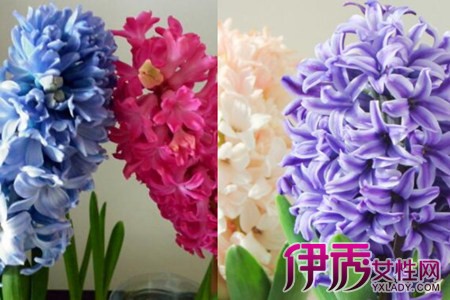
There are two ways to grow hyacinths: growing in soil and growing in water. Many people like to grow them in water at home. The water-growing method is to first find a small bottle, the kind with a slightly narrow middle. This way the roots of the hyacinth can be placed in the water, but the bulb's stem stays above the water. This method allows faster growth.
However, when growing hyacinths in water, you must pay attention to changing the water. Many people always choose to use rice-washing water. But rice-washing water has a very big effect on the roots of hyacinths, and root rot easily occurs. So when growing in water, you must use clean water, and when changing the water, also pay attention to cleaning the roots.
If the roots are not cleaned, dirt will build up over time, and then the outer layer will rot. It cannot grow normally at all, so change the water about once every 2-3 days. Each time you change the water, do not pinch the stem with force. Excessive force will damage the outer layer, causing yellowing.
Another method is to grow hyacinths in soil. When growing in soil, you must choose suitable soil. Do not use very hard yellow soil; very hard soil has a great effect on root growth. Also, when watering, you must control it well. Watering about once every 2-3 days is enough; overwatering will make the roots turn black.
Also, temperature control must be handled well. Around 23°C is just right for hyacinth growth. It also will not affect the flowering period. When blooming, the fragrance is very strong, filling the room with a rich scent. Master these growing methods and your hyacinths will surely grow very luxuriantly.
How to grow hyacinths, growing methods for hyacinths
The hyacinth flower interprets our beautiful life, so elegant and passionate. It represents the brilliance and glory of every stage of life from youth to old age. A person's inner world is like a rich and colorful world. A peaceful life blooms like a flower, releasing the light of life.
The hyacinth is a perennial herb. The bulb is oval with a membranous outer skin. The leaves are 4-8 in number, narrowly lanceolate, fleshy, with a groove on top, green and glossy. The flower stem is fleshy, slightly taller than the leaves, with a terminal raceme, 5-20 flowers, horizontal or drooping, funnel-shaped, the perianth tube long and swollen at the base, the lobes oblong and recurved. The flowers come in purple, white, red, yellow, pink, blue and other colors, and there are also double-flowered, large-flowered, early-flowering and polyploid varieties.
Four essentials for hyacinth cultivation
1. Bulb selection. The nutrients needed for hyacinth flowering mainly come from the nutrients stored in the bulb scales. Only by choosing bulbs with undamaged skin, fleshy scales that are not excessively shriveled, relatively hard and heavy, and plump can you get abundant and beautiful flowers.
2. Soil requirements: the soil should be fertile, high in organic matter, with good granular structure, and a pH of 6-7. A growing mix can be prepared in the ratio of 5 parts leaf mold : 3 parts garden soil : 1.5 parts coarse sand : 0.5 part bone meal. Before planting, chemical agents such as formalin can be used. At a soil temperature of 10-15°C, apply the agent to the soil surface and immediately cover with plastic film. After 3 days of warm weather, remove the film, let it air for 1 day, then plant, keeping the soil moist.
3. Light. Hyacinths need only above 5000Lx to maintain normal physiological activity. If the light is too weak, it will lead to weak plants, overly long stems, small buds, early flower fading, yellowing leaves and other conditions. An incandescent lamp can be used about 1 m away for supplemental light; but too strong light can also cause scorching of leaves and petals or shorten the flowering period.
4. Temperature and humidity regulation. If the temperature is too high, even above 35°C, flower bud differentiation will be inhibited, deformed growth will occur, and the rate of blind flowers will increase; if the temperature is too low, the flower buds will suffer cold damage.
Soil humidity should be kept between 60-70%. If too high, root respiration is inhibited and rot easily occurs; if too low, the aboveground part wilts, or even dies. Air humidity should be kept at around 80%, and humidity can be increased by misting and sprinkling water on the ground, or reduced by measures such as ventilation.
Scientific cultivation of grape hyacinth
The grape hyacinth flower is like strings of purple grapes, very beautiful. It is highly cold-resistant and can overwinter in the open even in North China. In cultivation, note:
① The growing soil should preferably be a well-drained, deep, fertile sandy loam.
② Propagate with bulblets. Every 2-3 years, dig up the mother plant and take well-grown bulblets as propagation material. Planting can be done in September-October, and they will bloom in April of the following year.
③ Apply sufficient base fertilizer before planting. During the growth period, apply a relatively complete liquid fertilizer 1-2 times as a top dressing, and also pay attention to watering to promote growth. After the flowers fade, reduce watering and apply liquid fertilizer 1-2 times, which is beneficial to the growth of the underground bulbs. In summer, grape hyacinth is in its dormant period, so stop fertilizing and control watering to prevent root rot. In winter, cut off the aboveground part and water thoroughly to let it overwinter.
How to grow hyacinths, growing methods for hydroponic hyacinths, how to grow hyacinths
?`?.??.?′′ˉ`? Related recommendations:
? How to grow Alocasia amazonica ? Yellowing ficus leaves ? Growing methods for Cymbidium ensifolium ? Growing methods for orchids
?`?.??.?′′ˉ`?Soft-decoration plants. This article comes from [Decoration Information]
The main place of origin of hyacinths is the Netherlands. They belong to the Liliaceae family and are also bulb plants. The hyacinth inflorescence is very full, and the colors are also quite numerous. The roots are still pure white. The growing period of hyacinths is in winter and early spring, and the flowering period is also at this time. Summer is the dormant period for hyacinths. So we generally cultivate hyacinths as annual flowers. Below, the editor shares the growing methods for hyacinths, and hopes everyone can learn them.
Growing methods for hyacinths - hydroponic hyacinths
Step one:First, prepare a transparent glass bottle shaped like a gourd. Water should be put in the bottle, and the hyacinth bulb placed at the mouth of the bottle. A little charcoal can also be added to disinfect and preserve it. The water level should be limited so that it does not touch the bottom of the bulb.
Step two:Once it is set up, place it in a dark place, and also cover the bottle with black cloth. Keep the indoor temperature at 5-10°C. This is because it benefits root development in hyacinths. After 20 days, the roots will sprout in a completely dark environment. At this time, it should be taken out to bask in the sun.
Step three:After the root system has grown fully, move it to a bright place without direct light, control the temperature above 10°C, and change the water once every 2-3 days to keep the water clean. Let the water reach the roots; there is no need to water or fertilize.
Step four:After the hyacinth flowers fade, the flower stem should be cut off, and the bulb taken out and planted in a pot so that the bulb can become plump. When the leaves wither, dig out the bulb and store it well; in autumn it can be planted again in a pot to restore its vigor. If the bulb is stored well, it can still bloom the next year, but the flowers will be smaller and the flower stalk will also shrink. This is mainly because the bulb has degenerated.
How to grow hyacinths?
First: watering is very important.If growing in clear water, it should be changed once a week; if growing in nutrient solution, it can be changed once every half month. No matter how it is grown, the key is to keep the water clean.
Second: growing environment:After sprouting, it should be placed in a bright, airy spot with sunlight to help its growth. At first, give it one or two hours of light each day, then gradually increase it to seven or eight hours. Be sure to maintain sufficient sunlight exposure.
Precautions for how to grow hyacinths:
1. Choose a container whose mouth can hold the bulb, preferably a gourd-shaped container that is small at the top and large at the bottom, with transparent glass being better.
2. The water temperature should not be high; below 15°C is better.
3. Place the bulb on the neck of the bottle. After roots develop, the water level can be lowered until the roots can just touch the water surface. This allows the roots to fully absorb oxygen and promotes root growth.
4. In winter, move the container to a place with sufficient sunlight to encourage larger and stronger flowers.
5. Several hyacinth plants can also be planted in a fish tank, with sand as the substrate, supplemented by shade-loving ferns, forming a small scene full of wild charm, which is also very unique.
Conclusion:In fact, after the first hydroponic growing period, hyacinths will not bloom immediately; you have to wait until the second year for them to bloom. So when growing them, do not worry if they do not bloom at that time. The above are the growing methods for hyacinths, and I hope they are helpful to everyone.
▓ Recommended reading
? How to grow jade plant ? White rose flower language ? Lavender pillow ? Gardenia flower language ? Growing methods for aloe
? Iris flower language ? Cosmos flower language ? Characteristics of Chinese rose ? How to plant bowl lotus ? Podocarpus bonsai pictures