How to care for gardenia during its blooming period? Keep these precautions in mind
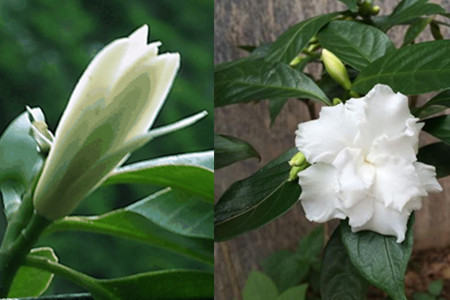
Gardenia leaves are as beautiful as feathers, and the fragrance is very alluring, refreshing to the heart. However, beautiful flowers need to be carefully tended, especially during the gardenia blooming period, which requires particularly meticulous care to ensure a longer blooming period and brighter, more moving flowers. Today let's talk about the precautions for gardenia care during the blooming period, and specifically how to care for them so the flowers bloom longer and more beautifully.
I. About light
Gardenias need to be placed in a ventilated spot with bright sunlight, especially during the blooming period, but they must not be exposed to direct strong light. During the gardenia blooming period, place it in the shade of other plants, so it fully receives sunlight but not direct rays; this ensures a longer blooming period and slower wilting of the flowers.
II. About water and fertilizer
During the gardenia blooming period, water must not accumulate in the pot, otherwise the flowers will quickly fade and drop, but the soil also needs to stay moist, meaning the pot's drainage must be good. Also, the buds or flower buds must not get even a tiny bit of water, which would seriously affect the flower's own growth, blooming and alluring fragrance. In addition, during the gardenia blooming period, do not fertilize casually. Fertilizing makes the plant grow rapidly, and as a result the flowers tend to wither.
III. Humidity
If your indoor humidity is insufficient, but you want to better care for blooming gardenias during the blooming period, you can use a humidifier beside the gardenia, avoiding spraying water onto the buds. And be sure to control it well. Because too much moisture also easily breeds pests.
Common gardenia care problems and precautions
Gardenias not only bloom beautifully, they also have many health functions. Gardenias have strong resistance to harmful gases such as sulfur dioxide and hydrogen fluoride, and their fruit, leaves and roots can all be used medicinally. These advantages have also brought gardenias more growers. But during the growing process, flower lovers encounter many cultivation problems, such as gardenia leaves turning yellow, and how to repot potted plants. In response to these cultivation problems, the editor will chat with fellow flower lovers about answers to common problems and cultivation precautions in the gardenia growing process.
Answers to common gardenia cultivation problems
1. What to do if gardenia leaves turn yellow?
Gardenias are sensitive to iron. If a potted plant is watered too frequently, the soluble iron in the soil is lost, which cannot meet the plant's growth needs, and leaf yellowing due to iron deficiency very easily occurs. When the condition is mild, the plant's leaf color fades somewhat, but the color of all leaf veins remains normal. When the condition is more severe, all the leaves at the top of the plant turn yellow, the leaf margins scorch, and only the main veins and side veins remain relatively green. For this situation, as long as you apply dilute alum fertilizer water about every 15 days and regularly spray a 0.2% ferrous sulfate aqueous solution, it can be prevented and controlled.
2. How to repot a potted plant?
Potted plants can be repotted in April-May. After trimming some branches and leaves, remove the plant from the pot, keep a small amount of soil at the center, trim away overly long roots, pot it, water thoroughly, place it in semi-shade, keep the pot soil moist, and after it survives, move it into sunlight for growing.
Precautions for gardenia cultivation
In summer and autumn, when the air is dry and the temperature is too high, frequently spray water on the leaf surface and around the flower pot to increase air humidity.
Tips for gardenia cultivation
Gardenias should not be pruned too much. Gardenias are rarely pruned; pruning is done each year only when the vigorous growth period from May to July is about to pass. Remove the top shoots to promote branching, so that later the plant shape is beautiful and it blooms more. Ordinarily, just cut off old branches, weak branches and diseased or pest-infested branches, and appropriately adjust the tree shape.
Lush campus life is always inseparable from gardenias. The gardenia blooming period is from May to August. When graduation arrives, the white gardenias give off their enchanting fresh fragrance. Their flower language is "joy", and they are now also often used as a metaphor for "a pure heart", which has also made many people sincerely love gardenias. The editor also hopes we can all keep a pure heart forever like gardenias. The above is the editor of Huinong Network's compilation of answers to common gardenia care problems and cultivation precautions. We hope it is helpful to you.
How to extend the gardenia blooming period? Key points for gardenia cultivation and care
Graduation and the start of school coincide with the season when gardenias bloom. It gets its name because its fruit resembles a wine cup, and it is also called yellow gardenia. Its blooming period is from June to August, and with proper care, flowering lasts as long as 2 months. Gardenias like a warm, humid and semi-shady, semi-sunny environment, and are suitable for growing in fertile, loose and moist acidic loess. Therefore, caring for gardenias requires doing the following work well.
1. Cultivation and care
Gardenias should be transplanted with soil, carried out in spring or the plum rain season. The soil should be fertile, loose and well-drained acidic soil. For potting, mostly use leaf mold plus mountain soil, and add a small amount of cake fertilizer and bone meal as base fertilizer. After transplanting, water thoroughly, place in a cool place, and carry out normal management after the seedlings recover.
In early spring, shaping and pruning should be done, promptly cutting off leggy branches. From May to July, cut off the top shoots to promote branching. After the flowers fade, cut off the spent flowers. In hot summer, water more, spraying water on the leaf surface once each in the morning and evening to increase humidity, pay attention to shading, and do not let it receive direct sunlight. It is best to place it under a shade shed, or move it indoors to a ventilated spot.
In spring and autumn, it can be placed outdoors in sunlight. Before flowering and throughout the growing period, apply thin fertilizer frequently, fertilizing once every half month. If yellow leaves are found, you can use 0.1% ferrous sulfate to water it in the water and fertilizer. In late autumn, move it indoors to a sunny spot to overwinter.
In winter, if the room temperature is too high and ventilation is poor, scale insects and sooty mold easily breed, and you can spray with a 500-1000 times dilution of carbendazim.
2. Propagation and care
Gardenias can be propagated by methods such as cuttings, layering and division.
(1) Cuttings
Using softwood cuttings gives a high survival rate. Take gardenia softwood shoots as cuttings, 10-15 cm long, keep 2 leaves at the top and cut each in half, cut off all the rest, insert into the seedling bed, shade and keep moist, and they can root in about 20 days.
(2) Division
Dig up the plant with soil, then use a flower trowel to cut it apart together with the roots, and plant them separately right away, place in a cool place, and after a week move to a sunny spot.
(3) Layering
This method is mostly used for gardenias planted in the ground. Choose strong 2-3 year old branches, pull them down to the ground, peel off some bark, press them into the soil, then cover well with soil. After one month they can root, and in mid-to-late June they can be separated from the mother plant, and planted separately the following spring.