Silver-edged geranium leaves have white edges; these three care methods you need to know
I. Introduction:
1. Introduction to geraniums:
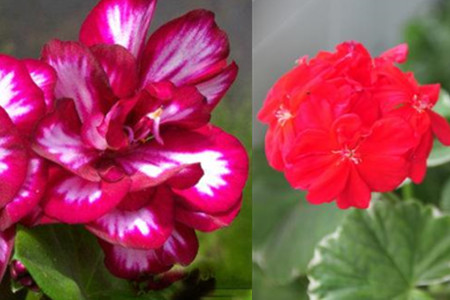
Geraniums are relatively common in daily life. The geranium leaves everyone usually sees are green, and the flower color is that kind of very vivid red, making them look very beautiful. In the past, the flowers were mostly single-petaled; now, besides single-petaled geraniums, there are also double-petaled ones. Geraniums have relatively many petals, a long flowering period, and vivid flower colors, and they are very popular in the flower market.
2. Introduction to the silver-edged geranium:
In addition, there is also a very special kind of geranium, namely the silver-edged geranium. From the name, you can tell that this variety is different from the green-leaf geraniums we see in daily life. The silver-edged geranium is one of the flower varieties loved by gardening enthusiasts. The silver-edged geranium originated in southern Africa and is now grown all over the world.
The silver-edged geranium blooms beautifully, in a vivid red, and is mostly used as an ornamental plant, very popular. The edges of its leaves are silver. In fact, when the silver-edged geranium is young, the leaf edges are green. As the plant grows, its leaf color gradually becomes lighter and whiter, and then changes to silvery white.
When the silver-edged geranium first entered the market, many people had never seen this variety and treated it as a green-leaf geranium, buying it in a muddle. As they cared for it, they would discover that its leaf edges gradually turned white. Gardening enthusiasts even thought it had some strange disease. In fact, this is a very normal state. Only when the silver-edged geranium grows normally will its leaf edges turn a beautiful silvery white. How can you grow this magical plant well? Let the editor share some insights with everyone!
II. Propagation methods:
1. Cutting method:
The silver-edged geranium can be propagated by cuttings from September to March every year. If cuttings are taken in September, they can bloom the following spring; if seedlings are cut in spring, they will not bloom in summer because the plants are too small. For cuttings, choose silver-edged geraniums that are 1-3 years old. Plants that are too old or too tender are not suitable for growth, are relatively difficult to cultivate, and are also hard to bring into bloom. About half a month after cutting, they can take root and grow.
2. Seed propagation:
After the silver-edged geranium sets fruit, the seeds can be collected and sown. If you want to wait until the weather is cool before sowing, you need to first dry the seeds in the sun, then store them in a paper bag. However, because seedlings are not easy to cultivate from sowing, the silver-edged geranium generally does not use seed propagation.
III. Care methods:
1. The silver-edged geranium likes warmth. Its normal growth temperature is between 15°C and 25°C. It is neither tolerant of severe cold nor high temperatures, so special attention must be paid during cultivation, especially in summer. Be sure to place the silver-edged geranium in a relatively ventilated and cool place so it can safely get through the intense heat.
2. The growth of the silver-edged geranium cannot do without sunlight. When growing silver-edged geraniums, friends must place them on a balcony with relatively ample light, so the plants can grow well. If light is insufficient for a long time, the silver-edged geranium may drop flowers or leaves.
3. In order to make the silver-edged geranium produce more flowers, when the plant grows to 15 cm, it should be treated accordingly, so they can grow more side branches, which in turn helps the plant produce more flower buds. During the plant's growing period, fertilize it regularly!
The silver-edged geranium is beautiful, especially when it blooms, so when friends are growing it, they must ensure sufficient light, so its leaves will not turn yellow and fall off.
What are the uses of geraniums? Geranium cultivation methods
Geraniums originated in southern Africa and are commonly cultivated all over the world. Young plants are succulent herbaceous plants, while older plants are semi-woody; in the West, they are very good flowers for decorating windowsills, and on the European continent, such as in Germany and Austria, they are especially common. The common name of geranium is hydrangea. There are single-petaled, semi-double, double, and tetraploid varieties. They can also be divided into upright geraniums and trailing geraniums. The stems are thick and juicy. Geranium stems are upright, succulent, woody at the base, succulent above, much branched or unbranched, with obvious nodes, densely covered with short soft hairs. Leaves alternate; stipules broadly triangular or ovate, 8-15 mm long, covered with soft hairs and glandular hairs; petioles 3-10 cm long, covered with fine soft hairs and glandular hairs; leaf blades round or kidney-shaped. The stem part is heart-shaped, 3-7 cm in diameter, with wavy shallow lobes at the edges, with round teeth, both sides covered with transparent short soft hairs, and within the leaf margin on the surface there is a dark red horseshoe-shaped ring pattern.
Geraniums like warm winters and cool summers. Indoors in winter, maintaining 10-15°C during the day and above 8°C at night allows them to bloom normally. But the most suitable temperature is 15-20°C. Geraniums like dryness and dislike dampness, so watering in winter should not be excessive; water only when the soil is dry, and let it dry between waterings. If the soil is wet, the stems become soft and tender, which is unfavorable for the sprouting and opening of flower branches; long-term excessive moisture will cause the plant to grow leggy, the flower-bearing parts to move upward, and the leaves to gradually turn yellow and fall off.
Geraniums themselves also have many uses, not only in home life; they also have medicinal effects. Below, their uses and cultivation methods will be explained for everyone.
Types of geraniums
Horseshoe geranium: plant height 30-HO cm. It is named because there is an obvious dark brown horseshoe pattern within the leaf margin. Petals are the same color, from deep red to white; the upper two petals are extremely short, and the petals are narrowly wedge-shaped. This species has produced a great many colorful-leaf varieties.
Regal geranium: also known as butterfly geranium and foreign butterfly. The whole plant has soft hairs. There is no horseshoe pattern on the leaves, and the leaf margin teeth are sharp and irregular. The flowers are large, with colors including white, pale red, pale purple, and so on. It is named because there are two red or purple blotches on the petals.
Ivy-leaved geranium: also called vine geranium and ivy-leaf geranium. The stem is semi-trailing, and the plant is prostrate or climbing. Leaves are shield-shaped and slightly glossy. Flowers are small, borne in clusters of 4-8, with colors including white, pink, red, purple, and peach red. The flowering period is winter and spring.
Scented geranium: also known as musk geranium and round-leaved geranium. The stem is slender and trailing, and new branches and new leaves often cluster at the top of the stem. Umbellate inflorescences, flowers small, white, with the upper two petals having red-purple markings. Touch the leaves with your hand. It immediately gives off an inviting fragrance.
Rose-scented geranium: also known as touch-me fragrance. Semi-shrub. Leaves palmately 5-7 deeply lobed, and the lobes are further pinnately shallowly lobed. Flowers peach red or pale red, with purple-red markings in the center, and the upper two petals are larger. The flowering period is summer.
Chrysanthemum-leaved geranium: stems have long hairs. Leaves palmately deeply lobed, and the lobes are further divided into linear segments. The whole plant is covered with white powder. Flowers rose red, with purple spots and stripes. The flowering period is summer.
Uses of geraniums
Psychological effects
Geranium is a tonic for the nervous system. It can soothe anxiety and depression, and can also lift mood. It helps the mind regain balance, and because it can also affect the adrenal cortex, it can relieve stress.
Physiological effects
Geranium essential oil has the functions of stimulating the lymphatic system and promoting urination. These two functions can enhance each other and help the body quickly and effectively eliminate excess body fluids. It can be used to treat cellulitis, fluid retention, and ankle swelling; it can help the liver and kidneys detoxify; it can treat jaundice, kidney stones, and various urinary tract infections; it can also help many women reduce symptoms of premenstrual fluid retention.
Beauty value
Geranium is suitable for various skin conditions because it can balance sebum secretion and make the skin plump. It may be beneficial for eczema, burns, shingles, herpes, ringworm, and chilblains. It is also very good for sagging skin, clogged pores, and oily skin, and can be called an all-around cleansing oil. Because geranium can promote blood circulation, after use it makes pale skin more rosy and energetic. Used in an aroma lamp or applied to the face with a towel, it can stimulate the lymphatic system and strengthen the circulatory system.
For the uses and cultivation methods of geraniums, please follow us for more home plants.
The role of geraniums in matching with home styles
Geranium, with aliases foreign hydrangea, stone wax red, ru la red, sun rot red, and foreign mallow, belongs to the Geraniaceae family and includes about 230 species of perennial succulent, subshrub, or shrub plants.
Geraniums like warm winters and cool summers. Indoors in winter, maintaining I0-15°C during the day and above 8°C at night allows them to bloom normally. But the most suitable temperature is 15-20°C. Geraniums like dryness and dislike dampness, so watering in winter should not be excessive; water only when the soil is dry, and let it dry between waterings. If the soil is wet, the stems become soft and tender, which is unfavorable for the sprouting and opening of flower branches; long-term excessive moisture will cause the plant to grow leggy, the flower-bearing parts to move upward, and the leaves to gradually turn yellow and fall off. Geraniums need sufficient sunlight during their growing period, so in winter they must be placed in a sunny place. If light is insufficient, the stems and leaves grow leggy, the flower stalks become thin and soft, and the inflorescences develop poorly; flower buds under weak light often fail to open smoothly and wither early. Geraniums do not like heavy fertilizer; too much fertilizer will make geraniums grow too vigorously, which is unfavorable for flowering.
Young geranium plants are succulent herbaceous plants, and older plants are semi-woody; in the West, they are very good flowers for decorating windowsills, and on the European continent, such as in Germany and Austria, they are especially common.
Geranium flower language: an accidental encounter, happiness is right beside you.
Geranium cultivation methods
1. Substrate: use a good substrate as much as possible, for example 55% to 70% peat, 20% to 25% perlite, 5% to 10% vermiculite, and 5% to 10% ceramsite. Mixing according to this ratio is relatively ideal. Because geraniums are divided into trailing and upright varieties, there will be slight differences in cultivation management. For example, the pH value for the trailing series is preferably between 5.5 and 5.8, while the pH value for ordinary varieties is 6.0 to 6.3. The cultivation substrate should be measured before planting, and measured once every week after planting. If the pH value needs to be adjusted, acidic or alkaline fertilizers can be used.
2. Water and fertilizer management: before cultivation, the substrate can be soaked with a nitrogen fertilizer solution at a concentration of 400 mg/kg, which can promote rapid growth of the plant after planting. Fertilization can also be combined with the first watering, with a nitrogen concentration of 300 mg/kg. Watering is best done in the early morning, and can be done when the soil is slightly dry. But note that excessive dryness can cause yellow leaves. From 4 to 6 weeks after planting, the ideal temperature is about 21°C. This temperature can promote rooting, accelerate growth, and encourage branch extension.
3. Light: geraniums belong to long-day flowers, and growth and flowering are related to the accumulation of light. The more light, the greater the growth, and the earlier the flowering. Within two weeks after planting, the light intensity should be maintained at 27,000 to 32,000 lux, and afterward it can gradually be increased to 38,000 to 49,000 lux.
4. Pests and diseases: gray mold and true mold are the main diseases of geraniums. First, do a good job of prevention, keep the plant growth environment well ventilated, promptly clean up dry and withered branches and leaves, maintain a relatively high night temperature indoors, and arrange irrigation time as much as possible in the early morning, etc. Fungal diseases can be reduced by using coarse peat substrate and not letting the plants lack water.
5. Geraniums like dryness and fear dampness, so daily watering should be moderate. In winter, they must not be watered every day. Even in dry weather, generally water once every five to seven days, keeping the potting soil slightly dry with a little moisture. Too much watering will cause leaves to turn yellow and fall off, thereby affecting flowering and even causing root rot and death. However, frequently spraying the leaf surface with clean water and keeping the leaves clean is beneficial to photosynthesis. If you want geraniums to bloom continuously, sufficient nutrients need to be supplied. Generally, a thin liquid fertilizer should be applied once every 10 days or so. It can be prepared by mixing bean cake, hoof pieces, and fishy water, and used after fermentation with added water. Compound fertilizer sold in flower shops can also be used, with only 3 to 5 pieces each time. Geraniums have many branches. To promote more flowering, the plant should be pinched multiple times to encourage more branching and more buds. After the flowers fade, promptly cut off the remaining flowers and prune overly dense or weak branches to avoid consuming nutrients. However, in the depths of winter, heavy pruning is not suitable.
The above is a share of the uses and cultivation methods of geraniums. For more home plants, please follow us.
The living environment of geraniums: what are the cultivation methods for geraniums?
Geranium is a perennial herbaceous plant of the Geraniaceae family that lives in southern Africa, with aliases foreign hydrangea and paraffin red. Geraniums love sunlight and do not like places with too much water. Their flowering period is very long; apart from the cold season, they bloom for about 8 months of the year. Geraniums are drought-tolerant and fear waterlogging, like a warm climate and fertile, loose soil, and in summer they are mostly in a dormant state and will not grow excessively. So, what are the cultivation methods for geraniums?
I. Introduction to geraniums
Geraniums originated in southern Africa and are commonly cultivated all over the world. Young plants are succulent herbaceous plants, and older plants are semi-woody; in the West, they are very good flowers for decorating windowsills, and on the European continent, such as in Germany and Austria, they are especially common. The common name of geranium is hydrangea. There are single-petaled, semi-double, double, and tetraploid varieties. They can also be divided into upright geraniums and trailing geraniums. The stems are thick and juicy. Geranium stems are upright, succulent, woody at the base, succulent above, much branched or unbranched, with obvious nodes, densely covered with short soft hairs. Leaves alternate; stipules broadly triangular or ovate, 8-15 mm long, covered with soft hairs and glandular hairs; petioles long, covered with fine soft hairs and glandular hairs; leaf blades round or kidney-shaped. The stem part is heart-shaped, 3-7 cm in diameter, with wavy shallow lobes at the edges, with round teeth, both sides covered with transparent short soft hairs, and within the leaf margin on the surface there is a dark red horseshoe-shaped ring pattern.
Geraniums like warm winters and cool summers. Indoors in winter, maintaining 10-15°C during the day and above 8°C at night allows them to bloom normally. But the most suitable temperature is 15-20°C. Geraniums like dryness and dislike dampness, so watering in winter should not be excessive; water only when the soil is dry, and let it dry between waterings. If the soil is wet, the stems become soft and tender, which is unfavorable for the sprouting and opening of flower branches; long-term excessive moisture will cause the plant to grow leggy, the flower-bearing parts to move upward, and the leaves to gradually turn yellow and fall off.
Geraniums have pain-relieving and antibacterial effects and can enhance cellular defense function. They can promote the repair of scars and stretch marks and promote cell regeneration. In addition, geraniums also help balance skin oil, prevent clogged pores, and promote blood circulation. Geranium essential oil can also calm people's anxiety and depression and help relieve stress.
II. The living environment of geraniums
Geranium is a drought-tolerant plant. Its requirement for soil is that there should not be too much water, because too much water will cause the roots of the geranium to rot. Therefore, when growing geraniums, the soil should not contain too much water. Geraniums love fertile, loose soil. When growing them, we should add some sand to the soil we bought to ensure the soil is loose. Potted geraniums should be repotted once a year to help them bloom.
Geraniums have high requirements for light and temperature. Generally, the most suitable temperature for geranium growth is between 10-20°C, which means spring and autumn are very suitable for geranium growth. Too hot in summer and too cold in winter will both cause geraniums to enter a dormant state. Therefore, be careful not to expose geraniums to the sun in summer and do not place them in places below 0°C in winter, otherwise it will harm them. In addition, prevent the effects of bad weather on geraniums. If heavy rain soaks the geraniums, the roots will have difficulty breathing and thus rot.
The growing environment of geraniums needs fertile soil, which also makes courtyard-type geraniums grow very quickly. As ornamental plants, geraniums usually need careful maintenance and pruning, generally pruning them three times a year. The first time is mainly to thin out branches, the second time is to cut off faded flowers and overly dense branches, and the third time is overall readjustment, that is, shaping.
III. Geranium cultivation methods
Geranium cultivation methods: water
Geranium originated in southern Africa and is a plant that does not like too much water. Therefore, during cultivation, do not overwater geraniums. If watered too much, the roots of the geranium will rot. If it grows in such a water-rich environment for a long time, it will affect its growth and cause death. Therefore, when growing geraniums, it is enough to water them once every two to three days, but each watering should be sufficient.
Geranium cultivation methods: fertilizing
Applying an appropriate amount of fertilizer is also a key point in growing geraniums. If too much fertilizer is applied, it will cause geraniums to dehydrate and affect their normal growth. But if you do not fertilize them for a long time, it will likewise cause insufficient nutrients. The amount of fertilizer for geraniums is directly related to the soil quality, flower size, and pot size. Therefore, when buying, it is best to ask the shopkeeper to understand the required amount and frequency of fertilization.
Geranium cultivation methods: temperature
Geraniums like a warm, humid environment with sufficient sunlight. The most suitable growth temperature is between 10 and 20°C, which is the temperature of spring and autumn. Therefore, protective measures must be taken in both winter and summer. If it is winter, place them in an environment not lower than 0°C to avoid frost damage, while in hot summer, move them to a shady place to avoid exposure to the scorching sun.
Geranium cultivation methods: pruning
If, when pruning them, the pinching is done too heavily, then their leaves will be very few for a long time, which will also delay their growth period, and the amount of flowering material will also be reduced. In addition, when maintaining them indoors in winter and spring, long-term insufficient light can also easily cause leggy growth and failure to bloom, so in winter we must give them sufficient light.
Finally, overall, geraniums are not very toxic, but the microparticles released by geraniums can cause skin allergies and itching in people, so it is better not to use them during pregnancy.
The above is the relevant introduction in this article. I believe that after reading it, you also have a simple understanding of this. If needed, you can continue to follow No. 1 Home Network to learn more information.