A detailed guide to wax plant (Hoya) cultivation methods, teaching you to become a professional grower
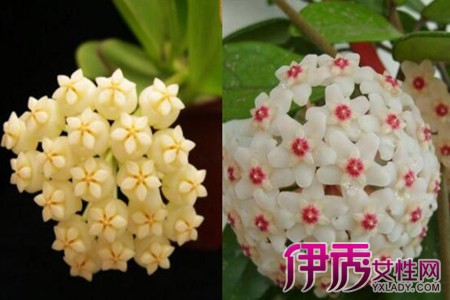
The wax plant itself is a plant that isn't difficult to grow, and many people keep wax plants in flower pots. But wax plants have certain requirements for their pots in order to grow well. You should choose tall pots, not very short ones. If the pot is too short, it holds much less soil, which has a huge impact on rooting, so choosing a deeper pot is more suitable.
After choosing the right pot, you need to find suitable soil. Having a plant without suitable soil is useless. For a plant to grow, it must have good soil to supply nutrients. You can buy specialized soil at a flower market. You can also go to a forest and use a sieve to sift out the rotted leaf and branch soil from beneath the trees. This kind of soil has a very good effect on plant growth.
After planting the wax plant, you need to master the amount of water for watering. Right after planting, water generously the first time. This has a very good effect on root growth. But after half a month of growing, you need to control the water amount and not water too much. When watering, feel whether the soil in the pot is dry. If it isn't dry, you don't need to water.
There is also temperature control. Many people experience petal drop precisely because they can't get this right. Many northern cities become very cold in winter, and at such times you must not put the wax plant indoors. Otherwise it can get frostbitten or you yourself can get frostbitten. It's better to place it indoors in a spot facing the sun. The temperature wax plants like is around 25°C.
When the flowers bloom, small insects easily appear. In such cases, you can spray insecticide. But after spraying insecticide, do not spray water, otherwise your insecticide will become less effective. Especially if there are small children at home, place it up high so danger can be avoided.
How to grow wax plants well
When a wax plant isn't blooming, it's plain and unremarkable, just an ordinary green plant, but once it blooms it's stunning, so beautiful it looks like a fake flower. I believe many flower enthusiasts will fall in love with it, so I found a practical article on how to grow wax plants. The author below, Chuzhou Tianyilao, is a veteran wax plant enthusiast with many years of wax plant growing experience, has dedicated greenhouse cultivation of wax plants, and has even bred several new varieties. His shared wax plant care experience is certainly worth referencing.
One: Potting up wax plant seedlings
Many flower enthusiasts say that some of the seedlings they bought died, for a variety of reasons, making it hard to form a unified approach. Here I've sorted them out one by one for your reference.
1. Coconut husk seedlings: This type of seedling is generally more common in the south. For southern regions, where the climate conditions are similar, you can wait a few days before potting up, or even just grow it as is. For northern regions where the climate isn't suitable, especially in winter and midsummer, it's still better to pot up (Uncle Lianmeng's note: there was an early saying that in Guangxi, using coconut husk as a medium to root wax plant cuttings makes roots grow fast).
Since the seedlings have fewer roots and the amount of coconut husk is small, first check for root mealybugs and scale insects. If there are no pests, I think you can skip removing the coconut husk and directly pot into a small pot to grow roots (choose one slightly larger than the original pot), adding some breathable, water-permeable growing medium to let it survive first. As long as it survives, repotting and changing the medium later will be easy. Conversely, if some seedlings have relatively thin or short stems, such as thin-leaved varieties, they are very prone to problems from root damage when removing the coconut husk. This type of seedling poses a certain difficulty for people with no growing experience at all.
2. Sphagnum moss seedlings: Many beginners are afraid of sphagnum moss seedlings, and even experienced growers dislike them. This is because sphagnum moss has high water content. You can't directly pot up and fill around it with other medium, because then it's dry outside and wet inside, making watering hard to control and very prone to root rot. Moreover, sphagnum moss is filamentous like wax plant roots, so when removing the moss, root damage is inevitable. If the granules are too large when potting up, water drains too fast and recovery is slow; if there's too much peat, the chance of root rot greatly increases.
For flower enthusiasts in the southern Guangdong and Guangxi regions, you can actually skip removing the sphagnum moss and let it recover first, then decide how to plant after it grows.
For northern regions with this type of seedling, I suggest immediately removing the sphagnum moss, then placing it in coconut coir to grow roots, and potting up after the roots are well developed. This way it's much safer.
3. Fine-particle medium seedlings: nutrient soil blended from several ingredients such as coconut coir. This is what I use. After taking it home, you can pot it up directly, with a higher survival rate, shorter recovery, or even no recovery period needed and direct growth...
The mistake beginners most easily make is not paying attention to observation after planting. If the lower leaves turn yellow, then the possibility of root rot is very high. You must promptly discover this and take action by cutting and re-planting. During the recovery period, you need to check every day whether there are subtle changes in the leaves and leaf stems.
Two: About watering wax plants
Understanding plant care in a moment, watering in three minutes
There's an old saying: understanding plant care in a moment, watering takes three years of skill. This shows how difficult watering is. Regarding watering, the mainstream view is "water thoroughly when dry." I think this is unscientific. How do you determine it's already dried out? You can't turn the soil over to look. If you just watered and then encounter cloudy and rainy days, and it doesn't dry for two weeks, wouldn't the wax plant be done for? Moreover, if you truly wait until the medium is completely dry, the root hairs of the medium will shrivel, and water absorption capacity weakens. Watering at this point means the medium can't absorb it fastest. Therefore the plant will certainly grow poorly, and in severe cases will die.
I think watering should vary from person to person, adapt to local conditions, change with the pot, and change with the weather. For example, it's winter now, and we don't have heating here. If you water thoroughly, it might not dry for a month, and the chance of freezing to death or root rot is very high.
In dry weather seasons, I water frequently, even daily. Water less for large pots, more for small pots.
In cold seasons, water as little as possible, watering only half the pot. This way, even if the soil doesn't dry, half the roots stay relatively dry, and problems are less likely to occur. I think this is the best watering method. This method can be learned in three minutes, which is truly "understanding plant care in a moment, watering in three minutes."
For people who can't resist overwatering, the amount each time should be even smaller. If you really can't hold back, you can mist the leaves.
Three: Analysis of the causes of wax plant growth stagnation
Many flower enthusiasts have encountered wax plants stagnating or growing very slowly, taking a long time to produce just one or two leaves. Among several wax plants planted at the same time, some have grown into large plants while others are still seedlings. So what exactly causes this situation? I myself am someone who likes to tinker. Once I notice stagnation, I like to take it out and study it. Through years of observation and research, I've listed the problems I've encountered for your reference.
1. Unsuitable growing medium
Wax plants are quite picky about their growing medium. Once the medium is unsuitable, it will enter a dormant state, neither dying nor growing. This is the most commonly encountered situation. Many flower enthusiasts experience stagnation when using garden soil.
2. Root problems
Everyone knows that wax plants are plants that root very easily, with strong root regeneration. But wax plant roots are also very delicate. I've found that once wax plant roots are damaged, new root growth is hindered, with only a tiny bit of new root. That is to say, once there is a small amount of root rot below, new roots are reluctant to grow. Even if they grow, they can't meet growth needs, and the wax plant remains in a stagnant state.
How to avoid this? For seedlings with coconut husk and sphagnum moss removed, you can let them air dry for half a day and use the wet soil dry planting method. After planting, don't water, wait a few days before watering, to prevent overwatering from causing the damaged roots to rot.
3. Water supply problems
This problem troubled me for a long time. I used orchid stone, bark, leaf mold, etc. During growing, I found that after watering a lot, the lower part of the pot was still dry. When I tipped the pot out to look, the roots below the wax plant were extremely dry, without even a bit of moisture. After several rounds, I realized that water channels had formed in the pot. The water poured in quickly flowed out the bottom through the channels, while the medium remained very dry. And soaking the pot is very troublesome, and this also easily causes stagnation.
4. Root disease or pest damage
If there are nematodes in the roots or pest damage has occurred, it will also cause stagnation. If root nodules are found (scars from insect bites), the best approach is to cut them off and re-root, and insecticide is needed. Scale insects on the roots will also stop growth, and in severe cases the plant will die.
5. Greenhouse seedlings or weak seedlings
Because greenhouses are very suitable for wax plant growth, greenhouse wax plant seedlings look far more tender and beautiful than seedlings from our variable-temperature sheds. Once the environment changes and differs greatly from greenhouse conditions, there may be a very long recovery period. Greenhouse seedlings, lacking hardening and acclimatization, will completely show problems of inadaptability when introduced in autumn, winter, and early spring. The so-called "hothouse flowers" refers to this type of seedling. Similarly, if it's a weak seedling, it needs a process to become strong, so the natural cycle will be longer.
Four: Prevention and control of potted wax plant pests
Many flower enthusiasts have encountered pest troubles. Especially with summer approaching, temperatures are higher during this period, and insects are in an active phase. For fungus gnats, scale insects, and spider mites, people find it very difficult. I previously worked in vegetable plant protection, so I'll share a bit of my experience, hoping to give everyone some inspiration.
1. Purchasing pesticides
Many flower enthusiasts choose pesticides by going to flower shops, or online stores selling flowers on Taobao, where products like "Huhuashen" are all the rage. Actually this is very unwise. Many pesticides in flower shops are produced by small factories. Since flower pesticides are still a small-batch market in China, big factories don't participate much, and small factories' quality is hard to guarantee. Therefore I advocate purchasing from agricultural supply companies or pesticide stores. Generally every city and town has professional agricultural supply markets.
2. Choosing pesticides
Most flower enthusiasts' plants are placed indoors, so when choosing pesticides, choose ones with weak volatility as much as possible. Higher toxicity isn't scary; strong volatility is more frightening. Of course, weak volatility and low toxicity is even better. Otherwise it easily volatilizes rapidly at high concentration indoors, causing poisoning. Recommended: pyriproxyfen-imidacloprid, avermectin (emamectin benzoate), pyrethroids, pyridaben, imidacloprid, etc. Here I recommend pyriproxyfen-imidacloprid. Its insecticidal effect is obvious, it has broad-spectrum activity, is effective against most pests, has less odor, and has lower toxicity to humans. Using it for prevention is very good.
3. Application methods
Apply pesticides strictly according to the ratio. Because flower enthusiasts' sprayers are small, bottled pesticide can't be poured in directly. You need to weigh the purchased pesticide. Before mixing, you can use a pen to mark graduations on the pesticide bottle. If it's powder, you can pour it on paper and divide it into several small portions. Only then can it go into the sprayer. First add the pesticide, then add water, then stir evenly before spraying.
If you can't buy granular formulations, you can also make slow-release granules yourself: use a small plastic bottle with a lid (a chewing gum bottle is best, seals tightly), put in fired soil, akadama, or other highly water-absorbent granules, then pour in a long-lasting technical-grade pesticide. After fully absorbing the liquid, bury it in the flower pot. Store the unused portion in the plastic bottle. Generally slow-release granules are used as a supplement after emergency measures like spraying.
Generally flower enthusiasts think it's over once they see pests killed. Actually many pesticides have poor effectiveness against killing eggs, so after a period they will recur. The ideal method is, after three days to a week, regardless of whether you see pests, apply two to three consecutive treatments to achieve the ideal effect. This is also the significance of making slow-release granules.
4. Timing of pest control
Many people only discover pests when it's actually already too late, because what the human eye easily spots are often flying adults. By the time adults appear, there are actually countless larvae feeding. Therefore pest and disease control should focus on prevention. It's recommended to place a yellow sticky board so you can observe the degree of pest infestation in time.
Five: Choosing wax plant pots
When we want to grow a plant well, we first consider several points: pot, growing medium, fertilizer, moisture level, temperature, etc. Generally everyone places great importance on the growing medium but lacks systematic analysis of pots. Tianyilao attempts to explain what kind of pots are suitable for wax plants. Please criticize any shortcomings.
The conventional saying is that growing wax plants in small pots makes them bloom easily. So is this saying correct?
I think growing wax plants in small pots, compared to large pots, can make them bloom earlier. Blooming is a manifestation of reproductive growth, while growing branches is vegetative growth. The plant itself regulates vegetative and reproductive growth. Generally it's vegetative growth first, and after accumulating enough nutrients and hormones, it will naturally bloom and fruit. If we artificially give it a very small pot, when its roots fill the pot, vegetative growth is hindered, and at this point reproductive growth becomes dominant, so the wax plant blooms easily.
But is this approach really good? Everything has pros and cons. The consequence of doing this is accelerated aging of the plant, with branches and leaves lacking vitality. In other words, sacrificing the wax plant's health in exchange for frequent blooming. For those of us who love them, the foliage effect of wax plants is also very important. I don't want my wax plants to look like the small old seedlings just imported from Thailand.
So what kind of pot is actually suitable for wax plants?
I think the south can choose slightly smaller pots, because the air humidity in the south is higher, and wax plant aerial roots can absorb moisture from the air. Wax plants grown in all-granular medium need slightly larger pots, because all-granular medium retains less water.
I personally am used to using soil-based medium, composed of coconut coir, peat, leaf mold, perlite, vermiculite, organic fertilizer, etc. It has good water retention and decent breathability. For these media, I've tried various pots, and finally feel that for small seedlings, pots with a 12-15 cm diameter are suitable. For large plants, pots with a 14-16 cm diameter are suitable. The depth of the pot should not exceed its diameter. For shallow-rooted varieties like Bella, creeping, and turtle shell, wide-mouthed shallow pots are better.
As for pot material, I lean toward plastic pots, because clay pots are too heavy and expensive, while plastic pots are lightweight and you can feel the moisture content by hand. Some say sand pots and clay pots are breathable. Actually, if you use a well-breathable medium, the effect is far better than the pot's breathability. Moreover, many sand-clay pots have only one hole at the bottom, while plastic pots can have holes drilled anywhere around the sides. New sand pots have very good breathability, but over time breathability gradually decreases. In northern regions with highly alkaline water, there's also the problem of salt accumulation.
Six: Discussion on cultivation techniques for trailing types of wax plants such as the creeping species
Many people like this creeping species variety, and quite a few have killed it. I've grown the creeping species for over two years, from 11 small leaves growing into ten large pots. Of course I also gave some away to others. No seedling deaths occurred. I don't know how others grow it, so it's hard to diagnose why others' seedlings died.
As mentioned earlier, the creeping species isn't picky about growing medium. It seems any medium works. But why do some people still easily kill it? Based on my own experience growing creeping wax plants, I've summarized the following two points.
1. The creeping species has very shallow, very weak roots, relying on more aerial roots to grow. Therefore I think the pot mouth should be large, giving it more area to creep and grow, thus developing more roots. Has everyone noticed this? If you only think about the ornamental effect and use a small pot wanting it to trail, then you hinder it from producing more roots to absorb water. If the roots aren't strong, management easily leads to problems. Letting it trail down after growing to a certain size gives a better effect, just takes longer.
2. Precisely because its roots are shallow, water supply also needs attention. It can't be too dry, and of course too wet is also bad. If the water quality is good, you can mist the leaves.
3. Growing with fine medium is better than with coarse medium.
Seven: How to determine if a wax plant has stem rot or root rot
Many new flower enthusiasts discover wax plant stem rot or root rot too late, ultimately losing the plant. It's quite a pity. Generally speaking, if one of two phenomena appears, it's possible.
1. Lower old leaves turn yellow and fall off.
2. Leaves become soft and wrinkled.
After discovering the above situations, you can use the needle-prick method to check. Use a sewing needle to prick the root-stem area of the wax plant. If no white or clear liquid flows out, then it's root rot or stem rot.
Eight: Analysis of wax plant root characteristics
We all know wax plants are epiphytic plants from rainforests. Their main roots are relatively weak, while their branches are very strong. Pests and diseases are also very few. In nature they rely more on epiphytic aerial roots to absorb nutrients. Therefore whether a wax plant is grown well depends on whether its roots are good. How can you grow wax plant roots well? First you need suitable growing medium. The medium not only provides nutrients and water but also plays a fixing role. Speaking of the fixing role, I recall a saying circulating among flower enthusiasts: in a mixed medium, whichever medium has the most roots wrapped around it means the wax plant likes it most, so you can add more of it when mixing. I can bet that if you put glass blocks and iron blocks in the wax plant medium, the roots will equally like to wrap around them, because at this point the roots are mainly playing a fixing role, and it doesn't mean the wax plant likes it.
Wax plant roots are like human capillaries. The roots have root hairs that play an absorbing role. Due to different media, wax plant roots also differ. Taking cuttings as an example, we can discover the characteristics of wax plant roots. Many people like water propagation. But some have found that after wax plant water cuttings root and are then switched to soil culture, there's a possibility of root rot. What does this show? Because water lacks oxygen, I speculate that the root hairs on water-propagated roots will specifically absorb more oxygen, and in water with high osmotic pressure, prevent excessive water from entering. Such roots can be called water roots. When water roots are switched to soil culture, because the medium's properties change greatly, the roots need adaptability. The longer the water roots, the harder to adapt. Therefore I think water-propagated roots shouldn't be too long, preferably within 2 cm. At the beginning, the medium's humidity should be slightly higher.
Conversely, if soil roots are switched to water propagation, the success rate is even lower, because soil root hairs have adapted to the oxygen-rich environment in soil. Suddenly switching to water with very high osmotic pressure, the root hairs can't adapt, so survival is very difficult. I estimate that people who like water propagation want to see the process of root buds appearing. I personally never use water propagation, always sticking directly into the medium, saving the transplanting and recovery process so it can grow faster and better.
Should wax plants have their roots pruned? Many people grow wax plants for years and never prune roots. Actually, for all plants, new roots have strong absorption capacity, while old roots are weak and may even completely lose the ability to absorb nutrients. Some old roots, due to pests and diseases, even rot underneath. If you don't prune them away, it will seriously affect the wax plant's health. Some people find that a wax plant blooms on one side while leaves on the other side wrinkle and soften, and when the flowers finish, the wax plant is done for too. Especially for wax plants grown in bark, it's best to prune roots once every one or two years, and replace the medium at the same time. Of course, for wax plants grown in bark and similar media, the roots are completely tangled together, making root pruning quite troublesome.
Here I still recommend using fine-particle medium. Changing soil and pruning roots is very convenient. Keep the main roots and thick roots, prune away dark-colored old roots and dead roots. After appropriate pruning, it can promote new root growth and restore the wax plant's youth.
Nine: About wax plant bud drop
Many flower enthusiasts report that a wax plant finally shows flower buds, then they drop. Hope turns to disappointment. So what causes bud drop?
I think there are the following aspects:
The pot is too small, causing water and nutrient deficiency. The traditional view that small pots make plants bloom easily is still popular today. Therefore choosing the right pot for wax plants is very important.
Secondly, the growing medium is unsuitable.
I often transplant with flower buds, take them out, prune roots and replant, and bud drop doesn't easily occur. Why? Many people use all-granular media like bark and orchid stone. This kind of medium is originally very dry, and the plant is thirsty most of the time. When you pour a scoop of water, the water-starved plant naturally increases water absorption and swells up. Then before long, the water is quickly gone again, so the flower buds drop. Therefore watering with bark, orchid stone and similar media causes large fluctuations. This water shock is an important cause of bud drop.
Therefore a good growing medium should have the following characteristics:
1. Appropriate water-holding rate right after watering, not too high.
2. After watering, the medium's water evaporates quickly, rapidly lowering the water-holding rate and reducing the incidence of root rot.
3. After that the evaporation rate decreases, and it can maintain water for a long period. It needs a good evaporation curve.
4. The pot size should be appropriate. Too small a pot also causes large water shock. The smaller the environment, the easier it changes.