Clivia seed planting method: grow beautiful flowers with your own hands
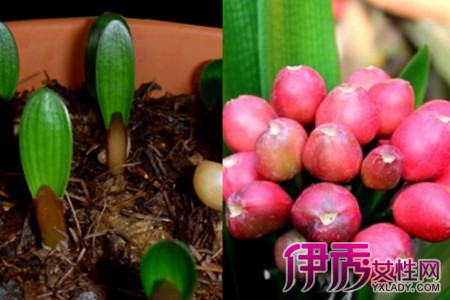
Clivia is a rather distinctive flower in the orchid family, because it has quite particular environmental requirements. If you grow it at home, it can adapt to any environment, but if it is bought, it will have a memory of the environment and climate it has already become used to, which makes clivia bought halfway very difficult to keep alive.
If you want to grow clivia from seed, it is best to use seeds set after the first bloom of a clivia that is more than one year old. After the seeds are dried and stored well, they can be planted in spring or autumn of the following year. Before planting, soak the seeds in warm water for two days, because the seed coat of clivia is too thick, and if planted directly, the seeds cannot sprout and may very likely suffocate in the soil.
After soaking, the seeds will swell and soften; at this point take them out, dry them, and put them in the sun for two hours, and then they can be planted. To plant clivia, use a flowerpot with good air permeability and special clivia potting soil. First cover the bottom of the pot with a tile piece, plant the seeds at a depth of two to three cm from the soil surface, then cover them with a thin layer of soil and then a layer of sawdust, and in this way you can water the clivia seeds.
When watering freshly planted clivia seeds, be sure to water thoroughly, ideally until water flows out from the bottom of the pot. Only sufficient moisture can ensure the seeds sprout as quickly as possible. Clivia seeds usually do not sprout very fast; normally they only sprout after about half a month to twenty days, so the waiting process is very trying and requires enough patience.
After clivia sprouts, be very careful when watering not to knock over the small tender shoots; if the tender shoots break, all the previous effort is wasted. When the clivia grows to ten cm tall, you can fertilize it regularly, once a month with special clivia flower fertilizer. In this way the clivia will bloom on time when the flowering season comes. Give the clivia one additional fertilizing before it blooms, and do not fertilize after it blooms; only by doing this will you avoid forcing off the newly opened flowers and ensure a longer flowering period.
Learn the clivia seed planting method and enjoy fresh flowers at home
If you want to sow clivia yourself, you should first pick healthy seeds from a healthy clivia of the current year. After picking the seeds, do not rush to plant them. Because the seed coat of clivia is rather hard, you must soak the seeds in warm water until they swell. Normally soaking for one to two days is enough, then take the seeds out, dry them, and plant them.
Before planting, prepare a suitable flowerpot and potting soil; the potting soil must be loose and airy. If you plant clivia in soil that is not airy or is rather hard, the seeds will not sprout and will suffocate in the soil. When planting, do not bury the seeds too deep, otherwise the seeds will not sprout easily. After planting, water thoroughly and then place it in a place with sunlight.
Clivia seeds are very afraid of being waterlogged; if soaked in water for a long time, they will rot, so after watering thoroughly the first time, wait until the soil is completely dry before watering a second time. Newly planted clivia seeds sprout rather slowly; usually they only grow small tender shoots after about one month to two months.
When watering the small tender shoots, it is best to use a spray bottle and spray little by little; if you pour water from above too forcefully, it is easy to knock over and break the small tender shoots, and if that happens all the previous effort will be wasted. About three months after the clivia has grown out, start fertilizing it; choosing special clivia fertilizer will give better results. Loosen the soil for the clivia every half month; this allows it to grow faster.
The above are the methods for cultivating clivia from seed. Clivia normally blooms in winter, and because clivia grows slowly, it is best to start planting in spring. Growing clivia requires enough patience; as long as you sow according to the above methods, you will see the beautiful flowers of clivia around the New Year.
How to plant clivia seeds, clivia seed planting methods
Many flower lovers do not know how to plant clivia seeds or what clivia seed planting methods there are. In fact, growing clivia is not especially difficult. Generally speaking, after a successfully pollinated clivia flower goes through an ideal 7~9 months of development, we will get fully developed clivia seeds. Below, the editor will introduce the planting methods for clivia seeds.
Clivia seed planting methods
1. Seed selection: after the fruit ripens, cut the entire fruit stalk from the lowest part of the stalk and dry it in a shaded, ventilated place for about 15 days. Remove the seeds, select the plump ones with bud eyes, wrap them in gauze, and place them in a shaded, ventilated place for 3 days before soaking and sowing.
2. Seed soaking and sowing: remove the seeds, select the plump ones with bud eyes, wrap them in gauze, and place them in a shaded, ventilated place for 3 days before soaking and sowing.
After the seeds removed from the fruit ball are wrapped in gauze and left for 3 days, soak them in a glass jar at about 25 degrees for 1-5 days until they sprout (on the first day the water fully covers the seeds; from the second day on, keep only a small amount of water, about 1 mm, and cover the jar opening with transparent plastic film to retain moisture), then put them into an airy plastic basket containing fresh sawdust sterilized at high temperature with a thickness of 10 cm (cover the seeds with 1 cm of sawdust) to promote sprouting, keeping the temperature at 20-27 degrees (about 25 degrees), and spray an appropriate amount of water once a day to maintain humidity.
3. Sowing methods: there are many different ways to sow clivia, but among the materials that are easy to find and the techniques that are not difficult, with a high seedling emergence rate, none surpass the two methods of river sand sowing and sawdust sowing.
River sand sowing is to take relatively fine river sand, rinse it with clean water and sterilize it by boiling in water, then put it in a container and level it off. Space the seeds at about 2 cm intervals on the sand surface, with the bud eyes facing down, and cover with a thin layer of sand.
Sawdust sowing is to take moderately coarse mixed wood sawdust, sterilize it by stir-frying in a pan or steaming, then put it into a container to a thickness of 7 cm to 10 cm. With the bud eyes facing down and the same spacing as before, cover the seeds with sawdust, water thoroughly, and then cover the container opening with plastic film or glass.
4. Sprouting promotion: after 30 days of sprouting promotion, the seeds have all grown long young roots and leaf sheaths. Plant them densely into a flowerpot at 1 cm intervals with the leaf sheaths exposed facing the same direction, keep the temperature at 20-27 degrees (about 25 degrees), provide appropriate light, and spray water regularly according to the humidity.
Warm reminder: for moisture and heat retention after clivia seeds are sown, whether the seedlings emerge quickly, whether the seedlings are uniform, and whether the growth is good all depend on having conditions and an environment with suitable humidity and temperature. River sand has strong water permeability and poor water retention; if you find the pot surface is not humid enough, water or spray immediately so that the water content remains at about 40%. Sawdust has strong water permeability and water absorption; water or spray once a day to keep the sawdust in a moist state. Clivia fruit embryos are rich in nutrients, and before the fruit embryo has fully shrunk, clivia seedlings do not need fertilizer.
The above is the article on how to plant clivia seeds and clivia seed planting methods. Clivia seeds and adult clivia plants share one common trait, which is good drought resistance; do not easily push this trait to its limit during planting. The best planting material for clivia breeding is medium-coarse wood shavings, followed by coarse sawdust. Wood itself has good heat retention and water retention, and its granular structure also ensures good drainage and air permeability.