Daisy growing methods and precautions: how you grow flowers determines their health
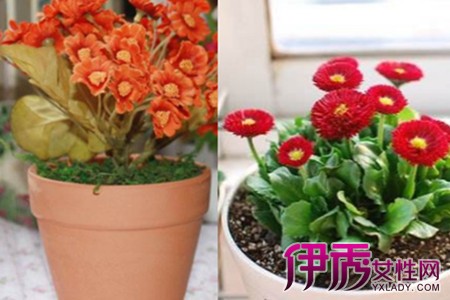
If you want to grow a flower well, you must understand its growth characteristics. The daisy is a flower with slightly higher requirements for its growing environment, so without understanding it, it is very difficult to grow it healthily and beautifully. Regarding the growing methods and precautions for daisies, we have summarized a few points of experience, and below we will introduce them one by one to friends.
Daisy growing - watering section: Although daisies relatively like moisture, their roots do not like to sit in water for a long time. If the roots are soaked in water and ventilation is poor, daisies can easily suffer root rot. The best method is to water them after seeing the surface layer of soil dry. Usually you can spray a little water on the leaves every day with a spray bottle, which can prevent the leaf tips from turning yellow and drying.
Daisy growing - temperature section: Daisies are sun-loving plants and are not afraid of direct sunlight. Even the hottest summer sun is sweet to daisies. Daisies are more cold-resistant than ordinary flowering plants, but sudden drops in temperature can also cause them discomfort, and the most direct change is that the leaves become limp.
Daisy growing - fertilizing section: Many people think that because daisies were domesticated from wild flowers, they do not need fertilizing. In fact, this idea is wrong. Daisies are wild because their living space is large and there are enough natural nutrients. But after being raised at home, they grow in flower pots, and the soil in a flower pot is limited to begin with. The nutrients in the pot are also insufficient, so daisies must be fertilized regularly. The correct method is to fertilize once every half month. Flower nutrient solution or traditional manure fertilizer are both fine.
Autumn flower-growing methods and precautions
As summer goes and autumn comes, friends who like growing flowers begin to prepare for a new round of flower growing. Which flowers are suitable for growing in autumn? What should be noted when growing flowers in autumn?Flowers suitable for growing in autumn include:
Daisy: The daisy is a kind of plant in the Asteraceae family, also known as changming ju and yanming ju. It originated in Europe, and the original species was regarded as a clump-forming weed. Its flowering period is in spring. The daisy is a perennial herbaceous plant, and the species epithet perennis in its scientific name also contains the meaning of "perennial." Daisies are deeply loved by Italians, and for this reason were chosen as the national flower. The daisy is also called gan ju and bai ju, and can be used as a medicinal plant. The cultivation history of the daisy is very long, and it is often sown in autumn and grown as a biennial, with a plant height of 15-20 cm. The leaves are clustered at the base and spoon-shaped. The capitulum is solitary, with a flower diameter of 3-5 cm, and the ligulate flowers are strip-shaped. There are white, pink, and red. Flower language: pure beauty, innocence, peace, hope, and "love hidden deep in the heart."
Pansy: Pansy (scientific name: Viola tricolor L.) is a common wildflower in Europe and is also often cultivated in parks. Pansies are best planted outdoors, and are suitable for flower beds, courtyards, and pots alike. They are not suitable for planting indoors, because insufficient light will slow growth, and the branches and leaves cannot become fully sturdy, resulting in failure to bloom. After blooming, they should also not be moved indoors, so as to preserve the flowers' lifespan for as long as possible.
Toadflax: Toadflax originated in the temperate zones of northern Eurasia and grows in sandy areas, hillside grasslands, and roadsides. It likes light, is relatively cold-resistant, and is not tolerant of extreme heat. It is suited to medium-fertile, appropriately moist, and well-drained soil. Toadflax branches and leaves are soft and fine, and the flower shape and flower color are distinctive. It is suitable as material for flower beds and flower border edges, and can also be potted or used as cut flowers. The genus has about 100 species, and commonly cultivated ones include Moroccan toadflax (L. moroccana); bipartite toadflax (L. bipartita), and others.
Stock: A perennial herbaceous plant, with leaves oblong or oblanceolate, and flowers purplish red, also pale red, pale yellow, or white, fragrant, with slender fruit. Grown for ornament. Stock originated along the Mediterranean coast. At present it is widely cultivated in the southern regions of our country. A biennial or perennial herbaceous flower, generally sown in autumn of the first year and blooming in spring of the following year, with a plant height of 30-60 cm. The whole plant is covered with gray stellate soft hairs, and the stem is upright and slightly woody at the base. The leaf surface is broad, long elliptical or oblanceolate, with a rounded and blunt tip. The raceme is terminal and axillary, the pedicel is thick and strong, and the flowers are purplish red, pale red, pale yellow, white, and other colors. Single-petaled flowers can set seed, while double-petaled flowers do not set seed. The fruit is a cylindrical silique, and the seeds have wings. The flowering period is December to April, and the fruit ripening period is June to July.
Precautions for growing flowers in autumn
1. Light should be sufficient. Some light-loving woody flowers that bloom in summer, such as jasmine, hibiscus, and orange jasmine, should still be placed in a place with sufficient sunlight, so that the plants fully receive light, allow the leaves to carry out photosynthesis better, supply nutrients in time, promote the maturity of current-year branches, enable them to overwinter safely, and ensure that they remain full of flowers and lush leaves the next year. Potted flowers that bloom around the Spring Festival, such as azaleas, clivia, cyclamen, poinsettia, and Christmas cactus, should also be placed in a sunny place to receive full sunlight; otherwise the flowering period will be delayed, or they may even fail to bloom. Generally, foliage plants are more shade-tolerant, and can be given some light appropriately, but strong direct light at noon should be avoided.
2. Water and fertilizer should be appropriate. In early autumn, especially in the first and middle ten days of September, the temperature is still relatively high and the transpiration of plants is large. Most flowers should be watered thoroughly once every 1 to 2 days. From the middle and last ten days of September, the amount of watering should be controlled and fertilizing should stop, so as to avoid root rot from too much water and excessive growth of branches and leaves from too much fertilizer, which would affect overwintering. Some flowers that bloom around the Spring Festival, such as cyclamen, clivia, Christmas cactus, and azaleas, have already passed their dormant period and begun to enter their peak growing season. Therefore, from autumn until they bloom at the Spring Festival, fertilizer and water should be continuous, and phosphorus and potassium fertilizer can be appropriately increased to help flower bud formation and budding and blooming.
3. Pruning should be reasonable. Apart from flowers that bloom in early spring, most flowers such as jasmine, crape myrtle, and pomegranate can be pruned and shaped in autumn. Pruning in late autumn and early winter can reduce nutrient consumption in winter, promote the health of potted flowers, and lead to more blooms the next year. When pruning, remove diseased branches, dead branches, overly dense branches, and leggy branches, laying a good foundation for potted flowers to overwinter.
4. Pest and disease control should be thorough. Autumn is still a season with a high incidence of pests and diseases, and plants are easily harmed by pests such as scale insects, red spiders, aphids, and whiteflies. Diseases include leaf spot disease and rot disease of branches and trunks. Before potted flowers are brought indoors, these pests and diseases must be thoroughly treated, and they must never be allowed indoors to cause harm. For those with no pests or diseases found, pesticides can be sprayed for prevention.
5. Propagation should be timely. After the Beginning of Autumn, temperatures drop, and some biennial herbaceous flowers, such as pansy, dianthus, cineraria, and hollyhock, are at a good time for sowing. Sowing can be done from September to October, and after sowing, attention should be paid to spraying water to keep the soil moist. There are also some woody flowers suitable for autumn cuttings, such as fuchsia, Chinese rose, geranium, jasmine, bougainvillea, and winter daphne, which have a relatively high survival rate when cuttings are taken in autumn. For perennial flowers that are densely grown and need division, such as peony and Chinese peony, division and propagation should be carried out in time. For bulbous flowers that bloom around the Spring Festival, such as hyacinth, tulip, and amaryllis, potting should be done promptly.
6. Bringing indoors should be timely. The time for bringing potted flowers indoors differs according to the flower. Warm-loving flowers and trees such as hibiscus, poinsettia, begonia, cyclamen, jasmine, coleus, and monstera should be moved indoors when the temperature is 10°C; spider plant, asparagus fern, aspidistra, dwarf umbrella tree, and rubber tree should also be moved indoors when the temperature drops to 5°C. The vast majority of flowers should preferably be brought indoors before Frost's Descent. Potted flowers indoors should be kept ventilated, and when the temperature is relatively high at noon, doors and windows can be opened for ventilation and heat dissipation.
Suitable and unsuitable choices of household flower soil and key points for pruning and shaping
One of the primary key points of household flower growing is the choice of flower soil. What kind of soil is suitable for growing household flowers? Today the editor of Huinong Network will not only bring you the suitable and unsuitable choices for flower-growing soil, but also talk about the key points for shaping and pruning household flowers.
In the daily growing process of household flowers, reasonable pruning and adjustment of flowers is necessary, so that the flowers will be more beautiful and more pleasing to the eye. Before pruning, full preparation should be made, including understanding the flowering parts, the growth characteristics of the flowers, and so on. Pruning is generally divided into four situations: heavy pruning, medium pruning, light pruning, and pinching.
1. Key points for shaping and pruning household flowers
(1) Heavy pruning
Flowers on one-year-old branches, such as jasmine, crape myrtle, and Chinese rose, are suitable for heavy pruning, while flowers on two-year-old branches should not be heavily pruned. The knife used for pruning should be sharp to ensure smooth cuts and prevent splitting, and when pruning, buds facing outward should be selected and retained, so that the branches spread evenly outward. This not only gives the plant a beautiful shape, but also helps ventilation and light penetration.
(2) Medium pruning
Potted flowers such as pomegranate, kumquat, and wintersweet, which need appropriate shortening to bloom well, are suitable for medium pruning. Moreover, thinning and cutting should be equally important. For one-year-old branches that have already bloomed, 2-3 buds should be retained at the stem base for short cutting, so as to facilitate the sprouting of side branches, and leggy branches, crossing branches, and diseased branches should be thinned out.
(3) Light pruning
Flowers that bloom on two-year-old branches, such as ornamental peach, magnolia, and gardenia, are suitable for light pruning, and only excess side branches, diseased and damaged branches, and top shoots should be cut, so that the main branches are strong. In addition, when pruning, artificial shaping can be carried out according to personal preference and the growth condition of the plant, such as umbrella shape, pagoda shape, and so on.
(4) Pinching
Herbaceous potted flowers such as daisy, calendula, and stock should be pinched and topped multiple times to make them produce more side buds and become short, sturdy, and beautiful, so as to increase the number of flowers and extend the flowering time. Moreover, after the flowers fade, the remaining flowers should be cut off in time to promote the other flower heads to bloom more vigorously.
2. Suitable and unsuitable choices of flower-growing soil
(1) Leaf mold
Leaf mold is the surface soil of forest areas, formed by the fallen leaves of broadleaf trees after long-term accumulation and decomposition. It contains a large amount of organic matter, is loose and fertile, has good air permeability and drainage, and is weakly acidic. It is an excellent loosening agent for heavy clay soil, with strong water and fertilizer retention capacity, and can be used alone to cultivate clivia, orchids, cyclamen, and so on. In autumn and winter, materials can be obtained locally, and fallen leaves of broadleaf trees can be collected by oneself (fallen leaves of poplar, willow, elm, pagoda tree, and other easily rotted leaves are better), mixed with garden soil and piled for 1-2 years, and once the fallen leaves have fully rotted, they can be sifted and used. Generally, leaf mold is an excellent potting soil and can also be mixed with other substrates. It is suitable for sowing, transplanting seedlings, and cultivating many common flowers.
(2) Pine needle soil
In mountainous forests, the humus formed by pine fallen leaves after many years of decay is pine needle soil. Pine needle soil is grayish brown, loose and fertile, with good air permeability and drainage performance, and shows a strongly acidic reaction. It is suitable for flowers that like strong acidity, such as rhododendron, gardenia, and camellia.
(3) Peat soil
Peat soil, also called black soil or turf, is formed from the remains of plants in low-temperature wetlands after carbonization through the action of sphagnum moss over thousands of years. Peat soil is soft and loose and has no pathogenic spores or harmful insect eggs. It has good drainage and air permeability, strong fertilizer and water retention capacity, and shows a weakly acidic reaction. It is a good potting soil and cutting substrate. In the north, brown turf is mostly used to prepare nutrient soil, and using turf soil to cultivate acid-loving flowers originating in the south, such as orchids, camellia, osmanthus, and magnolia, is relatively suitable.
(4) Pond mud
Pond mud, also called river mud, is the sediment soil at the bottom of rivers and ponds. It is rich in organic matter, black, and neutral or slightly alkaline. Generally, in autumn and winter, sludge is taken from ponds or lakes, and after drying, freezing, and weathering, it can be the best culture soil for aquatic flowers. After being dried and crushed, it can be mixed with coarse sand, rice husk ash, or other light and loose soil, and used for planting foliage flowers.
(5) Turf soil
On natural pastures or grasslands, the surface turf of 10 cm is dug up, piled layer by layer, decomposed for one year or a longer time, and sifted to remove stones, grass roots, and so on. Turf soil is rich in nutrients and shows a weakly acidic reaction, and can be used to plant Chinese rose, dianthus, dahlia, and so on.
(6) Marsh soil
After marshland dries up, its surface soil is a good raw material for potting soil. Marsh soil is rich in humus, has lasting fertility, and is acidic. However, after drying it easily hardens and cracks, so it should be mixed with coarse sand and so on. Nutrient soil for flower cultivation must be selected from nutritious ingredients, and polluted soil should not be used.
The above is all the content the editor has organized for flower friends today. Flower farmers in need are welcome to come to Huinong Network to learn!