How to grow poppy seeds: you can grow beautiful flowers yourself
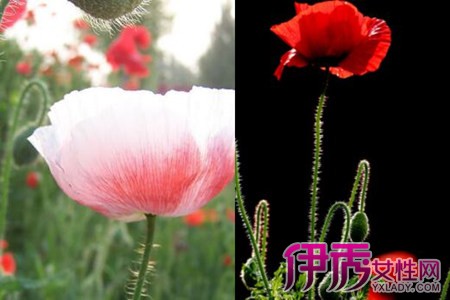
In fact, the reason poppies cannot be propagated by cuttings or division and do not easily survive is that poppies have a taproot, so neither division nor cuttings can make them take root. The only suitable propagation method for them is sowing, so choosing seeds is very important. You should select plump poppy seeds harvested in the current year. Poppies must be sown in autumn, preferably around September.
Because poppies cannot be transplanted into pots, you must use a somewhat larger flowerpot for sowing the seeds. The flowerpot must have good breathability, and the potting soil should be loose and airy; it is best to mix in some fine sand so the soil drains and breathes even better. Once everything is ready, we can sow. Do not sow too densely; be sure to leave enough space for growth, which is beneficial for the poppies' growth.
Although poppies are suitable for planting in autumn, their seeds are also afraid of cold and prefer warmth. After sowing, if the indoor temperature is too low, they will not easily germinate, so after watering you can cover the flowerpot with plastic film. In this way, within a week the poppies will sprout, and once they have sprouted you can remove the plastic film.
Poppies like as much sunlight as possible, and they will not wilt because of direct sunlight. Poppies need sufficient water, so in autumn and winter the number of waterings should be decided according to how dry or moist the potting soil is. Spring and summer are relatively dry, so you should water twice a day, and in the morning and evening spray the leaves with a spray bottle, which can prevent drought from causing the leaves to turn yellow.
As long as you follow this sowing method, you can make the poppies in your home multiply. Poppies can not only add greenery to our lives, but also absorb harmful gases from the air. They are very beneficial to our home health, and I sincerely hope everyone can grow the flowers they love healthily and beautifully.
How to create a flower sea landscape? Key points of open-field cultivation techniques for herbaceous flower flower seas
Flower tourism is one of the most popular forms of ecotourism today, and the flower sea landscape, as a brand-new landscape model in flower tourism, enriches the cultural connotation of the flower sea landscape by creating a flower sea landscape with composite functions, satisfies people's different needs, promotes the stable development of the flower sea landscape, and drives the ecotourism industry. So how do herbaceous flowers create a flower sea landscape?
1 Selection of herbaceous plants for the flower sea
(1) Annual and biennial herbaceous flowers: Under local cultivation conditions, herbaceous ornamental plants that can complete their entire growth and development process in the same year after sowing are called annual flowers; herbaceous ornamental plants that complete their entire growth and development process the following year after autumn sowing are called biennial flowers. Because climate and cultivation conditions vary from place to place, there is often no obvious boundary between the two, and in horticulture they are often collectively called annual and biennial flowers, or simply herbaceous flowers. Sometimes some perennial flowers cultivated as annual or biennial flowers are also included. Annual and biennial herbaceous flowers have the characteristics of a wide variety of types, bright colors, easy cultivation, concentrated flowering, adjustable flowering periods, and short growth cycles, and are the main type currently used in flower sea landscapes. The main varieties include Cosmos, Sulfur Cosmos, Zinnia, Sunflower, Cleome, Poppy, California Poppy, Rapeseed Flower, Marigold, February Orchid, and so on.
(2) Perennial herbaceous flowers: refer to herbaceous plants whose individual lifespan exceeds 2 years and which can flower and set seed many times. They have the characteristics of large and brightly colored flowers, relatively long flowering periods, and strong plant adaptability and tolerance to pruning. Because when planted in suitable environments, many types can rely on bulblets or perennial roots to reproduce themselves in large quantities, ultimately forming natural color blocks, and do not need frequent replacement, their application in flower seas is gradually increasing. The main varieties include Verbena bonariensis, Phlox, Lavender, Salvia, Rudbeckia, Evening Primrose, Purple Coneflower, Purple Loosestrife, and so on.
2 Creation forms of the flower sea landscape
(1) Single-variety planting: Planting one variety of herbaceous flowers in a large site or within one unit planting area. It can form a landscape effect in a relatively short time, with neat and uniform flowering and a very striking flowering effect, and can attract tourists to the greatest extent, making it the most commonly used creation form for flower sea landscapes today. However, herbaceous flowers are relatively slender and weak and prone to lodging, the landscape effect is not well sustained, and it easily causes monotony and aesthetic fatigue. Therefore, when planting a single variety, you must consider the plant's color and form and how they match the surrounding environment, or add appropriate garden ornaments and structures for arrangement. The planting design can be carried out using color blocks or color bands.
(2) Multi-variety combined planting: According to the growth characteristics, plant height, color series, and so on of herbaceous flowers, reasonably configure more than three kinds of herbaceous plants by simulating wild herbaceous plant communities, and plant them in a large site. This can achieve the advantages of a wide range of flower colors, a strong sense of layering, a good ornamental effect, and a long flowering period with flowers blooming in spring, summer, and autumn. Through the self-sowing and reproduction ability of herbaceous flowers, the landscape effect can last for two to three years, and it is the development trend of recent flower sea landscape creation forms using herbaceous plants. The shortcoming of this creation form is that the flower sea cultivation cycle is long, and achieving the best ornamental effect requires a relatively long time. When planting, you should choose a suitable herbaceous flower combination according to the climate type of different creation sites and the required landscape effect.
Whether planting a single variety or a combination of multiple varieties, you must follow the principle of "suitable flowers for the suitable site" and pay attention to careful matching in terms of flowering period, color, seasonal appearance, and so on. You should rationally arrange and plant according to the ecological habits of the herbaceous flowers and the planting environment conditions, taking into account both landscape and ecological sustainability, to create a colorful flower sea landscape effect in all four seasons.
3 Open-field cultivation of herbaceous flower flower seas
Herbaceous flowers used to create flower seas mostly adopt open-field cultivation. The seed cost for herbaceous flowers used in open-field flower sea cultivation averages 1~3 yuan/sq m, and the sowing rate is generally 2~5g/sq m. Compared with container cultivation and protected cultivation, open-field cultivation is cheaper in cost, simpler to manage, and good in landscape formation effect.
3.1 Pre-sowing work
(1) Planting soil: Open-field cultivated herbaceous flowers have strong adaptability, and general soil conditions are suitable for their normal growth. The preparation work to be done well: ① Try to clean up weeds and debris in the soil as much as possible. ② Improve the soil structure. Carry out soil replacement improvement for overly sandy and overly clayey soil, and for soil that has long been used as flower sea planting land and has too low organic matter content, increase the application of organic fertilizer and phosphorus fertilizer. ③ Carry out plowing. Generally, two to three rounds of operation are needed, with a depth of 30~50cm of soil layer, and plowing can be carried out together with soil improvement.
(2) Sowing methods: divided into broadcast sowing, drilling, and dibbling. The planting method adopted is determined according to the size of the flower sea plot, the terrain, and the size of the seeds. Most herbaceous flowers can be planted by direct broadcast sowing. For areas with a slope greater than 45°, difficult watering, or overly strong sandiness, drilling or dibbling in planting furrows can be used.
(3) Planting time: The natural sowing times for herbaceous flowers are mainly spring-summer sowing (March to August) and autumn sowing (September to November). Spring-summer sowing is for summer-autumn flowering types; after sowing, they can bloom after 45~90d of growth, and the flowering period reaches 40~50d. Such varieties include Cosmos, Sulfur Cosmos, Sunflower, Zinnia, and so on; when sown in spring they can be used to create a flower sea landscape for the "May 1st node," and when sown in June to July they can be used to create a flower sea landscape for the "October 1st node." Autumn sowing is for spring flowering types; after sowing, they enter a dormant state under low-temperature conditions after about 1~2 months, and after the spring temperature rises they send up flower stems and bloom, with the flowering period in March to May. Such varieties include Poppy, Phlox, February Orchid, and so on, and are used to create spring flower sea landscapes.
(4) Covering and watering: After sowing, lightly cover with soil and rake level to ensure most seeds are in full contact with the soil. If sowing over a large area, use non-woven fabric for covering, which plays a role in preserving moisture and preventing rain from washing the seeds away. Herbaceous flowers need sufficient water during germination and the seedling stage; after covering, water to ensure the 10cm soil layer is moist, and after the emergence rate reaches about 60~70%, promptly remove the non-woven fabric and continue to preserve moisture for about 20d, which is beneficial for the growth of the young seedlings.
3.2 Later management and maintenance work
(1) Fertilization: Appropriate topdressing is beneficial to the growth and flowering effect of herbaceous flowers. According to the growth condition of the plants, from the mature seedling stage to before flowering, compound fertilizer can be applied 2~3 times.
(2) Weeds: During the young seedling growth period of herbaceous flowers, weeds must be strictly prevented and removed. Carry out weeding work promptly, which is beneficial to the growth of the young seedlings.
(3) Pests and diseases: Give priority to prevention and combine prevention with control. Focus on prevention work during the seedling stage and before the flowering period, and you can spray carbendazim, thiophanate-methyl, imidacloprid, and so on.
(4) Pruning: After the full flowering period, carry out pruning work on spent flowers and withered leaves to maintain a relatively good landscape effect. If you want them to be able to self-sow and reproduce, after the last watering before winter, cut off the aboveground parts.
4 Creation of flower sea landscape culture
As urbanization continues to accelerate and the material standard of living continues to rise, people's leisure lifestyles are also slowly changing. In the pursuit of beauty, people are no longer limited to a comfortable living environment, but pay more attention to physical and mental experience. People are no longer satisfied with simple sightseeing, appreciation, and photo-taking when it comes to flower sea landscapes. There are also many creative practices for flower sea landscapes in various parts of the country, but most are copies of one another, lacking distinctive features, with single content and insufficient cultural development, which makes the development of flower sea landscapes face many problems. In response to people's needs, the creation of flower sea landscapes will also expand toward composite types, enhance people's interactivity with the landscape, let the cultural connotation of flowers be displayed, and let people participate in it, so that the flower sea landscape has multi-level composite functions such as economic functions, leisure functions, science popularization functions, and ecological functions. For example, flower science popularization sightseeing, led by popularizing flower knowledge, carries out activities such as flower cultivation, floral design, and flower creation to enrich people's experience; flower village ecological vacation, using flower seas to create scenery, creates a beautiful vacation environment and, combined with local agricultural production and folk culture, provides people with a natural and simple experience; flower industry exposition visualizes the entire flower production industry chain process, allowing people to experience the operation mode of the entire industry at a deeper level.
Some common poisonous flowers
As people's living standards improve, more and more people are growing flowers and plants. Flowers and plants in all kinds of forms bring people the enjoyment of beauty, but although some flowers have beautiful appearances and enchanting fragrances, they are actually harmful to the human body. People should be good at identifying them and seeking advantages while avoiding harm. Below are some common flower poisonings.Oleander blooms in spring, summer, and autumn every year. It is a flower that can be ornamental and medicinal, but can also poison people. Its stems, leaves, and even flowers are all poisonous, and if its scent is smelled for too long, it can make people drowsy and reduce their intelligence. The milky white sap it secretes can cause poisoning if swallowed by mistake. Poinsettia is poisonous in the whole plant, especially the white sap in the stems and leaves, which can irritate the skin, causing redness, swelling, and allergic reactions; if the stems and leaves are eaten by mistake, there is a risk of poisoning and death.
Growing narcissus at home is generally no problem, but do not break its bulb, because it contains lycorine toxin, and eating it by mistake can cause vomiting and enteritis; the sap of the leaves and flowers can cause skin redness and swelling, and be especially careful not to get this sap into your eyes.
The poppy is poisonous in the whole plant and contains toxic alkaloids, with the fruit being the most toxic; if eaten by mistake, it can cause central nervous system poisoning, and in severe cases may even lead to danger to life. Calla lily flowers are poisonous and contain large amounts of calcium oxalate crystals and alkaloids, and eating them by mistake can cause poisoning symptoms such as coma.
The flowers and leaves of Lantana camara are both poisonous, and eating them by mistake can cause symptoms such as diarrhea and fever. Datura, also known as belladonna flower, is common in rural areas south of the Yangtze River, and children who eat it by mistake will be poisoned. Night-blooming jasmine stops photosynthesis at night and then releases a large amount of waste gas. This waste gas smells very fragrant, but it is harmful to human health. If it is kept indoors for a long time, it can cause dizziness, coughing, and even asthma and insomnia. Therefore, keep night-blooming jasmine indoors during the day, and move it outdoors in the evening.
Tulip flowers contain toxic alkaloids. If humans and animals stay in such flower beds for 2 hours to 3 hours, they will feel dizzy and dizzy, develop poisoning symptoms, and in severe cases even lose hair, so it is not suitable to plant them at home. Lycoris contains lycorine alkaloids and is poisonous in the whole plant. If eaten by mistake, it causes vomiting and diarrhea, and in severe cases can also cause speech impairment and bleeding from the mouth and nose.
In yellow azaleas, both the plant and the flowers contain toxins, and eating them by mistake causes poisoning; the flowers of white azaleas contain tetracyclic diterpenoid toxins, and after poisoning people will experience vomiting, difficulty breathing, numbness of the limbs, and so on, and severe cases will cause shock, seriously endangering human health. As for redbud flowers, if people are exposed to the pollen they release for too long, it can trigger asthma or worsen coughing symptoms.
Larkspur, also known as radish flower, is poisonous in the whole plant, and the seeds are even more toxic, mainly containing terpenoid alkaloids. If eaten by mistake, it causes nervous system poisoning, and in severe cases causes spasms, respiratory failure, and death.
Nandina is elegant and graceful, but the whole plant is poisonous, mainly containing nandine, nandinin, and so on. After eating it by mistake, it easily causes poisoning symptoms such as whole-body twitching, spasms, and coma. Mimosa contains mimosine. Too much contact with this toxin can cause sparse eyebrows, yellowing of hair, and even hair loss. Therefore, do not fiddle with it too much with your fingers.
The leaves of Dieffenbachia contain oxalic acid and asparagine. After eating them by mistake, they cause pain in the mouth, throat, esophagus, and gastrointestinal tract, and in severe cases damage the vocal cords and make a person mute.
Wisteria's seeds, stems, and bark are all poisonous, and the seeds contain cytisine. After eating them by mistake, they cause vomiting and diarrhea, and in severe cases also cause bleeding from the mouth and nose, cold hands and feet, and even shock and death.
The rich fragrance given off by Chinese rose can make some people suddenly feel chest tightness and discomfort and difficulty breathing after smelling it. If the fragrance given off by lily is smelled for too long, it will overexcite the human central nervous system and cause insomnia. The spines of cactus plants contain toxic sap. After the human body is pricked, it causes allergic symptoms such as skin redness, swelling, pain, and itching, leading to whole-body discomfort and restlessness.
The fragrant aroma given off by pines and cypresses has an irritating effect on the human gastrointestinal tract. If smelled for too long, it not only affects people's appetite, but also makes pregnant women feel upset, nauseous and wanting to vomit, and dizzy. If the fragrance given off by orchid is smelled for too long, it makes people overly excited and causes insomnia. As for hydrangea, the tiny particles it releases, if people come into contact with them, will cause itching of the skin in some people.