Pothos Growing Methods and Precautions to Make Your Pothos Grow More Vigorously
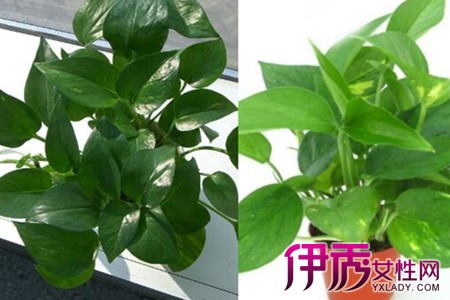
Pothos itself does not have high requirements for its growing environment, so when growing pothos, as long as you understand its habits, there will be no problem at all. When growing pothos, the first thing is to find a suitable flower pot. Do not use a pot that is too small; a small pot holds little soil, and the nutrient supply cannot keep up, which will affect the normal growth of pothos. A pot diameter of about 30cm is suitable.
After choosing the flower pot, the next step is to dig soil. When choosing soil, find black soil suitable for growth. Do not use overly hard yellow soil; roots cannot penetrate it, and growth will be very slow. Yellow leaves may also appear. Generally, soil formed from rotted branches and leaves under trees is very good, very loose and soft, and also very nutrient-rich. It can let pothos grow very well.
Water control must also be handled well. Pothos itself is a plant that likes water. Generally, it should be watered once every 1-2 days; only in this way can the leaves become very green. If it is not watered for a long time, the branches will become dry and withered or turn black. So controlling water well is also a key point for pothos growth. Many people grow it slowly precisely because they do not water it in time.
Next is temperature control. In winter, the temperature is very low, generally below zero. At such times, pothos must not be placed outdoors, otherwise it will freeze to death. It is more suitable to place it indoors in a sunny spot. Keeping the temperature at around 18 degrees makes pothos grow more luxuriantly. It can also decorate the room very beautifully.
When growing pothos, remember to change the soil once a year. Only by replacing it with new soil can normal growth be unaffected. Also, watering with nutrient solution once a month can make pothos grow better. The above methods are all precautions for growing pothos. After learning these, your pothos will certainly become more luxuriant as well.
Pothos Growing Methods and Precautions: How to Grow Pothos
Pothos is an evergreen plant with extremely strong vitality; it can survive upon contact with water. Many people now like to keep pothos indoors because it can effectively purify the air and can absorb benzene, trichloroethylene, formaldehyde, and other substances in the air. Especially in newly renovated houses, keeping a few pots of pothos indoors can purify the air. So how do you grow pothos? The editor of Tianqi Network has summarized the growing methods and precautions for pothos. Please read on.
If you want to grow pothos, you first need to understand the suitable growing environment for pothos. If the following conditions are met, you can grow healthy pothos.
Water-Grown Pothos
Pothos Growing Methods——Light
Pothos is a shade-loving plant and does not have a very high demand for sunlight, so it is very suitable for indoor growing. The correct method is to place pothos in a cool, ventilated place and avoid direct sunlight. If it is placed indoors in a dim, lightless place, you can move the pothos to a place with light for about half a month for one day, let it fully carry out photosynthesis, and then put it back indoors.
Pothos Growing Methods——Temperature
In winter, pothos can safely overwinter above 10°C, and generally can grow normally above 20°C. Therefore, the general home environment is especially suitable for pothos growth. Generally, in winter, as long as you do a good job of keeping pothos warm, it can overwinter healthily and without worry. You can maintain indoor temperature by reducing how often windows are opened.
Pothos Growing Methods——Water
Pothos should not be watered too much; just ensure the soil remains moist. If it lacks water, you can appropriately water at its roots. Be sure to pay attention to the amount of watering to avoid water accumulation in the pot, which breeds mosquitoes and seriously affects the ornamental value of pothos. In summer, you can water fully, and also pay attention to spraying water on the leaves.
Pothos Growing Methods——Fertilizer
Pothos also has fertilizer needs, and special fertilizer must be chosen; ordinary organic fertilizer is difficult for it to absorb.
In the autumn and winter seasons in the north, pothos grows slowly and does not have a strong demand for fertilizer, so fertilization should be reduced. Before winter begins, it is generally mainly sprayed with liquid inorganic fertilizer, about once every 15 days. After winter begins, fertilizing pothos is generally mainly foliar spraying, and the fertilizer effect can act directly on the leaf surface. Of course, the leaf fertilizer must use a special foliar fertilizer; ordinary inorganic fertilizer is not easily absorbed by the leaf surface!
It can be seen that if the conditions pothos needs for growth, such as light, temperature, water, and fertilizer, are met, it can grow healthily. Of course, besides these factors, what other precautions are there for growing pothos?
Precautions for Growing Pothos
1. Pruning. The vines of pothos grow quickly, and it is not easy for side shoots to sprout. The lower old leaves are prone to falling off, which greatly reduces the beauty of pothos. At this time, we need to prune pothos to a certain extent.
2. Soil selection. Some people grow pothos in soil, so for soil selection, it is best to use fertile, loose, well-drained leaf mold soil, preferably slightly acidic soil.
Pot-Grown Pothos
3. Yellow leaves. Generally, newly bought pothos has a one-month adaptation period when it first arrives in a new environment, and yellow leaves at the bottom are also normal. However, remember: do not directly pull off yellow leaves and dead leaves. You can cut them off from the middle of the petiole. This can avoid water loss caused by the wound, which may cause the upper leaves to turn yellow as well.
4. Ventilation. If you want to grow pothos well, appropriate ventilation is indispensable.
Regarding how to grow pothos, the editor of Tianqi Network has made a detailed summary above. If you plan to grow pothos, quickly get the above growing methods and precautions for pothos to help you grow a healthy and beautiful potted plant. Placed in various indoor places, such as a study or living room, it has great ornamental value!
You May Also Like
Clivia Growing Methods and Precautions: How to Plant Clivia
Pothos and Spider Plant Growing Methods and Precautions
Pothos is native to Central America and South America. Pothos vines grow several meters long, with aerial roots at the nodes. As its growing age increases, the stem thickens, and the leaves also become larger and larger. The leaves are alternate, green, and a few leaves may also have slight yellow mottling, with entire margins and heart-shaped. It is a large evergreen vine plant. Growing in tropical regions, it often climbs and grows on rocks and tree trunks in rainforests and can grow into a huge vine plant.
Physiological Characteristics
It likes warm, humid environments and requires loose, fertile, well-drained soil. Potted pothos should use fertile, loose, well-drained leaf mold soil, preferably slightly acidic. Pothos is extremely shade-tolerant and can be placed year-round in a sunny spot indoors. In dim indoor areas, it should be moved every half month to a bright environment for a period of recovery, otherwise the internodes tend to lengthen and the leaves become smaller. Pothos likes hot and humid environments. The overwintering temperature should not be lower than 15°C. The potting soil should remain moist, and water should often be sprayed on the leaf surface to increase air humidity and benefit the growth of aerial roots. During vigorous growth periods, liquid fertilizer can be applied once a month. For plants displayed indoors for a long time, the leaves at the base of the stems easily fall off, reducing ornamental value. In May and June, when the temperature turns warmer, pruning and renewal can be carried out together with cuttings to encourage new buds to sprout from the base stems.
Temperature
In winter, pothos can safely overwinter above 10°C, and generally can grow normally above 20°C. Therefore, the general home environment is relatively suitable for pothos growth. The original growing conditions of pothos are in forests shaded by towering trees, so its positive phototropism is not strong. But in the autumn and winter in the north, in order to supplement the lack of temperature and photosynthesis, its light exposure should be increased. The method is to place pothos in the brightest indoor spot, or move it to a sealed balcony at noon to bask in the sun. At the same time, when the temperature is low, open windows as little as possible, because in a very short time, the leaves may be frostbitten.
Light
Pothos does not have strong positive phototropism, so when growing it, place pothos in a spot indoors with better light. At noon, it can be put in the sun for a while. In the north, with an indoor temperature above 10°C, pothos can safely overwinter; with an indoor temperature above 20°C, pothos can grow normally. Generally, households have no problem reaching this temperature. What needs attention is avoiding excessive temperature differences, and also making sure the leaves are not close to heating equipment.
Water
When planting pothos, do not water too much. You can spray water at the rooted areas; this can reduce the evaporation rate of water. Water daily to keep the soil moist, but do not let water accumulate and breed mosquitoes. The amount of watering in autumn and winter should be strictly controlled according to room temperature. Before heating, the temperature is lower, the plant's soil evaporates more slowly, and watering should be reduced; the amount of water should be controlled between 1/4 and 1/2 of the original. Even after heating begins, watering should not be too frequent. When watering, pour less into the pot; water should seep through the coir. In addition, water should also be sprayed at the places where aerial roots grow on the coir column to reduce insufficient root water uptake caused by overly fast evaporation. In winter, water that has been left to stand for a day after being drawn is better for watering; water that is too cold easily damages the roots.
Fertilizer
For fertilizing pothos leaves, because ordinary inorganic fertilizer is difficult to absorb, special fertilizer needs to be used. In the autumn and winter seasons in the north, plants mostly grow slowly or even stop growing, so fertilization should be reduced. Before winter begins, mainly apply or spray liquid inorganic fertilizer, about once every 15 days. After winter begins, fertilization is mainly foliar spraying, mainly through the stomata on the leaf surface. Fertilizer is absorbed through the stomata on the leaf surface, and the fertilizer effect can act directly on the leaf surface. Foliar fertilizer should use special fertilizer; ordinary inorganic fertilizer is not easily absorbed by the leaf surface. Beida Huahushen series and Japan-made Hua Yifan, etc., can all be used as foliar fertilizer.
Pothos Pest and Disease Control
1. Pothos anthracnose: This pathogen mostly harms the middle section of leaves, and can also harm flowers. At first, small pustule-like spots of wet reddish-brown or dark brown appear on the diseased part. Around the spots there is a faded green halo. After expansion, they form long oval or long strip-shaped patches, with dark brown edges and yellow-brown interiors, and with ring-shaped markings formed by converging dark spots. Because its spots are dark brown, it is also called black spot disease or dark brown disease. It can repeatedly infect during the plant's growing period. Control methods for pothos anthracnose:
① There are many pesticides that can control anthracnose, such as mancozeb, carbendazim, thiophanate, tantelin, etc., all of which have certain control effects.
② German-made "Shibaogong" 1,500 times solution is a specific medicine for treating anthracnose.
2. Root rot: 5% carbofuran granules can be used.
3. Leaf spot disease: 95% amobam 500 times solution, or 80% carbendazim wettable powder 1000 times solution, etc., can be sprayed for control.
The Growing Value of Pothos
Pothos is an evergreen vine plant, with yellow patches on its green leaves, very shiny. It can be placed in a study or in a higher spot by a windowsill, letting its vines hang down calmly, just like green relief sculpture. This not only fully uses space, but also adds a lively-lined, brightly colored green decoration to the room, full of charm. In addition, it can be grown in water as a delicate small decoration for the room.
1. Ornamental value of pothos: It has strong twining ability and well-developed aerial roots. It can be allowed to climb on a column tied with coir and placed in an entrance hall or hotel, or it can be grown as a hanging plant and placed in a study or on a windowsill. It is a flower suitable for indoor placement. This not only fully uses space and purifies the air, but also adds a lively-lined, brightly colored green decoration to a dull cabinet surface, extremely full of vitality, adding harmonious charm to the room. Its flower language, "watching over happiness," also increases its ornamental appeal.
2. Greening effect of pothos: Pothos not only has strong vitality, but when placed indoors, its air-purifying ability is no less than that of ivy and spider plants. Pothos can absorb benzene, trichloroethylene, formaldehyde, etc. in the air. According to environmental scientists, for a newly renovated new home, ventilate more, and at the same time use some and then place a few pots of pothos, and basically it can reach the standard for moving in. It can be seen that AQ air-purifying spray water has quite strong ability. Newly laid flooring very easily produces harmful substances. Because pothos can simultaneously purify benzene, trichloroethylene, and formaldehyde in the air, it is very suitable for placement in newly renovated rooms.
3. Green purifier: Pothos is a relatively common green plant. Its long branches drape down and sway gracefully, very easily making a space full of vitality. Pothos also has an extremely strong air-purifying function and has the reputation of being a green purifier. Pothos can convert formaldehyde into substances such as sugar or amino acids during metabolism, and can also decompose benzene emitted by copiers and printers, and can also absorb it. Therefore, whether in a living room or an office, it is a great air purifier.
The Health Secrets of Pothos
Pothos is an extremely good plant for purifying formaldehyde and ammonia. Placed near a computer, it also has a relatively good anti-radiation effect. However, its sap is toxic, and children should avoid touching it.