How Often Should You Change the Water for Hydroponic Plants? Proper Cultivation Is the Key to Growing Beautiful Flowers
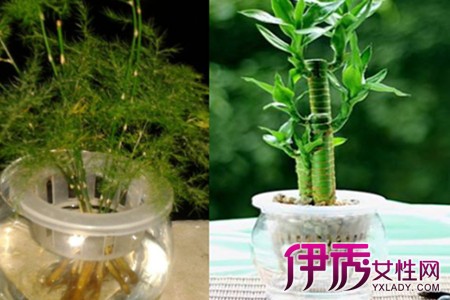
The most important task in growing hydroponic plants in water is changing the water. Some people always feel that the water in the container still looks quite clean and does not need to be changed, but this idea is actually wrong. For hydroponic plants, water is their only channel for absorbing nutrients. If the nutrient supply is insufficient, they will take on a sickly appearance.
The water-changing schedule for hydroponic plants differs from season to season. Usually in spring, when the temperature warms up and all things grow, hydroponic plants need more nutrients at this time. They need the water changed every day, and not only should the water be changed, but nutrient solution should also be added to the water. With sufficient nutrients, they can grow quite a bit in spring. If the water is not changed in time, they will also stop growing due to a lack of nutrients.
In summer, hydroponic plants have a greater demand for water; not only does the water need to be changed every day, but water also needs to be added once at noon. This is because water evaporates quickly in the summer heat, and hydroponic plants already absorb a lot of water; combined with natural evaporation, if water is not added, the plants may end up short of water. When the water level drops below the point the roots can reach, the flowers will wilt.
In autumn, hydroponic plants absorb less water, so the water can be changed once every two days. This is because most areas get more rain in autumn, and the climate in other areas also turns cooler. Under these conditions, hydroponic plants will not grow too quickly, so the water does not need to be changed every day. However, the interval between water changes should not exceed three days, because after more than 48 hours the nutrients in the water are gone.
In winter, most hydroponic plants enter a dormant state, though of course a few hydroponic plants in particularly warm homes do not go dormant and continue to grow. If a hydroponic plant is dormant, you can stop adding any nutrient solution and change the water once every three days. If a hydroponic plant has not entered dormancy, you can change the water once every two days, but nutrient solution is still not recommended, because even if it does not go dormant, a hydroponic plant will not grow too quickly in winter.
How Often Should You Change the Water for Hydroponic Plants? How Do You Change the Water for Hydroponic Plants?
With hydroponic flowers, the fragrance of flowers fills the room above while fish swim freely below. They are hygienic, eco-friendly and low-maintenance, so hydroponic flowers are also called "lazy person's flowers." Through the implementation of original industrial-scale modern biological improvement technology, flowers that originally adapted to grow in terrestrial environments are rapidly acclimated, improved and cultivated through short-term scientific domestication, so that they quickly adapt to growing in an aquatic environment.Most people nowadays grow a few green plants hydroponically at home or on their office desks. For hydroponic plants, water is their important living environment, and regularly changing the water and washing the roots is especially important; it is a key part of ensuring good growth.
The Importance of Changing the Water for Hydroponic Plants
1. The main conditions for plant growth are water, nutrients and air. The water and nutrients of hydroponic plants can absolutely guarantee their needs, but the oxygen content of the water will gradually decrease as the plants grow. When it drops to a certain level, it will affect the growth of the flowers due to lack of oxygen, so the water must be changed to replenish new oxygen.
2. The roots of hydroponic plants growing in water absorb nutrients from the water on the one hand, and on the other hand release some organic substances, as well as waste or toxins, into the water, where they settle. The hydroponic container has no drainage hole at the bottom, so these organic substances, waste or toxins all settle in the water and are very easily taken up again by the plants. This repeated vicious cycle of absorption, excretion, re-absorption and re-excretion is very unfavorable to the normal growth of the flowers and their normal physiological functions.
3. Hydroponic flowering plants are often given nutrient fertilizer in the water. Apart from the portion of mineral elements absorbed by the roots, the rest remains in the water. When the residual substances reach a certain amount, they will also cause a certain degree of harm to the flowers.
4. The roots of hydroponic flowers that grow in water for a long time produce a kind of slime. When there is a lot of slime, it not only affects the roots' absorption of nutrients but also pollutes the water.
How to Change the Water for Hydroponic Plants
1. Water-changing time: Generally, a water-changing interval of 5-7 days is suitable. But the water-changing schedule depends on the season. For flowers that have just been set up hydroponically, the water should be changed once every 1-2 days. In summer, plants grow vigorously, temperatures are high, and the water easily spoils, so the interval should be shortened. In winter, most plants are in a semi-dormant or dormant state, temperatures are lower, and the water-changing interval can be longer. Overall, a shorter water-changing interval is beneficial to plant growth.
2. Cleaning the roots and container: When changing the water, the roots should be cleaned. You can use clean water to rinse off the slime on the roots, and cut away some rotten roots and old roots that have lost their ability to absorb. After a container has been used for some time, some sediment will cling to its walls, and algae is also likely to grow, so it should also be cleaned thoroughly when changing the water.
3. Water depth: When growing hydroponic flowers, people often immerse the roots in water, but this method is not appropriate. It is best not to add too much water; instead, immerse most of the roots in the water and leave a small portion of the roots exposed to the air. In this way, the roots can both absorb dissolved oxygen from the water and absorb oxygen from the air.
Through the detailed introduction in this article, we hope you have gained something from it! Thank you for your support of and attention to Zuihua Network!
What Hydroponic Plants Are There and How to Grow Hydroponic Plants
Hydroponic planting is a common method of growing plants in modern homes. Unlike traditional planting in soil, it involves growing plants in water with the addition of the nutrient solution the plants need. Hydroponic plants are more ornamental, and now a few goldfish are even kept in hydroponic plants on the market for a better decorative effect. So what hydroponic plants are there? They will be introduced one by one below.
[What Hydroponic Plants Are There]
Plants that can generally be grown hydroponically include Monstera deliciosa, Aglaia odorata, Clivia miniata, camellia, Chinese rose, jasmine, azalea, lucky bamboo, violet, Phalaenopsis, fuchsia, five-needle pine, rubber fig, Brazilian iron, begonia types, ferns, palm family plants, and various foliage plants, such as clumping Alocasia, Spathiphyllum, anthurium, Guangdong spider plant, and variegated lucky bamboo;
Crassulaceae types such as Aeonium and Sedum, as well as other types including Clivia miniata, Paphiopedilum, Schlumbergera, lucky bamboo, Billbergia, dusty miller, Brazilian wood, English ivy, and coleus, among more than a hundred kinds. Basically, any plant that can be grown in soil can be grown hydroponically; only a very small portion of plants that like dry environments are unsuitable for hydroponics.
In addition, plants need sunlight, so when growing hydroponic plants indoors, pay attention to choosing the growing environment for the hydroponic plants according to the different types of plants.
[How to Grow Hydroponic Plants]
1. Stages to pay attention to
From the perspective of the plant growth cycle, there are two technical stages in hydroponic flower technology that need attention: the first is the seedling cultivation stage, that is, carrying out the water propagation process; the second is the care stage of the finished plant, that is, the hydroponic process carried out through personal operation after successful hydroponics. Through the care work in these two stages, following correct hydroponic rules, and paying attention to the issues that need attention during the growing process, we can see beautiful, elegant, clean and healthy hydroponic flowers.
2. Soilless acclimation
(1) Planting large seedlings: Gently tap around the flower pot with your hand, and once the soil loosens, take the whole plant out of the pot. Gently remove the soil by hand, or rinse it off directly with water; then cut the planting basket. If the plant's head is too large while the holes in the planting basket are too small, the holes in the planting basket need to be enlarged to make planting easier. After that, add the prepared nutrient solution to the container, insert the large seedling's roots through the planting basket, and then fix them in place with sponge or stones, taking care to avoid damaging the roots.
(2) Planting small seedlings: Planting small seedlings is much simpler than planting large seedlings. Generally, the small seedlings taken are no more than 8 cm. Take the small seedling directly out of the pot and rinse the roots briefly in water, taking care not to accidentally damage the roots; then begin planting the small seedling by inserting its roots directly through the holes of the planting basket and fixing them with stones.
(3) Mixing the nutrient solution: As for mixing the nutrient solution for hydroponic flowers, you can buy the ingredients at a chemical reagent store and prepare it according to the formula provided in the relevant materials; you can also prepare and study a formula using fertilizers such as urea according to the local fertilizer sources, and use it in hydroponic flowers after gaining experience. For the preparation of other fertilizers, the total concentration should be controlled at 0.1%-0.2%.
(4) Key points for transplanting flowers: For hydroponic flowers, the water level must be well controlled; it should be low rather than high. Just keep the plant's roots in the water, or even a little less. This state should be maintained for an adaptation period of one month, after which the water volume can be gradually increased. During the hydroponic process, when water droplets appear at the tips of the flower leaves, the hydroponic water level needs to be appropriately lowered, and when hydroponic growing has just begun, care should be taken to avoid direct sunlight.
3. Soilless trough planting
(1) Establishment and method of the water propagation seedling bed: The water propagation seedling bed must not leak. It is usually made of concrete or built with bricks along the edges and covered with plastic film. The width is about 1.2-1.5 m, and the length depends on the scale. It is best to build a stepped seedling bed, which helps water flow and keeps the oxygen content in the water. Lay a heating electric heating wire for water supply at the bottom of the bed to keep the water temperature stable at 21-25°C. Water propagation can be carried out all year round, with the water temperature controlled at around 25°C, not too high or too low. During water propagation, the plant seedlings should be inserted shallowly, with water or nutrient solution 5-8 cm deep in the bed. However, to keep the seedlings stable, you can put clean sand at the bottom, or drill holes in styrene foam boards, or set up a grid on the water surface; insert the plant seedlings into the boards and place them in the water. During the rooting process, use a water pump to circulate the water at regular times every day to keep the oxygen in the water sufficient.
(2) Preparation of commonly used nutrient solutions for water propagation seedlings: Water propagation uses water as the medium, and the water contains none of the nutrient elements needed for plant growth. Therefore, a certain nutrient solution must be prepared to provide the nutrients needed for plant rooting and for the growth of seedlings before transplanting. The choice of nutrient solution formula is the key to successful water propagation, and different plants require different nutrient solution formulas, so when carrying out hydroponics we must prepare the nutrient solution according to what the plants need.
[Recommended Common Hydroponic Plants]
Hydroponic Plant One (Clearwater Lotus):
The lotus has always been called the clearwater lotus, and the lotus has always been a representative hydroponic plant. The lotus is loved by people for many reasons. For example, its meaning is very auspicious, as "lotus" (he) is homophonous with "harmony" (he). It blesses a family with reunion and happiness for ten thousand years. The lotus also symbolizes love, because in Wang Bo's "Song of Picking Lotus" from the early Tang Dynasty, "pulling flowers just as twin blooms on one stem, breaking lotus root in love with unbroken threads" uses twin lotuses on one stem and unbroken lotus root threads to express the steadfastness of love between men and women.
Hydroponic Plant Two (Water Peacock Water Hyacinth):
The center of the water hyacinth's petals has an obvious bright yellow spot, shaped like a phoenix eye, and also like the flower spot at the tip of a peacock's tail feather, very dazzling and beautiful. It is like a peacock in the water, with an elegant and noble posture. Water hyacinth likes to grow on sunny, calm water surfaces, or on moist and fertile slopes, so it is a very easy hydroponic plant to grow. Therefore, water hyacinth has the advantages of both high ornamental value and easy cultivation.
Hydroponic Plant Three (Elegant Water Lily):
The water lily, also called the noon lotus and water celery flower, is a perennial aquatic plant, and the water lily is a precious flower among aquatic flowers. Its appearance is similar to the lotus, except that the lotus's leaves and flowers rise above the water surface, while the water lily's leaves and flowers float on the water surface. Because it opens by day and closes by night, the water lily is known as the "sleeping beauty among flowers." The water lily has a wide range of uses and can be used for food, making tea, cut flowers, medicinal purposes and more. Its ornamental value is also very high. With so many advantages, are you tempted by this hydroponic plant?
If you want to learn more related information, you can continue to follow No.1 Home Network.