How to sow Mountain Rose? A step-by-step guide to the planting method
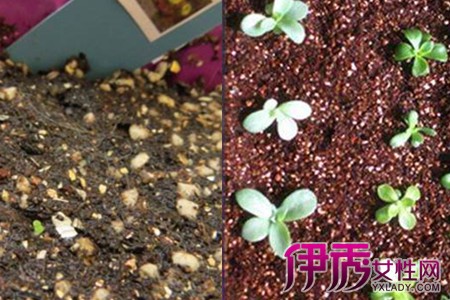
Many gardening enthusiasts use peat when planting this flower. Peat soil very easily breeds fungus gnats, and these insects will gnaw all your seedlings away. If you only have this kind of soil, you can bury some insecticide under the soil, and also be careful not to damage the seeds.
To plant this flower you can use rice husk instead of peat, add akadama soil and also add an appropriate amount of perlite. For the surface layer of the soil you can choose maifan stone; a particle size of about 1 mm is fine. The soil should be sterilized by drying it in high heat for half a day.
The temperature needed for sowing this plant is not very high; generally a temperature of 10-20 degrees is fine. Spring is exactly the right time to sow it. To keep the seeds fresher, you can sow it in early spring.
Before sowing this succulent plant, buy a bottle of potassium permanganate solution and dilute it with water until it is a pale purplish-red. Note that you can dilute it fairly thin; just don't make it too concentrated. Soak these Mountain Rose seeds in the diluted potassium permanganate water for about half an hour.
Pour the potassium permanganate water and the seeds into the pot together; at this point there is no need to cover with soil. The seeds usually have some impurities mixed in, such as seed coats and grass leaves. If they are not sterilized, they easily get moldy in high-humidity soil, so do not cover with soil and let the sunlight help them sprout.
Cover the surface of the pot with a layer of glass or plastic wrap, either is fine, and leave some ventilation holes. After planting, this flower should be placed by a window where it can receive sunlight. Every morning and evening, open the cover to let it ventilate and breathe, for about half an hour. The rest of the time you can keep it covered while growing.
During the growing process, increase the ventilation time a little each day, and in about 5 days small sprouts will grow out.
How does Mountain Rose propagate? Mountain Rose sowing and division propagation methods
Mountain Rose can be propagated by sowing, division, and beheading. Among these, apart from a few varieties such as Aeonium diplocycla, Mountain Roses generally produce side shoots quite easily. You can break them off during the growing season, let them dry for 3 to 5 days, and once the wound is dry, plant them directly in a pot; they root easily whether or not they have roots.
Mountain Rose propagation method 1. Mountain Rose sowing propagation methodThe seeds should be stored in the refrigerator's refrigerated compartment; after about 5 years they still have a very high germination rate. Sow during the growing season, with autumn being the best. Sprinkle the seeds evenly on the soil surface, do not cover with soil, place in a spot without direct sunlight, and water using the immersion method to avoid the tiny seeds being washed away. They germinate 5 to 10 days after sowing. During the seedling stage keep the soil moist and give plenty of soft light. When the seedlings become too crowded, thin them out in time so as not to affect their growth.
2. Mountain Rose division propagation methodApart from a few varieties such as Aeonium diplocycla, Mountain Roses generally produce side shoots quite easily. You can break them off during the growing season, let them dry for 3 to 5 days, and once the wound is dry, plant them directly in a pot; they root easily whether or not they have roots.
3. Mountain Rose beheading propagation methodIn autumn, insert dental floss or fishing line into the gap between the leaves, wrap it around the plant at mid-height, and pull tight to separate the core from the base. Leave the base in the original pot, and be careful not to let the wound touch water, otherwise it easily rots; soon it will sprout many side shoots between the leaves. Place the removed core in a ventilated spot to let the wound dry. Depending on the size of the plant and the ambient humidity, dry it for anywhere from two or three days to a week, then plant it in moist soil and grow it dry (meaning the substrate is moist but not wet; it holds together when squeezed in the hand and falls apart when released), and wait for it to root. Once you observe signs of growth, you can water and care for it normally.
Introduction to Mountain Rose sowing
The rose represents love, as we all know, so does Mountain Rose represent eternal, unchanging love? Grown at altitudes of more than two thousand meters in the mountains, I wonder whether it is very difficult to sow? Actually, sowing Mountain Rose is very easy. Today Little Rabbit has collected some detailed information online about how to sow Mountain Rose. Now let Little Rabbit take everyone through the issues of sowing Mountain Rose.
Mountain Rose (Greenovia) is a succulent plant of the Crassulaceae family and the Aeonium genus (many species among the Crassulaceae and Aeonium succulents have the trait of spreading their leaves during the growing period and closing them during dormancy, just not as obviously as Mountain Rose, like the well-known[1] Aeonium arboreum 'Zwartkop'). The fleshy leaves are arranged in a rosette. The plant's spread varies greatly depending on the variety: the small variety 'Aeoniumaizoon' is only 2 to 4 cm, while the large variety 'Aeoniumdiplocyclum' can grow to 30 cm to 40 cm or larger. Leaf colors include gray-green, blue-green, and emerald green. After intense sun exposure the leaves sometimes develop reddish-brown markings, and some varieties have a slight white powder and fuzz on the leaf surface, with "eyelashes" along the leaf edges. Its flowering period runs from late spring to early summer, with a raceme inflorescence and yellow flowers. After flowering, as the seeds mature, the mother plant gradually withers, but small shoots grow from its base. It was originally a separate genus, Mountain Rose, and was later merged into the Aeonium genus. There are varieties such as Greenovia aizoon, Greenovia aurea, Greenovia diplocycla, and Greenovia dodrentalis.[2] Since Mountain Rose dies after flowering, be careful during cultivation to keep seeds and side shoots.
Sowing Mountain Rose is very easy. Sprinkle the seeds on the growing medium, then sprinkle on vermiculite or a layer of small-grain akadama, use a seedling tray or plastic wrap to create a high-humidity environment, place it in a bright spot that does not get direct sunlight, and wait for it to slowly sprout. 15-25 degrees is the best germination temperature. When the temperature is suitable the germination rate is very high; when the temperature is not suitable you can only leave it to fate. Perhaps if the temperature is inadequate for even an hour, the seeds will not germinate.
So during the sowing period, checking the weather forecast is the most important thing. After they sprout, they are not so easy to kill. But growing them to full size is something many people consider complicated, though I think it is not complicated; you barely need to do anything. Its leaves have a layer of wax as hard as iron and lose very little water, so in summer, as long as it is not in the sun and is placed in a ventilated, bright spot, the leaves will only dry up after several months.
In heated rooms in northern China, winter and spring are its peak growing seasons; it will grow madly until summer, entering dormancy starting in May. From June to September no watering is needed. When the autumn temperature drops below 28 degrees, it slowly wakes up, turning from pale green to dark green, madly photosynthesizing with chlorophyll.
The above is the relevant information on sowing Mountain Rose. Little Rabbit suggests that if you want to understand the habits of Mountain Rose, you need to go through a full spring, summer, autumn, and winter. So if you want to grow Mountain Rose, be sure to maintain the indoor humidity level and place it in a ventilated spot. Only then will Mountain Rose grow healthily. I hope that through Little Rabbit's information on sowing Mountain Rose, everyone can gain more understanding of the methods for sowing Mountain Rose.