How to grow pothos in water? A few tricks to make it propagate more vigorously
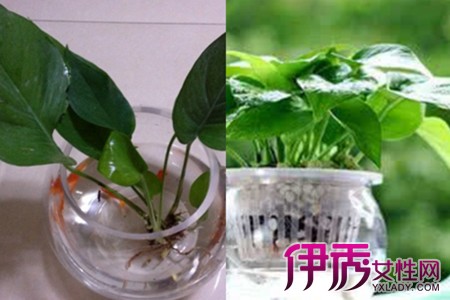
This plant, pothos, has very low requirements for its growing environment, and many office areas place pothos in them. It can not only beautify the environment but also relieve eye fatigue, but in most places beautiful pothos is grown in soil. In fact, growing it in water makes it even more beautiful, and it also has a very translucent feel. To grow pothos in water, you first need to find a suitable glass vase.
The vase must not be too tall; about the size and height of a fish tank is just right. After finding a suitable glass container, the next step is choosing the water. Many people think that rice-washing water is rich in nutrients. But when growing pothos, never use rice-washing water, otherwise root rot will occur.
Use tap water, put it in the glass container, and let it settle for half an hour. In this way, you can insert the selected pothos cuttings into the water in order. But do not choose cuttings that are too tender; choosing older cuttings will give a higher chance of survival, so that they can grow and propagate normally.
After placing them in the water, you can put them on a windowsill, so that with sunlight the roots will grow faster. Changing the water about once every 3 days is enough. When changing the water, be sure to clean the roots thoroughly. If the roots are not cleaned for a long time, a lot of moss will appear on them, affecting normal root growth, and rot may also occur.
After cleaning, place them back in the bottle according to the method above, and after about two months they will become very long, like the feel of a spider plant. Hanging them from a high place at home looks very beautiful, but it is still more suitable to add nutrient solution to the water once a week, which can promote the growth of pothos.
Pothos Epipremnum aureum (Scindapus aureus) Pothos illustrated guide: how to grow pothos / how to propagate pothos
Pothos profilePothos Epipremnum aureum (Scindapus aureus)
Aliases: devil's ivy, stone citrus, bamboo-leaf grass, golden pothos, golden vine, stone citrus
Classification: vine flowering plant
Family and genus: Plantae, Angiosperms, Monocots, Alismatales, Araceae, Epipremnum
Full bloom period: does not bloom
Pothos, also known as golden pothos, devil's ivy, golden vine, etc., is a plant of the genus Epipremnum in the Araceae family. It originates from tropical rainforest regions and is an evergreen vine of the Araceae family. Its green leaves have yellow patches, its twining ability is strong, it has aerial roots, and it usually has hanging branches. The leaves are heart-shaped, emerald green and glossy, mixed with yellow patches, pleasing to the eye. Pothos has high ornamental value, and people often make it into pothos poles, wall hangings, hanging displays, water cuttings, and decorations for rockeries, etc. The vine stems droop naturally, which can not only purify the air but also make full use of space, adding lively lines and bright colors to dull cabinet surfaces. It is known as the "land, sea, and air plant...
Pothos cultivation methods and precautions Pothos introduction
Pothos, also known as golden pothos, devil's ivy, golden vine, etc., is a plant of the genus Epipremnum in the Araceae family. It originates from tropical rainforest regions and is an evergreen vine of the Araceae family. Its green leaves have yellow patches, its twining ability is strong, it has aerial roots, and it usually has hanging branches. The leaves are heart-shaped, emerald green and glossy, mixed with yellow patches, pleasing to the eye.
Pothos has high ornamental value, and people often make it into pothos poles, wall hangings, hanging displays, water cuttings, and decorations for rockeries, etc. The vine stems droop naturally, which can not only purify the air but also make full use of space, adding lively lines and bright colors to dull cabinet surfaces. It is known as the "land, sea, and air plant."
Pothos grows in tropical regions, often climbing on rocks and tree trunks in rainforests, and can grow into a huge vine. Its twining ability is strong, and its aerial roots are well developed. Pothos belongs to the Araceae family and can be grown hydroponically.
Pothos originates from the tropical rainforest regions of Central and South America. It is an evergreen vine of the Araceae family. Pothos is a plant of the genus Philodendron in the Araceae family, belonging to climbing foliage flowering plants. It likes warm, humid environments, its vines can reach several meters long, there are aerial roots at the nodes, the leaves grow larger and larger, the leaves are alternate, and it is evergreen. Pothos has high ornamental value; it can not only purify the air but also make full use of space. At present, in various places in China such as Shanghai, Jiangsu, Fujian, Taiwan, China, Guangdong, and Guangxi, there are artificial garden and indoor plantings.
Pothos is usually grown indoors in pots, placed in studies, living rooms, offices, and other places. It can bring a beautiful visual sense and purify the environment. Among large vines, pothos, spider plants, and ivy are all the same, with a powerful air-purifying effect. Because pothos can absorb benzene, formaldehyde, and other substances from the air, it is widely grown indoors. It is difficult for plants to move from outdoors to indoor cultivation. Next, let us understand the cultivation methods and precautions for pothos.
Pothos is one of the very excellent indoor decorative plants. Its vines are slender and soft, and its leaves are delicate and beautiful. Pothos has strong twining ability and well-developed aerial roots. It can be allowed to climb on a cylinder tied with palm fiber and placed in an entrance hall or hotel, or it can be trained into a hanging form and placed in a study or on a windowsill, placed on top of furniture cabinets, letting its vine stems droop calmly, or after the hanging vine stems grow too long, loop and hang them into a ring, like an emerald relief. Pothos is a flowering plant relatively suitable for indoor placement.
Morphological characteristics of pothos
Pothos is a perennial evergreen vine; both stems and leaves are fleshy, and the stem nodes have aerial roots. Leaves are alternate, ovate-oblong, heart-shaped, waxy, 10-15 cm long, dark green, and glossy. There are also variegated varieties inlaid with irregular golden stripes or spots.
Pothos is a large evergreen herbaceous vine, often climbing and growing on rocks and tree trunks. It can grow up to 20 m tall, with a vine diameter of 4 cm, and indoor planting height can reach about 2 m. The stems and vines of pothos are thick, the vines can reach several meters long, the vines can reach more than ten meters, and there are aerial roots at the stem nodes.
As pothos ages, its stems thicken and its leaves become larger and larger. Young branches are whip-like, slender, with larger lower leaves, papery, broadly ovate, shortly acuminate, and heart-shaped at the base. On mature branches, the petioles are thick, the leaves are thinly leathery, emerald green, with irregular pure yellow patches, entire, asymmetrical ovate or ovate-oblong, acuminate at the tip, and deeply heart-shaped at the base.
The largest leaves can reach 100 cm long and 45 cm wide (young plants are generally below 20 cm). Young leaves are ovate-heart-shaped; newly propagated seedlings have smaller and lighter-colored leaves, while mature leaves are long-ovate, about 30 cm long and about 10 cm wide. The dark green leaf surface is inlaid with irregular yellow-white spots or stripes.
Due to differences in fertilizer and water conditions, the size of pothos leaves varies. Pothos has luxuriant branches and leaves, good shade tolerance, is evergreen all year round, and is glossy. In winter, outdoor vegetation withers and fades, while indoor pothos remains lush, so it is an excellent indoor foliage plant.
Because the stems and vines of pothos grow relatively quickly, people often cultivate it in a pole-vine style. That is, erect a support in the center of the flower pot, wrap some palm fiber around the support, with the support diameter reaching 22-12 cm, then plant 3-4 young seedlings in the pot, letting their stems and vines climb and grow around the pole. Some also plant pothos in flower pots and place them on flower stands, letting their stems and vines hang down like a green curtain, with a unique charm. It also has a certain effect of adsorbing formaldehyde and benzene, and when used together with Maya Blue it will achieve a long-lasting protective effect, suitable for planting in homes, offices, and other places.
Ecological habits of pothos
Pothos likes warm, humid, and semi-shady environments, is sensitive to light, and fears direct strong light. The soil is best if it is fertile leaf mold or peat soil, and the winter temperature should not be lower than 15°C.
Pothos is a shade-loving plant, avoids direct sunlight, and likes shade. Indoor cultivation can place it beside a window, but direct sunlight must be avoided. Too strong sunlight will burn pothos leaves, and too much shade will make the beautiful markings on the leaf surface disappear. Generally, receiving four hours of scattered light is best for the growth and development of pothos.
Pothos likes warm, humid environments and requires loose, fertile, well-drained soil. Potted pothos should use fertile, loose, well-drained leaf mold, preferably slightly acidic. Pothos is extremely shade-tolerant and can be placed in a sunny indoor spot all year round. In a relatively dark room, it should be moved every half month to a brighter environment for a period of recovery, otherwise the internodes are likely to lengthen and the leaves to become smaller. Pothos likes hot and humid environments, and the overwintering temperature should not be lower than 15°C. The pot soil should be kept moist, and water should often be sprayed on the leaf surface to increase air humidity, so as to facilitate the growth of aerial roots. During the vigorous growth period, liquid fertilizer can be applied once a month. For plants kept indoors for a long time, the leaves at the base of the stem are prone to falling off, reducing ornamental value. In May and June, when the temperature warms up, pruning and renewal can be carried out together with cuttings to encourage new buds to sprout from the base of the stem.
It likes warm, humid environmental conditions, likes shade, and avoids strong light. It is heat-tolerant, moisture-tolerant, and not cold-tolerant. It likes soil rich in humus, loose and fertile, and slightly acidic.
Pothos is sensitive to temperature and avoids direct sunlight in summer. Under strong light, the leaves are prone to turning yellow and falling off, so shade should be provided when outdoors in summer. In winter, it can grow well under bright scattered light indoors, with sturdy stem nodes and brilliant leaf color. During the growth period, it has relatively high water requirements. In addition to normally replenishing water to the pot soil, water should also often be sprayed on the leaf surface. For pole-vine cultivation, more water should also be sprayed on the palm fiber pole so that the palm fiber fully absorbs water for the aerial roots around the stem to absorb. A nitrogen-phosphorus-potassium compound fertilizer can be applied once every 2 weeks, or a 0.2% potassium dihydrogen phosphate solution can be sprayed weekly, making the leaves emerald green and the markings more vivid.
Cultivation techniques for pothos
Pothos is very robust and can be potted indoors in all four seasons. It can be placed in a bright sunny spot in the pot for long-term display. If kept in a dark place for a long time, the leaves will become smaller and the internodes will lengthen; for color-leaf variants, the leaf color will fade, affecting ornamental value. In summer, it needs to spend time in a semi-shady environment and avoid direct sunlight.
The suitable growth temperature is about 25°C during the day, and the suitable winter temperature should be kept at 10-13°C, generally not lower than 7°C. In the warm winter areas of South China and Southwest China, it can be cultivated in the open field.
Pothos likes hot and humid environments, and water needs to be frequently sprayed on the leaf surface and ground while keeping the pot soil moist. During the growing season, apply a compound fertilizer once every 2 weeks or so.
It is often potted, and can also be used as a hanging basket, or planted in indoor planting troughs. Generally, a support is erected in the pot so that its vines can climb on it. It is best to use dead wood with moss or snake wood (the trunk of tree ferns), or a cylinder made of wire mesh can be used for planting. If planted in a hanging basket or planting trough, the stems and vines are generally allowed to hang freely, and there is no need to erect a support. Usually repot once every 2-3 years. In May-June each year, carry out appropriate pruning and renewal to promote new branches from the base of the stem, making the clump more luxuriant. The culture soil is best mixed with leaf mold and garden soil, and it can also grow when grown in water.
Characteristics
(1) Pothos is all shipped from Guangzhou to all parts of the country and bought back in winter. Pothos has generally been frozen, so when placed indoors it will
show rapid yellowing of leaves, etc. After these frozen leaves turn yellow and fall off completely, they will still regrow after the Spring Festival.
(2) Generally, newly bought pothos has an adaptation period of about 1 month in a new environment, and yellow leaves at the bottom are normal. However, remember: do not directly peel off yellow or dead leaves; cut them off from the middle of the petiole, so as to avoid excessive water loss and increased wounds caused by direct peeling; otherwise the upper leaves will also turn yellow.
(3) Pothos is not afraid of shade, but it also cannot be grown well in a very dark environment! You can regularly move its position to a place with good light (but it cannot be exposed to the sun).
(4) To grow pothos well, appropriate ventilation is also needed.
(5) When watering, you can wet the pole, as it is covered with aerial roots. From time to time, spray a little nitrogen fertilizer on the leaves, and pour a little diluted ferrous sulfate solution into the soil.
(6) If the leaves have already turned very yellow, be sure to control watering. Too much or too little watering is not good. At this time, place the pothos in a well-ventilated place with light.
(7) Pothos is afraid of freezing, and after freezing it will turn black until it dies.
(8) When the pothos has grown very long and climbed past
Precautions
When planting pothos, soil requirements are already an old topic. The soil should mainly be fertile, loose leaf mold with good drainage performance, and appropriately slightly acidic soil gives the best effect. In a relatively dark room, some lights should be turned on, as this helps the plant grow.
1. Water more. Pothos likes to live in a humid environment, so watering more is best. In summer, when the weather is hot, water dissipates quickly. In addition to watering more, you should also spray water on the leaf surface. The amount of watering depends on the pot soil; larger pothos plants should be watered more.
2. Avoid exposure to the sun. Pothos grows in shaded places under large trees, so it is a shade-loving plant and cannot be exposed to the sun, otherwise newly sprouted leaves will lose water and become smaller, with dull color, and the leaf edges are also easily burned. It only needs enough sunlight for photosynthesis.
3. Appropriate temperature. Although pothos does not like the scorching sun, it is still very sensitive to temperature. If the temperature is too low, it is easily frostbitten. A room temperature of about 20 degrees is enough. If heating equipment is installed, pothos leaves must not be too close to it. If the indoor temperature is controlled above 10 degrees, pothos can safely pass the winter.
4. Fertilizing. Because it is grown indoors, pothos absorbs nutrients less sufficiently than outdoors. It is recommended to apply fertilizer once every half month. You can buy fertilizer specially for pothos on the market. Or ask the flower shop owner to help choose fertilizer.
5. Maintain air humidity. Pothos grows faster in environments with higher air humidity. It is recommended to maintain indoor humidity, and a humidifier can be used to increase air humidity. A specific method is to spray water around the pothos.
Daily management
Hydroponic pothos is generally placed in a sunny indoor spot, which can maintain a warm temperature and relatively good light to promote plant growth. In addition, it cannot directly receive sunlight. In winter, especially in northern China where winter is very cold, insulation measures should be taken appropriately at this time. At different growth stages of hydroponic pothos, additional fertilization should be carried out according to growth needs to ensure nutrient supply. Hydroponic pothos has relatively high water requirements, so the soil should be kept moist. Water thoroughly once a month, and the leaves can be wiped every day to keep them fresh. Regularly prune hydroponic pothos to maintain the shape and emerald green color of the branches and leaves, and prevent and treat pests and diseases.
What you need to know about pothos cultivation methods
In principle, pothos likes moisture, and during the growing season watering should preferably keep the pot soil moist at all times. In summer, while watering fully, attention should also be paid to frequently spraying water on the leaf surface. Whether to water every day is affected by many conditions, such as the amount of pot soil, plant size, pot material, maintenance environment, and so on. Water consumption varies greatly, and it needs to be grasped specifically according to the above principles.
Pothos cannot be watered with rice-washing water. Although rice-washing water contains many nutrients that can be used, it must be composted, fermented, and decomposed before use. Otherwise, it will not only easily breed insects, but in severe cases also cause root rot.
Pothos has relatively strong shade tolerance, and in home cultivation it can be kept indoors all year round. If placed outdoors for cultivation, attention should be paid to shading, especially in summer, and even more attention should be paid to preventing direct strong light, otherwise new leaves will become smaller, leaf color will be dull, and leaf edges will also be easily burned.
Tips
1. Pothos develops best when cultivated in loose, organic-rich, slightly acidic and neutral sandy loam soil. Repot once every three years. Pothos is a shade-loving plant, avoids direct sunlight, likes scattered light, and is relatively shade-tolerant. Generally, receiving four hours of scattered light is best.
2. Propagation uses cuttings and stem layering. Select robust pothos vines, cut them into sections with two nodes, being careful not to damage the aerial roots, and spray with Xinhua protective film to retain moisture, raising the survival rate to above 90%.
3. Pothos likes relatively high air humidity and a humid environment. Midsummer is the peak growth period for pothos. Several times a day, spray water on the aerial roots and leaf surface of pothos. This can not only clean dust from the leaves and help pothos breathe, but also make the leaf color emerald green, lower the leaf surface temperature, increase the air humidity of the micro-environment, and let the leaves grow better. For fertilizing pothos, nitrogen fertilizer is the main one, supplemented by potassium fertilizer. Spray Xinhua protective film to retain fertilizer and moisture. In winter, when indoor temperature is relatively low, pothos is in a dormant state, so water less and just keep the pot soil from drying out.
4. The most suitable growth temperature for pothos is 18°C-21°C during the day and 20°C-23°C at night. In winter, as long as the indoor temperature is not lower than 15°C, pothos can safely overwinter. If the temperature is lower than 10°C, it easily causes leaf drop and affects growth. During the growing period, spraying Zhuangjingling at the right time can make the plant stems thick, the leaves plump, the leaf color fresh and tender, and the plant luxuriant.
Characteristics
(1) Pothos is all shipped from Guangzhou to all parts of the country and bought back in winter. Pothos has generally been frozen, so when placed indoors it will show rapid yellowing of leaves, etc. After these frozen leaves turn yellow and fall off completely, they will still regrow after the Spring Festival.
(2) Generally, newly bought pothos has an adaptation period of about 1 month in a new environment, and yellow leaves at the bottom are normal. However, remember: do not directly peel off yellow or dead leaves; cut them off from the middle of the petiole, so as to avoid excessive water loss and increased wounds caused by direct peeling; otherwise the upper leaves will also turn yellow.
(3) Pothos is not afraid of shade, but it also cannot be grown well in a very dark environment! You can regularly move its position to a place with good light (but it cannot be exposed to the sun).
(4) To grow pothos well, appropriate ventilation is also needed.
(5) When watering, you can wet the pole, as it is covered with aerial roots. From time to time, spray a little nitrogen fertilizer on the leaves, and pour a little diluted ferrous sulfate solution into the soil.
(6) If the leaves have already turned very yellow, be sure to control watering. Too much or too little watering is not good. At this time, place the pothos in a well-ventilated place with light.
(7) Pothos is afraid of freezing, and after freezing it will turn black until it dies.
(8) When the pothos has grown very long and climbs past the top of the pole, cut it off, or turn the head upside down and let it climb downward; do not let it grow randomly.
(9) It can climb and grow, and is suitable for beautifying indoor and outdoor walls, staircases, and so on.
Cultivation
Pothos has vigorous vitality. From one lush pot of pothos, 3-5 stem sections can be broken off and placed in a bottle filled with 500 ml of clear water, with 2-3 drops of "fish and water co-cultivation" nutrient solution added. In one week, new roots can grow. Change the water once every 10 days, and gently clean the roots by hand to prevent root rot; if the water evaporates or becomes insufficient within the 10 days, new clear water can be added without cleaning.
Pothos grows relatively quickly and cultivation management is extensive. During cultivation and management, more water should be sprayed on the plants in summer, and foliar fertilization should be carried out once every 10 days to keep the leaves green. For potted seedlings, when the seedlings grow 30 cm up the cultivation pole, they should be cut off; when the lower leaves fall off by 30%-50%, they should be discarded and replanted. The green-pole potted form is an ideal plant for courtyard gateposts and wall greening, and its leaves are also excellent foliage for flower arrangements.
Key cultivation points
Extensive management: for cultivation, choose a plot with fertile soil. After planting, water thoroughly and spray to retain moisture. In the dry autumn weather season, spray 2-3 times a day; if the air is too dry, the leaf color becomes dull and lusterless. It likes sufficient scattered light; if too dark, the stripes become darker and ornamental value decreases. It has low fertilizer requirements; fertilize 2-3 times during the growing season, mainly with nitrogen fertilizer.
Protection
Pothos likes hot and humid conditions, and the best growth temperature is 20°C to 30°C. Creating a suitable growing environment for it in winter becomes the key to the success or failure of care. In terms of care, attention should be paid to the following aspects:
Light: pothos does not have a strong tendency toward the sun, but in winter, in order to supplement the lack of temperature and photosynthesis, its light should be increased. The method is to place pothos in the brightest indoor place, or move it to a sealed balcony at noon to bask in the sun. At the same time, when the temperature is low, open windows as little as possible, because in a very short time the leaves may be frostbitten.
Temperature: in the north, with an indoor temperature above 10°C, pothos can safely overwinter, and with an indoor temperature above 20°C, pothos can grow normally. Generally, households have no big problem reaching this temperature. What needs attention is avoiding excessive temperature differences, and also making sure the leaves are not close to heating equipment.
Humidity: under the condition of ensuring normal temperature, increasing humidity is extremely beneficial to plant growth. Humidity can be increased by the following methods: keep the plant near a humidifier, with the humidifier running for more than 5 hours each day; use a sprayer adjusted to the mist setting to spray water on the leaves, stems, and aerial roots of the plant several times a day; keep an appropriate amount of water in the flower pot saucer and increase the local humidity of the plant through its evaporation; use a cold wet towel or toilet paper to gently wipe the leaf surface or gently apply it to the leaf surface for a short time (1-2 hours per day); cover the plant with transparent plastic film to create a small greenhouse effect, supplementing the plant's water through evaporation of water vapor from the soil, for no more than 2 hours per day, as too long will affect the plant's ventilation and photosynthesis.
Water: in winter, the amount of watering should be strictly controlled according to room temperature. After heating begins, watering should not be too frequent. When watering, pour less into the pot, and water should seep through the palm fiber. In addition, water should also be sprayed on the aerial roots on the palm pole to reduce insufficient root water absorption caused by excessive evaporation. For winter watering, water that has been left to stand for a day is better; water that is too cold easily damages the roots.
Fertilizer: in winter, plants grow slowly, so less fertilizer should be applied. After the beginning of winter, fertilization should mainly be foliar spraying. Special fertilizer should be used for foliar fertilizer; ordinary inorganic fertilizer is not easily absorbed. Foliar fertilizers such as the Beida Huahuashen series and the Japanese-made Hua Yifan can be used.
Note
Like peace lilies, pothos belongs to the Araceae family, and its toxic part is mainly its sap.
It is a fact that pothos is toxic, and growing pothos at home is also no problem, because as long as the sap of pothos is not eaten, it will not cause poisoning. Although the sap of pothos is toxic, it is also low-toxicity. During cultivation, even if everyone touches pothos leaves, as long as they do not directly eat them, it will not affect the body. In addition, many people nowadays grow pothos hydroponically. If they touch the water used for cultivation, as long as they do not drink it, there is generally no harm.
Of course, accidental ingestion is one aspect, and contact is also an issue that needs attention in cultivation. As a plant with low-toxicity sap, accidental ingestion may cause allergic reactions. Therefore, during ordinary cultivation, everyone should especially be careful not to put it in the mouth, and it is also best not to let food come into contact with pothos. Regarding the effect of pothos sap on the body, experts say that pothos sap is toxic. Whether adult or child, contact with the skin may cause redness, swelling, and itching, and accidental ingestion may also cause throat pain. For toxic plants such as pothos, the toxin mainly comes from the sap in the plant stems. Even if they are planted at home or in the office, as long as you do not directly touch the sap with your hands, it will not cause poisoning.
It can be seen that pothos can be grown, and according to gardening experts, plants such as pothos and peace lilies actually do more good than harm to the public. Although their sap is toxic, they can all absorb formaldehyde, and their air-cleaning effect is also very good. Therefore, everyone does not need to "turn pale at the mention of poison," nor should they refuse to grow them because they think they are toxic. Moreover, keeping pothos at home is very useful for purifying the home environment, so everyone can still choose to grow pothos at home.
Specifics
(1) Light: the original growing condition of pothos is in forests shaded by towering trees, so it does not have a strong tendency toward the sun. But in the north in autumn and winter, in order to supplement the lack of temperature and photosynthesis, its light intensity should be increased. At the same time, when the temperature is low, open windows as little as possible, because in a very short time the leaves may be frostbitten.
(2) Temperature: in the north, with an indoor temperature above 10°C, pothos can safely pass the winter.
(3) Humidity: refers to the water content of the air in the plant's growing environment. Under the condition of ensuring normal temperature, increasing humidity is extremely beneficial to plant growth. Humidity can be increased by the following methods. Keep the plant near a humidifier, with the humidifier running for more than 5 hours each day, so the plant can enjoy the mist sprayed by the humidifier; use a sprayer adjusted to the mist setting on the plant's leaves, stems, and aerial roots, increasing the plant's local temperature through evaporation; use cold
wet towels or toilet paper to gently wipe the leaf surface or gently apply it to the leaf surface for a short time (1-2 hours per day); cover the plant with transparent plastic film to create a small greenhouse effect, supplementing the plant's water through evaporation of water vapor from the soil, for no more than 2 hours per day, as too long will affect the plant's ventilation and photosynthesis.
(4) Water: in autumn and winter, the amount of watering should be strictly controlled according to room temperature. Before heating begins, the temperature is relatively low, and the plant's soil evaporates relatively slowly, so watering should be reduced, and the amount should be controlled at 1/4-1/2 of the original. Even after heating begins, watering should not be too frequent. When watering, pour less into the pot, and water should seep through the palm fiber. In addition, water should also be sprayed on the aerial root growth areas of the palm pole to reduce insufficient root water absorption caused by excessive evaporation. For winter watering, water that has been left to stand for a day is better; water that is too cold easily damages the roots.
(5) Fertilizer: in the autumn and winter seasons in the north, plants mostly grow slowly or even stop growing, so fertilization should be reduced. Before the beginning of winter, mainly apply liquid inorganic fertilizer by watering or spraying, about once every 15 days. After the beginning of winter, fertilization should mainly be foliar spraying, mainly through the stomata on the leaf surface, and fertilizer is absorbed through the stomata on the leaf surface, so the fertilizer effect can directly act on the leaf surface. Special fertilizer should be used for foliar fertilizer; ordinary inorganic fertilizer is not easily absorbed by the leaf surface. The Beida Huahuashen series and the Japanese-made Hua Yifan can all be used as foliar fertilizer.
(6) Pests and diseases: pothos plants are very susceptible to problems from pests and pathogens. Typical pests affecting pothos include mealybugs, red spider mites, and scale insects. Mealybugs are usually the most common, and can be removed using alcohol to kill the insects, with cotton swabs, or by hand.
Typical pathogens (fungi and bacteria) affect pothos varieties and usually cause root rot, leaf spot, and wilt. Be careful not to overwater to prevent root rot from occurring. When choosing to buy a pothos plant, take the plant out of the pot and check its roots. See whether it has complete and healthy roots. Pothos, also known as golden pothos, originates from tropical rainforest regions and is an evergreen vine of the Araceae family. The overwintering temperature should not be lower than 15°C, the pot soil should be kept moist, and water should often be sprayed on the leaf surface to increase air humidity, so as to facilitate the growth of aerial roots. Vigorous growth method.
Shaping
Plant or directly insert 4-5 plants per pot, and set up a palm pole in the middle of the pot to make it convenient for pothos to twine and grow upward. Shaping and pruning are carried out in spring. When the stems and vines have climbed all over the palm pole and the tips exceed the palm pole by about 20 cm, cut off 40 cm of the stem tips of 2-3 of the plants. After the short cut sprouts new buds and new leaves, then cut off the stem tips of the remaining plants. For potted plants whose whole plant or lower half has lost leaves due to winter freezing or other reasons, half of the stems and vines can be cut back by 1/2 and the other half by 2/3 or 3/4, so that the cut heights are staggered. In this way, the new leaves growing below the cuts can quickly cover the palm pole.
When growing in water, the water volume must not be too much; just submerging the roots is enough, because too much water easily rots the stems and leaves.
Yellow leaves
(1) Pothos bought back in winter has generally been frozen, so when placed indoors it will quickly show yellow leaves. After these frozen yellow leaves fall off completely, they will still send out new leaves after the Spring Festival.
(2) Generally, newly bought pothos has an adaptation period of about 1 month in a new environment, and yellow leaves at the bottom are normal. However, remember: do not directly peel off yellow or dead leaves; cut them off from the middle of the petiole, so as to avoid excessive water loss and increased wounds caused by direct peeling, which would cause the upper leaves to turn yellow as well.
(3) Although pothos is not afraid of shade, a very dark environment can also cause yellow leaves, so you can regularly move its position to a place with good light; at the same time, it cannot be exposed to the sun, because excessive exposure under strong light will not only cause yellow leaves and leaf drop, but also lead to the death of the whole plant.
(4) If the pot soil is too dry or too wet, both conditions will cause abnormal metabolism, damage the root system, and lead to yellow leaves and leaf drop.
(5) Lack of fertilizer and malnutrition can also cause yellow leaves. At this time, fertilizer should be supplemented promptly.
(6) Beer can be appropriately used as fertilizer. Method: mix beer with water at a 1:1 ratio and spray it on the stems and leaves.
(7) Too much topdressing can also easily cause root burn, leading to yellowing and withering of leaves. You can dilute the fertilizer with water so that the nutrients flow away with the water.
Evergreen techniques
In spring, summer, and autumn, it can be placed near an east- or north-facing windowsill, and in winter it can be placed at a south-facing window. If it is kept in an environment with too little light for a long time, it will not only cause the trailing stems to grow excessively, the internodes to lengthen, and the plant shape to become sparse, but the yellow-white stripes on the leaf surface will also become smaller and lighter, or even completely disappear and fade to green. If placed outdoors for cultivation, attention should be paid to shading, especially in summer, and even more attention should be paid to preventing direct strong light, otherwise new leaves will become smaller, leaf color will be dull, and leaf edges will also be easily burned. The suitable growth temperature for pothos is 20°C-30°C, and the winter room temperature should not be lower than 15°C.
Pothos likes moisture, and during the growing season watering should preferably keep the pot soil moist at all times. Never let the pot soil dry out, otherwise it easily causes yellow leaves and poor plant shape. If too much watering causes water accumulation in the pot soil, it easily causes root rot and withered leaves. Especially when the winter room temperature is low, even more attention should be paid to controlling watering. In summer, while watering fully, also pay attention to frequently spraying water on the leaf surface. In winter, when the climate is dry, it is also necessary to spray and wash the leaves once every 4-5 days with warm water, washing away dust on the leaf surface, so as to help keep the leaves glossy and emerald green.
Propagation methods for pothos
It is not easy to bloom, and cuttings are commonly used for propagation. From May to July, take shoots from the stem tip or base, cut them into sections of about 10 cm, and insert them into a propagation bed mixed with equal amounts of fine sand and peat. Maintain appropriate humidity and a temperature of 21-25°C. In a semi-shady environment, new roots can be produced in about 3 weeks. After rooting, they can be potted, with 3-4 plants per pot. Older branches can also be used for cuttings. Cut branches with buds into sections of 4-5 nodes, insert them according to the above method, and they can also grow into new plants. Layering propagation can also be used, and it can be carried out during the growing period.
The propagation method for hydroponic pothos is asexual propagation by cuttings.
Propagation can be carried out in spring and summer each year when the climate and environment are suitable. Generally, a longer and healthily growing stem is selected from the hydroponic pothos as a new plant, separated from the mother plant, its base slightly prepared, and then cultivated in water or nutrient solution; after some time, when new roots and buds have grown, it can be transplanted into a flower pot for cultivation.
Cuttings are generally used for propagation: cut 3-5 branches 20cm long, remove the leaves from the bottom 2 nodes, then pot them directly, afterwards transplant them into the pot, water thoroughly, and place in a cool, ventilated spot, keeping the potting soil moist. Pothos can also be grown hydroponically, but because the plant is smaller, its ornamental value is somewhat affected.
Cuttings
Propagation uses the cutting and stem-burying methods. Select a robust pothos vine, cut it into sections of two nodes, taking care not to damage the aerial roots, then insert into plain sand or coal cinders to a depth of 1/3 of the cutting, water thoroughly, and place in a shaded spot. Spray water on the leaf surface daily or cover with plastic film to retain moisture; as long as the ambient temperature is not below 20°C, the survival rate is over 90%.
Keeping pothos as a household potted plant is fairly simple. First, there should be at least 4 established seedlings per pot. The potting soil should be loose, fertile and rich in organic matter, which helps the plant take shape. Second, pothos requires a relatively high temperature (in winter the room temperature must not be below 10°C, otherwise yellowing and leaf drop easily occur) and a growing environment with fairly strong diffused light. If it is too dark for a long time, the internodes become thin, long and weak, and the leaves also become thinner, paler and lose their luster. In late spring and early summer (from April to August), cut branches 15-30cm long, remove the leaves from the bottom 1-2 nodes, pot them directly in culture soil, 3-5 per pot, water thoroughly, plant in a cool, ventilated spot, keep the potting soil moist; in about one month they will take root and sprout, and within the same year they can grow into plants with ornamental value.
Water cuttings
Pothos can also be propagated by water cuttings of the terminal bud; the method is: cut a tender, robust stem 20-30cm long as one section, insert it directly into a bottle filled with clear water, change the water once every 8-9 days, and in a little over 10 days it can take root and survive. Because potted pothos is limited by the potting soil, after being cultivated for too long the plant tends to age, and the leaves become smaller and drop. Therefore, after 2 to 3 years of cultivation, repotting or pruning and renewal is required.
Hydroponic pothos grows relatively fast and its cultivation and management are simple. During cultivation and management, in summer water should be sprayed on the plant frequently, and nutrient solution should be added once every 10 days to keep the leaves green and fresh. For potted seedlings, when the seedlings grow 30cm up the cultivation pole, they should be cut off; plant 4-5 plants per pot or insert cuttings directly, and set up a moss pole in the middle of the pot so that the hydroponic pothos can twine upward. After cutting back, when new buds and new leaves sprout, cut off the stem tips of the remaining plants.
Pothos disease control: pothos anthracnose
This pathogen mostly harms the middle section of the leaves, and can also harm the flowers. At first, small pustule-like spots of a wet reddish-brown or dark brown color appear on the diseased part, with a faded green halo around the spots; after expanding, they form long oval or long strip-shaped patches, with dark brown edges, a yellow-brown interior, and ring-like patterns formed by dark spots converging together. Because its spots are dark brown, it is also called black spot disease or dark brown disease. It can repeatedly infect the plant during the growing season.
Control methods
1. There are many pesticides that can control anthracnose, such as mancozeb, carbendazim, thiophanate, tantelin, etc., all of which have a certain control effect.
2. German-made "Sporgon" at 1,500 times dilution is a specific remedy for treating anthracnose.
Yellow leaves
(1) Pothos bought in winter has generally been exposed to cold, so when placed indoors it will quickly show yellow leaves; after these cold-damaged yellow leaves have all fallen, new leaves will still grow again around the Spring Festival.
(4) Generally, newly bought pothos has an adaptation period of about 1 month in a new environment, and yellow leaves at the bottom are normal. However, remember: do not peel off yellow or dead leaves directly; cut them off from the middle of the petiole. This avoids excessive water loss and extra wounds caused by direct peeling, which would otherwise cause the upper leaves to turn yellow as well.
(3) Although pothos is not afraid of shade, a very dark environment can also cause yellow leaves, so the position can be moved regularly to a place with good light; at the same time, it must not be exposed to strong sun. Excessive exposure under strong light will not only cause yellow leaves and leaf drop, but can also cause the whole plant to die.
(4) Potting soil that is too dry or too wet, both conditions will cause metabolic disorders, damage the root system and lead to yellow leaves and leaf drop.
(5) Lack of fertilizer and malnutrition can also cause yellow leaves; at this time fertilizer should be supplemented promptly.
(6) Beer can be appropriately used as fertilizer; method: mix beer with water at a 1:1 ratio and spray it on the stems and leaves.
(7) Too much topdressing can also easily cause root burn, leading to yellowing and withering leaves; water can be used to dilute the fertilizer so the nutrients are carried away with the water flow.
Pests and diseases
Pothos plants are very susceptible to problems from pests and pathogens. Typical pests affecting pothos include mealybugs, red spider mites and scale insects. Mealybugs are usually the most common, and can be removed with alcohol insecticide, cotton swabs, or by hand.
Typical pathogens (fungi and bacteria) affect a range of pothos varieties, usually causing root rot, leaf spot and wilt. Be careful not to overwater, to prevent root rot from occurring. When choosing to buy a pothos plant, take the plant out of the pot and check its roots. See whether it has complete and healthy roots. Pothos, also known as golden pothos, originated in tropical rainforest regions and is an evergreen vine of the Araceae family. The overwintering temperature should not be lower than 15°C, the potting soil should be kept moist, and water should often be sprayed on the leaf surface to raise air humidity, so as to favor the growth of aerial roots. Vigorous growth method.
Potting methods for pothos
Because potted pothos is limited by the potting soil, after being cultivated for too long the plant tends to age, and the leaves become smaller and drop. Therefore, after 2 to 3 years of cultivation, repotting or pruning and renewal is required.
Pothos likes warm, humid environments and requires loose, fertile, well-drained soil. For potted pothos, fertile, loose, well-drained leaf mold soil should be chosen, preferably slightly acidic. Pothos is extremely shade-tolerant and can be placed in a sunny indoor spot in all four seasons; in a dimly lit room, it should be moved every half month to a brighter environment for a period to recover. Pothos likes hot and humid environments; the overwintering temperature should not be below 15°C, the potting soil should be kept moist, and water should often be sprayed on the leaf surface to raise air humidity, so as to favor the growth of aerial roots. During the vigorous growth period, liquid fertilizer can be applied once a month. In May and June, when the temperature turns warmer, pruning and renewal can be carried out together with cuttings to encourage new buds to sprout from the basal stems.
Pothos develops best when cultivated in loose, organic-rich, slightly acidic to neutral sandy loam. It can be made by composting 70% leaf mold, 20% red loam soil, and 10% rapeseed cake and bone meal. Repot once every three years. Pothos is a shade-loving plant, avoids direct sunlight, likes diffused light, and is fairly shade-tolerant. Indoors it can be placed beside a window, but direct sunlight must be avoided. Too strong sunlight will scorch the leaves of pothos, while too much shade will make the beautiful markings on the leaf surface disappear. Generally, receiving four hours of diffused light gives the best growth and development for pothos.
Pothos likes relatively high air humidity and a moist environment. In midsummer, the peak growth period for pothos, water can be sprayed several times a day on the aerial roots and leaf surface; this can wash dust off the leaves, help pothos breathe, keep the leaf color emerald green and fresh, and also lower the leaf surface temperature, increase the air humidity of the micro-environment, and help the leaves grow better. The potting soil should be kept moist; when the potting soil is found to have turned pale, water thoroughly. In winter, when room temperature is relatively low, pothos is in a dormant state, so water less and just keep the potting soil from drying out.
The most suitable growing temperature for pothos is 20°C-28°C during the day and 15°C-18°C at night. In winter, as long as the indoor temperature is not below 10°C, pothos can overwinter safely; if the temperature is below 5, it easily causes leaf drop and affects growth. For fertilizing pothos, nitrogen fertilizer is the main choice, supplemented by potassium fertilizer. Before the spring growing season for pothos arrives, apply a 0.3% solution of ammonium sulfate or urea once every 10 days or so, and use a 0.5‰-1‰ urea solution once as a foliar fertilizer; this can both meet the growth needs of pothos and keep the leaves green and glossy. Fertilizing should stop in winter.
Potted pothos is usually propagated by cuttings and the stem-burying method. Select a robust pothos vine, cut it into sections of two nodes, taking care not to damage the aerial roots, then insert into plain sand or coal cinders to a depth of 1/3 of the cutting, water thoroughly, and place in a shaded spot. Spray water on the leaf surface daily or cover with plastic film to retain moisture; as long as the environment is kept not below 20, the survival rate is over 90%. In late spring and early summer, cut branches 15cm to 30cm long, remove the leaves from the bottom 1 to 2 nodes, pot them directly in culture soil, 3 to 5 per pot, water thoroughly, plant in a cool, ventilated spot, keep the potting soil moist; in about one month they will take root and sprout, and within the same year they can grow into plants with ornamental value. In spring and summer, branch cuttings take root easily; for making a totem pole, terminal cuttings with large leaves must be used, as this takes shape relatively quickly. Pothos can also be grown in water, but compared with soil cultivation the plant is smaller.
Plant 4-5 plants per pot or insert cuttings directly, and set up a moss pole in the middle of the pot so that the pothos can twine upward. Shaping and pruning are carried out in spring. When the stems have covered the moss pole and the tips extend about 20cm beyond the moss pole, cut off 40cm of the stem tips of 2-3 of the plants. After cutting back, when new buds and new leaves sprout, cut off the stem tips of the remaining plants. For potted plants whose leaves have dropped from the whole plant or the lower half due to winter cold or other reasons, half of the stems can be cut back by 1/2, and the other half cut back by 2/3 or 3/4, so that the cut heights are staggered; in this way the new leaves growing below the cuts can quickly cover the moss pole.
When growing in water, the water volume must not be too much; it is enough to submerge the roots. If there is too much water, the stems and leaves rot easily.
Hydroponic methods for pothos
I.Propagation method for hydroponic pothos
The propagation method for hydroponic pothos is asexual propagation by cuttings. Propagation can be carried out in spring and summer each year when the climate and environment are suitable. Generally, a longer and healthily growing stem is selected from the hydroponic pothos as a new plant, separated from the mother plant, its base slightly prepared, and then cultivated in water or nutrient solution; after some time, when new roots and buds have grown, it can be transplanted into a flower pot for cultivation.
II.Daily management of hydroponic pothos
Hydroponic pothos is generally placed in a sunny spot indoors, where it can maintain a warm temperature and relatively good light to promote plant growth. In addition, it must not receive direct sunlight. In winter, especially in northern China where winter is very cold, insulation measures should be taken appropriately. At different growth stages of hydroponic pothos, additional fertilizer should be applied according to growth needs to ensure nutrient supply. Hydroponic pothos has relatively high water requirements; the soil should be kept moist, watered heavily once a month, and the leaves can be wiped every day to keep them fresh. Hydroponic pothos should be pruned regularly to keep the branches and leaves well-shaped and emerald green, and pests and diseases should be prevented and treated.
III.Natural habits of hydroponic pothos
Hydroponic pothos is a green plant with very high ornamental value; its emerald, graceful form and very long branches can hang downward like a gauze curtain, very beautiful, adding not only greenery but also tenderness to interiors, and it is a very popular ornamental plant on the market. Hydroponic pothos is a plant that grows in tropical regions; its stems have a climbing function and can attach to objects to grow, hanging down like a waterfall, very beautiful. Hydroponic pothos grows in tropical regions and likes warm, humid climatic conditions; it has relatively high temperature requirements and cannot be too cold in winter. It has relatively high requirements for rainwater and moisture and likes humid environments. Hydroponic pothos is suitable for growing in fertile, moist soil with good drainage.
During care, attention must be paid to the following aspects:
1. Light 2. Temperature 3. Humidity 4. Water 5. Fertilizing and pruning
Winter care for pothos
Pothos likes hot and humid conditions, and its optimal growing temperature is 20°C to 30°C. Creating a suitable growing environment for it in winter becomes the key to success or failure in care. In terms of care, attention should be paid to the following aspects:
Light
Pothos does not have a strong tendency toward the sun, but in winter, in order to make up for the lack of temperature and photosynthesis, its light should be increased. The method is to place pothos in the spot with the best indoor light, or move it to a sealed balcony to bask in the sun at noon. At the same time, when the temperature is low, windows should be opened as little as possible, because in an extremely short time the leaves may be frostbitten.
Temperature
In the north, with a room temperature above 10°C, pothos can overwinter safely; with a room temperature above 20°C, pothos can grow normally. Ordinary households generally have no problem reaching this temperature; what needs attention is avoiding too great a temperature difference, and also making sure the leaves do not come close to heating equipment.
Humidity
Under the condition of ensuring normal temperature, increasing humidity is extremely beneficial to plant growth. Humidity can be increased by the following methods: place the plant near a humidifier, with the humidifier running for more than 5 hours each day; use a sprayer adjusted to the mist setting to spray water on the leaves, stems and aerial roots of the plant several times a day; keep an appropriate amount of water in the saucer of the flower pot, and increase the local humidity around the plant through its evaporation; gently wipe the leaf surface with a cold wet towel or toilet paper, or lightly apply it to the leaf surface for a short time (1-2 hours per day); cover the plant with transparent plastic film to create a small greenhouse effect, supplementing the plant's water through evaporation of water vapor from the soil, for no more than 2 hours a day, as too long will affect the plant's ventilation and photosynthesis.
Water
In winter, the amount of watering should be strictly controlled according to room temperature. After heating begins, watering must not be too frequent; when watering, do not pour too much into the pot, and water should seep through the moss. In addition, water should also be sprayed on the aerial roots on the moss pole to reduce insufficient root water uptake caused by too-rapid evaporation. Water used for winter watering is better after being left to stand for one day; water that is too cold easily damages the roots.
Fertilizer
In winter, plant growth is slow, so less fertilizer should be applied. After winter begins, fertilizing should mainly be foliar spraying. Special fertilizer should be used for foliar fertilizer; ordinary inorganic fertilizers are not easily absorbed. Foliar fertilizers such as the Beida Flower Guardian series and the Japanese-made Hana Ichiban can be used.
Pothos variety classification
Pothos has many aliases around the world, including Australian native monstera, centipede tongavine, devil's ivy, golden pothos, hunter's robe, ivy arum, money plant, silver vine, Solomon Islands ivy, taro vine, etc.
Green-leaf pothos: the leaves are entirely green, with no markings or variegation;
Yellow-leaf pothos (golden pothos): the leaves are light golden yellow, and the leaf blades are relatively thin;
Variegated pothos: variegated pothos refers to pothos whose leaves have markings of various colors; according to the color and characteristics of the markings, 3 variants have been discovered so far;
Silver pothos (E. a. 'Marble Queen'): the leaves have milky white markings, and it is more robust than the original variety;
Golden pothos (E. a. 'Golden Pothos'): the leaves have irregular yellow stripes;
Tricolor pothos (E. a. 'Tricolor'): the leaf surface has green and yellow-creamy white markings;
Star-point vine: the leaf surface is velvety green, covered with silver-green patches or spots;
2008 new variety pothos 'N'Joy': it is the first variety to appear with curled leaves; the leaves are relatively small, and the leaf color is green with white markings.
Distribution range of pothos
Pothos originated in the tropical rainforest regions of Central and South America. At present, in various places in China such as Shanghai, Jiangsu, Fujian, Taiwan, China, Guangdong and Guangxi, it is cultivated artificially in gardens and indoors.
Pothos, also known as golden pothos, has been widely distributed around the world since ancient times, including South Australia, Malaysia, Indochina, China, Japan and India. In modern times it has been introduced to most tropical and subtropical forests of the world.
It originated in the tropical rainforest regions of Central and South America. At present, in various places in China such as Shanghai, Jiangsu, Fujian, Taiwan, China, Guangdong and Guangxi, it is cultivated artificially in gardens and indoors.
Uses of pothos: ornamental value
Pothos is one of the very finest indoor decorative plants, a climbing vine grown for its foliage. Its stems are slender and soft, and its leaves are delicate and elegant. Place a nested pot high on top of a cabinet and let its stems hang down gracefully, or after the hanging stems grow too long, loop and hang them into a ring, just like an emerald relief. This not only makes full use of space and purifies the air, but also adds a lively-lined, brightly colored green decoration to a dull cabinet surface, full of vitality and adding a warm touch of charm to the room.
Pothos is an evergreen vine, and its green leaves have yellow patches that are very shiny. It can be placed in a study or on a high windowsill, letting its stems hang down gracefully like an emerald relief. This not only makes full use of space, but also adds a lively-lined, brightly colored green decoration to the room, full of charm. In addition, it can be grown in water as a delicate little decoration for the room.
It has strong twining ability and well-developed aerial roots. It can be allowed to climb on a cylinder tied with moss and placed in an entrance hall or hotel, or it can be grown as a hanging form and placed in a study or on a windowsill. It is a flower that is relatively suitable for indoor placement. This not only makes full use of space and purifies the air, but also adds a lively-lined, brightly colored green decoration to a dull cabinet surface, full of vitality and adding a warm touch of charm to the room. Its flower meaning, "watching over happiness," also increases its ornamental appeal.
Greening value
Pothos not only has tenacious vitality, but when placed indoors, its air-purifying ability is no less than that of English ivy and spider plant. Pothos can absorb benzene, trichloroethylene, formaldehyde, etc. from the air. According to environmental scientists, a newly decorated new home should be well ventilated, and at the same time use Maya Blue harmful gas adsorbent and then place a few pots of pothos, and basically it can reach the standard for moving in. Newly laid flooring very easily produces harmful substances. Because pothos can simultaneously purify benzene, trichloroethylene and formaldehyde in the air, it is very suitable for placement in newly decorated rooms.
Green purifier. Pothos is a relatively common green plant; its long branches drape down and sway gracefully, easily making a space full of vitality. Pothos also has an extremely strong air-purifying function and has the reputation of being a green purifier. Pothos can convert formaldehyde into substances such as sugars or amino acids during metabolism, and can also decompose and absorb benzene emitted by copiers and printers. Therefore, whether in a room or an office, it is a great air purifier.
Environmental value
Environmental scientists have found that one pot of pothos in a room of 8-10 square meters is equivalent to an air purifier, and can effectively absorb harmful gases such as formaldehyde, benzene and trichloroethylene from the air. Pothos not only has tenacious vitality, but when placed indoors, its air-purifying ability is no less than that of English ivy and spider plant. Newly laid flooring very easily produces harmful substances. Because pothos can simultaneously purify benzene, trichloroethylene and formaldehyde in the air, it is very suitable for placement in newly decorated rooms.
Landscape uses of pothos
Pothos has colorful leaves and is evergreen in all four seasons; it is an excellent foliage plant, suitable for greening walls, wall fences and tree trunks, and can also be used as ground cover under tree shade.
Food therapy or medicinal value of pothos
The medical information and healthy food therapy information on Huahua Net is for reference only and cannot be used as a basis for diagnosis or medical treatment. Any health problem should be consulted with professional medical personnel, and the treatment of any disease should follow a doctor's advice.
Ultimate flower-guarding mission: love yourself, start from reality, and strictly follow a doctor's advice. For illness, do not be careless, do not delay, do not give up hope; face it bravely, warm the silent world with love, and care for the flower field within your heart with your heart.
Medicinal value
Effects: invigorate blood and disperse stasis.
Indications: used for traumatic injuries.
Nature, flavor and meridian entry: pungent, neutral. Kidney meridian.
Usage and dosage: oral administration: decocted in water, 3-9 grams.
External use: appropriate amount, pounded and applied.
Textual research: first recorded in "Flora of Guangzhou."
Clever decorative uses of pothos
Pothos is an extremely effective plant for purifying formaldehyde and ammonia, and placed near a computer it also has a relatively good anti-radiation effect. However, its sap is toxic, so children should avoid touching it.
I.Pothos pot pole
In the natural environment, pothos grows upward by clinging to tree trunks with its aerial roots. Based on this habit, gardeners weave pothos poles for people to admire.
The specific method is: set up a support post covered with moss in the center of the pot (bamboo or wooden poles can also be used), build up flower soil at the base, press it firm, then plant three or four small pothos seedlings around the support post, and use fine string to tie these branches and leaves spirally onto the post, and the pothos pole is complete. Afterwards, strengthen water and fertilizer management; when it has been cultivated into an emerald, lush pothos pole, place it in a courtyard, hall, office or room, making people feel surrounded by greenery and quiet and fresh, full of wild charm.
II.Wall hanging and suspension
Pothos vines are several meters long, and their branches and leaves hang softly. Several stems can be grown in water or soil, and hung in a bamboo basket or hanging pot in front of a window or in the center of a room; its green long stems and trailing leaves hang low, soft and elegant, pleasing to the eye and refreshing to the spirit.
III.Water-cutting ornament
Soak pothos branches in a water bottle, and within several years the branches can remain full of vitality. If paired with other flowers, it also has a special charm.
IV.Greening rockeries
Around rockeries in courtyards, plants are often difficult to grow well because of the poor environment, but pothos can grow very well. Planting pothos not only beautifies the rockery, but also lets people admire the graceful branches and hanging green leaves of pothos, decorating the rockery so it is lively and full of interest.
Precautions for pothos
Like Alocasia macrorrhizos, pothos belongs to the Araceae family, and its toxic part is mainly its sap.
It is a fact that pothos is toxic, and keeping pothos at home is also no problem, because as long as the sap of pothos is not eaten, it will not cause poisoning. Although the sap of pothos is toxic, it is only mildly toxic; during cultivation, even if you touch the leaves of pothos, as long as you do not directly eat them, it will not affect your body. In addition, many people now grow pothos hydroponically; if they touch the water used for growing it, as long as they do not drink it, there is generally no harm either.
Of course, accidental ingestion is one aspect, and contact is also an issue that needs attention in cultivation. As a plant whose sap is mildly toxic, accidental ingestion may cause allergic reactions. Therefore, during ordinary cultivation, everyone should especially be careful not to put it in the mouth, and it is also best not to let food come into contact with pothos. Regarding the effect of pothos sap on the body, experts say that pothos sap is toxic; whether in adults or children, contact with the skin may cause redness, swelling and itching, and accidental ingestion may also cause throat pain. For toxic plants such as pothos, the toxins mainly come from the sap in the plant stems. Even if they are grown at home or in the office, as long as you do not directly touch the sap with your hands, it will not cause poisoning.
It can thus be seen that pothos can be cultivated, and according to garden experts, plants such as pothos and Alocasia macrorrhizos actually do more good than harm for residents. Although their sap is toxic, they can all absorb formaldehyde, and their air-cleaning effect is also very good, so everyone need not turn pale at the mention of "toxicity," nor think that they should not be cultivated because they are toxic. Moreover, keeping pothos at home is very useful for purifying the home environment, so everyone can still choose to keep pothos at home.
The flower meaning of pothos
Pothos is one of the most popular indoor hanging plants. Its stems are slender and soft, and its leaves are delicate and elegant. Place a nested pot high on top of a cabinet and let its stems hang down gracefully, or after the hanging stems grow too long, loop and hang them into a ring, just like an emerald relief. This not only makes full use of space, but also, pothos can effectively absorb harmful gases such as formaldehyde, benzene and trichloroethylene from the air, making it an effective air purifier.
The ornamental value of pothos and its air-purifying effect have brought pothos into countless homes. At the same time, the flower meanings of pothos, "tenacity and kindness" and "watching over happiness," give people an extra layer of expectation when growing pothos.
Pothos flower meaning one: tenacity and kindness.
Pothos is a herbaceous plant with extremely tenacious vitality; it can grow with water, and is also called the "flower of life." Its spreading green branches and leaves are very easy to satisfy, and even drinking water feels like happiness. The tenacious and kind pothos asks for very little, but gives everyone a great deal in return.
Pothos flower meaning two: watching over happiness.
Pothos comes to life when it meets water, and because of its tenacious vitality it is called the "flower of life." Its spreading green branches and leaves are very easy to satisfy, and even drinking water makes it feel happy.
Pothos rarely blooms. The pothos flower belongs to a rare and precious plant species endemic to Tibet, growing in the cold regions of Tibet and the Himalayas. Pothos kept at home will never bloom. Some people say that the greatest dream of pothos is to be able to produce beautiful flowers. They strive constantly for this dream, looking forward to the arrival of happiness.
Pothos picture
How do you grow pothos and spider plant? With this little trick, one pot can become ten pots
Both pothos and spider plant have the effect of beautifying the home environment, and they can also absorb harmful gases such as formaldehyde and purify the air. So how do you grow pothos and spider plant? It is actually very simple, and you can propagate several pots yourself. With one little trick for growing pothos and spider plant, one pot becomes ten pots, filling out quickly and growing vigorously, and soon the balcony can hardly hold them.
Little tricks for propagating pothos:
1. As long as a friend nearby grows pothos, or you originally have a pot of pothos at home, find these branches that have grown aerial roots.
2. Use scissors to cut them into sections of about ten centimeters, with one or two leaves each.
3. Prepare peat soil and perlite, or ordinary sandy soil. After watering thoroughly, insert the cuttings. Spray water frequently to keep them moist, and place them in a shaded place without light.
4. After about ten days or more, small roots and small leaves will gradually grow. In normal care, pothos must not be watered too much; water again only when the soil is dry.
5. In summer it must not be exposed to strong sun; at other times it needs sunlight. You can use fermented rice-washing water and fish tank water to water pothos. The pothos leaves grow glossy and shiny, and the vines can climb more than two meters long.
Propagating pothos this way, one pot can grow into many pots, and it can also climb very high. It is very simple and fun. Seeing the home full of lush green feelings will also make your mood especially bright.
Little tricks for planting spider plant:
1. Pick the stolons from the mother spider plant. Generally, the spikes that are sent out all bear this kind of stolon with aerial roots. You can have as many as you want, and those without aerial roots can also be planted. Cut them off with scissors or pull them off directly by hand.
2. Prepare flower pots. Any idle flower pots at home, as long as the diameter is not too small and they have drainage holes, can be used to grow spider plant. Prepare fertile, loose soil. You can use ordinary garden soil, mix in some leaf mold, and add some granular sand or fine coal cinders.
4. When planting the stolons in the pot, just bury the aerial roots slightly in the soil, water promptly, and replenish water before the potting soil dries out.
5. In less than ten days or so, more roots will grow and tender green small leaves will emerge, and the spider plant will grow more and more luxuriant.
6. The current temperature is relatively high, so place it in a ventilated, semi-shaded position, and the spider plant will grow leaves with a full, emerald green and beautiful color.
7. If you like hydroponics, simply placing it in a glass cup for hydroponic growing is also quite beautiful.
As long as relatives or friends have spider plants, whether it is green-leaf spider plant, golden-heart spider plant, or golden-edge spider plant, you can pick some plantlets and some stolons back. Growing spider plant this way, one pot becomes many pots. There is no problem growing ten pots or even more, and the balcony can hardly hold them.