How to plant hollyhock seeds to grow beautiful flowers
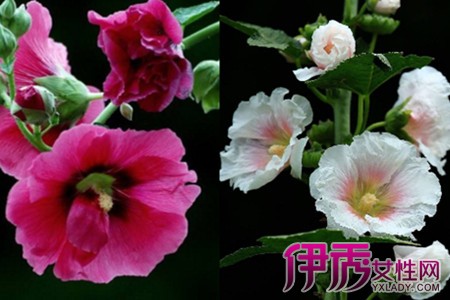
To sow hollyhocks, you first need to prepare seeds, flower pots and potting soil. The seeds are best taken from the current year's crop. If you are buying them, try not to choose online shopping, because old hollyhock seeds do not germinate easily and it is very hard to tell them apart with the naked eye. It is recommended that everyone buy hollyhock seeds from a proper flower seed market, so the chance of successful germination is higher.
Before planting, prepare the flower pots. The pots must have good breathability; try not to use plastic products, because plastic pots are not breathable and are not good for flower growth. For the soil you can use flower nutrient soil, or you can go to an outdoor flower bed and find soil containing fallen leaves and rotten roots. The seeds you buy vary in size; when planting, try to choose large, plump seeds.
After planting, be sure to water thoroughly, because this makes it easier for them to sprout and take root. After watering the hollyhocks for the first time, first place them in a sunny spot; only with sufficient light can they sprout as quickly as possible. After four or five days the young hollyhock shoots will push out. At this point do not water too much and do not let them be in direct sunlight; you can put them in a spot that gets morning and evening sun, and wait until the soil surface is dry before watering.
When the hollyhocks grow to three or four cm tall, you can divide them into separate pots. Put only one plant in each pot to ensure their nutrients are not spread thin. After dividing them, observe the growth rate of each pot of hollyhocks. After one month you can give the hollyhocks their first fertilizing. You can use flower nutrient solution sold on the market, or organic fertilizer; dilute it according to the dosage ratio in the instructions and pour it onto the roots. After that, fertilize the hollyhocks once a month.
Before hollyhocks bloom, they first grow stalks and then develop flower buds on the stems. During this period, try to protect the flower stalks well. You can use a slightly thicker small branch to reinforce them so they do not break and all the previous effort is wasted. When the flower stalks reach a certain height, the hollyhocks are about to bloom. After blooming, do not fertilize the hollyhocks anymore; letting them grow naturally can keep the flowering period longer.
How are hollyhocks planted?
[Common Questions] How are hollyhocks planted?
[Expert Answer]
Plant Introduction:
Hollyhock, commonly known as shujihua, is a perennial plant in the mallow family. It grows 1-2 m tall, likes sunlight, tolerates drought, and has strong adaptability. In the Beijing area it can overwinter outdoors; from June to August, hollyhock branches bear flowers in the leaf axils, and the flower colors are rich, including white, yellow, pink, red, purple and so on. Seeds are generally harvested in August-September. Sow directly in the open field, thin the seedlings twice, and keep a plant spacing of 30 cm. Water thoroughly with freezing water in winter, and in the coming spring new branches will sprout and bloom.
Cultivation Techniques:
For large-scale planting, seedbeds can be used for raising seedlings. Follow the usual method for sowing herbaceous flowers, cover with 0.5 cm of soil, and seedlings will emerge in 7-10 days. When the seedlings grow 2-3 leaves, divide and transplant them, with a plant and row spacing of 15 cm × 20 cm. In winter, cover the seedbed with a little firewood or leaves for cold protection, and in April of the following year they can be planted out. In early spring or late autumn, division propagation can be carried out: dig out the root clumps of perennial hollyhocks, cut them into several small sections with a sharp knife, each section with 2-3 buds, and then plant them at the growing site. Hollyhocks like sunlight and grow better when planted in fertile, loose soil, with large flowers and lush leaves. Before hollyhocks bloom in June, 1-2 applications of liquid fertilizer should be given. Watering should depend on the weather; generally it is enough to keep the soil moist.
To cultivate short, sturdy hollyhock plants, you can choose varieties with full flowers and large double petals, sow in early August, and when two leaves have grown, divide the seedlings and transplant them into a seedbed with sufficient base fertilizer. At the first transplanting, remove the tip of the main root. Transplant once more in mid-September, being careful not to break the soil ball. In winter, lift the soil balls and heel them in a sunny seedbed for maintenance. In the coming spring, plant them into the seedbed. When the plants are just about to joint and grow vigorously, transplant once more. Before the stems extend and show buds, first use a straight spade to cut deeply 15 cm down from the soil surface at 10 cm on the north and south sides of the plant. After pulling out the straight spade, loosen the soil. One week later, cut down once more from the east and west sides. Hollyhocks treated this way have a short, sturdy plant shape, and at the same time the root clumps are dense, so they are less likely to wilt when potted and tolerate sun exposure.
[Editor's Comments] Hollyhock originated in Sichuan. Because its flower color is mostly red, it is also called yizhanghong. Its tender leaves and flowers can be eaten and can also be used as medicine. It is now cultivated in countries around the world, generally for ornamental use. The editor of First Agricultural Economics above introduced the planting method of hollyhock for you, and hopes it is helpful to you.
Hollyhock Althaea rosea Hollyhock illustrated guide: how to grow hollyhock / how to propagate hollyhock
Hollyhock ProfileHollyhock Althaea rosea
Hollyhock cultivation methods and precautions Hollyhock introduction
Hollyhock is a perennial herb. The stem is upright and tall. The leaves are alternate and heart-shaped. The flowers are in terminal racemes, single or double, in colors such as purple, pink, red and white. The flowering period is from June to August. The fruit is a capsule, and the seeds are flat and round, kidney-shaped. Flower language - gentleness. It likes full sunlight and tolerates partial shade, but dislikes waterlogging. It originated in Sichuan, China, and is now widely distributed in China, including East China, Central China and North China.
Morphological Characteristics of Hollyhock
Cold-resistant, sun-loving, tolerates partial shade, dislikes waterlogging. A perennial large herbaceous plant with persistent roots, the plant can reach 2 m to 3 m tall. The stem is upright and straight, clustered, unbranched, and the whole plant is covered with stellate hairs and bristles. The leaves are nearly round-heart-shaped or oblong, 6 cm to 18 cm long and 5 cm to 20 cm wide. The basal leaves are larger, the leaves are rough, and both sides are covered with stellate hairs. The petiole is 5 cm to 15 cm long. The flowers are solitary or nearly clustered in the leaf axils, sometimes arranged in racemes. The flower diameter is 6 cm to 12 cm. The flower colors are gorgeous, including pink, red, purple, dark purple, white, yellow, water red, cream yellow, bi-color and so on, single or double. The fruit is a capsule, the fruit is flat and round, and the seeds are kidney-shaped. Hollyhock likes light and does not tolerate shade; the underground part is cold-resistant and it is not choosy about soil, but loose, fertile soil is best. The flowering period is from May to September. The root system is well developed, the stem is upright and straight, the lower part is woody, and it can reach 3 m tall. The whole plant is hairy. The leaves are alternate, rough and wrinkled, round heart-shaped, with 3-7 shallow lobes and irregular blunt teeth on the edges, with long petioles, generally 6-25 cm long. There are 2-3 stipules, free. The flowers are solitary in the leaf axils. There are 6-9 bracteoles, broadly lanceolate, united at the base, attached outside the calyx tube. There are 5 sepals, ovate-lanceolate. The corolla diameter is 6-13 cm, in colors such as purple, purplish red, pink, light red, purple-black, yellow and white, as well as bi-color types with different-colored edges. There are 5 or more petals, obovate, with wavy and wrinkled or toothed edges, single, semi-double to double. There are many stamens; the anthers unite into a tube and surround the style, and the style is linear, protruding above the stamens. The capsule is flat and round, and the seeds are kidney-shaped, with the back edge standing up like a cockscomb and oblique lines on the sides. The 1000-seed weight is about 9.2 grams.
Ecological Habits of Hollyhock
Hollyhock likes sunlight and tolerates partial shade, but dislikes waterlogging. It has strong salt-alkali tolerance and can still grow in soil containing 0.6% salt. It is cold-resistant and can overwinter safely outdoors in North China. It grows well in loose, fertile, well-drained sandy soil rich in organic matter. This species originated in the southwest region of our country and is widely cultivated throughout the country for garden ornamental use. The whole plant is used as medicine, with the effects of clearing heat, stopping bleeding, reducing swelling and detoxifying, and treating conditions such as vomiting blood and uterine bleeding. The stem bark contains fiber and can be used as a substitute for hemp. It is cultivated in countries around the world for ornamental use.
Medicinal or Dietary Therapeutic Value of Hollyhock
The medical information and health dietary therapy information on Huahua Network is for reference only and cannot be used as a basis for diagnosis or medical treatment. Any health problem should be consulted with professional medical staff, and the treatment of any disease should follow a doctor's advice.
Ultimate flower-protecting mission: To love yourself, start from reality and strictly follow a doctor's advice. For illness, do not be careless, do not delay, do not give up hope, face it bravely, use love to warm the silent world, and use your heart to care for the flower field within.
Medicinal Parts:Flowers, roots and seeds
Medicinal Functions:Diuretic, laxative,
Medicinal Indications:Relieving stagnation and dispersing redness, cooling blood and stopping bleeding, promoting urination and bowel movement. Used for globus hystericus, difficulty in urination and defecation, dysentery, vomiting blood, uterine bleeding, leukorrhea, carbuncles, swelling and sores, and scald and burn injuries.Modern MedicineRoot (hollyhock root): sweet, cold. Clears heat and cools blood, promotes urination and discharges pus. Used for painful urinary dribbling, blood in urine, vomiting blood, uterine bleeding, leukorrheal diseases, and intestinal abscess; externally for sores and swellings and erysipelas. Stem and leaves (hollyhock seedling): sweet, slightly cold. Used for heat-toxin dysentery, strangury, metal wounds and fire wounds. Flower (hollyhock flower): sweet, cold. Activates blood and moistens dryness, frees both urination and defecation. Used for dysentery, vomiting blood, uterine bleeding, leukorrheal diseases, difficulty in urination and defecation, malaria, and pediatric rubella; externally for carbuncles, swellings and sores. Seed (hollyhock seed): sweet, cold. Promotes water movement and treats strangury, lubricates the intestines, and induces labor. Used for edema, strangury, and obstruction of both urination and defecation.Ethnic Medicine[Bai medicine] Bai Gai Bi He, Gai Bi Hou: flowers treat irregular menstruation and excessive leukorrhea; roots treat urinary tract infection and cervicitis, from Dian Yao Lu. Gai Bi Hou, Gai Bi Yu Hou: roots mainly treat urinary tract infection, cervicitis and leukorrhea; flowers mainly treat irregular menstruation; seeds mainly treat edema and nephritis; leaves mainly treat carbuncles, swellings and sores, from Min Zu Yao Zhi Yi. [Wa medicine] Dai Bi: roots treat uterine bleeding and restless fetus; flowers treat leukorrhea, irregular menstruation and corneal opacity; seeds treat constipation in the elderly, from Dian Yao Lu. Dai Bi: roots mainly treat boils and sores, from Min Zu Yao Zhi Yi. [Naxi medicine] Gu Zi Zan Ba: roots treat uterine bleeding and restless fetus; flowers treat leukorrhea, irregular menstruation and corneal opacity; seeds treat constipation in the elderly, from Dian Yao Lu. Gu Zi Zan Ba: roots mainly treat women's uterine bleeding and restless fetus; flowers mainly treat leukorrhea, irregular menstruation and corneal opacity; seeds mainly treat constipation in the elderly, from Min Zu Yao Zhi Yi. [Tibetan medicine] Jiang Ba: flowers are used for spermatorrhea; fruits are used for urinary retention, gonorrhea, edema, thirst, kidney heat and bladder heat, from Bu Zang Biao. Pao Jin: flowers treat excessive menstruation and unstoppable nosebleeds; fruits treat inability to urinate, diarrhea, thirst and other conditions, from Qing Zang Yao Jian. Ha Luo Mei Duo: flowers, seeds and roots mainly treat kidney failure, spermatorrhea and heat-type urinary retention, from Zhong Guo Zang Yao. Ha Luo Mei Duo: flowers treat spermatorrhea, excessive menstruation, nosebleeds, metritis and excessive leukorrhea; seeds treat difficult urination, diarrhea, nephritis and edema; roots tonify the kidney, strengthen the stomach, and treat kidney failure and loss of appetite, from Zang Ben Cao. Ha Luo Mei Duo, Dou Dan: flowers mainly treat spermatorrhea, metritis and leukorrhea, from Min Zu Yao Zhi Yi. [Mongolian medicine] Ha Lou Yi Qi Qi Ge: seeds are used for urinary stones, urinary retention, gonorrhea, diarrhea, wasting-thirst and sores, from Meng Yao. E Ri Yi Zhan Ba: flowers are used for kidney heat, bladder heat, edema, spermatorrhea and red and white leukorrhea, from Meng Zhi Yao Zhi. Ha Luo Qi Qi Ge, E Ri Zhan Ba: flowers treat urinary retention, kidney heat, spermatorrhea, cystitis and red and white leukorrhea, from Min Zu Yao Zhi Yi. Zhan Ba: fruits treat edema, kidney heat, bladder heat, painful urination, urinary retention, wasting-thirst and pustules [209]. [Dong medicine] Nugs laemp yav: roots, stems, flowers and leaves mainly treat Geng Lai (waist pain and edema) and He Leng (edema disease), from Dong Yi Xue. [Tujia medicine] Yi Pian Hong (yi pian gong): flower buds treat irregular menstruation, amenorrhea and Yue Ting Lao, from Tu Jia Yao. Chinese species name: Hollyhock flower
[Drug Name]: Hollyhock flower
[Pinyin]: SHUKUIHUA [Source]: The flowers of the mallow family plant hollyhock. [Effects]: Harmonizes blood and moistens dryness, frees both urination and defecation. [Main Indications]: Treats dysentery, vomiting blood, uterine bleeding, leukorrhea, obstruction of both urination and defecation, malaria and pediatric rubella. [Nature, Flavor and Meridians]: Sweet, cold. 1. Bie Lu: "Salty in flavor, non-toxic." 2. Qian Jin Shi Zhi: "Sweet in flavor, slightly cold and slippery, non-toxic." The lung, large intestine and bladder meridians. [Usage and Dosage]: Oral use: decocted in soup, 1-2 qian; or ground into powder. External use: ground into powder and applied mixed. [Contraindications]: Si Chuan Zhong Yao Zhi: "Contraindicated for pregnant women." [Aliases]: Ce Jin Zhan (Er Ya Yi), Qi Ying Hua (Fen Lei Cao Yao Xing), Shu Qi Hua (Ben Cao Tui Chen), Shui Wu Rong (Hu Nan Yao Wu Zhi), Zai Yang Hua (Gui Zhou Cao Yao), Ca Jing Hua, Zan Zhang Hua (Shan Xi Zhong Cao Yao). [Harvesting and Storage]: Harvested in summer and autumn, sun-dried. [Latin Name]: Althaea rosea (L.) Cav.
Textual Research: From Qian Jin Shi Zhi. 1. Guo Pu's annotation in Er Ya: "Hollyhock resembles mallow, and its flowers are like hibiscus flowers." 2. Ben Cao Tu Jing: "The small-flowered hollyhock is called jinkui, and its effects are even stronger." 3. Gang Mu: "Hollyhock is planted in every household. It is sown in early spring, and the perennial root also grows by itself in winter. When the seedlings are tender they can also be eaten as a vegetable. The leaves resemble mallow leaves but are larger, and also resemble loofah leaves, with forked lobes. After Xiaoman the stems grow five or six chi tall, and the flowers resemble hibiscus but are larger, with differences of deep red, light red, purple-black and white, single-leaved and double-leaved. People of old described it as having sparse stems and dense leaves, emerald calyxes and brilliant flowers, and golden-powdered pomegranate hearts, which is quite a good description. Only the red and white colors are used as medicine. The fruit is as large as a fingertip, with thin and flat skin, and the inner kernel resembles Aristolochia kernel and Wuyi kernel; it is light and hollow and easy to plant. Traditional Chinese medicine chemical componentsThe petals contain a yellow pigment with a melting point of 261 degrees C (decomposition), possibly a substance of the dibenzoyl carbinol type related in structure to kaempferol. From the white-flowered ones, two glycosides possibly of dihydrokaempferol (C15H12O6) were once isolated: one is a colorless crystal with a decomposition point of 235 degrees C; the other is a pale yellow crystal with a decomposition point of 261 degrees C; the aglycone of the former has a decomposition point of 232 degrees C, and the sugar is glucose. From the deep yellow ones, a glucoside named herbacin was once isolated; upon hydrolysis it yields glucose and herbacetin. The red pigment of the flower is red in acid and brown in alkali, and can be used as a neutral indicator.
Hollyhock root Chinese species name: Hollyhock root [Drug Name]: Hollyhock root [Pinyin]: SHUKUIGEN [Source]: The plant hollyhock of the mallow family. [Effects]: Clears heat and cools blood, promotes urination and discharges pus. [Main Indications]: Treats gonorrhea, leukorrhea, blood in urine, vomiting blood, uterine bleeding, intestinal abscess and sores and swellings. [Nature, Flavor and Meridians]: 1. Ben Cao Shi Yi: "Sweet, cold, non-toxic." The heart, lung, large intestine and bladder meridians. [Usage and Dosage]: Oral use: decocted in soup, 1-2 liang; or made into pills and powders. External use: pounded and applied.
[Latin Name]: Althaea rosea (L.) Cav. [Textual Research]: From Ben Cao Gang Mu Shi Yi. [Traditional Chinese medicine chemical components]: The root contains a large amount of mucilage; the mucilage of one-year-old roots contains 7.78% pentose, 6.86% pentosans, 10.59% methyl pentosans, and 20.04% uronic acid. The root of the related plant marsh mallow Althaea officinalis L. contains about 30% mucilage. The root of the same-family plant Hibiscus manihot L. contains about 16% mucilage, mostly composed of araban, galactan and rhamnosan.
Hollyhock seedling Chinese species name: Hollyhock seedling
[Drug Name]: Hollyhock seedling [Pinyin]: SHUKUIMIAO [Source]: The stems and leaves of the mallow family plant hollyhock. [Effects]: Clears heat and stops dysentery, detoxifies and treats sores, promotes urination and treats strangury. [Main Indications]: Treats heat-toxin dysentery, gonorrhea and metal wounds. [Nature, Flavor and Meridians]: Qian Jin Shi Zhi: "Sweet in flavor, slightly cold and slippery, non-toxic." The lung, large intestine and bladder meridians. [Usage and Dosage]: Oral use: decocted in soup, 2-6 qian; cooked and eaten or pounded into juice. External use: pounded and applied or burned to preserve its nature, ground into powder and applied mixed. [Contraindications]: Yi Lin Zuan Yao: "Avoid eating after epidemic diseases." [Latin Name]: Althaea rosea (L.) Cav. [Textual Research]: From Ben Cao Gang Mu. Hollyhock seedChinese species name: Hollyhock seed [Drug Name]: Hollyhock seed
[Pinyin]: SHUKUIZI [Source]: The seeds of the mallow family plant hollyhock. [Effects]: Promotes water movement and treats strangury, lubricates the intestines. [Main Indications]: Treats edema, gonorrhea, constipation and scabies. [Nature, Flavor and Meridians]: Sweet, cold. 1. Ben Cao Shi Yi: "Cold, non-toxic." 2. Gang Mu: "Sweet, cold, non-toxic." [Usage and Dosage]: Oral use: decocted in soup, 1-3 qian; or made into powders. External use: ground into powder and applied. [Contraindications]: Contraindicated for those with deficiency-cold of the spleen and stomach and for pregnant women. [Latin Name]: Althaea rosea (L.) Cav. [Textual Research]: From Ben Cao Gang Mu Shi Yi; Ben Cao Shu: "(Hollyhock seed) its nature and flavor are beneficial for qi and blood that are dry and astringent, but it should not be used on bodies with deficiency and middle cold; clinicians should examine and handle it accordingly." [Traditional Chinese medicine chemical components]: The fruit contains fatty oil. The oil contains many unsaturated free acids, calculated as oleic acid, reaching 34.88%.
Effects and Functions of Hollyhock
Hollyhock flower is also called hemp stalk flower, shujihua and chessboard flower. The plant can reach 3 m, hence the name yizhanghong. Its flowers are large and the flowering period is long. The flowers are divided into single and double, and the colors include purple, red, white, yellow and so on. Hollyhock belongs to the mallow family and is a perennial large herbaceous flower. Once planted, it can bloom for years, and it is a good source for arranging flower borders in courtyards, roadsides and sites. It can form lush green hedges and flower walls and beautify the garden environment. The roots, stems, leaves, flowers and seeds of hollyhock are medicinal materials; they clear heat and detoxify, and when taken orally they treat constipation, neutralize pufferfish poison, promote urination and treat dysentery. Externally they treat sores, ulcers and burns. Its flowers are a food coloring agent. Hollyhock root contains sugars and alcohol-type substances. The flowers contain anthocyanins, red pigment, glucose and hollyhock glycoside. The seeds contain fatty oil, and the unsaturated free acids in the oil are 34.88%. The stems can be used as weaving fiber material (Qun Fang Pu states: "Take the bark as threads, it can be used to weave cloth and rope").
Ornamental Varieties of Hollyhock
It is a herbaceous flower. Hua Jing calls it "the flowers are in strange forms, opening like embroidered brocade that dazzles the eyes." In the Ming dynasty, Jiang Zhong's Mo Kui says: "Dense leaves protect the abundant blossoms, the flowers open when summer is already deep. Do not say the colors are different, it still faces the sun in its heart." Guo Moruo described it as "arrow-like stems shooting straight one by one, jade-like flowers following one after another." Large leaves, abundant flowers, brilliant colors and a long flowering period make it a relatively common flower cultivated in gardens. There are many horticultural varieties, including precious varieties such as qianye, wuxin, chongtai, jianrong and jugou, and many excellent varieties have also been bred abroad. It is suitable for planting beside buildings, beside rockeries, or as a dot planting in flower beds and lawns, planted in rows or clumps. Dwarf varieties can be grown as pot flowers and displayed in front of doors, but should not be kept indoors for long. They can also be cut as cut flowers for vases, flower baskets, bouquets and so on. The tender leaves and flowers can be eaten, the bark is a high-quality fiber, and the whole plant is used as medicine, with the effects of clearing heat and detoxifying, relieving cough and promoting urination. The anthocyanins extracted from the flowers can be used as a food coloring agent.
Cultivation Techniques of Hollyhock
1. Hollyhock propagation methods: Hollyhocks are usually propagated by sowing, and can also be propagated by division and cuttings. Division and cuttings are mostly used to propagate excellent varieties. Both spring sowing and autumn sowing are possible. Depending on the amount of hollyhock seeds, they can be sown in an open-field seedbed and then raised as seedlings for transplanting, or directly sown in the open field without further transplanting. In the south, autumn sowing is often used; usually it is suitable to sow in an open-field seedbed in September, and germination is neat. In the north, spring sowing is often the main method. Hollyhock seeds can be sown as soon as they mature; under normal conditions the seeds germinate in about 7 days. The germination capacity of hollyhock seeds can be maintained for 4 years, but sown seedlings show growth decline after 2-3 years. For direct sowing in the open field, if properly combined with transplanting on cloudy and rainy days, you can both thin the seedlings and plant flowers once for many years of benefit. Hollyhock division is carried out in autumn. At the right time, dig out the clustered roots of perennial hollyhocks and cut them into several small clumps with a sharp knife, so that each small clump has two or three buds, and then plant and set them separately. For spring division, slightly strengthen water management. Cuttings can be done from after flowering to winter. Take lateral branches sprouting from the base of old hollyhock stems as cuttings, about 8 cm long, and insert them in a sand bed or pot. After insertion, cover with plastic film to keep moisture, and place in shade until rooting. Around winter, an electric heating wire should be laid at the bottom of the bed to increase ground temperature, which can accelerate the production of new roots. 2. Hollyhock cultivation management: Hollyhocks like a cool climate, dislike heat and frost, like light, and tolerate slight shade; they are suitable for deep, fertile, well-drained soil. Hollyhock cultivation management is relatively simple. When the seedlings grow 2 to 3 true leaves, they should be transplanted once, increasing the plant and row spacing. After transplanting, water in a timely manner. Before flowering, combine cultivation and weeding with 1 to 2 topdressings; phosphorus and potassium fertilizers are best for topdressing. After one transplanting, sown seedlings can be set in the field in November. During the seedling growth period, apply 2-3 liquid fertilizers, mainly nitrogen fertilizer. At the same time, loosen the soil and weed frequently to help the plants grow robustly. After flower buds form in the leaf axils of hollyhock, apply 1 topdressing of phosphorus and potassium fertilizer. To prolong the flowering period, maintain sufficient water. After flowering, promptly cut off the aboveground part, and new shoots can still sprout. For pot cultivation, pot them in early spring and keep only a single stem for flowering. Because hollyhock seeds easily scatter after maturing, harvest them in time. After 3-4 years of planting, the plants easily age, so they should be renewed in time. In addition, hollyhocks easily hybridize; to maintain variety purity, different varieties should be kept at a certain distance. Hollyhocks are easily harmed by leaf rollers, aphids, red spiders and so on, and old plants and dry weather easily cause rust disease, so timely control should be carried out.
Growth Patterns of Hollyhock
Hollyhock is a perennial herbaceous plant, with an upright and straight stem and alternate, heart-shaped leaves. The flowers are in terminal racemes, single or double, and the flowering period is from June to August. The fruit is a capsule, and the seeds are flat and round. Flower language: gentle. It likes sufficient sunlight. When growing in pots, use sown seedlings in early spring and keep a single-stem flower. After flowering, cut off 15 cm from the root crown, and new plants can sprout again. Hollyhock plants age easily, and should be renewed after about 4 years of cultivation. Harvest the fruit immediately when it turns yellow and ripe, so that the seeds do not fall off. Fertilizing: during the seedling growth period, apply liquid fertilizer, and pay attention to weeding and loosening the soil to promote robust plant growth. After buds form in the leaf axils, apply phosphorus and potassium fertilizers. Watering: during the flowering period, water appropriately so that the flowering period is long and the flowers open well, all the way to the top of the branches. Pest and disease control: nearly round lesions with a diameter of 3-10 mm appear on the leaves, brown, slightly zonate, with darker edges, and small black spots. For control, spray 50% carbendazim 600-1000 times solution in the early stage of the disease. Polygonal or irregular lesions with a diameter of 2-6 mm appear on the leaves, brown, with dark brown edges, and small black spots on them. In the later stage the lesions often rupture and perforate. Attention should be paid to spraying for control. Round or polygonal lesions with a diameter of 1-5 mm appear on the leaves. Common aphids harming hollyhock include cotton aphid, green peach aphid and many others. They pierce and suck the sap of tender shoots and tender leaves, and must be controlled in time. Adults and larvae gather on the underside of leaves to suck sap, causing leaves to turn yellow and wither, and should be removed and killed. Diseased plant leaves turn yellow or die, and powdery spore masses appear on the underside of the leaves. In spring and summer, Bordeaux mixture should be sprayed on the plants for control, and seeds should be disinfected before sowing. Hollyhocks are usually propagated by sowing, and can also be divided or cut. In southern regions autumn sowing is best, and in northern regions spring sowing is best. Seeds can be sown as soon as they mature, germinating after about 1 week. When 2-3 true leaves have grown, transplant once, and they can bloom the next year. The germination capacity of seeds can be maintained for 4 years. The root system is well developed, the stem is straight and upright, woody, and can reach 3 m tall. The whole plant is hairy. The leaves are alternate, rough and wrinkled, with 3-7 shallow lobes and irregular blunt teeth on the edges, generally 6-25 cm long. There are 2-3 stipules, free. Sown seedlings decline after 2-3 years of growth, so they can be cultivated as biennials. In autumn, dig up the plants, divide the branches sprouting from the root crown together with roots, and plant them separately; this is division. For some special excellent double varieties, use the tillers occurring at the base in autumn as cuttings, cut them into 8 cm lengths, and insert them in pots; the potting soil is best as sandy loam. After insertion, place in shade until rooting. Depending on the amount of hollyhock seeds, they can be sown in an open-field seedbed and then raised as seedlings for transplanting, or directly sown in the open field without further transplanting. In the south, autumn sowing is often used; usually it is suitable to sow in an open-field seedbed in September, and germination is neat. In the north, spring sowing is often the main method. Hollyhock seeds can be sown as soon as they mature; under normal conditions the seeds germinate in about 7 days. The germination capacity of hollyhock seeds can be maintained for 4 years, but growth decline appears after 2-3 years. Hollyhock flowers are rich in color, and double varieties have a better ornamental effect. They are often planted in front of buildings in rows or clumps, and the effect as a flower border background is also very good. They can also be used for hedge-side greening and potted ornamental use.
Distribution Regions and Producing Areas of Hollyhock: Originated in China and widely distributed in China, in East China, Central China, North China and South China. It is the city flower of Shuozhou City, Shanxi Province, and local people call it "big flower". Because it originated in Sichuan, China, it is named "shukui" (hollyhock). And because it can reach about a zhang in height and its flowers are mostly red, it is also called "yizhanghong".Varieties:Mainly Althaea chinensis Wall., Althaea ficifolia Cav., Althaea rosea Cav.
Disease Control of Hollyhock
Perennial old hollyhock plants are prone to hollyhock rust disease. Infected plants have leaves that turn yellow or die, and brown, powdery spore masses can be seen on the underside of the leaves. Spraying Bordeaux mixture on the plants in spring or summer or disinfecting the seeds before sowing can achieve control effects. In the early stage of the disease, spray 15% triadimefon wettable powder 1000 times solution, or 70% thiophanate-methyl wettable powder 1000 to 1500 times solution, or 75% chlorothalonil wettable powder 600 times solution, etc., once every 7 to 10 days, for 2 to 3 consecutive sprays, all with good control effects. During the growth period there is damage by red spiders. When the occurrence is severe, use 1.8% abamectin emulsifiable concentrate 7000 to 9000 times solution for uniform spray control; or use 15% pyridaben emulsifiable concentrate 2500 to 3000 times solution, both with good control effects. Do not use dichlorvos to kill mites; dichlorvos has the effect of stimulating mite proliferation. Do not use pyrethroid pesticides; they are basically ineffective for mite control. Sometimes cotton leaf roller also harms hollyhock leaves. When it occurs, spray Bt wettable powder with a content of 16000 IU/mg at 500 to 700 times solution, or 25% diflubenzuron suspension concentrate at 1500 to 2000 times solution, or 20% miman suspension concentrate at 1500 to 2000 times solution, etc.White Spot DiseaseHollyhock white spot (hollyhock white spot), also called leaf blight, mainly harms the leaves of hollyhock. In the early stage of hollyhock white spot disease, small brown spots appear on the leaf surface of hollyhock. As the disease develops, the lesions gradually expand into round, oval or irregular shapes, with the center of the lesion grayish white and the outer edge reddish brown. In a humid environment, a grayish brown mold layer can appear on the lesions. Control methods: 1. Remove diseased leaves in time, pay attention to the density of branches and stems, and keep the plants ventilated and exposed to light. 2. Increase the application of phosphorus and potassium fertilizers, and apply little or no nitrogen fertilizer. 3. In the early stage of the disease, spray 75% chlorothalonil wettable granules 800 times solution or 50% carbendazim wettable granules 500 times solution or 70% thiophanate-methyl wettable granules 1200 times solution for control, once every 10 days, for 3-4 consecutive sprays to effectively control the disease.
Flower Language of Hollyhock
If you want to give flowers to your lover or girlfriend to praise her gentle personality and her being a good wife and loving mother, then you might consider giving red hollyhock, which represents the flower language of gentleness. Red hollyhock, that is, red hollyhock, is very beautiful, with bright colors that give a fresh feeling, and is very popular. Red hollyhock is especially suitable for planting in courtyards, roadsides and sites as a good environment for arranging flower borders. It can also form lush green hedges and flower walls and beautify the garden environment. It brings a gentle feeling to the owners of the green hedges and flower walls.
Hollyhock Pictures