What to Do When Rose Leaves Turn Yellow: A Few Tips to Handle It Easily
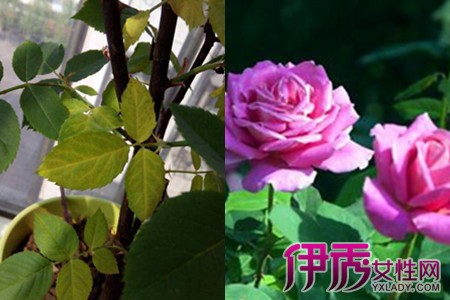
Yellowing leaves on roses are very likely caused by damage to the roots. Root damage is mainly caused by usually watering too much, with a large amount of water accumulating in the pot. At this point, you need to promptly place the flowerpot in an environment with good ventilation for growing, and reduce the amount of watering.
In addition, if the flowers have not been watered for too long, the leaves will also turn yellow, because the soil is too dry and lacks water and nutrients. At this point, hurry and give this plant some water. If it is severely short of water, water it thoroughly in one go, and after that just don't water it all the time.
Improper fertilizing can also cause the leaves of flowers to turn yellow. Before fertilizing, the fertilizer must be fully decomposed before use; otherwise it will damage the flower roots and cause the flower roots to rot. Nitrogen fertilizer in flower fertilizer can promote leaf growth, and phosphorus fertilizer can promote the plant to bloom faster. If the whole plant lacks nitrogen fertilizer, yellowing leaves and no growth will occur. At this point, you need to promptly apply some nitrogen fertilizer so the leaves can grow healthily. Before fertilizing, be sure to fully decompose the fertilizer first.
Roses are always placed in a spot with direct sunlight to grow, so if the weather is too hot, the light will be especially strong, and the leaves will easily turn yellow. When growing them, it is best to place them in direct sunlight at seven or eight in the morning, and again in direct sunlight at five or six in the evening; at noon, place them in a ventilated, shaded spot to grow.
If the potting soil is very hard and has become compacted, the roots of the plant cannot breathe normally. Over the long term in this kind of environment with poor air permeability, the plant will develop various problems such as yellow leaves and damaged roots. At this point, you need to promptly turn over the soil in the flowerpot, and you can also use chopsticks to poke some small ventilation holes in the soil.
Do These Management Tasks Well to Easily Handle March Garden Maintenance
In March, temperatures rise and rainfall increases. At this time, many garden plant pests and diseases are stirring into action, and weeds also begin to take root and sprout, so March is a busy month. Nursery stock growers need to do a good job of garden maintenance, so how exactly should it be done? The editor has put together an overview of March maintenance for reference!
Tree Transplanting
If deciduous trees are dug up and planted this month, corresponding protective measures should be taken. Digging and planting of evergreen trees should be done promptly. After planting, fixed-root water should be watered in time; together with the fixed-root water, quick-rooting agent can be used to promote rapid rooting and help survival. In areas where watering is inconvenient, holes can also be drilled in the trunk and tree nutrient quick-feed used to supplement water and nutrients.
For nursery stock planted in late autumn and early winter of last year, management and protection should be strengthened, adopting measures such as enlarging the tree basin, watering, settling, filling soil to plug leaks, and reinforcing and adjusting supports.
Pruning
On the basis of winter pruning, do a follow-up pruning, cutting off branches with severe new shoot growth as well as damaged branches caused by various reasons; do a good job of bud removal and pruning of trees, removing excess tender buds and improperly positioned branches at any time.
Watering (Green-up Water)
In March, in northern North China, the Northwest and Northeast regions, irrigate green-up water according to the local temperature recovery. In other regions, decide whether to water based on rainfall conditions.
Lawn Maintenance
At the beginning of the month, promptly clean up the thatch layer of the lawn to help raise soil temperature, and aerate older lawns by punching holes. After the Spring Equinox, overwintering cool-season lawns enter their spring growth stage, and topdressing can begin in late March to promote rapid growth after the lawn turns green. However, for warm-season lawns in East China, Central China and other regions, the overseeded ryegrass should be given controlled water and fertilizer measures in March to inhibit ryegrass growth, which is beneficial for the later green-up of the warm-season lawn.
Pest and Disease Control
(1) Controlling globular scale insects
If no control measures were taken in February when globular scale insects hatched and emerged from the soil, after Awakening of Insects they will move to the aboveground parts of garden plants to cause damage. Therefore, in mid-to-late March, during the peak period of their occurrence on trees, spray pesticide for control. Kuangsha Scale Insecticide can be used for control, and especially the trunk must be sprayed evenly and thoroughly.
(2) Controlling the overwintering generation of white peach scale
White peach scale mainly harms garden plants such as red-leaf peach, ornamental peach, cherry blossom, Chinese scholartree, peach trees and cherry trees, and occurs from Hainan to Liaoning. It overwinters as fertilized female insects. In March, as the weather warms and trees begin to bud, the overwintering females begin to lay eggs. Control promptly according to the occurrence situation in each area, and it can be controlled together with globular scale insects.
(3) Controlling the cypress two-striped longhorn beetle
In mid-February, adult two-striped longhorn beetles begin to bite flat-round holes in the bark and emerge. Mid-March to early April is the peak emergence period, adults begin laying eggs in early March, and late March is the peak egg-laying period. Therefore, at the end of March, to control the cypress two-striped longhorn beetle, contact insecticides with strong effects such as Ganchongjing can be used to spray or seal the trunk, preventing adults from laying eggs, or trap wood can be used to lure and kill adults, as part of comprehensive control measures.
(4) Controlling the overwintering box tree moth
The box tree moth mainly harms plants such as Korean boxwood, boxwood, large-leaf boxwood, small-leaf boxwood, as well as holly and euonymus, and overwinters as mature larvae. Around the Spring Equinox, after the tender boxwood leaves grow out, the overwintering larvae awaken and directly feed on large amounts of boxwood leaves, storing nutrients to prepare for pupation. Therefore, in East China, Central China and other places, when large occurrences of the overwintering generation of box tree moth are found in March, control them promptly to reduce the base number of the first generation. Pesticides such as Yechongjing and Kuangsha can be used for control. Older larvae of the box tree moth spin silk and tie leaves together to cause damage, so pesticide application must be even to achieve thorough control.
(5) Maintenance in South China
In March, the temperature and humidity in South China are suitable, and pests and diseases begin to occur in large numbers, so they should be controlled promptly. For example, powdery mildew and frangipani rust that harm garden plants such as crape myrtle, rose and orange jasmine will occur over large areas. Fenxiuzuo 1600-times liquid can be used for control, spraying once every 7 days, for 2--3 consecutive treatments. Pests are mainly piercing-sucking pests, such as aphids that harm many plants, autumn maple leafhoppers, and banyan thrips, which harm new shoots and new buds of plants. Pymetrozine can be diluted with water and sprayed for control, for 2-3 consecutive treatments; Jinpin Yiguan Shuwuchong can also be diluted 1500 times and used as a root drench, with control effectiveness lasting more than 4-6 months.
Weed Control
March is the season when willows are green and grass grows and orioles fly. Weeds in the lawn also begin to turn green and grow rapidly, mainly broadleaf weeds such as dandelion, annual fleabane, shepherd's purse, speedwell, cleavers, clustered mouse-ear chickweed, water starwort and hawkweed. In cool-season grass, Pingkuojing or Ekuojing can be used for control; warm-season lawns can be controlled with Ekuojing.
The above are the key points of March garden maintenance. Hope they are helpful to you. To learn more agricultural technology knowledge, please follow Huinong Classroom!
Huinong.com's 2018 Spring Seedling Procurement Festival high-quality supplier recruitment is in full swing. Click here to sign up!
The Practical Complete Guide to Home Flower Growing (Middle Volume)
31.What Are the Benefits of Foliar Feeding?
Foliar feeding, also called leaf surface fertilization, is a fertilizing method in which a diluted solution of chemical fertilizer or trace elements is sprayed on the leaf surface and absorbed and utilized by the plant through the leaf stomata. The main advantages of foliar feeding are: small dosage, notable and rapid fertilizer effect, it is not fixed by the soil, and it is not affected by the absorption function of the root system.
32.Why Can't Undecomposed Fertilizer Be Applied?
Some flower enthusiasts often bury rotten eggs, internal organs of chickens, ducks and fish, meat skins, raw horse manure, cake fertilizer and the like into the potting soil, thinking this can increase nutrients and make the flowers bloom profusely and grow lush leaves. The result is contrary to expectation, and instead harms the flowers. Why is this? Because the growth and development of flowers rely on absorbing various nutrient elements such as nitrogen, phosphorus, potassium, magnesium and iron dissolved in water in the soil after fermentation. The above spoiled foods, if buried directly into the pot without fermentation, will ferment upon contact with water after application and generate high temperatures, which will directly scorch the flower roots. In addition, microbial activity causes soil oxygen deficiency, leading to the death of the flowers. At the same time, undecomposed fertilizer produces a foul odor during fermentation, attracting flies to lay eggs, and maggots can also bite and damage the root system, harming flower growth; the odor can also pollute the environment. Therefore, when growing flowers, one must pay attention to applying fully decomposed fertilizer to ensure good flower growth.
33.What Harm Does Applying Concentrated Fertilizer Do?
Applying liquid fertilizer at too high a concentration often causes the branches and leaves of flowers to wither and yellow, or even the whole plant to die. Why is this? Because under normal conditions, the concentration of the cell sap in plant root hairs is greater than the concentration of the soil solution, so the osmotic pressures of the two differ. At this time, the soil solution can continuously permeate into the root hair cells, and the root hairs can absorb water and nutrients from the soil to supply the growth and development of the flowers. If the concentration of the applied liquid fertilizer is too high (its concentration greater than the cell sap concentration), a reverse phenomenon occurs, that is, the cell sap instead permeates into the soil solution, causing the root cells to lose water and causing plasmolysis, and in severe cases causing the plant to wither and die. The principle is similar to pickling vegetables at home: put salt and vegetables into a water vat, and before long the brine becomes dilute and the vegetables become wilted. This phenomenon mostly occurs when too much chemical fertilizer is applied; a similar phenomenon also occurs if decomposed liquid fertilizer is applied too concentrated. Therefore, the concentration of chemical fertilizer liquid applied to potted flowers must not be too high, generally around 0.1% is suitable. When applying decomposed liquid fertilizer, it also needs to be diluted 5-10 times to be appropriate.
The Practical Complete Guide to Home Flower Growing (Middle Volume)
34.Why Are Eggshells and Tea Residue Harmful to Flowers?
In daily life, some people like to place eggshells upside down in flowerpots or use leftover tea to water flowers, thinking this benefits flower growth, but in fact it often does the opposite. Because when eggshells are placed upside down on the flowerpot, the residual egg white inside the shell flows into the surface layer of the potting soil, and after fermentation generates heat, directly burning the plant roots. At the same time, after the egg white ferments it produces a foul odor, attracting flies to lay eggs, and the maggots bite and eat the roots, which in turn easily induces the occurrence of pests and diseases and affects flower growth. Tea contains theophylline, caffeine and other alkaloids, which have a relative destructive effect on organic nutrients in the soil. At the same time, residual tea covering the pot surface will, over time, gradually ferment and rot, hindering air permeability of the potting soil, causing oxygen deficiency in the pot, and affecting root respiration, which is unfavorable to flower growth. However, decomposed eggshells, using the supernatant liquid as a topdressing, or baking the eggshells dry and crushing them and applying them into the potting soil, are beneficial to flower growth and development. Decomposed tea residue used as base fertilizer is also beneficial for soil improvement. The flower proverb "seven parts depend on management, three parts depend on pruning" is an important piece of experience in growing flowers. Through pruning, not only can the branches of flowers be evenly distributed, nutrients saved, plant vigor regulated, and excessive growth controlled, thereby making the flower plant shape neat and the posture graceful, but more importantly it is beneficial for more blooming. The flowers of most flowers bloom on new branches. Only by continuously pruning old branches can new branches be promoted, resulting in more blooms and more fruit.35.What Effect Does Air Humidity Have on the Growth of Foliage Plants?
The water needed by foliage plants is easily solved during watering; what is difficult is their special requirement for air humidity. Because most of them originate from tropical rainforests and require air humidity of at least about 60%. Therefore, air humidity is an important factor in keeping the plant's leaves green. In northern homes, the relative humidity is mostly below 60%; under general conditions, as long as it is not below 50%, most varieties can still grow normally. On the contrary, if the humidity is less than 40%, the leaves of the plant will develop scorched edges and become withered and yellow. At this time, water should be sprayed frequently, or a plastic cover added, or measures such as the deep-basin evaporation method used to increase air humidity. If foliage plants are in a dry environment for a long time, not only will the leaves lose their luster, but the growth vigor of the whole plant will also weaken, growing slowly or stagnating, until it withers and dies. Foliage plants bought from flower shops often grow poorly, mostly because they cannot adapt to the dry air in the home. Therefore, controlling humidity well is another key to the care and management of foliage plants.36.Why Should Air Humidity Be Increased When Growing Flowers on a Balcony?
All physiological activities of flowers require the participation of water to proceed. Without water, the metabolic functions of flowers will stop, leading to death. Flowers absorb water through two channels, namely from soil moisture and from air humidity. In hot seasons, high air humidity correspondingly lowers the temperature, which is beneficial to flower growth. Some flowers that like shade and moisture can only survive in relatively high air humidity. For example, orchids, Monstera deliciosa, ferns and begonias require relative humidity between 80%--85% in summer, and in winter it must not be lower than 65%--75%; evergreen ornamental flowers such as Chinese hibiscus, white orchid, lantana, jasmine, rubber tree and poinsettia require relative humidity not lower than 70% in summer and not lower than 60% in winter; even drought-loving cacti or succulent plants must have relative humidity above 60% in the peak summer growth period to grow well. Balconies are high up in buildings, and in hot seasons the light is strong, causing the balcony floor, railings, walls and other places to absorb more heat and release it slowly, so the balcony temperature is high and air humidity is reduced; normally, because buildings are high and winds are strong, air humidity is also not high. If balcony air humidity remains low for a long time, flower plants appear dull and lusterless, lacking vitality, and even new buds dry at the tips and leaves have scorched edges and scorched spots, seriously affecting the growth, development, blooming and fruiting of flowers. Therefore, growing flowers on a balcony requires increasing air humidity.The Practical Complete Guide to Home Flower Growing (Middle Volume)
37.What Soils Are Commonly Used for Growing Potted Flowers?
Various flowers and their different growth and development stages have different soil requirements. The potting soil materials commonly used are roughly the following: Plain sandy soil. This is a fine sandy soil with a pure texture and little clay content, and it drains smoothly. This soil is often used as sowing soil for general flowers, or as soil for cuttings of stems and buds of herbaceous flowers and softwood cuttings of woody flowers, and is also a main material for preparing culture soil. Peat soil, also called turf soil, is collected from peat bogs. It is formed under waterlogged anaerobic conditions after organic matter continuously accumulates. Its organic matter content varies, with some as high as 80%--90% or more. It contains large amounts of fiber and humic acid. It is soft in texture, has strong fertilizer adsorption and water retention capacity, and good water and air permeability. Peat soil is acidic or neutral, contains organic matter, and is suitable as soil for cuttings of slow-rooting evergreen flowering trees, or mixed half-and-half with plain sandy soil as sowing and cutting soil for general flowers. It can also be used to prepare culture soil. Garden soil: the matured loam of garden surface layers can be used as flowerbed soil or to prepare culture soil. Furnace ash soil: furnace ash soil has strong drainage and air permeability and can be used to prepare culture soil. Sifted furnace ash residue can be placed at the bottom of the pot as a drainage layer. Mountain forest humus soil: formed by natural accumulation and fermentation and decomposition of mountain forest dead branches and fallen leaves, moss and wind-blown sand. Humus soil, with slight preparation, becomes culture soil. River mud: sediment soil from fish ponds and lotus ponds, containing large amounts of organic matter. After being dug out in autumn or winter, dried and weathered through the winter, and mixed half-and-half with yellow clay, it can be used as cultivation soil for aquatic flowers such as lotus and water lilies. River mud, after being sun-dried and repeatedly turned and crushed, can be used to prepare culture soil after one year. Mountain soil: this soil is commonly known as orchid soil. It is natural humus soil produced in the mountainous areas of Zhejiang, formed by the rotting of fallen leaves accumulated over many years. It is light in texture, both air-permeable and draining, and also water- and fertilizer-retentive. It is a good potting soil, slightly acidic, suitable for cultivating acid-loving orchids, rhododendrons, camellias and the like, and can be used as cultivation soil for tree stump bonsai. Guangdong pond mud: fertile pond mud clumps from South China, the surface soil deposited at the bottom of fish ponds over many years. It is gray-black in color, contains decomposed remains and excrement of aquatic animals, is rich in organic matter, has sufficient nutrients, and drains well. Dig it up in winter when the pond is dry, sun-dry it, crush it, and sieve it for later use. Large particles can be placed at the bottom of the pot; because they are not easy to break apart, there is absolutely no risk of water stagnation. It is neutral or slightly acidic.
38.What Are Acidic Soil and Alkaline Soil?
Soil acidity and alkalinity is a term for measuring how much acid and alkali are contained in soil. pH value is the symbol indicating the degree of acidity and alkalinity. Its corresponding values with acidity and alkalinity are as follows: pH value 3-4 5 6 7 8 9 10-11 indicates strongly acidic acidic weakly acidic neutral weakly alkaline alkaline strongly alkaline. Soil with a pH value less than 7 is acidic soil, and soil with a pH value greater than 7 is alkaline soil. Table of how various flowering trees adapt to soil acidity and alkalinity: Acid-tolerant flowering trees (pH4--5): rhododendron, cyclamen, gardenia, coleus, purple spiderwort, ferns, orchid family plants, etc. Suitable for weakly acidic flowering trees (pH5--6): cyclamen, begonia, amaryllis, primrose, camellia, jasmine, orchid tree, five-needle pine, lily, gladiolus, palm family, white orchid, gloxinia, etc. Suitable for neutral to slightly acidic flowering trees (pH6--7): chrysanthemum, asparagus fern, rose, narcissus, hyacinth, osmanthus, four-season primrose, asparagus, poinsettia, fuchsia, taro, clivia, purple magnolia, Chaenomeles speciosa, etc. Suitable for neutral to slightly alkaline flowering trees (pH7-8): rose, dianthus, geranium, cactus family, winter jasmine, boxwood, nandina, sweet pea, flowering almond, Chinese juniper, etc.
39.How to Determine the Acidity and Alkalinity of Potting Soil with a Simple Method
The simplest way to determine pH value is to buy some pH test paper, litmus paper and a standard color comparison card from a chemical reagent store for testing. When testing, take a small spoonful of potting soil and place it in the bottom of a clean bowl. Add a small amount of distilled water until it just covers the test soil, and do not add too much. Then stir evenly and let it settle; this is the soil extract. Use a bamboo stick to dip a little soil extract onto a small piece of test paper. If it turns red it is acidic, if it turns yellow it is alkaline. Compare the color shown by the test paper with the standard color comparison card, find the color card number closest to that color, and that is the pH value of the potting soil being tested.
The Practical Complete Guide to Home Flower Growing (Middle Volume)
40.What Role Do the Three Major Fertilizer Elements Play in Potted Flowers?
Among the various mineral elements required for plant growth and development, the ones needed in the largest amounts and most important are nitrogen, phosphorus and potassium. Therefore, nitrogen, phosphorus and potassium are called the three major fertilizer elements. Their roles are:Nitrogen fertilizer is also called leaf fertilizer.
It can make plants grow rapidly, with lush branches and leaves and dark green leaf color. During the seedling stage and for foliage flowers, nitrogen fertilizer should be applied as the main fertilizer. In the early stage of plant growth, that is, the vegetative growth period, nitrogen must not be lacking. It is generally applied mostly from spring to early summer. If nitrogen fertilizer continues to be applied when plant growth and development have stopped (after summer), it will cause excessive growth of stems and leaves, making it difficult for the plant to finally mature and seriously affecting blooming and fruiting. Moreover, the stems and leaves will be weak and susceptible to pests and diseases. Therefore, before the plant enters the reproductive growth period (flower bud differentiation period), nitrogen fertilizer should be stopped. Human excrement and urine, bean cake, ammonium sulfate and urea are all nitrogen fertilizers.
Phosphorus fertilizer is also called fruit fertilizer.
It can promote flower bud differentiation and flower bud formation, make flowers brightly colored and fragrant, and make fruit large and good in quality. It can also promote robust plant growth. It is most effective when applied in the later stage of plant growth and development (reproductive growth period). Therefore, before flowering and after fruit set, more phosphorus fertilizer can be applied. Plants have the ability to store phosphorus fertilizer within their bodies and can regulate its use according to growth needs, so it can be applied sufficiently at one time in the base fertilizer. Plants have a certain limit to their ability to absorb phosphorus fertilizer. Calcium phosphate, monopotassium phosphate and phosphate rock powder are all phosphorus fertilizers.
Potassium fertilizer is also called root fertilizer.
It can make stems and root systems grow strong, making them less prone to lodging and enhancing resistance to pests, diseases and cold. It is indispensable in the early stage of plant development. During the seedling stage, shoot emergence stage and after transplanting nursery stock, more potassium fertilizer can be applied. In the later stage of plant development, potassium fertilizer helps complete photosynthesis and plays an important role in the production of carbohydrates, especially for bulb flowers that can store large amounts of carbohydrates, where its effect is even more notable. Therefore, throughout the entire plant growth process, potassium fertilizer is indispensable. For potted flowers kept indoors for a long time, because insufficient light weakens photosynthesis, potassium fertilizer can be applied in large amounts. Potassium fertilizer also will not cause fertilizer damage from excessive application. Plant ash, potassium chloride and potassium sulfate are all potassium fertilizers.
41.What Adverse Phenomena in Plant Growth Occur When Potting Soil Lacks Fertilizer?
When potting soil lacks fertilizer, the plant is short and thin, with few branches and abnormal leaves, appearing as if it were growing robustly. Because different fertilizer elements are lacking, the adverse growth phenomena are also different: when potting soil lacks nitrogen, the leaves are small and pale yellow in color, with lower leaves turning yellow first, then gradually spreading until the whole plant loses its green color, and the lower leaves are more yellow and pale than the upper leaves; when potting soil lacks phosphorus, the leaves curl, the leaf color is dark green, the lower leaves become yellow between the veins and show a bronze color, the number of flowers is small, the root system is underdeveloped, and young buds sprout slowly; when potting soil lacks potassium, the lower leaves show brown edges, and from the leaf tips downward the leaf edges and centers of the lower leaves lose green and turn white, with various colored spots appearing between the veins; when potting soil lacks iron, both sides of the veins and within the leaf margins as well as the leaf tips show scorched brown spots and dry up, sometimes expanding to form large areas of drying, with only the larger veins remaining green.The Practical Complete Guide to Home Flower Growing (Middle Volume)
42There Are Three Methods of Fertilizing Potted Flowers:
(1) Applying base fertilizerApplying base fertilizer to potted flowers is very important. If the base fertilizer is sufficient, less topdressing can be applied, and chemical fertilizer alone can even be used as topdressing, because repotting will be done after 1--2 years, so it will not affect the quality of the potting soil.
Organic fertilizer made from fully fermented decomposed dried human excrement, barnyard manure, crushed bones, fish, poultry offal, rotten vegetables and other household waste is suitable as base fertilizer for potted flowers. The method of use is to mix one to three tenths into the culture soil, keep it moist, turn it frequently, so that the fertilizer and soil fully blend, and use it after one winter or 2--3 months in a high-temperature season. According to different ingredients, it can be used separately for different flowers when potting, repotting or changing pots. For hooves and horns and poultry feathers used as base fertilizer, they can be placed directly at the bottom of the pot when potting flowers. Oil meal fertilizers such as sesame residue and bean cake and bone meal used as base fertilizer are used in the same way as manure fertilizer, mixed into culture soil at 3%--5%.
For flowering trees that are not repotted that year, when the flowering tree is dormant, a ring-shaped trench can also be opened along the edge of the pot, or short trenches symmetrically opened, and some of the above fermented organic fertilizer applied, then covered with new culture soil, which can also replace applying base fertilizer.
Inorganic fertilizer (chemical fertilizer), for example phosphorus fertilizer can use superphosphate and phosphate rock powder at 0.5%, nitrogen fertilizer can use ammonium sulfate at 0.2% and urea at 0.1%, potassium fertilizer can use potassium sulfate and potassium chloride at 0.1%, mixed into culture soil two weeks earlier as base fertilizer.
(2) Applying topdressing
During the growing season of flowering trees, applying dilute liquid fertilizer to supplement the base fertilizer is called topdressing. Fermented urine, bean cake water, fish intestine water, rice washing water and other liquids, 1 part liquid mixed with 10--20 times water, or urea or monopotassium phosphate made into a 0.1%--0.2% aqueous solution, applied 1-2 times a week, and once every half month after the Start of Autumn.
When applying topdressing, master the following: apply more nitrogen and potassium fertilizer during the vegetative growth period, and more phosphorus fertilizer during the flower bud formation period; loosen the soil the day before fertilizing, and water the next morning after fertilizing; apply after the beginning of spring, do not apply after the Autumn Equinox; apply when buds appear, do not apply when buds split; apply before rain and on sunny days, do not apply after rain; apply in dry climate, do not apply in the moldy rainy season; apply when the potting soil is dry, do not apply when the potting soil is wet; apply more when the climate is suitable and growth is vigorous, do not apply when the climate is hot and growth stagnates; also do not apply when newly planted, excessively growing, or dormant; apply thin fertilizer frequently, do not apply concentrated fertilizer; for fertilizer-loving chrysanthemums and jasmine, apply more from light to concentrated; for barren-tolerant five-needle pine and other conifer and cypress types, it is better to apply less, preferring light over concentrated; apply before and after flowering, do not apply during full bloom; apply in the morning and evening, do not apply at noon; apply more to strong seedlings, apply less to weak seedlings; do not let them go too hungry, do not let them be too full; do not apply if not decomposed and not diluted.
(3) Foliar topdressing
Spraying a chemical fertilizer solution on the upper and lower leaf surfaces to supplement root fertilization is called foliar topdressing. Because the fertilizer content increases, the plant grows robustly, with many branches and green leaves, abundant and colorful flowers, and enhanced disease resistance, but it cannot replace soil fertilization. Only inorganic fertilizers easily soluble in water such as urea, ammonium sulfate, potassium chloride, superphosphate and monopotassium phosphate can be used, in weather with low temperature and high humidity, in the morning and evening. In high temperatures it dries easily and cannot be absorbed. A concentration of 0.1%--0.2% is unsuitable; too dilute gives low fertilizer effect, too concentrated is difficult to absorb.
43.What Issues Should Be Noted When Fertilizing Potted Flowers?
A flower proverb says: "Whether it lives or not depends on water, whether it grows or not depends on fertilizer." Reasonable fertilization is one of the key issues in the care of potted flowers. With proper fertilization, the seedlings are strong and the leaves lush, the flowers colorful and the fruit large; with improper fertilization, the branches and leaves shrink, the plant becomes listless, and it may even die. Home potted flower fertilization should note the following points:(1) Fertilize according to different flowering trees and different growth periods. A flower proverb says: "Clear orchid, turbid jasmine." This means orchids like light fertilizer and jasmine likes concentrated fertilizer. Most flowering trees prefer light fertilizer, and few like concentrated fertilizer. Although jasmine likes concentrated fertilizer, it is only during the dog days, and only with the cooperation of full sun and plenty of water, that it can take heavy fertilizer. If concentrated fertilizer is applied as soon as it comes out of the house, that would be terrible. Although chrysanthemums like heavy fertilizer, in the early growth stage too much nitrogen fertilizer causes excessive growth, making it difficult to form flower buds; only during the process of flower bud formation can the amount and concentration of fertilization be gradually increased. For acid-loving flowering trees such as gardenia, rhododendron, camellia and jasmine, alkaline fertilizers such as ammonia water and sodium nitrate must not be applied. Bulb flowers and flowering trees that need heavy pruning every year should be given more phosphorus and potassium fertilizer. Half a month before frost, overwintering fertilizer should be applied to improve cold resistance; before sprouting in early spring, sprouting-promoting fertilizer should be applied to make buds plump and sprout quickly; when spring shoots are about to mature, flower-promoting fertilizer should be applied to promote flower bud differentiation and plump buds; after flowering, apply dilute nutrient fertilizer to restore tree vigor for blooming or fruiting again. During full bloom and the early fruit-setting stage, fertilizer and water should be controlled, otherwise flowers and fruit are prone to drop. During the seedling stage, growth is rapid, so apply more nitrogen and potassium fertilizer. Before flowering and when buds appear, apply more phosphorus fertilizer.
(2) Loosen the soil before fertilizing, so that fertilizer water penetrates quickly and is easily absorbed. Also note not to let fertilizer water fall on the leaves and buds, which would affect growth. Acidic fertilizers such as human excrement and urine, superphosphate and ammonium carbonate must not be mixed with alkaline fertilizers such as plant ash and ammonia water for application, otherwise they will neutralize and lose their fertilizer effect. Alkaline potting soil should use acidic fertilizer, and acidic potting soil should use alkaline fertilizer. Fertilizing must never be single; applying nitrogen fertilizer together with phosphorus and potassium can improve fertilizer effect; applying inorganic fertilizer together with organic fertilizer can prolong fertilizer effect and also prevent potting soil compaction, and can improve the potting soil's properties of aeration, water seepage, water retention and fertilizer retention.
(3) When fertilizing on a balcony, pay attention to environmental hygiene, and at the same time be careful not to dirty the clothes hung to dry on the balcony below, which would affect neighborly relations.
The Practical Complete Guide to Home Flower Growing (Middle Volume)44.How to Pot Flower Seedlings?
Potting refers to when flowers first begin to be cultivated in pots, also called placing in pots. Large seedlings of woody flowers are generally potted from early December to the end of March, when the flowering tree is dormant or just sprouting; otherwise it will affect normal growth and development and weaken tree vigor, and then it will take a longer time to recover. For those propagated in concentrated cuttings, after rooting and leafing out, they should be divided and potted promptly. Newly sown seedlings should preferably be potted when they have become mature plants. For most perennial flowers, potting should be done when the young buds just begin to sprout.
When potting bare-root seedlings (seedling roots without soil), for delicate seedlings or those with large root damage, it is best to first plant them in plain sandy soil for a period, paying attention to wind protection in spring and shading when necessary in summer, and after the root system is sturdy, then repot and plant with culture soil. For strong bare-root seedlings or those with soil on the roots, as well as perennial flowers, potting can be done with culture soil according to the seedling's growth vigor and habits, and some base fertilizer appropriately added.
Before potting, choose an appropriate flowerpot according to the size of the seedling and its speed of growth, and be careful not to put a small seedling into a large pot. New pots should first be soaked thoroughly with water; old pots often have water stains and debris, and should be scrubbed clean. Cover the pot hole with a tile piece or block it with weeds. For flowers afraid of waterlogging, according to the size of the flowerpot, place 1--4 cm thick of residue sifted from culture soil or somewhat coarse sand and stone at the bottom of the pot as a drainage layer. Ceramic and porcelain flowerpots need broken tile pieces for the drainage layer, and it should be thicker than in clay pots. On top of the drainage layer, spread a layer of bottom soil, with thickness determined by the depth of the pot and the size of the plant. Generally when potting, fill soil to the plant's original planting depth. Those with sturdy stems and fibrous roots can be planted deeply; those with fleshy stems and roots must not be too deep. The upper part of the pot should leave a water opening, and the depth of the water opening should be such that a normal full watering can penetrate to the bottom of the pot.
For potting bare-root seedlings, pile the bottom soil into a small mound in the center of the pot. With one hand place the seedling upright and straight, spread the fibrous roots evenly, and with the other hand add soil, lifting the seedling gently as you fill, so that the fibrous roots extend downward at a 45°C angle. For flowers with longer fibrous roots, when potting, the seedling can be rotated so that the long roots coil evenly in the pot. After any flower is potted, the soil must be firmed, and the potting soil must not be empty below and solid above or have cavities. Using the method of pressing with the hand to firm it easily damages the roots. The soil used for potting should be moist, that is, it forms a clump when squeezed and breaks apart when rubbed. After potting, it is best to place it in a wind-sheltered, shady and moist place and not water it for the time being; if the weather is dry, water can be sprayed at any time to keep the seedling alive. Generally after 4--48 hours, water thoroughly again. This can not only prevent the fibrous roots from rotting and shrinking, but also promote rapid growth and recovery of new roots. After placing it in a shady place for about 7 days, then according to the habits of the flower seedling, move it to a sunny place or under a shade shed and switch to normal care.
In conjunction with potting, the plant should be pruned, cutting off overly long fibrous roots, diseased and dead branches, overly dense branches and leaves. For overly weak plants and flowering trees that bloom on current-year branches, they can be cut back 10 cm from the stem base to promote the growth and development of sturdy branches.
45Why Do Potted Flowers Need Repotting? How to Repot and Change Pots?
After 1--3 years of cultivation, the root mass of potted flowering trees fills the flowerpot, the potting soil nutrients are exhausted, and because of long-term watering, the potting soil becomes alkalized, the soil compacted, with poor air permeability and no water retention. Even if topdressing is applied regularly, the flowering tree will not grow well. At the same time, as the flowering tree grows larger, the original flowerpot no longer suits its growth and development, so it needs repotting and changing pots.Repotting and changing pots are regular tasks in growing flowers. If potted flowers are not repotted or changed for many years, they will not grow well. Through repotting and changing pots, the flowerpot size can match the seedling, and nutritional conditions can be improved.
Repotting generally means moving flower seedlings that have grown for a period after potting into a pot one size larger, or moving flower seedlings originally potted bare-root in plain sandy soil into culture soil for planting. When repotting, the original soil ball is not disturbed, so there is no damage to the roots or aboveground parts. Therefore, the time for repotting is generally not restricted by season.
When repotting, the original potting soil must not be too wet or too dry. When removing the plant from the pot, use the index finger and middle finger of one hand to clamp the base of the plant, with the palm pressed close to the soil surface; with the other hand support the bottom of the pot and turn it over, and gently tap the pot edge with the palm, and the whole ball can be removed. Then immediately scrape away the drainage layer at the bottom of the soil ball, lightly loosen the outer fibrous roots, and plant it in a larger pot.
Changing pots refers to potted flowers that have already been cultivated into shape, carried out before spring sprouting in combination with operations such as shaping and pruning, in order to maintain a graceful plant shape and long-lasting vigorous growth. Changing pots is generally done before spring germination. For wintersweet, camellia, plum blossom and winter jasmine that bloom in early spring, pots can be changed after flowering. For potted flowers that grow fast and bloom much, such as jasmine, rose, Chinese hibiscus and pomegranate, pots should be changed every year; for slow-growing potted flowers such as camellia, rhododendron, citrus types and conifer and cypress types, pots can be changed once every 2--3 years. Do not water for a few days before changing pots, so that the potting soil separates from the pot wall. Cut away 1/3 of the old soil from the original soil ball, and prune away some coiled roots and old roots. For potted flowers that have already been shaped, the original plant can be changed into the original pot; generally a pot one size larger is used. After removing from the pot, cut away the netted fibrous roots and rotten roots, remove part of the original soil, and replace with culture soil. For some flowers, division can also be done in conjunction with changing pots.
The Practical Complete Guide to Home Flower Growing (Middle Volume)46What to Do When the Plant Root System Has Grown All Through the Pot?
At what state of growth should potted foliage plants be repotted? Observe whether the surface soil in the pot has bulged up, or whether roots have emerged from the bottom hole of the pot. This indicates that the root system in the pot has grown full, and at this time the pot should be turned and the soil changed promptly; otherwise the plant will weaken due to malnutrition or poor aeration and other reasons.
First, remove the plant from the flowerpot, cut off old roots and rotten roots, and also shake off some of the old soil attached to the root system. Find a flowerpot one size larger, place a few small stones at the bottom of the pot, first add a small amount of new soil, put the plant into the pot, then gradually add new soil until it is filled and firmed.
If you only want to change the soil and do not change the size of the flowerpot, shake off 1/3 of the old soil from the root system, and also cut off 1/3 of the old leaves, so that the roots absorbing water and the leaves evaporating water can maintain balance.
47.Why Some Herbaceous Flowers Are Not Suitable for Transplanting?
Herbaceous flowers unsuitable for transplanting are those with a taproot system: the main root extends straight down and there are very few lateral roots. When transplanting, after the main root is cut off, lateral roots do not grow vigorously and the ability to absorb nutrients decreases, so transplanting mostly does not easily survive or growth and development are poor. Morning glory, corn poppy, California poppy and the like belong to this category. Such herbaceous flowers are best cultivated by direct sowing. If transplanting is needed, shortly after sowing and germination, move them into small pots for cultivation, and after the seedlings grow, remove from the pot and transplant, without damaging the main root.Some herbaceous flowers cannot tolerate transplanting, such as stock and wallflower, and cannot be transplanted multiple times or bare-root transplanted. When transplanting, take as large a soil ball as possible, and the ball must not break apart.
48.Why Some Flowers and Grasses Need Several Rounds of Seedling Transplanting?
Cultivated herbaceous flowers are usually raised in batches for beautifying the environment or arranging flowerbeds, requiring neatness and beauty. But it often happens that some herbaceous flowers planted into flowerbeds have a low survival rate or grow very thin and weak, failing to achieve the ideal beautifying effect. The main reason is that during the seedling-raising process, the transplanting and hardening-off measures are unfavorable. Some herbaceous flowers, such as garden balsam, China aster, zinnia and marigold, tend to grow tall and lodge. To cultivate short, sturdy, neat, drought-resistant and waterlogging-tolerant flower seedlings, several rounds of transplanting and hardening off are needed during cultivation. When the sown seedlings grow 2 true leaves, they should be promptly divided bare-root, with plant and row spacing of 10 cm. After planting, water, and after 2--3 days water again to help them recover, and then when the surface soil is no longer sticky, loosen the soil promptly to harden the seedlings. The hardening-off time depends on the weather, generally about 1 week. When the seedlings show wilting at noon, begin watering, and combine with fertilizing. After fertilizing, the seedlings visibly grow, then water once more. When the plant rows and leaves have already touched each other, transplant and divide the seedlings again. When transplanting, cut off the main root to promote proliferation of lateral roots, cut soil balls 8--10 cm in diameter, and after planting similarly water twice to help recovery. After that, every time you water, loosen the soil promptly, and combine watering with fertilizing. From sowing to final planting in the flowerbed, herbaceous flowers that have gone through 2--3 rounds of transplanting grow sturdy, do not wilt after planting, and are neat and uniform. Herbaceous flowers grown at home should also not be planted too densely. During the seedling growth stage there must also be a hardening-off process, and the soil should be loosened and fertilizer applied frequently so they can grow sturdy. Cuttings-propagated scarlet sage, chrysanthemum and the like must also be cultivated in the same way to produce ideal flower seedlings.The Practical Complete Guide to Home Flower Growing (Middle Volume)
49.What Tasks Does Flowering Tree Pruning Include?
Pruning is one of the important means of growing flowering trees well. If all flowering trees are allowed to grow naturally, they will lose their due ornamental value. Pruning can not only create a good plant shape, but also regulate the reasonable distribution and supply of nutrients within the plant, prevent excessive growth of branches and leaves, help flower bud differentiation and bud formation; and it can create good ventilation and light transmission conditions, reducing the occurrence of pests and diseases.
50.How to Prune and Shape Foliage Plants?
Some large foliage plants, such as rubber tree, bamboo palm, coconut palm, Monstera deliciosa and Schefflera, have relatively large plant bodies. If pruned diligently, plant growth can be promoted, making them strong and beautiful. Topping can make the plant's leaves dense and the plant shape well proportioned, preventing excessive growth; cutting off excess lateral buds can make the plant upright and straight.
Some smaller plants such as Pilea, Peperomia and aloe need pruning to appear beautiful and lush. Therefore, before new buds begin to grow, poor branches must be cut off to maintain a graceful shape.
In order not to let foliage plants grow excessively, a certain height should be determined, so the terminal buds of stems or branches should be cut off frequently to inhibit growth and make them dwarf or clustered. This is different from the general pruning principles for outdoor plants.
51.Does Growing Flowers Indoors for a Long Time Affect Health?
Some people worry that keeping plants indoors for a long time may affect human health, but this is actually unfounded anxiety. During the day, plants carry out photosynthesis, and the oxygen they release far exceeds what they themselves need for respiration. At night, although photosynthesis stops, their respiration is also extremely weak. Especially foliage plants, whose respiration is even weaker than that of flowering plants (flowering plants have the greatest respiration during the bud and flowering stages), require even less oxygen.
Someone once did such an experiment: through respiration, 1 molecule of oxygen can produce 1 molecule of carbon dioxide, while the amount of oxygen needed to light 2 matches is equivalent to the respiration of two or three potted indoor plants in one night. It can be seen that the carbon dioxide exhaled by ornamental plants is negligible. From this point of view, indoor plants have no effect on human health. On the contrary, many indoor ornamental plants are also beneficial to people. For example, begonia, asparagus fern and asparagus, besides being able to absorb carbon dioxide gas, can also secrete bactericidal substances and have the effect of preventing colds, typhoid, laryngitis and other diseases. In addition, plants can also reduce indoor dust, clean the air, increase negative oxygen ions, and let people live in a fresh and healthy environment.
The Practical Complete Guide to Home Flower Growing (Middle Volume)
52.Why Are Most Modern Indoor Ornamental Plants Mainly Foliage Plants?
People cannot be separated from nature. In today's world, in cities full of high-rise buildings, people cannot have courtyard green space, and can only use indoor plants to bring the freshness of nature into their homes. It is precisely foliage plants that hold an absolute advantage among indoor plants. In the bedroom, study or reception room, placing a few pots of ornamental plants not only adds color to the home, but also, after work or in the gaps between "writing," a glance at the verdant and graceful green "artworks" you cultivated yourself will make you feel fatigue vanish and your mind refreshed.
Foliage plants have leaves of different forms and brilliant variety, and can remain evergreen through the four seasons, so they can be enjoyed year-round without being restricted by season, with appreciation especially focused on the posture and color of their leaves. Second, foliage plants are relatively shade-tolerant and prefer warm, humid environments, and their requirements for light and nutrients are much lower than those of flowering and fruiting plants.
Some flowering plants also have the characteristics of foliage plants, for example: oleander, orchid, clivia, anthurium, bird of paradise, dwarf gloxinia and so on.
Foliage plants are mostly ideal materials for indoor greening and decoration. In China, foliage plants are still in a rising stage; although they have already occupied major hotels and restaurants, they have not yet become widespread in family homes. It is believed that in the near future, foliage plants will enter thousands of households.
53.What species of foliage plants are suitable for home cultivation??
Some plants stand out not for their flowers but for their leaves. Their greatest characteristic is that they are not limited by the blooming and fading of flowers and can be enjoyed at any time throughout the year. Among them are those valued for their form, such as Monstera deliciosa, Japanese aralia (Fatsia japonica), bamboo palm (Rhapis excelsa), asparagus fern (Asparagus setaceus), and sword fern (Nephrolepis cordifolia). There are also those valued for their color, such as redwood, red maple, red-back eurya (Excoecaria cochinchinensis), and purple spiderwort (Tradescantia pallida). There are also those with both beautiful form and color, such as coleus (Coleus scutellarioides), purple velvet plant (Gynura aurantiaca), and dieffenbachia (Dieffenbachia picta). There are also those that are enjoyed both for flowers and leaves, such as clivia (Clivia miniata), pearl orchid (Chloranthus spicatus), and the four-season epiphyllum. Placing a few pots in a family home creates a unique touch of elegance and novelty. Below are several easy-to-grow species suitable for the home:
54.What flowers are suitable for hanging basket cultivation??
Hanging basket flowers are a decoration for balconies and interiors. They can make full use of space and are most suitable for environments with small balconies and living areas. When flower pots are hung indoors, on the outer side of balconies, or at windows, the branches and leaves sway with the wind, creating a unique charm. Hanging basket installations must be secure. The height of the hanging basket should be based on the principle of not hindering daily life. As for the hanging cords, besides nylon ropes, chains used for hanging light fixtures are even more attractive. For the care of hanging basket flowers, in addition to referring to the care of potted flowers, the direction of the hanging basket should also be rotated frequently so that different parts can receive sunlight. Sun-loving species should not be hung indoors for long periods. Flowers suitable for hanging basket cultivation must have soft, drooping branches or flower scapes. For example: purple spiderwort (Tradescantia pallida), stringy stonecrop (Sedum sarmentosum), inch plant (Tradescantia zebrina), and saxifrage (Saxifraga stolonifera) are all easy-to-grow species. The latter three are introduced below:
The Complete Practical Guide to Home Flower Growing (Part Two)
55.What are the characteristics of climbing plants? Are they suitable for home cultivation??
In the wonderful natural world, plant shapes are incredibly diverse. Some plants have soft stems that cannot stand upright and need to twine around or attach to other objects to grow upward, so they are called climbing plants. All kinds of climbing plants can be divided by their climbing methods into:
(1) Twining climbers, such as morning glory (Ipomoea), cypress vine (Ipomoea quamoclit), fleeceflower (Fallopia multiflora), honeysuckle (Lonicera japonica), and wisteria (Wisteria sinensis), which can twine around other objects and climb upward.
(2) Attachment climbers, such as grape and loofah, which climb by means of tendrils; Boston ivy (Parthenocissus tricuspidata) and American ivy, which climb by means of suction cups; and Chinese trumpet creeper (Campsis grandiflora) and ivy (Hedera helix), which climb by means of aerial roots.
56.How to choose and purchase foliage plants?
When choosing and purchasing foliage plants, one should decide based on the actual conditions and requirements of the exhibition room, hall, or living room, such as the size of the room, light, temperature, and the desired decorative effect. When first starting to grow plants, one should choose varieties that are easy to cultivate, and after accumulating rich experience, choose those that are more difficult to grow. For example, aluminum plant (Pilea cadierei) and red-edged dracaena (Cordyline fruticosa) can quickly adapt to the environment and are easy to grow well; while philodendrons and calatheas require extra care.
When shopping at the market, choose plants with bright, glossy leaves and no yellow leaves or disease spots. Also check the drainage hole at the bottom of the pot; it is best to choose one where no roots have grown through the drainage hole. In addition, plants with a neat and beautiful shape, vigorous growth, and no leggy branches are even better.
On the way home, the newly purchased plant should be wrapped in a plastic bag to prevent wind damage or injury. Due to the bumpy journey, the swaying of the plant may cause the roots to loosen. After arriving home, the plant should be placed in a humid area without strong light and with good ventilation, keeping the potting soil moist to encourage root development. After a few days, place it in its intended display position. This is called the acclimatization process. After acclimatization, the plant can adapt to the indoor growing environment and begin to grow.
57.How to choose flower pots?
For potted flowers and trees, the material of the flower pot and the size of its volume greatly affect the growth of the flowers and trees, so it is very important to choose flower pots reasonably. An ideal flower pot should have: lightweight material for easy transport; durability and resistance to breakage; colors, shapes, thickness, and sizes that suit the needs of flower and tree growth, with a variety of specifications and models; and a low price.
The Complete Practical Guide to Home Flower Growing (Part Two) 58.What safety issues should be noted when installing balcony flower racks??Balcony flower racks are generally installed on balcony railings. In order to use space, they also extend outward beyond the balcony, so only the side resting on the balcony railing is a load-bearing point, while the other side extending beyond the outer side of the balcony is supported by wire hanging. For safety, it is best to add additional support below the part of the flower rack extending beyond the outer side of the balcony, making it more firm, safe, and reliable.
The three sides of the flower rack extending beyond the balcony should be fitted with rails about 15 cm high made of steel bars or wooden boards to prevent flower pots from falling. Some balcony flower racks do not have such rails. When hanging clothes to dry or doing other household chores on the balcony, flower pots may accidentally be knocked off, and cases of injury have been heard of. This must attract the attention of balcony flower growers.
59.How to set up a shade awning for balcony flower growing?
Flower growing also requires the installation of a shade awning. Balcony space is small. If only a small number of strongly sun-loving flowers are grown, such as crape myrtle (Lagerstroemia indica), jasmine (Jasminum sambac), peach blossom, citrus, succulents and cacti, as well as annual and biennial herbaceous flowers, a shade awning may not be needed. If some shade-loving flowers are also to be grown, then a shade awning is needed; moreover, in the scorching summer, some sun-loving flowers such as wintersweet (Chimonanthus praecox), osmanthus (Osmanthus fragrans), gardenia (Gardenia jasminoides), and Chinese hibiscus (Hibiscus rosa-sinensis) also need appropriate shading; and some sun-loving flowers such as roses and superior varieties of cacti also need shading at noon.The shade awning can be installed near the window side of the balcony. Installing a flower rack below the window, although it holds only a few potted flowers, makes planting and care operations very convenient. The shade awning can also serve as a sun-blocking curtain, helping to cool the interior. If a shade awning is set up on the balcony flower rack, it will hinder hanging clothes and bedding on the balcony and also affect other household activities on the balcony. For this reason, it is better to install the shade awning on the window beside the balcony. In this way, sun-loving flowers are grown exclusively on the balcony flower rack, and shade-loving flowers are grown exclusively under the window shade awning, without interfering with each other.
The shade awning does not need special materials such as bamboo or reed stems to build; it can be combined with the trellis used for growing climbing flowers and trees, thus serving as a shade awning while also beautifying the balcony and window. The balcony shade awning should not be too high. Apart from the window shade awning, which must be installed according to the window height, the shade awning on the flower rack should preferably be below 1.2 m. Balcony potted flowers should all be controlled at around 80 cm; too high blocks wind and is not easy to install, while too low is inconvenient for care operations. In addition to shading the top of the shade awning, the side facing the west sun should also be shaded, but ventilation should also be considered. It is better to plant small vines and climbing plants with smaller leaves in the shade awning, because the shade awning area is not large. For this, honeysuckle and banksia rose (Rosa banksiae) are most ideal. Although Chinese trumpet creeper is a large vine, its leaves are relatively small, and the gaps through which sunlight penetrates are also small, so its shading effect is better than that of large-leaved grape. If a higher degree of shade is desired, some herbaceous climbing plants can also be planted, such as cypress vine (Ipomoea quamoclit), morning glory, and hyacinth bean, creating an even better decorative effect.
60.Where is a good position indoors for large foliage plants??
Those growing above 1.2 m are generally called large foliage plants, and they are mostly woody types.Common large foliage plants include: sago palm (Cycas revoluta), Norfolk Island pine (Araucaria heterophylla), rubber tree (Ficus elastica), Monstera deliciosa, heavenly bamboo (Nandina domestica), croton (Codiaeum variegatum), Japanese aralia (Fatsia japonica), oleander (Nerium oleander), bamboo palm (Rhapis excelsa), dracaena (Cordyline fruticosa), dragon tree (Dracaena), pothos (Epipremnum aureum) trained into a totem pole, and ivy (Hedera helix). These plants have elegant forms and a commanding presence, cover a large decorative range, and are suitable for placement in larger living rooms. Small rooms are not suitable for arranging large plants, because in that way the plants not only take up a great deal of space but also fail to produce a decorative effect, making the room appear even more crowded.
Large foliage plants should be placed on the floor, beside a writing desk, in a corner, or at the bend of a corner sofa. When placing them, it is best to put a rather attractive pot over the outside of the clay pot, such as a porcelain pot, ceramic pot, or plastic pot, or even a fiberglass-reinforced plastic pot. The color of the outer pot should harmonize with the indoor furniture.
Of course, when placing these foliage plants, one must be sure to satisfy their ecological conditions. If the indoor environment does not provide the growing conditions for the plants, but for the sake of some happy occasion or entertaining guests, decoration is needed to create an elegant, peaceful, and comfortable environment, then it is best to place these large plants for only one or two days and then remove them. Many flower businesses offer rental and placement services; they rent out flowers externally, which for many customers is both economical and practical.
Recommended reading:The Complete Practical Guide to Home Flower Growing (Part One)