How to Propagate Snake Plants? A Floral Master Teaches You Plant Care Tips
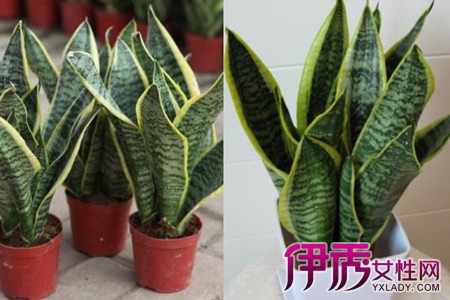
Growing snake plants is actually not difficult at all. Snake plants themselves are very easy plants to grow, so once you understand their habits, they will surely propagate more luxuriantly. Snake plants do not have very high requirements for pots. Many people who like to place them in the living room should choose large, tall pots so they can grow luxuriantly. But if you want to place them on a table, choosing a mini small potted plant also looks particularly beautiful.
After choosing a good pot, you need to find suitable soil. Basically every kind of flower likes loose soil. Rigid yellow soil cannot let snake plants take root and grow, and will cause the leaves to become soft, so choosing black soil from rotted leaves and branches under trees is a very good choice.
For propagating snake plants, you also need to master humidity well. Many people think they need to water every day for better growth. In fact, for growing snake plants, do not always water. Watering once every 2-3 days is enough. Before watering, you can press the soil in the pot with your hand; if it is not dry, you can temporarily skip watering.
Snake plants are plants that love sunlight very much. When growing snake plants, place them in a sunny spot. Only with sufficient sunlight can they grow more vigorously, but they cannot be placed outdoors in scorching sun, because this will cause the leaves to become soft. Placing them on an indoor windowsill is more suitable; with proper sunlight they can propagate luxuriantly.
When growing snake plants, you also need to pay attention to temperature. The temperature suitable for their growth needs to be around 23°C. In winter in the north, the outdoor temperature is always below zero, so snake plants must be grown indoors. Placed outdoors they will certainly freeze to death, and then you can only propagate them again. Growing snake plants is just this simple.
Snake Plant Propagation Methods, Snake Plant Propagation Method Step-by-Step Illustrated Guide
Snake plant leaf-cutting propagation method. First, snake plants (Sansevieria) are a very common home decorative plant, but when cultivated at home they often do not bloom, so they are mainly appreciated for their leaves. Caring for snake plants is very simple; you only need to master two points, keeping the environment warm and watering less, to ensure normal growth. Although they do not easily bloom at home, if water, fertilizer and light are managed properly, you can still catch a glimpse of their beauty: a string of white flowers that looks quite unique.
Snake Plant Propagation Methods IllustratedHow could such a great top-choice indoor green plant as the snake plant be missed? Moreover, leaf-cutting propagation of snake plants is very easy; beginners can do it in 3 steps. Let's take a look below at the step-by-step illustrated guide for snake plant leaf-cutting propagation.
Snake plant leaf-cutting propagation time: the suitable period for leaf cutting is spring and summer
Step 1: Cut the leaves into sectionsYou need to prepare a sharp blade or garden scissors, select relatively robust snake plant leaves, cut the leaves into sections of about 6 cm each, mark the top and bottom of each section, and place them in a shaded indoor spot to dry for 1-2 days before starting step 2.
Step 2: Insert the leaf sections into the soilInsert the dried leaf sections directly (you can also dip them in some rooting powder) into a cutting bed with loose, fertile and well-drained sandy soil as the medium, keep it moist, and roots will form in about 20-50 days. When cutting, follow the marks with the top facing up and the bottom facing down; they must not be reversed. Insert about 2-3 cm into the soil.
Step 3: Care after leaf cuttingAfter leaf cutting of snake plants, keep the growing environment free from scorching sun, ventilated, at a temperature of 18-25°C, and moist. First roots will grow, and only slowly will small buds appear, which requires full patience. Once rooted, they can be transplanted into pots.
Snake Plant Cutting Propagation Methods, How to Grow Snake Plants in Winter
Although snake plants do not bloom often and their appearance is not as gorgeous as other flower varieties, this does not affect everyone's love for them. They are often used to decorate living rooms and offices. They not only have high ornamental value themselves, but their ability to absorb formaldehyde and purify the air is also unmatched by ordinary flowers. For flower lovers who want to grow them, of course they care most about their propagation methods.
Snake Plant Cutting Propagation Methods
1. Cutting propagation time
Sansevieria can be propagated by cuttings throughout the year.
2. Selection of cutting slips
Medium and large varieties of Sansevieria are suitable for split-leaf cuttings, while small varieties of Sansevieria are suitable for whole-leaf cuttings. Select healthy, thick leaves as cutting slips.
3. Cutting propagation method
Cut the leaves horizontally at equal distances of 5-8 cm into several pieces, insert the leaf pieces obliquely into a clean medium, and the medium should first be thoroughly moistened with water. Place in a semi-shaded area and wait for the cutting slips to sprout. When small seedlings grow, they can be transplanted into larger round pots for seedling cultivation.
How to Grow Snake Plants in Winter
1. Care temperature
Snake plants like a relatively warm growing environment. Their suitable growing temperature is between 20°C——30°C, and the overwintering temperature in winter should preferably not be lower than 10°C. Therefore, when growing snake plants in winter, try not to place them outdoors.
2. Moderate watering
Winter temperatures are generally relatively low. Snake plants are desert plants and are relatively afraid of frozen leaves and waterlogging, so in winter it is best to moderate watering. Wait until spring to resume watering. If indoors is not warm enough, it is best to stop watering and wait until the temperature rises before watering again.
3. Do not fertilize
In winter, the growth of snake plants slows down, and at this time they do not need a large amount of fertilizer, because snake plants do not have very high fertilizer requirements in winter.
4. Winter frost protection
In winter, be sure to pay attention to frost protection for snake plants, because snake plants are plants with relatively high leaf water content. If frozen in winter, the cells will rupture, causing death. So pay attention to frost protection, and do not let the snake plant die.
Snake Plant Diseases and Prevention
1. Leaf spot disease
Symptoms of damage: It mainly occurs on the leaves. In the early stage of the disease, nearly circular or oblong spots appear on the leaves, and the edges of the lesions are light yellow and slightly sunken. When there are many lesions on the leaves, they easily merge, the leaves wither and die, and later the lesions fall off and perforate. Lesions close to the ground easily rot, thereby causing stem base rot or the whole plant to fall over.
Prevention and control methods: During care, reduce watering, keep the soil slightly moist, and lower the soil humidity, which can effectively prevent leaf spot disease. When the disease occurs, in the early stage you can choose Bordeaux mixture or 53.8% Kocide 2000 dry flowable, and spray continuously 2-3 times with an interval of 5-7 days. When spraying, change the pesticide in a timely manner to avoid the plant developing resistance.
2. Rot disease
Symptoms of damage: In the early stage of the disease, water-soaked lesions appear on the plant leaves. After gradually expanding, the lesions become round to irregular, dark gray, soft rot, and slightly sunken; afterward the lesions dry and sink, and in a humid environment black mold spots appear on the leaves.
Prevention and control methods: When diseased plants are found, promptly remove the diseased leaves and change the pot and soil. Before replanting, disinfect the soil. When the disease is severe, spray 50% carbendazim or thiophanate-methyl 800 times solution, once every 5-7 days, and stop once it improves.
3. Bacterial soft rot
Symptoms of damage: After the plant is infected, the leaves change from green to light yellow to grayish yellow. The stem base near the ground develops water-soaked soft rot, and later gradually falls over, and the roots rot and die.
Prevention and control methods: In winter and spring, the temperature should be controlled above 10°C, watering should be controlled, and appropriate shading should be provided. In the peak growing seasons of spring and autumn, appropriately apply more phosphorus and potassium fertilizer to improve the plant's disease resistance. When diseased plants are found, promptly pull them out and clean them up thoroughly. If discovered in time, you can choose streptomycin sulfate 2000 times solution, spray once every 5-7 days, and spray continuously 2-3 times.
How to Propagate Snake Plants by Division
1. Cutting
Sparse ones do not need to be dealt with; here it is mainly about cutting overly dense snake plant leaf clusters into several clusters. Each divided leaf cluster must have not only leaves but also rhizomes and suckers. Only in this way can the snake plants survive.
2. Potting and planting
First, spread a layer of culture soil at the bottom of the pot, then starting from one side of the pot, place the snake plant leaf clusters evenly in the pot, and finally fill the empty spaces in the pot with culture soil.
3. Care
After potting and planting, do not just leave them alone. Water thoroughly the first time, and afterward the amount of water should be controlled.
4. Precautions for division
When cutting, try to make the root system on each cluster as evenly distributed and as abundant as possible, and try to avoid damaging the root system. Of course, do not hurt yourself either.
The planted snake plants should be placed in a cool place for care. On rainy days they should be moved indoors and must not be exposed to rain for a long time, to prevent root rot.
Although snake plants have very strong adaptability to the environment, when growing them at home you still need to control key factors such as light, water and fertilizer. Later, you also need to guard more against pests and diseases. Detailed prevention and control methods are given above. If all these can be done well, the snake plant's growth will not be poor, and it may even bloom with beautiful small flowers!