How to grow cyclamen so it blooms abundantly? A few tips to teach you
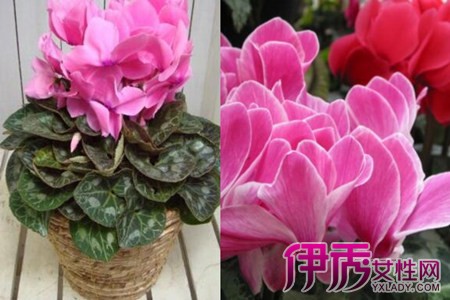
Every plant has its own living habits, and the cyclamen is the same. For growing cyclamen, the first thing is to choose a suitable flower pot; do not choose a pot that is too shallow, as a shallow pot has a great impact on the root growth of the cyclamen. It is better to choose a taller and deeper pot, which is good for the flowers to take root.
After choosing the flower pot, the next step is to collect soil. Generally, soil with rotted branches in the woods is quite good; this kind of soil is very suitable for the growth of cyclamen. Just sift the soil well with a sieve. Many people will say that there are few woods in the city, so you can go to the flower market to buy it. Generally, a large bag of soil, 5 jin, costs only about 2 yuan. After buying the soil, put it into the flower pot, and then plant the prepared cyclamen in the middle of the pot. Press down firmly with your hands a few times, so it is more solid.
After planting, start watering. The soil in the flower pot is all dry soil, so when watering, you must water a lot to soak it through. If you do not water it thoroughly, the leaves will turn yellow, and the roots cannot grow normally, so the survival rate will be much lower.
After watering, leave it outside for half an hour and then put it indoors. A freshly planted cyclamen should not be placed outdoors. Because the sunlight is relatively abundant, it is very easy for it to wilt. After placing it indoors for half a month, it will roughly begin to take root and grow normally, and then slowly move it to a sunny place.
A basically well-planted cyclamen can bloom in the second year, but when it blooms it easily attracts small flying insects. At such times, use insecticide and spray it on the cyclamen, but if there are children at home, it must be placed high, and after spraying the medicine, do not water immediately, as that will make the medicine lose its effect.
How to grow cyclamen, cyclamen growing methods
First understand the habits of cyclamen. Cyclamen likes a growing environment with sufficient light, coolness and moisture, and likes acidic soil. Too high or too low a temperature will affect the growth and blooming of cyclamen. In summer, it should be placed in a moist and ventilated place, and the pot soil should be kept dry, so as to pass through the hot summer. Light: sufficient light can prolong the flowering time and make the flower color vivid; insufficient light easily causes the flower color and branches and leaves of cyclamen to fade, making the plant gradually weaken until it dries up.
Cyclamen growing methods
Soil selection: The culture soil for cyclamen can use humus soil, forest leaf mold soil, furnace ash and cinders, etc., and an appropriate amount of chemical substances such as calcium carbonate can be added for preparation. This kind of soil is relatively loose, which helps the growth of our cyclamen. When cultivating, pay attention to the size of the container, gradually increase it, and do not use a large pot to cultivate small seedlings.
Light: Cyclamen likes sunlight, so it should be placed in a sunny place for care. Sufficient light is very beneficial to its growth, but it is afraid of direct strong light in summer.
Fertilization: Cyclamen is a fertilizer-loving plant. Each spring and autumn, apply 2‰ potassium dihydrogen phosphate once each. During the flowering period, nitrogen fertilizer should not be applied, otherwise it will cause excessive growth of branches and leaves and shorten the life of the flowers.
Temperature: Cyclamen is not tolerant of high temperatures. Too high a temperature will make it enter a dormant state. Above 30°C the plant will stop growing and enter dormancy; above 35°C it is prone to rot and death. In winter during the flowering period, the temperature must not be lower than 10°C. If the temperature is too low, the flower color will be dim and the flowers will easily fall off. The suitable growth temperature is 15—20°C.
Watering: Cyclamen is a plant that likes moisture and fears waterlogging. It should not be watered too much; too much watering will cause root rot and death. Just keep the soil moist every day.
Pests and diseases: Cyclamen has more diseases than insect pests. The main diseases are gray mold and soft rot, mostly caused by bacterial infection. The diseased parts show softening and rotting. Thiophanate-methyl or chlorothalonil can be applied for prevention.
Hormone treatment: When the young buds of cyclamen appear, gently spray 1 mg/kg gibberellin onto the young buds, 1 to 3 times a day, which can advance flowering by more than 15 days.
Precautions for growing cyclamen
When the temperature exceeds 28°C in early summer, the cyclamen bulbs will begin to dormant. If management during the dormant period is poor, the bulbs are very likely to dry up or rot, so safely passing the summer becomes a difficult point in cyclamen cultivation. Vigorous seedlings are the best way to pass the summer. Sow one-year-old seedlings; they grow vigorously and have a relatively weak tendency to dormant in summer. During early summer, strengthen the management of fertilizer and water to form strong seedlings, making the leaves thick, numerous, deeply colored and glossy. Such seedlings have relatively strong heat tolerance. At the same time, do a good job of cooling, cover with a shade net, increase its ventilation, and spray water around the plant. After late August, cyclamen will enter the growth period and need strengthened fertilizer and water management.
Cyclamen care
Repotting time
The first repotting time is between Qingming and Guyu. At this time, cyclamen has grown about 10 leaves, and the outdoor temperature is 18°C—25°C, with a large temperature difference between day and night. After repotting, the nutritional supply area in the substrate can be increased in time, providing the necessary conditions for the first vigorous growth period of cyclamen.
The second repotting time is after the Beginning of Autumn and before Frost's Descent. This is the last repotting. Repotting at this time not only increases the nutritional supply area in the substrate in time, but also increases the water storage capacity for each watering, providing sufficient water and fertilizer resources for the rapidly growing plant.
Management after repotting
After repotting, the substrate should be watered thoroughly. During the seedling recovery period, pay attention to moisture retention, and promptly disinfect wounds from broken leaf stalks. The usual practice is to uniformly spray the plants once with 800 times diluted agricultural streptomycin. After about a week, they can enter routine management.
After the second repotting, cyclamen enters a stage of explosive growth, and the demand for nutrients further increases. Apply once every half a month a fully decomposed thin fertilizer solution made by composting bean cake or horse hoof (flower growers call it strong seedling water). At this time the plant is in the bud stage, so additionally spray the leaves with 2—3 times a month a 300—500 times diluted potassium dihydrogen phosphate liquid fertilizer. In order to ensure sufficient light during the bud stage, artificial assistance must be adopted by pulling dense leaves to the sides, and if necessary removing excessive leaves from the center of the plant, so that the newly sprouted flower buds can fully receive light. In addition, according to the plant's growth condition, frequently turn the flower pot, so as to obtain a full and neat plant shape.
Reasons cyclamen does not bloom, what to do if cyclamen does not bloom
Why cyclamen does not bloom. Cyclamen is a light-loving flower, and winter and spring are also its vigorous growth and flowering periods. To make flower buds abundant, sufficient sunlight should be given during the bud stage. If daily care is improper, it is difficult for cyclamen to bloom. Below is a summary of the reasons cyclamen does not bloom.
Reason 1 cyclamen does not bloom: low indoor temperatureCyclamen needs a warm environment. If the indoor temperature is low and cannot meet the flowering requirements, the flower buds will shrink and cannot bloom.
2. Pot soil too wetDuring the growth period of cyclamen, the pot soil must not be too wet, otherwise it is prone to root rot. 3lian.com
3. Insufficient lightThe growth and blooming of cyclamen require both a certain temperature and sufficient light. If the light is insufficient, the flower buds will wilt.
4. Do not fertilize during the flowering periodCyclamen should stop fertilization during the flowering period. Even if fertilizing, it can only be little and thin. If concentrated fertilizer is applied, it will only make the plant's flower buds wither.
What to do if cyclamen does not bloom? 1. Proper temperature controlThe most suitable growth temperature for cyclamen is 15~20°C. When the temperature is higher than 28°C, it will enter a dormant state, and higher than 30°C it will rot roots. Therefore, in summer it should be shaded, and water should be sprinkled on the ground to lower the temperature.
2. Appropriate wateringIn autumn, cyclamen resumes growth, and repotting is also carried out in this season; after repotting, water it.
3. Fertilization controlStop fertilizing during the flowering period. In other seasons, apply a thin liquid fertilizer containing phosphorus and potassium once every 10 days.