How to grow strawberries in pots, so you can enjoy delicious fruit anytime
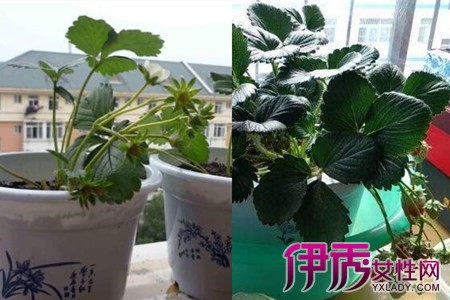
Many people don't know how to grow potted strawberries, but the method is actually not difficult at all. Many people run into trouble simply because they don't understand the growing habits of strawberries. The few tips below will definitely make your strawberries grow more vigorously.
First, choose a suitable flower pot for growing strawberries; you can buy a rectangular pot. That's because a rectangular pot can hold several plants, and the growing space is much larger too. You can plant them in rows in a rectangular pot, which suits strawberry growth very well.
Next, choose soil suitable for strawberry growth. Many people think any random bit of soil will do. That's actually not right; the soil strawberries like is loose black soil. Soil made from fermented leaves and branches from under trees is especially good, because such soil is rich in nutrients and very helpful for strawberries to take root and grow. Strawberries themselves have a very high survival rate, but after putting the soil in the pot, be sure not to plant them too deep, or root rot will occur.
Strawberries themselves like water, especially in summer, when you must water them every day, otherwise they will wilt. Because summer is very hot, you must water them sufficiently for them to grow normally. After planting, be sure not to expose the strawberries to strong sun; put them in a cool, ventilated place indoors. It takes about 10 days for them to take root and grow normally, after which putting them outdoors is basically no problem.
In winter, especially in the north where the season is too cold, don't put strawberries outdoors. Outdoor temperatures are all below zero, so they will definitely freeze to death. It's better to put them indoors in a sunny spot, and keep the temperature at around 22 degrees for them to flower and bear fruit normally.
Potted strawberry pictures and their cultivation
Speaking of strawberries, everyone is familiar with them. Strawberries, called red berries or foreign berries in some places, are a very delicious fruit. When it comes to strawberries, everyone knows them, but not everyone necessarily knows how to grow them. The strawberries we eat now are all grafted greenhouse strawberries, all grown in pots. This growing method has great advantages: it makes fertilizing and management easier, and it can increase land use efficiency and improve economic returns. Below, let's talk about the method of growing potted strawberries.
When growing strawberries in pots, it is suitable to choose varieties with long fruiting periods. Generally, choose pots with good air permeability, such as clay pots, wooden barrels or wooden boxes. The potting soil can be made by mixing humus soil with half garden soil, or by mixing garden soil, decomposed organic fertilizer and river sand in equal parts. Planting can be done in spring or autumn, and the survival rate is higher when planted in autumn. Before planting, soak the flower pot in water until thoroughly wet, place broken tiles or stones at the bottom of the pot, then fill it with potting soil. When planting, choose strong seedlings, plant 3 to 4 per pot, and set the plants at a depth where the roots are not exposed. After planting, water thoroughly and make the roots and soil fit closely together. Leave them in a shady place for 3 to 5 days, then move them to a place with plenty of light.
Strawberries need more nutrients for flowering and fruiting, so nutrient supplementation should be strengthened. You can use fish bones, poultry innards, soybean cake and the like, add water, let them decompose and ferment, and make them into liquid fertilizer. Generally, apply a top dressing once a week. For outdoor potted plants, it is suitable to water once each morning and evening. Never use well water or tap water directly when watering. The growing temperature for strawberries is generally 20 to 25 degrees, and in winter the room temperature should be kept above 15 degrees. The flower pot should be placed in a ventilated, sunny place, and the potting soil should preferably be kept moist at all times. For potted strawberries, regularly remove old leaves, withered leaves, diseased leaves and excess runners to reduce nutrient consumption and improve fruit quality; you can use wire or bamboo poles to make supports of different shapes, place them in the pot and prop up the fruit clusters, prompting the fruit clusters to be ventilated and exposed to light, the fruit to color evenly, preventing soil from contaminating the fruit, and reducing pest and disease damage; you can also use runners for artistic shaping to increase ornamental value. If pests or diseases are found, prevention and control measures must be taken promptly.
After potted strawberries have fruited for 2 years, the pots should be changed after fruiting. When changing pots, first take the plant out of the pot, cut off the aged roots, then plant it into new potting soil.
Having told everyone all this, I believe you have certainly broadened your horizons. Potted strawberries can not only increase yield, reduce pest damage and improve our growing efficiency, but also have a certain ornamental value. Nowadays, isn't it popular to go pick things in the fields yourself? With carefully pruned potted strawberries, you not only improve the aesthetics, but also indirectly attract customers and increase farmers' income, so it is indeed a very good method. All right, if you are interested in potted strawberries, you are welcome to visit Tubatu for information
Balcony vegetable growing: precautions for growing strawberries
Strawberries are a fruit often chosen when growing vegetables on a balcony. Strawberries not only look good, but also have a sweet taste and are a very delicious fruit. When growing strawberries on a balcony, there are also quite a few precautions to note. Below is a brief introduction to the precautions for growing strawberries when growing vegetables on a balcony.1. Choice of container
The choice of container for growing strawberries when growing vegetables on a balcony is also very important. If you are growing quite a few, you can choose a larger container; rectangular, square and round ones are all fine. Generally, when growing strawberries, choosing a ceramic container is best, because ceramic containers drain well and have good air permeability, making them very suitable for growing strawberries.
2. Choice of soil
When growing strawberries, the soil can be a professional cultivation substrate, or you can make your own soil for growing strawberries. You can take some surface soil from under a garden or woods, mix in some field soil, then mix it half and half with fertile vegetable garden soil and peat soil.
3. Planting out
When strawberry seedlings grow to 5-6 true leaves and the root crown is moderate in size, they need to be planted out. Indoor cultivation can be done in all seasons of the year. Before planting out, fill the pot with prepared growing soil, with the soil surface 3-4 cm from the pot rim. Water thoroughly, leave it for 2 days, then plant the strawberry seedlings into the pot.
4. Management
Potted strawberries experience large temperature changes, and the key points are the low temperatures of winter and the high temperatures of summer. In winter in the north, the pots can be moved indoors to raise the temperature. In summer, when temperatures are high, the pots should be moved to a shady place to cool down.
=======================================
If you like this article or want more great content, please click the top right corner --- share it to Moments or view the official account and follow. Thanks again very much!
Love the balcony, love labor, love gardening, love life! Changqingju Gardening focuses on the cultivation and growing of household balcony vegetables and flowers, provides various materials and technical support needed for household gardening, and makes our balconies beautiful