How to grow wax begonia: master the care and the flowers will last longer
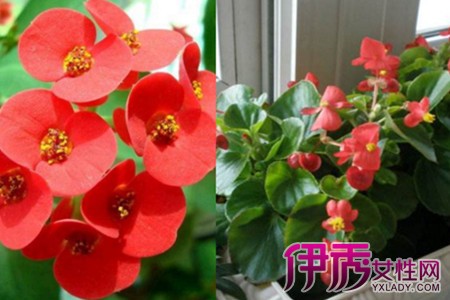
For people who grow flowers, wax begonia may not be difficult to grow at all. Under normal conditions, wax begonia can bloom for about 3-6 months at a time. And the flowering period of wax begonia is not very short, so growing techniques are very important. Only by mastering the right growing methods can you avoid affecting the flowering period of wax begonia.
When growing wax begonia, pay attention to temperature and humidity; only by mastering these two points can wax begonia open during its normal flowering period. Many people always leave it outdoors when growing it, but wax begonia cannot stand harsh sun exposure, and its leaves will turn red. In such a case, it takes a period of time to return to normal, which will certainly affect the normal flowering period.
Many people also do not know how to handle humidity properly; wax begonia needs to be watered in the right amount. Too much water will cause the roots to turn black, so watering about once every 3-5 days is enough. As long as the flowerpot soil does not dry out, it can grow normally, and only by maintaining good humidity can it bloom normally during the flowering period.
In winter, whether in southern or northern cities, do not leave wax begonia outdoors, because the outdoor temperature is still relatively low. If left outdoors, it will suffer frost damage, and the cold temperatures in the north can freeze it to death outright. Then there is no hope of flowers.
Even more important is that after growing wax begonia for one year, you need to change the soil once, because after a year the soil in the pot no longer has much nutrients. You need to replace it with new soil so it can bloom normally the next year. Once you master these points, your wax begonia will bloom for longer. And placed at home, it is especially bright and beautiful.
The benefits of wax begonia and how to grow wax begonia
Wax begonia, also known as wax begonia (Begonia semperflorens), is a perennial herbaceous plant. Native to Brazil, it is a perennial herbaceous plant, also called begonia, tiger-ear begonia, melon-seed begonia and glass begonia, and in traditional production it is grown as a perennial greenhouse potted flower. Wax begonia is the most common and most widely cultivated species among begonia plants. It has a graceful form, tender and glossy leaves, clustered flowers, blooms in all four seasons, and carries a slight fragrance, making it one of the main potted flowers for indoor and outdoor decoration. People use it in flowerbed arrangements with excellent results. With the appearance of some relatively heat-tolerant varieties, wax begonia is very likely to become one of the most important flowerbed flowers in China, with advantages such as a neat and rounded plant shape, abundant and dense flowers, great ease of combining with other flowerbed plants, and a long ornamental period, so it is becoming more and more popular. It is generally cultivated in spring and autumn. Below, I will introduce the role of wax begonia in the home and how to grow it.
The feng shui role of wax begonia
Begonia has the beautiful titles of "immortal among flowers", "noble consort among flowers", "honored among flowers" and "flower that understands speech", and the flower meaning of begonia is gentleness, beauty and happiness. Begonia symbolizes bitter love. When people's love encounters setbacks, they often use the begonia flower as a metaphor for themselves.
In royal gardens, begonia often became a flower favored by nobles, and was planted together with magnolia, peony and osmanthus, forming the artistic conception of "jade hall wealth and honor". What is its relationship with feng shui?
1. The begonia flower is a symbol of wealth and honor. In the Classic of Poetry, the flower of the tangdi was once mentioned, using begonia to describe the wealthy and elegant bearing of the women in the households of feudal lords and high officials. The begonia flower has a free and elegant posture and blooms like brocade; since ancient times it has been a famous flower appreciated by both refined and popular tastes, delicate and grand, naturally carrying a kind of noble air, and in feng shui it is also regarded as the flower of wealth and honor before the hall. Because it is also charming and moving, especially after rain when its delicate fragrance remains, and the splendor of its flowers is even harder to describe, it is often used to compare to a beauty. Therefore, if there is a girl in the family, planting a few begonias beside the house may mean that when the child grows up she is very likely to become a person of great wealth and honor.
2. The bedroom is a place for people to sleep and rest, and efforts should be made to create a quiet and beautiful atmosphere, which helps ensure sleep and naturally makes the body healthier. In feng shui, it is believed that bedrooms should avoid strong fragrances, especially bedrooms with air conditioning, where the air conditioning is often turned on at night and left on all night, so the air in the room becomes very poor by morning. Therefore it is advocated to choose some plants that can absorb toxic gases and purify the air and are beneficial for sleep. Begonia is just such a plant; it removes harmful impurities from the air and, since it has no fragrance, is especially suitable for placing in the bedroom.
As the saying goes, "Though beautiful, it has no vulgar bearing; the supreme sovereign is truly wealthy and noble." This is how Lu You of the Southern Song described the beauty and elegance of begonia. It carries the meaning of wealth and honor and of beauty, and is a good plant in feng shui.
How wax begonia matches home decor styles
Wax begonia has many varieties and bright colors, not only with high ornamental value but also with certain medicinal and edible value. Wax begonia also has the ability to resist harmful gases such as sulfur dioxide, hydrogen fluoride and hydrogen chloride. Growing it at home can not only beautify the environment but also reduce air pollution, which is beneficial to people's physical and mental health.
Wax begonia is a good potted indoor flower and blooms extremely abundantly. It is relatively small in size, suitable for beautifying indoor spaces, and can also be used as a flowerbed flower. It is non-toxic.
Among the so-called 52 flowers and plants prone to causing cancer, wax begonia is not included, so it can absolutely be placed in the bedroom. However, this flower is not an indoor plant, so after about a week of enjoyment, it should be moved to a place outdoors with sunlight. It is best to move it to a place where it can absorb mist.
Some people worry that placing plants in a room at night will affect the air. In fact, keeping a few pots of plants indoors, you can neither count on them to purify the air nor need to worry about the carbon dioxide they release affecting human health; one pot of plant simply does not have that much energy. Plants release fresh oxygen during the day and carbon dioxide at night. For a relatively large space, the amount of these gases produced can be said to be negligible, and the impact is minimal (see note). Opening a window and letting in fresh air is much more important than this. When growing (placing) plants indoors, whether they can give people a sense of pleasure is what should be considered most. In a place for people to sleep and rest - the bedroom - creating a quiet and beautiful atmosphere is what matters most.
However, in order to grow wax begonia well, you should place it in a bright spot as much as possible, and you should often keep the indoor air circulating to avoid smoke pollution.
The role of wax begonia in the home
Landscape use
Wax begonia has a graceful plant form, oily green and glossy leaves, and exquisite, delicate flowers. It is widely loved by the public, and has been grown as a potted ornamental for a thousand years. Placed on a table in the cold season, it brings a room full of spring vitality; placed on a balcony or under the eaves in spring and summer, it shows even more lively vitality. Besides potted ornamental use, it is also a material for flowerbeds, hanging baskets, planting troughs, window boxes and indoor arrangements.
Medicinal use
Wax begonia is also a kind of traditional Chinese medicine, an outstanding medicinal herb. This plant contains a large amount of medicinal components such as oxalic acid, fumaric acid and succinic acid. After being used as medicine, it tastes bitter and has a cold nature. Its greatest effect is clearing heat and detoxifying, and it has a clear therapeutic effect on human sores and boils.
How to grow wax begonia
First, potting soil. The most ideal potting soil for wax begonia is a mixture of river sand, leaf mold and snake fern sawdust. Wax begonia fears intense heat, so in summer it should be kept in a cool place.
Second, watering. Wax begonia likes warm and moist conditions, so during the growth period, watering should be based on the plant's growth and changes in temperature. Water less during the budding stage and keep the potting soil slightly dry; if it is too wet, it will cause root rot. During the growth period, water once every two days, and often spray water around the plant to increase air humidity. In addition, note that when watering, do not pour from the leaves and stem tips; water along the edge of the flowerpot, otherwise the stems and leaves easily accumulate water and rot.
Third, fertilizing. During the growth period of wax begonia, fertilizer should be applied according to leaf color and leaf growth conditions, and too much fertilizer must not be applied, otherwise the leaves will grow excessively and flowering will be affected. Before flowering, apply an appropriate amount of phosphorus fertilizer and potassium fertilizer to improve flower quality.
Fourth, when winter comes, dig up the bulbs and hang them for storage in a dry, ventilated place, or place the potted flower in a warm indoor place to overwinter.
Fifth, disease prevention. During periods of high temperature and dryness, wax begonia is prone to root rot and stem rot. When discovered in the early stage, watering should be controlled promptly, and carbendazim should be sprayed for prevention and control. Continuous use for a period of time can show results.
Sixth, winter and summer management. Because wax begonia is affected by temperature in winter and summer, its growth is relatively slow, so fertilizer and water management need to be strengthened.
Seventh, sunlight. In the hot midsummer period, by all means avoid direct strong light on wax begonia, as this will scorch it.
Eighth, after the flowers of wax begonia fade, be sure to remember to pinch out the growing tips in time and remove the remaining flowers, so that it can grow more luxuriantly.
Ninth, pests. The common pest of wax begonia is the leaf-rolling moth. This insect damages tender leaves and flowers with its larvae, directly affecting the growth and development of wax begonia. If the situation is not especially serious, you can catch them by hand; for serious cases, spray with a diluted dimethoate solution.
Tenth, the flowerpot of wax begonia should usually be kept in a semi-shaded spot on a balcony or courtyard, and direct sunlight must not be allowed to shine in. Also pay attention to ventilation. About half a month after planting wax begonia, apply one application of decomposed fertilizer water. After that, during the growth period, apply a light fertilizer water once every 20-30 days. In winter, move it indoors to a place with plenty of sunlight, and the lowest temperature must not be below 10°C.
How to grow crown of thorns: how to care for crown of thorns
Crown of thorns, also known as tiger thorn plum, is a relatively common indoor potted ornamental plant. How do you grow crown of thorns? Below I will share how to grow crown of thorns.
1. Soil: pot cultivation requires sandy loam, which can be made by mixing leaf mold or peat soil with 1/2 sandy soil and a small amount of fertilizer.
2. Watering: crown of thorns is drought-tolerant, and in spring and autumn watering should follow the principle of watering when dry. In summer, water once a day; in the rainy season, prevent waterlogging; in winter, do not water unless the soil is dry, and the pot should not remain moist for a long time. Water should also be controlled during the flowering period, as too much water easily causes flower drop and root rot.
3. Sunlight: crown of thorns likes plenty of sunlight, and should be given relatively sufficient light all year round. During the flowering period, if sunlight is sufficient, the bracts are brightly colored and the flowering period is long; if sunlight is insufficient, the flower color is dull, and if it is kept in shade for a long time, it will not bloom or will bloom very little. Crown of thorns likes warmth and cannot tolerate cold. In northern regions, it is generally taken outdoors in early May and placed in a sunny spot, then brought indoors in early October and placed in a spot indoors with sunlight.
4. Temperature: crown of thorns likes warmth and cannot tolerate cold. It grows best at about 22°C during the day and about 15°C at night. Kept at 15°C to 20°C in a greenhouse, it can bloom continuously all year; if the temperature drops to 10°C, it sheds its leaves and enters a semi-dormant state.
5. Fertilizing: crown of thorns does not like strong fertilizer. When planting, you can choose some potting soil with hoof and horn pieces added as base fertilizer. During its growth period, generally applying one application of decomposed thin cake fertilizer water every 3-4 weeks is enough. Too much fertilizer, especially too much nitrogen fertilizer, makes the branches grow excessively and produces only leaves without flowers. Generally, fertilizing can stop after the Start of Autumn, and crown of thorns must not be given fertilizer containing grease. Applying phosphorus and potassium fertilizer 1-2 times during the bud stage results in more flowers and brighter colors.
6. Pests and diseases: the main problems are stem blight and rot. Spray with a 50% captan 800-fold solution once every half month. Pests include whiteflies and scale insects; spray with a 50% fenitrothion emulsifiable concentrate 1500-fold solution to kill them.
7. Pruning: the flowers of crown of thorns open at the tips of new branches. To make crown of thorns bloom more, proper pruning must be done. Because if the main branches are too long, there will be fewer flowers. Therefore, after the flowering period, shorten the overly long and irregularly growing branches. Generally, 2 new branches grow below the cut on a branch, and when the new branches grow to 5-6 cm they can bloom. Prune once a year, and after a few years the whole plant will be covered with bright small red flowers. Because the branches are slender and relatively soft, as the plant grows you can use bamboo sticks or wire to make supports of different shapes, and tie and guide the branches onto them to form a flower-column shape, which shows the beauty of red flowers and green leaves even better when in bloom. If you do not prune in time and let it grow naturally, its main branches will grow longer and longer, resulting not only in fewer flowers but also in an unattractive plant shape.