Grow carnations this way, and you will raise a living embodiment of love and respect
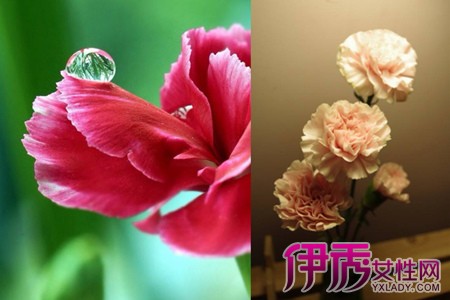
Every year on Mother's Day, we can never do without carnations. This small bouquet represents our love and gratitude for our mothers and expresses the purest affection in the world. But cut flowers will always wither eventually. Watching a flower die, do you feel a little unwilling to let it go? Today, the editor brings you a way to grow carnations at home. You only need to follow the editor's method to grow a carnation full of vitality in your own home.
To grow a plant well, you must first understand its living habits. Our protagonist, the carnation, loves to live in a cool, ventilated environment with an appropriate amount of light. Generally speaking, temperatures above 30 degrees will make this fragile plant unable to survive well, and the soil is also required to be loose and good at retaining fertilizer, so that it can grow healthily and robustly. Therefore, the editor here brings you the following few small suggestions.
For beginners growing carnations, sowing seeds is not recommended. You can go to your local flower and bird market to buy your favorite variety, or use the all-purpose Taobao, which is also a good choice. For the growing soil, heavy soil is recommended. If conditions allow, it is best to use a pottery pot with good breathability. After your carnation is planted out, proper care will allow it to grow robustly.
As long as we strictly follow the carnation's growth habits, we can formulate a complete and comprehensive care plan. Caring for them is like caring for a small child, requiring careful treatment. Watering, light, fertilizing and pinching are all indispensable tasks. The editor has prepared a few points to note for everyone here.
After your carnation is planted out, it needs to be watered once every day. Pay attention to the soil moisture: it should neither be too dry nor too waterlogged. Fertilizer can be purchased on Taobao, but be sure not to apply concentrated fertilizer, because fertilizer that is too concentrated can easily cause fertilizer burn in carnations. When your carnation baby has six to seven side buds, you can consider pinching. Doing so can ensure a beautiful plant shape and make it look more pleasing to the eye.
How to grow carnations from seed
Carnations can be propagated by growing from seed. When growing carnations from seed, the key is definitely to select good seeds. High-quality seeds are more conducive to improving the germination rate. Below is a summary of the steps for growing carnations from seed.
Carnation seed growing method 1. Seed selectionChoose seeds that are healthy and free of pests and diseases. Seed quality directly affects the germination rate of carnations. In addition, carnation seeds are very light and can easily be blown away, so pay attention to collecting and storing them.
Before planting, carnation seeds need to be soaked in a soaking solution for 2 hours, which helps the seeds germinate.
2. Pot and soil selectionAfter choosing the seeds, the next step is to prepare a flower pot for sowing. The pot is required to have drainage holes and strong breathability. When sowing, scatter some ceramic pellets at the bottom of the pot to improve drainage capacity, then spread a layer of culture soil on top of the ceramic pellets.
For the soil, generally choose loose, breathable sandy soil.
3. Planting methodGardeners can directly scatter the seeds on the surface of the soil. After planting, sprinkle a thin layer of fine soil over the surface of the seeds to prevent the seeds from being blown away. At the same time, water to keep the soil moist.
4. Care after plantingAfter sowing, gardeners can move the flower pot to a ventilated and bright place, while avoiding direct sunlight.
In the care that follows, you can spray some water frequently to keep the environment and soil moist. After a period of time, the seeds will take root and sprout, and they generally germinate in about a week.
5. Setting up supportsWhen the young carnation plants grow to a certain height, a small support needs to be set up, which can prevent the plants from growing crookedly. During this cultivation process, it is necessary to prevent the plants from growing leggy, otherwise it will reduce the ornamental value of the carnations.
During the cultivation process, in addition to setting up supports for the plants, you should also maintain soil moisture and nutrient supply, and provide appropriate light. After waiting for the plants to resume normal growth, gardeners can patiently wait for the cultivated carnations to bloom.
How to grow carnations, the method for growing carnations
Carnations have relatively high requirements for growing techniques. When planting out, first pay attention to the growing medium. For field cultivation, the soil is required to maintain a certain permeability, and a large amount of organic fertilizer must also be applied to make the soil loose and fertile and reach a certain degree of porosity. Then level the land and build beds in preparation for planting out. So, how do you grow carnations? Below is an introduction to the method for growing carnations.
Carnation growing method
1. Soil: Requires clayey soil with good drainage, rich humus, good fertilizer retention and slightly alkaline.
2. Watering: Carnations grow vigorously and are relatively tolerant of drought. In rainy and overly wet areas, the soil easily becomes compacted, and the root system develops abnormally due to poor ventilation, so in the rainy season pay attention to loosening the soil and draining water. Apart from watering in a timely manner during the peak growing and flowering seasons, you can water less at ordinary times, just enough to keep the soil moist. The air humidity should preferably be kept at around 75%. Appropriately spraying water before flowering to adjust humidity can prevent the buds from splitting open early.
3. Fertilizing: Carnations like fertilizer. Before planting, apply a sufficient amount of baked fertilizer and bone meal. During the growing period, continue to apply liquid fertilizer as a top dressing. Generally, apply a fully decomposed, thin fertilizer solution once about every 10 days, and apply a top dressing once after cutting flowers.
4. Pest and disease control: Carnations have many pests and diseases, especially diseases, mainly including damping-off, viral disease, leaf spot and rust. To prevent diseases, choose disease-free cuttings and virus-free seedlings that have undergone tissue culture. If diseased plants are found at the seedling stage, the diseased plants must be removed, and pesticide should be sprayed and the soil disinfected. The main pests include red spiders, aphids, cutworms and mole crickets, which can be controlled by spraying pesticide or trapping.
5. Others: To encourage carnations to branch more and bloom more, multiple pinchings are needed starting from the seedling stage: when the seedlings grow 8 to 9 pairs of leaves, carry out the first pinching, keeping 4--6 pairs of leaves; when the side branches grow more than 4 pairs of leaves, carry out the second pinching, keeping 3--4 pairs of leaves per side branch, and finally it is best for the whole plant to have 12--15 side branches.
When buds are forming, keep only one flower bud at the tip of each side branch, and promptly remove all the small flower buds and side branches sprouting from the leaf axils below the top. After the first flowering, promptly cut off the flowering stems, keeping only two buds at the base of each branch. Through repeated pinching like this, the plant shape can be made elegant and the flowers abundant and brightly colored.
Warm reminder: Liking strong light is an important characteristic of carnations. Whether growing indoors, in pots over summer or in forced cultivation in a greenhouse, they all need sufficient light and should be placed in a sunny position exposed to direct light.
The above is the main content of the article on how to grow carnations and the method for growing carnations. After carnations are planted out and the plants grow to about 20 cm tall, excess side buds should be removed. Generally, the first bud removal is carried out in July, and the second bud removal and pruning are carried out in September. How many buds to keep when removing buds depends on the vigor of the plant's growth; generally 6-7 side buds at the base are retained. After two rounds of bud removal and pruning, the plant's form is set.