How to grow impatiens? Grow them this way to make your home flowers colorful and varied
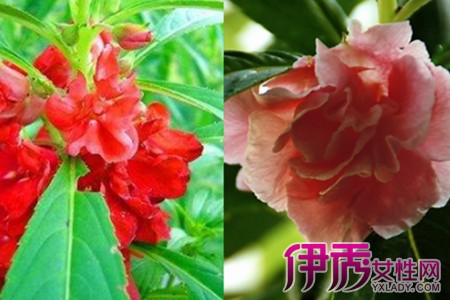
The seeds of impatiens are very peculiar. Once mature, they pop out of the seed pod on their own. If you want to save its seeds, you must collect them in time. After the seeds are collected, wait until February or March in spring before sowing. Before sowing, prepare a flower pot and potting soil. The flower pot should have good air permeability, and the potting soil should be loose and soft, preferably soil containing rotten leaves and decayed roots, because rotten leaves and decayed roots can serve as base fertilizer.
When sowing, do not plant the impatiens seeds too deep; a distance of three to four cm from the soil surface is enough. Then water thoroughly. Impatiens like warmth and plenty of sunlight. What makes sowing different from planting seedlings is that after sowing, they need to be given plenty of sunlight, which helps impatiens germinate.
Normally they will sprout in one week. After sprouting, do not water too frequently, because the small tender sprouts cannot withstand being soaked in water. After impatiens sprout, do not place them where the midday sun can hit them; receiving sun in the morning and evening is enough. After twenty days, impatiens can grow to about ten cm, and at this time they need to be fertilized.
For fertilizing, you can use flower nutrient solution or soybean cake. Remember not to use too high a concentration, otherwise the leaves tend to grow excessively and it is unwilling to bloom. The interval between fertilizing should be kept at once every half month. Control the amount of each fertilizing and then increase the number of fertilizing times; this can encourage impatiens to bloom earlier. However, after impatiens form flower buds, you can apply one more top dressing, and after that do not fertilize again until the flowering period ends.
What kind of flower plant is impatiens? Impatiens flowering period, aliases and brief introduction
Impatiens Impatiens balsamina
Aliases: golden phoenix flower, good daughter flower, nail flower, nail-dyeing flower, nail grass, little peach red, don't touch me
Classification: annual herbaceous flower
Family and genus: Plantae, Angiosperms, Dicotyledoneae, Ericales, Balsaminaceae, Impatiens
Full flowering period: summer, autumn
Introduction to impatiens
Impatiens, also known as nail flower, nail-dyeing flower, little peach red, etc. Because its flower head, wings, tail, and feet all curl upward like a phoenix, it is also called golden phoenix flower. Impatiens is an annual herbaceous flower of the Balsaminaceae family, native to China and India.
Impatiens, also known as nail flower, nail-dyeing flower, nail grass, little peach red, don't touch me, etc. Its Latin scientific name is Impatiens balsamina L. Because its flower head, wings, tail, and feet all curl upward like a phoenix, it is also called golden phoenix flower.
Impatiens is an annual herbaceous flower of the Balsaminaceae family, 60-100 cm tall, and the whole plant is divided into six parts: root, stem, leaves, flowers, fruit, and seeds. It is produced in various places in India and China. Because its flower head, wings, tail, and feet all curl upward like a phoenix, it is also called golden phoenix flower. It can be eaten, is ornamental, and has medicinal value. Because it can dye nails when combined with alum, it is also called nail-dyeing flower.
Impatiens planting methods, how to plant impatiens
The suitable temperature for impatiens germination is 22°C-30°C. Sowing period: March-April or September-October. The suitable temperature for impatiens growth is 15°C-32°C. Flowering period: May-July or December-February
Impatiens planting methods (steps and matters): Impatiens: before plantingThe growth of impatiens is closely related to various factors in the natural environment. Among factors such as temperature, light, water, and growing medium, temperature is the main factor affecting flower growth. If an air conditioner or heater is used indoors to regulate temperature, planting will not be affected by season, but after emergence, the plant must be placed by a sunny window so it can receive as much sufficient sunlight as possible.
Impatiens: when plantingThe sowing time is generally spring and autumn. Choose conditions with an ambient temperature of 22-26°C and humidity of 50-85%, and sow when light is sufficient. However, the substrate must be prepared in advance, with no large clods of soil, and it must be leveled and finely worked to avoid "eating the seeds." Water the seedbed substrate thoroughly, and after the water has completely seeped down, scatter the seeds evenly, then cover with fine sandy soil or vermiculite 0.5-0.8 cm thick. They can sprout in 5-6 days.
Impatiens: planting1. When planting, pay special attention that at most only a thin layer of soil can cover the surface of the flower seeds, 1-3 times the diameter of the flower seeds (be as accurate as possible; feeling is also important). If the seeds are buried too deep, it will make seed germination difficult.
2. Adjust the spray bottle to mist mode and spray an appropriate amount of water on them.
3. Cover the mouth of the flower pot with a glass plate or plastic sheet to reduce water evaporation.
4. Place the flower pot in a shady place without light, and remember to open it for 15-20 minutes every day for ventilation.
5. Flower seeds generally germinate in about 10-15 days. Be patient while waiting for germination. Sometimes factors such as temperature changes will affect the germination time of seeds, so please wait patiently.
Impatiens: sprouting1. The seeds have germinated! At this time, please wait until the first pair of leaves on the sprout unfolds symmetrically, then immediately remove the covering (glass plate, plastic sheet), and place it in a sunny place, avoiding direct sunlight, paying attention to temperature changes, and do not overwater.
2. When the first pair of cotyledons has fully unfolded and turned green, gradually increase the time of exposure to direct sunlight.
3. When the first pair of true leaves grows, place it in all-day direct sunlight, pay attention to the dryness of the growing medium, and water appropriately; when the second pair of true leaves grows, it means the most difficult stage of planting has passed. As long as temperature and water are well controlled, impatiens will grow robustly.
Impatiens: light1. If the plant lacks light, leggy growth often occurs, making the plant slender, weak, and prone to falling over. The light duration should be increased.
2. Turn the flower pot as often as possible so that the branches and leaves receive sunlight from all angles and grow fully.
Impatiens: care1. When the seedlings grow to nearly one inch, keep the robust plants and the rest need to "move house" -- repotting.
2. When repotting, be careful not to damage the fibrous roots. When moving the seedling out, dig a hole of appropriate width and depth in the center of the flower pot, let its root system spread fully, cover with growing medium, press lightly, and then water an appropriate amount.
Let's start with impatiens care. In fact, Chinese impatiens is very easy to grow. During care, ensure there is light, do not lack water, and ensure the soil drains well. If drainage is good, the seedlings may wilt from sun exposure at noon in summer, so provide appropriate shade. There is nothing else particularly noteworthy.
Seedling-stage care: during the cotyledon stage, keep the substrate moist, not dry, but also not overly wet and waterlogged, to avoid "damping-off disease." In the true-leaf stage, control water; water only when the substrate surface is dry. After the first true leaves unfold, they can be transplanted. Of course, if your planting amount is small, you can sow directly; without transplanting, it is even better for robust roots.
Adult seedling care: water thoroughly before transplanting, then transplant with a soil ball. When transplanting, the planting depth should be the original depth or slightly deeper. Water thoroughly immediately. When planting in summer, provide appropriate shade for a few days, and after one week normal care can resume. No watering is needed unless it looks dry. After 2 more true leaves grow, a small amount of fertilizer water can be applied to promote growth. Fertilizer is best with comprehensive nutrients, which can produce more and larger flowers.
Impatiens seed collection: because the fruit of impatiens bursts open and flings seeds in all directions, it belongs to mechanical seed dispersal. So if flower lovers want to collect seeds, they can look at the bottom of the pot or around it, or collect them before the seeds burst open.
Impatiens: watering1. During the sprouting period, the soil needs to be kept moist. After sprouting, keep it somewhat on the dry side, with the surface soil dry and the interior still moist, which is better;
2. Water as much as possible in the morning, avoiding sunlight
3. The water is best left to sit for 4-6 minutes first, to dissipate the chlorine in tap water
4. When watering, it is best to use a fine-mesh pot, starting from a place far from the plant and gradually moving closer to the plant, watering more around the sides and less near the plant, and try not to.