How to grow jasmine? These cultivation tips are worth learning
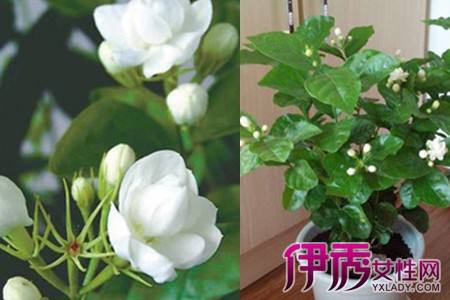
Jasmine is suited to growing in a humid, hot environment with good ventilation, so during cultivation you should let it grow in a spot with plenty of sunlight. With enough sunlight it will have lush branches and leaves; without enough sunlight its leaves will be sparse and unhealthy.
Jasmine is best grown in loose soil, which has very good air permeability; grown in this kind of soil, the roots of the jasmine will breathe very freely. It prefers soil that is slightly acidic, which is even better. Ordinary sandy soil or semi-sandy soil is very suitable for growing this flower.
Jasmine is a plant that likes moisture, but it also fears standing water in the pot. If there is too much standing water in the pot, the roots will have trouble breathing and may rot from being soaked. If you keep it outside in summer, be sure to pour out any accumulated water in the pot promptly when it rains.
In hot weather, you need to water this flower twice a day to prevent the leaves from wilting from lack of water. If the leaves curl, spray them with some water.
Jasmine often suffers from pests and diseases such as scale insects, so pay attention to checking it regularly, and spray medicine promptly to control them once you find them.
During cultivation, this flower should be fertilized twice a month; you can apply bone meal, raw cake meal and so on. There is no need to apply nitrogen fertilizer; applying some phosphorus and potassium fertilizer is enough. Nitrogen fertilizer promotes leaf growth, while phosphorus and potassium fertilizer promotes flowering and can also extend the flowering period. If the branches and leaves are lush but it does not bloom, then control the amount of fertilizer and water applied and increase the application of phosphorus and potassium fertilizer.
In summer this flower grows very fast, so you need to prune its branches and leaves often. When pruning, if you want it to grow short and sturdy, you can start cutting the branches about 10 cm above the base, and the new branches that grow out will be short, sturdy and broad. After flowering, the branches at the flowering spots should also be cut off promptly to avoid consuming more nutrients.
How to grow jasmine: these little facts you must know
When I was little, my family often bought air fresheners. Nowadays, many people still buy air fresheners, placing them in places like bedrooms or bathrooms. Among them, the scent sold most is probably jasmine. The jasmine scent itself is also very pleasant to smell, light and mild. It is not as strong as a rose, nor as scentless as a lotus. Gently smelling the fragrance of jasmine is almost like arriving in spring.
That elegant fragrance lingers in the nasal cavity for a long time, unwilling to leave. Jasmine not only has an intoxicating scent, but its flowers also bloom very beautifully. Crisp green leaves accompany pure white flowers. It makes people think of the person they love wearing pure white clothes, standing in the sunlight and waving to them.
Yes, jasmine is just that charming. Because of this, more and more people like to choose to grow some jasmine at home. It can not only naturally improve the air at home and make people feel relaxed and happy, but more importantly, it has a pure white beauty.
But how should jasmine be grown? Is it enough to just water it like an ordinary plant? Next, I will introduce some methods for growing jasmine. Jasmine is mainly distributed in the south of our country, so jasmine is more accustomed to a humid climate and likes a semi-shaded environment.
Most varieties of jasmine cannot withstand cold environments, and when the temperature is relatively low, the branches and leaves will show signs of being "frostbitten". So even when growing jasmine in the south, you should also pay attention to moving the jasmine indoors in winter. Now that you know all this, don't you really want to grow a jasmine plant? Get started right away
Jasmine growing tutorial: how to grow jasmine
Jasmine comes from India, and its pure white petals carry a rich fragrance and also have health benefits. Common jasmine is a potted ornamental flower, so it is suitable for growing at home. Below we introduce how to grow jasmine.
How to grow jasmine1. How to grow jasmine——light
Jasmine likes a hot, humid and well-ventilated growing environment, and it can thrive in an environment with plenty of light. When jasmine gets enough light, its leaves will be greener and its flowers will be more fragrant. If there is not enough sunlight, it will produce fewer flowers. In winter, it is best to strengthen the warmth protection for jasmine.
2. How to grow jasmine——water
Jasmine is not drought-tolerant. If you do not water it in time, its leaves will turn yellow. In summer, it is best to water twice a day, each time waiting until the temperature is cooler, to avoid damage to the plant caused by temperature differences.
3. How to grow jasmine——soil
The soil for growing jasmine needs to be fertile; sandy soil is best, and keeping it slightly acidic can make jasmine grow more healthily.
4. How to grow jasmine——fertilizing
Jasmine grows very well in the high-temperature season of summer. Relying on organic fertilizer and phosphorus and potassium fertilizer, such as bone meal fertilizers, can help jasmine grow even better. You can maintain fertilizing twice a month, but be careful not to apply fertilizer too strongly, and secondly, do not do it too frequently. If jasmine is not fertilized enough, it will result in poor flowering.